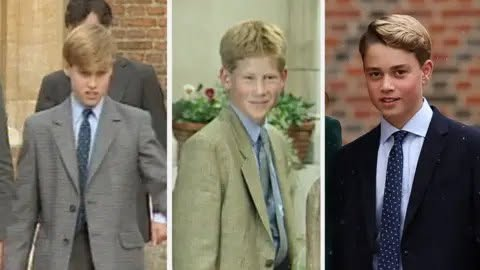
Prince William has long used his public role to support causes that hold deep personal significance, from mental health awareness to the importance of family, compassion, and community. His connection to the family of the late rugby league star Rob Burrow reflects another deeply moving dimension of that commitment.
Burrow, celebrated for his extraordinary career with Leeds Rhinos and his courage following a diagnosis of motor neurone disease (MND), became an inspiration to millions. Alongside his wife, Lindsey, and their children, he helped raise awareness of a devastating condition while encouraging people to recognize the importance of hope, dignity, and human connection.
A heartfelt letter from Prince William to Burrow’s children offers a poignant reminder that the impact of a public figure can extend far beyond sporting achievements. It also highlights the human relationships that can develop when people are brought together by shared values, personal loss, and a determination to make a difference.
While the precise wording and circumstances of any particular correspondence should be understood in context, the reported connection between William and the Burrow family resonates because it brings together two very different worlds: the British royal family and a sporting family whose remarkable story touched the nation.
At its heart, this is a story about compassion, the enduring influence of a father, and the power of kindness during difficult times.
Who Was Rob Burrow? The Rugby Star Who Inspired a Nation
Rob Burrow was one of the most admired players in rugby league. Despite standing at just 5 feet 5 inches tall, he established himself as a formidable competitor, earning respect for his speed, determination, intelligence, and ability to perform under pressure.
During his career with Leeds Rhinos, Burrow became an important part of one of the most successful periods in the club’s history. He helped the team secure multiple Super League titles and became known for his remarkable contribution to the sport.
His achievements were impressive not simply because of the trophies he won, but because of the way he approached the game. Burrow demonstrated that determination and skill could overcome assumptions about physical stature, making him an inspiration to aspiring athletes.
However, his influence reached an even wider audience after he announced in December 2019 that he had been diagnosed with motor neurone disease.
MND is a progressive neurological condition that affects the nerves responsible for controlling movement. It can gradually affect a person’s ability to walk, speak, swallow, and breathe. There is currently no cure, and the condition presents enormous challenges for patients and their families.
Rather than allowing the diagnosis to define his remaining years, Burrow became a passionate advocate for greater awareness, research, and support for people living with the disease.
His determination to continue raising awareness, despite the profound personal difficulties he faced, transformed him into a symbol of courage and resilience.
Prince William’s Connection to the Burrow Family
Prince William’s public work has frequently focused on the importance of empathy, emotional well-being, and supporting people through challenging circumstances. His involvement in charitable initiatives has also brought him into contact with individuals whose experiences have inspired wider conversations about health, family, and social responsibility.
Rob Burrow’s story naturally connects with these themes.
Although the Prince of Wales occupies a very different position from that of a professional rugby player, both men have been associated with efforts to improve people’s lives through public service and advocacy.
Burrow used his growing public profile to encourage support for MND research and services. William, meanwhile, has used his royal platform to highlight issues affecting individuals and families across the United Kingdom.
The significance of a personal message from William to Burrow’s children lies in the possibility of recognizing the family behind the public story.
When someone becomes widely admired for their courage, it can be easy to focus exclusively on their achievements and forget the people who experience the most intimate consequences of their struggles.
For Burrow’s children, their father was not simply a sporting legend or an advocate whose words inspired strangers. He was a parent whose presence shaped their everyday lives.
A thoughtful letter from a prominent public figure can therefore carry a meaning that goes beyond formal recognition. It can communicate that a family’s experiences have been noticed and that their loved one’s legacy continues to matter.
Why a Letter to Rob Burrow’s Children Is So Meaningful
A letter addressed to children can hold particular emotional significance, especially when it comes from someone whose public position makes such a gesture unusual.
Unlike a speech delivered before a large audience, a personal message creates the possibility of direct communication. Its value may lie in the care expressed through the gesture rather than the status of the person sending it.
For children who have experienced the illness and loss of a parent, words of encouragement can be a meaningful reminder that their family is not forgotten.
Grief is a deeply individual experience. Children may understand loss differently as they grow older, revisiting memories and asking new questions about the person they loved.
A message acknowledging their father’s courage, character, or contribution to others could help reinforce the knowledge that his life made a lasting difference.
It is important not to assume how Burrow’s children personally received or interpreted any correspondence without their own accounts. Nevertheless, the broader significance of such a gesture is easy to understand.
Small acts of kindness can have lasting value precisely because they acknowledge the person rather than simply the public story surrounding them.
For the Burrow family, any sincere expression of support from someone who recognizes Rob’s contribution to society would be a reminder that his influence extends beyond rugby league.
Rob Burrow’s Family: The Heart of His Story
Throughout his battle with MND, Burrow’s family remained central to his public story.
His wife, Lindsey, stood beside him as they navigated the practical and emotional challenges of a progressive illness. Their family life became part of a wider conversation about caregiving, resilience, and the importance of supporting loved ones living with serious conditions.
The couple’s children also represented an important part of Burrow’s motivation to raise awareness. His work helped demonstrate that people living with life-changing diagnoses continue to have identities, relationships, ambitions, and responsibilities beyond their illness.
For families affected by MND, the condition can transform ordinary routines into complex challenges. Communication, mobility, personal care, and long-term planning may all require adjustments as the disease progresses.
These experiences are often difficult to convey to people who have never encountered the condition directly.
By speaking publicly about his life and continuing to advocate for greater awareness, Burrow helped bring these realities into the public conversation.
His family’s role in that journey also highlights an important truth: serious illness affects more than the individual who receives a diagnosis. It changes the lives of partners, children, relatives, and friends.
Recognizing the Burrow family means recognizing the people who supported Rob while he continued to inspire others.
How Rob Burrow Changed the Conversation About Motor Neurone Disease
One of Burrow’s most significant contributions was his role in raising public awareness of MND.
Before his diagnosis, many people had limited knowledge of the disease. Through his advocacy, interviews, public appearances, and fundraising efforts, he helped bring attention to the challenges faced by those living with the condition.
His work alongside former rugby league teammate Kevin Sinfield became particularly influential. Sinfield undertook extraordinary fundraising challenges to support MND causes, demonstrating the power of friendship and collective action.
Their bond captured public attention because it combined sporting camaraderie with a commitment to helping people beyond the playing field.
The funds raised through initiatives associated with Burrow and his supporters have contributed to the wider effort to improve research, care, and support for people affected by MND.
Just as importantly, their work encouraged conversations about the disease that might otherwise never have taken place.
Public awareness cannot replace medical breakthroughs, but it can help bring communities together, encourage donations, support affected families, and strengthen calls for continued research.
Burrow’s legacy therefore extends beyond the rugby league record books. His influence can also be measured through the people he motivated to act, the families whose experiences received greater recognition, and the attention directed toward MND.
Prince William and the Royal Family’s Role in Showing Compassion
Members of the British royal family frequently encounter people whose experiences illustrate broader social challenges. Their public responsibilities can provide opportunities to recognize charitable work, celebrate individual achievements, and bring attention to issues affecting communities.
However, gestures of compassion can be particularly powerful when they focus on people rather than ceremonies.
A personal message, a thoughtful conversation, or a willingness to acknowledge a family’s difficult experience can make a public interaction feel more human.
For Prince William, whose public role combines tradition with modern expectations, such moments can help demonstrate the personal dimension of royal service.
The monarchy’s visibility means that even relatively small gestures may attract significant attention. Yet their deeper value should not be measured only by how widely they are reported.
What matters most is whether the gesture communicates genuine respect and recognizes the experiences of the people involved.
In the context of the Burrow family, the broader message is that compassion should not depend on professional achievement or public recognition. Families coping with illness and grief deserve support regardless of whether their experiences attract national attention.
The interest in William’s connection to Burrow’s children reflects the public’s appreciation for moments that place empathy at the center of a story.
A Legacy That Will Continue to Inspire Future Generations
Rob Burrow died on June 2, 2024, at the age of 41. His death was met with widespread tributes from the sporting world and beyond, reflecting the extraordinary impact he had made during his life.
Although his rugby career secured his place in the sport’s history, his determination after his MND diagnosis became an equally important part of his legacy.
Burrow showed that courage does not mean the absence of fear or difficulty. It can mean continuing to find purpose, maintaining meaningful relationships, and using one’s circumstances to help others.
His advocacy also demonstrated how an individual family’s experience can become a catalyst for broader change.
For his children, their father’s legacy will inevitably carry a personal meaning that differs from the public tributes. They will have their own memories, stories, and experiences through which to understand the person he was.
As they grow older, the wider recognition of Burrow’s achievements may offer another perspective on the difference he made beyond his immediate family.
Messages of support from public figures can contribute to that recognition, but his lasting influence rests on much more than any individual gesture.
It lives in the people he inspired, the fundraising efforts connected to his cause, the conversations he helped start, and the continuing determination to improve the lives of those affected by MND.
The Bottom Line
Prince William’s reported heartfelt connection to Rob Burrow’s children offers a moving opportunity to reflect on compassion, family, and the enduring power of a remarkable life.
Burrow was celebrated as a rugby league champion, but his influence grew even greater when he became an advocate for people living with motor neurone disease. His courage and determination brought attention to a devastating condition and inspired individuals across the United Kingdom and beyond.
For his children, the most important part of his legacy will always be the father they knew and loved. For the wider public, his story remains a reminder that extraordinary influence can emerge from the most personal struggles.
Whether expressed through a letter, a public tribute, or continued support for MND research, acts of recognition can help keep that legacy alive.
Ultimately, the significance of this story extends beyond royal correspondence. It is about remembering a man whose determination changed lives, acknowledging the family who stood beside him, and recognizing that kindness can matter most when people are facing their most difficult moments.
Rob Burrow’s achievements on the rugby field will always be remembered, but the courage, love, and humanity he demonstrated throughout his life may prove to be his most enduring legacy.