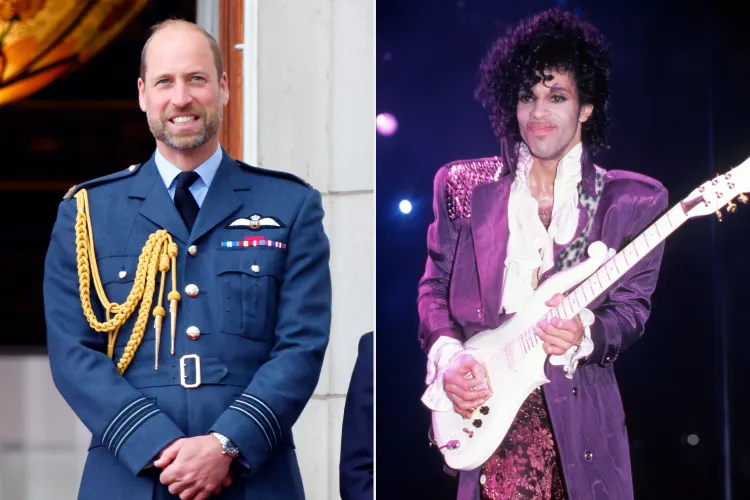
Prince William has shared an amusing story about being mistaken for the legendary musician Prince, prompting one man to apologize to the future king after hearing the royal’s account. The unexpected mix-up offers a lighthearted glimpse into the Prince of Wales’s life beyond official ceremonies, royal engagements, and the responsibilities that come with being the heir to the British throne.
Although William is one of the most recognizable members of the British Royal Family, his anecdote highlights how even a familiar public figure can be misidentified in an unexpected situation. The story also brings together two very different kinds of celebrity: a royal known for his public service and a musical icon whose distinctive style and extraordinary influence made him instantly memorable to generations of fans.
The reported apology adds another entertaining element to the encounter. Rather than focusing on controversy or royal protocol, the story centres on a simple human misunderstanding and the reaction that followed when the man learned more about what had happened.
For royal watchers, moments like this provide a welcome contrast to the more serious stories surrounding the monarchy. They reveal a more relaxed side of Prince William and demonstrate how a brief anecdote can generate widespread interest when it involves a member of the Royal Family.
Prince William’s Unexpected Encounter With a Musical Legend’s Identity
Prince William has spent most of his life in the public eye. As the elder son of King Charles III and the late Princess Diana, he grew up under intense media attention before gradually assuming more responsibilities as the future king.
His public appearances are generally associated with official duties, charitable causes, diplomatic occasions, and events supporting the communities he represents. Yet William also has a personal side that occasionally emerges through conversations, informal exchanges, and humorous stories.
Being mistaken for someone else is a familiar experience for many people, but the possibility becomes particularly amusing when the person involved is a globally recognized royal and the mistaken identity belongs to one of music’s most distinctive performers.
Prince, the American singer, songwriter, musician, and multi-instrumentalist, was renowned for his extraordinary creativity, flamboyant fashion, and unmistakable stage presence. His career produced celebrated songs including “Purple Rain,” “Kiss,” and “When Doves Cry,” helping establish him as one of the most influential artists in modern popular music.
The idea of someone confusing Prince William with the musician Prince creates an obvious contrast between the two figures. One represents Britain’s constitutional monarchy, while the other became an international symbol of musical experimentation and artistic independence.
The humour lies in the unexpected connection. Even though the two men occupied very different worlds, the similarity in their names provides an easy starting point for a memorable story.
Why the Story About Prince William Being Mistaken for Prince Is So Amusing
The anecdote’s appeal comes partly from the fact that Prince William and the late musician Prince are both associated with considerable public recognition, but in entirely different ways.
William’s appearance, title, and role within the Royal Family have made him familiar to audiences around the world. Prince, meanwhile, developed a visual and musical identity that was difficult to mistake once audiences became familiar with his work.
The musician was celebrated for combining rock, funk, pop, and other influences into a sound that resisted easy categorization. His bold fashion choices and distinctive performances helped make him one of the most recognizable entertainers of his generation.
By comparison, William’s public image is shaped by royal protocol, formal dress, and the expectations associated with representing the monarchy.
That contrast makes the possibility of mistaken identity particularly entertaining. It invites people to imagine the confusion that might occur when someone unexpectedly associates the future king with a legendary musician.
However, the humour does not depend on assuming that the two men look alike or that the mistake was inevitable. Misidentification can happen for many reasons, including a brief encounter, a misunderstanding, or a person’s incomplete knowledge of someone they have seen in public.
Without additional verified details about the circumstances, it is best not to speculate about exactly why the man made the mistake or what he believed at the time.
What makes the story memorable is the unexpected connection between two famous names and the human reaction that followed.
The Man’s Apology Adds Another Twist
The reported apology from the man involved gives the story an extra layer of charm. Learning that one has mistaken a royal for a famous musician could prompt embarrassment, surprise, or a sense of disbelief.
For many people, apologizing after a misunderstanding is a natural response once they realize what has happened. The gesture can acknowledge the mistake without turning it into a serious incident.
In this case, the apology also provides a reminder that public figures are not always recognized correctly, despite the extensive media coverage surrounding them.
Prince William’s position makes the story particularly interesting because encounters with the public are often shaped by assumptions about titles, protocol, and recognition. Yet a mistaken identity can briefly turn even a formal public figure into the subject of an ordinary, relatable misunderstanding.
The man’s response may also explain why the anecdote has attracted attention. The story is not simply about a person making a mistake; it is about what happened after the misunderstanding became clear.
Still, the precise details of the apology, including the wording used and the circumstances in which it was made, should not be embellished without a reliable account. The essential point is that the reported apology transformed an amusing story into an even more memorable exchange.
Who Was Prince, the Musician William Was Confused With?
For anyone unfamiliar with the musician, Prince was far more than a famous name. Born Prince Rogers Nelson in Minneapolis, Minnesota, in 1958, he became a defining figure in popular music through his songwriting, instrumental ability, vocal performances, and inventive approach to recording.
His breakthrough years brought an extraordinary run of commercially successful and critically acclaimed work. The 1984 album and film Purple Rain became major milestones in his career, with the title song turning into one of his most enduring musical achievements.
Prince’s influence extended beyond individual hits. He challenged conventional boundaries between genres, frequently played multiple instruments, and maintained considerable creative control over his work.
His music combined sensuality, spirituality, humour, emotional intensity, and experimentation. He also influenced the presentation of masculinity and fashion in popular entertainment, embracing a style that was expressive and frequently unconventional.
Prince died in April 2016 at the age of 57, but his music continues to reach new audiences. His recordings remain an important part of the history of modern pop and R&B, and his artistic legacy continues to inspire performers.
That enduring fame helps explain why the musician’s name remains instantly recognizable. A story involving someone being confused with Prince can therefore capture the attention of audiences who might otherwise have little interest in royal anecdotes.
Prince William’s More Relaxed Public Side
Although Prince William’s future role as king places him at the centre of important national responsibilities, he occasionally shares stories that reveal a more informal side of his personality.
Humorous anecdotes can help audiences connect with public figures beyond their official roles. A brief story about an unexpected encounter or an amusing misunderstanding can make someone who is usually seen at formal ceremonies seem more approachable.
William has spent decades balancing public expectations with his private life. His work includes supporting charitable organisations, participating in official visits, and representing the monarchy at events across the United Kingdom and abroad.
Such responsibilities often require careful communication and adherence to protocol. Informal conversations, by contrast, can offer opportunities for humour and spontaneity.
A story about being mistaken for a famous musician provides precisely that kind of contrast. It allows the public to see the Prince of Wales not simply as a future monarch but as someone who can recognize the humour in an unusual situation.
This does not mean that every anecdote reveals a deeper truth about William’s personality. A single encounter cannot establish how he responds to every misunderstanding or how he feels about public recognition.
Nevertheless, lighthearted stories can contribute to a broader understanding of the human experiences that exist alongside the duties of royal life.
Why Royal Anecdotes Continue to Fascinate the Public
Stories involving the Royal Family often attract attention because they combine familiar human experiences with an institution that is unusual in the modern world.
The public may follow royal engagements, weddings, state visits, and family milestones, but smaller personal stories can sometimes be just as appealing. They offer glimpses of informal interactions that contrast with the carefully structured nature of official royal appearances.
A mistaken identity story is particularly accessible because almost everyone understands the embarrassment of being confused with someone else or realizing that they have made an incorrect assumption.
When the people involved are Prince William and the musician Prince, the ordinary experience becomes an unusual celebrity anecdote.
The reported apology also gives the story a simple narrative: a misunderstanding occurs, the circumstances become clearer, and the person involved responds by acknowledging the mistake.
That structure makes the story easy to share and remember without requiring a major royal announcement or a dramatic public event.
At a time when coverage of the monarchy can be dominated by serious questions about its future, family relationships, and public responsibilities, a humorous story offers a different perspective.
It reminds audiences that the public figures they recognize from photographs and headlines also experience unexpected moments that do not fit neatly into their formal roles.
The Difference Between Public Image and Everyday Encounters
Prince William’s experience also highlights the difference between how public figures are perceived and how they are encountered in real life.
A person may recognize a face but struggle to place it immediately. Someone else may know a famous name without being certain which individual it belongs to. In a brief interaction, these uncertainties can produce surprising results.
For celebrities and royals, recognition can be complicated further by changing appearances, unfamiliar settings, and the expectations people bring to an encounter.
The musician Prince cultivated a distinctive public image, while William’s appearance has become familiar through years of news coverage. Even so, mistaken identity remains a possibility in any social situation.
The story is therefore less about whether the two figures share a resemblance and more about the unpredictability of human recognition.
It also illustrates how humour can help resolve an awkward moment. When a misunderstanding is handled graciously, it can become a shared joke rather than an uncomfortable confrontation.
Although the full circumstances of the encounter are not established here, the reported apology suggests that the story’s appeal lies in the human response rather than any lasting consequence.
The Bottom Line
The story of a man apologizing to Prince William after hearing the royal recount how he was mistaken for singer Prince offers a lighthearted glimpse into an unexpected side of royal life.
The anecdote brings together two famous figures from very different worlds: the future king of the United Kingdom and the late musician whose groundbreaking work transformed popular music.
The reported apology adds an amusing conclusion to the misunderstanding, while the story itself highlights how easily even familiar faces can be misidentified in everyday encounters.
For Prince William, the moment offers a contrast to the formal duties that define much of his public life. For audiences, it provides a reminder that royal stories do not always need to involve major ceremonies or complicated institutional questions to be memorable.
Ultimately, the appeal lies in the simplicity of the situation. A mistaken identity, a surprising realization, and an apology combine to create a story that is both entertaining and relatable.
And while Prince William’s future responsibilities as king will continue to attract serious attention, moments like this demonstrate why audiences remain interested in the smaller, more human details of his life.