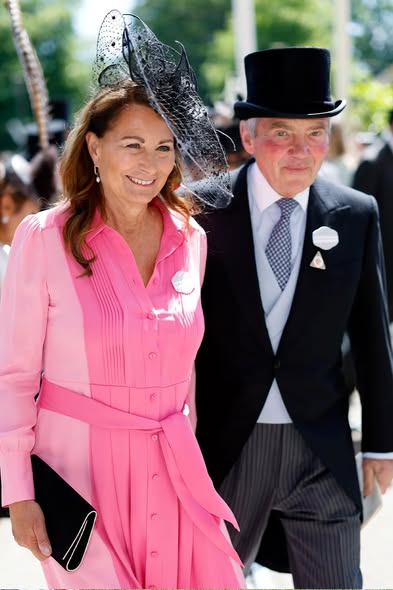
Queen Elizabeth II spent decades navigating the delicate balance between royal tradition and the changing expectations of the modern monarchy. When Catherine Middleton entered Prince William’s life, the future queen consort brought more than a new romance into the royal family. She also introduced a family whose background was markedly different from the aristocratic circles that had long surrounded the British royal household.
Carole and Michael Middleton, Kate’s parents, became subjects of public fascination as their eldest daughter moved from university student to the Princess of Wales. Naturally, questions followed: What did Queen Elizabeth really think of Kate Middleton’s parents? Did the late monarch welcome them into the royal family, and how did she view their influence on the future king and queen?
Although the Queen rarely discussed private family relationships publicly, her actions, public appearances and the place the Middletons came to occupy within the wider royal story offer valuable context. The answer appears to be less about dramatic royal disapproval and more about the gradual acceptance of a family that helped Catherine prepare for life at the heart of the monarchy.
Who Are Kate Middleton’s Parents?
Before examining Queen Elizabeth’s relationship with the Middletons, it is worth understanding the family background that made their arrival in royal circles so interesting.
Carole and Michael Middleton built a comfortable life for their family through work, business and careful financial planning. Michael worked in aviation before becoming involved in the family business, while Carole established Party Pieces, a party-supplies company that grew into a recognizable name in its market.
The couple raised three children: Catherine, Pippa and James Middleton. Their upbringing was not identical to that of many young royals, but the family enjoyed financial security, educational opportunities and an active social life.
Kate attended the University of St Andrews in Scotland, where she met Prince William. Their relationship developed during university before eventually becoming one of the most closely watched romances in the world.
For the royal family, Catherine’s background represented a familiar modern development: a future senior royal whose parents had earned their position in society rather than inherited aristocratic titles.
That distinction attracted considerable media attention. Yet it did not automatically mean the Middletons were unwelcome. Their family life, education and financial independence gave them a foundation that helped Catherine navigate the responsibilities that came with her relationship with William.
Did Queen Elizabeth Approve of Carole and Michael Middleton?
There is no widely established public statement in which Queen Elizabeth II offered a detailed personal assessment of Carole and Michael Middleton. The monarch was famously discreet about private opinions, particularly when those opinions concerned family relationships.
Consequently, claims that the Queen secretly disliked Kate’s parents, or that she strongly favored them over other relatives, should be treated cautiously unless supported by credible evidence.
What can be observed is the way the relationship evolved publicly over time.
As Kate and William’s relationship became serious, the Middletons gradually appeared more frequently in royal-related settings. Their presence at important family occasions reflected their growing connection to the monarchy. After the couple’s engagement was announced in 2010, Carole and Michael stood alongside their daughter as she prepared for a dramatically different life.
The royal wedding in April 2011 marked a significant milestone. The Middletons were not merely guests watching their daughter marry a prince; they became the parents of a woman who would eventually be known as the Princess of Wales.
Queen Elizabeth’s role in welcoming Catherine into the family was clear through the formal responsibilities she undertook as monarch. However, the precise nature of her private feelings toward Carole and Michael remains a matter of personal judgment rather than something that can be conclusively established from public appearances alone.
Why Kate’s Family Background May Have Mattered
The British monarchy has historically been shaped by questions of lineage, tradition and social standing. In earlier generations, royal marriages were often closely connected to aristocratic families and European royal houses.
By the time William began dating Kate, those expectations had changed considerably.
The future king’s partner was increasingly expected to demonstrate personal qualities such as discretion, emotional resilience and the ability to adapt to public scrutiny. A family’s ability to provide stability and support could be just as significant as its social connections.
The Middletons offered Catherine a relatively grounded family environment outside the formal structures of royal life. They were not responsible for preparing her for every aspect of monarchy, but their long-standing family relationships provided continuity as her public role expanded.
For Queen Elizabeth, who had spent much of her life balancing private family matters with constitutional responsibilities, stability would have been an understandable priority. Nevertheless, without direct evidence, it would be misleading to claim that the Queen specifically praised the Middletons for these qualities or privately identified them as the reason for Kate’s success.
Their gradual integration into royal occasions suggests that they became an accepted part of the wider family landscape.
Carole Middleton’s Influence on the Princess of Wales
Carole Middleton has frequently attracted attention for her close relationship with Catherine. While Kate’s public duties require a considerable degree of independence, her parents have remained an important part of her personal life.
Carole has generally maintained a restrained public profile compared with the attention directed toward her daughter. She has attended significant family events and supported Catherine through the transition from private citizen to senior royal.
For a future queen consort, that support can be especially valuable. Royal life involves public appearances, official engagements and intense media interest, often leaving little room for ordinary family routines. Maintaining relationships with people who knew a royal figure before fame can help preserve a sense of personal continuity.
Michael Middleton has also maintained a comparatively low-key public presence. His appearances at major family occasions have reinforced the image of a family that participates in royal life without seeking to dominate it.
It is possible to understand why these qualities might be viewed positively within a family that values discretion. Still, it would be speculation to attribute specific judgments about Carole’s influence or Michael’s character directly to Queen Elizabeth without reliable documentation.
The Middletons and the Royal Wedding of 2011
Catherine and William’s wedding at Westminster Abbey on April 29, 2011, was one of the defining royal occasions of the modern era.
Millions of people followed the ceremony, while the couple’s families became the focus of worldwide attention. For Carole and Michael, the occasion represented the culmination of years of watching their daughter grow up and build a relationship that would place her in the public eye permanently.
The event also demonstrated how the royal family was adapting to a more contemporary understanding of marriage. Catherine was joining the monarchy, but she was not expected to abandon her family background or erase the relationships that had shaped her life.
Queen Elizabeth’s presence as head of the royal family gave the ceremony its constitutional and ceremonial significance. The wedding brought together royal relatives, international guests and the Middletons in a highly visible display of family unity.
It would be inaccurate to interpret every element of the ceremony as proof of a private opinion held by the Queen. Nevertheless, the Middletons’ prominent place at the event reflected their legitimate and important role in Catherine’s life.
Did the Queen Have Concerns About Kate’s Transition Into Royal Life?
Questions about Queen Elizabeth’s views on the Middletons are often linked to a broader subject: whether the monarch had reservations about Catherine herself.
Joining the royal family is a demanding transition. A senior royal must understand protocol, manage public expectations and represent the institution while protecting a degree of personal privacy. The challenge can be particularly significant for someone whose parents and siblings have not spent their lives inside royal circles.
Catherine’s relationship with William developed over several years before their marriage. That extended period gave her time to become familiar with the environment surrounding the future king.
Her gradual public emergence also allowed the royal family and the public to become accustomed to her presence. Rather than entering royal life overnight, she moved through a series of stages that culminated in marriage and, later, motherhood.
Queen Elizabeth had extensive experience observing how different personalities adapted to royal responsibilities. However, no reliable conclusion about specific private concerns over Carole and Michael should be presented as fact without documentary evidence.
The more defensible interpretation is that Catherine’s transition required adjustment from everyone involved, including her family, and that the Middletons eventually became an established part of the broader royal network.
How the Middletons Fit Into the Modern Monarchy
The monarchy has changed substantially during Queen Elizabeth’s lifetime. Public expectations surrounding marriage, family life and royal accessibility have evolved, while the institution has faced increasing pressure to demonstrate that it remains relevant to contemporary society.
The Middletons represent one aspect of that transformation. Their story is not based on inherited royal titles but on the experience of raising a daughter who developed a relationship with the future king.
Their position also illustrates the difference between being part of the royal family by marriage and being a working royal. Carole and Michael are Catherine’s parents, but they do not hold the same constitutional responsibilities as the monarch, the Prince of Wales or other senior working royals.
That distinction matters because public attention can sometimes blur the boundaries between personal family relationships and official royal duties.
The Middletons’ appearances at important occasions have helped make the monarchy seem more connected to ordinary family experiences. At the same time, their relatively limited public roles have allowed Catherine to maintain a clear identity within the institution.
Whether Queen Elizabeth privately viewed this arrangement as ideal cannot be confirmed. Yet the Middletons’ continued presence at significant family moments demonstrates that they became an enduring part of the royal family’s modern story.
What Queen Elizabeth’s Legacy Suggests About the Middletons
Queen Elizabeth II died in September 2022, leaving behind a reign defined by duty, continuity and the monarchy’s gradual adaptation to a changing world.
During her lifetime, she witnessed Catherine’s transformation from Prince William’s university girlfriend into the Princess of Wales. She also saw the Middletons move from relative obscurity into the public life surrounding one of Britain’s most prominent families.
The Queen’s private opinions will always attract curiosity, particularly when they concern the people closest to the future king. However, historical understanding depends on separating documented events from assumptions and sensational claims.
There is no need to imagine a dramatic hidden conflict to explain the relationship between the Queen and Kate’s parents. The available public picture is one of a family becoming increasingly connected to royal life as Catherine’s responsibilities grew.
The Middletons’ importance was ultimately tied to their relationship with Catherine and the support they provided as her life changed. Their role was personal rather than constitutional, but it remained meaningful.
The Final Verdict: What Did Queen Elizabeth Really Think?
So, what did Queen Elizabeth really think of Kate Middleton’s parents?
The honest answer is that her precise private views are not fully known. The Queen did not leave a widely established public assessment of Carole and Michael Middleton that settles the question once and for all.
What is clear is that the Middletons became an accepted presence in the wider royal family through Catherine’s marriage to Prince William. They attended major family occasions and continued to support their daughter as she assumed increasingly significant responsibilities.
Their background differed from the traditional aristocratic world associated with the monarchy, but that difference does not prove the Queen disapproved of them. Nor does their public inclusion establish that she held unusually strong admiration for them.
Instead, their story reflects the changing nature of the British royal family: an institution rooted in tradition but increasingly shaped by contemporary relationships and family life.
Queen Elizabeth’s legacy is often discussed through major constitutional events and public milestones. Yet the story of Kate’s parents offers a quieter perspective on the monarchy’s evolution. As Catherine became one of its most important figures, the family that raised her remained part of her life.
And perhaps that is the most meaningful conclusion. Whatever Queen Elizabeth’s private thoughts may have been, the Middletons’ place in the modern royal story was secured not by titles or grand declarations, but by their enduring connection to the woman who would become the Princess of Wales.