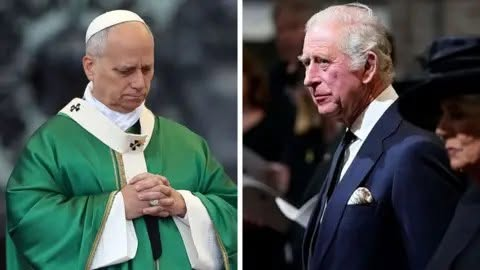
King Charles III has marked a significant moment in relations between the British monarchy and the Vatican by approving a rare honorary title for Pope Leo XIV, creating a powerful symbol of friendship between two Christian traditions separated by centuries of history.
The announcement, made on October 23, 2026, comes exactly one year after King Charles and Queen Camilla visited the Vatican for a historic state visit. Pope Leo has accepted the title of Papal Confrater of the College of St George at St George’s Chapel in Windsor, an appointment that highlights the growing spirit of cooperation between the Roman Catholic Church and the Church of England.
The honor is more than a ceremonial gesture. It reflects a remarkable change in the relationship between institutions whose histories have been deeply intertwined with both cooperation and division. Nearly five centuries after England broke with Rome during the reign of King Henry VIII, the exchange of honorary religious titles between the British monarch and the pope offers a striking reminder of how dialogue and mutual respect can help bridge historic differences.
For King Charles, whose public life has long included an interest in interfaith relations, environmental responsibility, and religious heritage, the announcement represents another important step in his efforts to encourage understanding across Christian communities.
King Charles Grants Pope Leo XIV a Rare Honor
The honorary appointment was announced by the Dean and Canons of Windsor with the approval of King Charles. Pope Leo XIV accepted the invitation to become Papal Confrater of the College and Chapel of St George at Windsor Castle.
According to the official announcement, the appointment represents a visible sign of spiritual fellowship, ecumenical friendship, and Christian fraternity. It also recognizes the longstanding relationship between St George’s Chapel and the Holy See, alongside progress in relations between the Catholic Church, the Church of England, and the wider Anglican Communion.
The title is honorary rather than a new governing position. It does not make Pope Leo part of the British royal family, nor does it alter his responsibilities as leader of the Catholic Church.
Instead, its significance lies in what it symbolizes: a willingness to recognize shared Christian traditions while respecting the differences that remain between the two churches.
The announcement also reflects the mutual esteem between King Charles and Pope Leo, who met during the British monarch’s state visit to the Vatican in October 2025.
For royal watchers and religious observers alike, the appointment has attracted attention because it places a historic relationship into a distinctly modern context. Rather than emphasizing past disagreements, the gesture focuses on shared values, spiritual fellowship, and the possibility of continued cooperation.
The Historic Meeting That Set the Stage
The roots of the new honor can be traced to October 23, 2025, when King Charles and Queen Camilla traveled to the Vatican to meet Pope Leo XIV.
The visit was significant from the beginning. It brought together the British sovereign, who is Supreme Governor of the Church of England, and the head of the Roman Catholic Church for a series of engagements that emphasized Christian unity and environmental stewardship.
During the visit, King Charles and Pope Leo participated in an ecumenical prayer service in the Sistine Chapel. The moment was especially notable because it marked the first time since the English Reformation that a British monarch had publicly prayed alongside a pope.
The encounter carried considerable historical weight. The English Reformation of the 16th century resulted in the separation of the Church of England from the authority of the papacy, fundamentally changing the religious and political landscape of England.
Against that background, the public act of prayer represented a meaningful expression of reconciliation and dialogue.
The royal visit also included discussions about issues of common concern, including environmental protection, poverty, peace, and security. These subjects demonstrated that the relationship between religious institutions can extend beyond theology to address challenges affecting communities around the world.
The honorary title now accepted by Pope Leo builds on that meeting, transforming the spirit of the visit into a lasting symbolic connection between Windsor and the Vatican.
A Reciprocal Honor Between King Charles and the Pope
One of the most striking details surrounding the announcement is that King Charles received a comparable honor during his 2025 Vatican visit.
At the Papal Basilica and Abbey of St Paul’s Outside the Walls in Rome, the King was welcomed as Royal Confrater of the institution. The appointment recognized historic links between the English Crown and the basilica, as well as the broader relationship between the two Christian traditions.
Pope Leo’s acceptance of the corresponding title at St George’s Chapel creates a reciprocal gesture between the two institutions.
The exchange is particularly notable because it reflects a relationship built on mutual recognition rather than a one-sided act of honor. Both leaders have accepted honorary religious positions connected to important places of worship, offering a tangible expression of their shared commitment to Christian fellowship.
Specially commissioned chairs have also been associated with the appointments. The chair presented to King Charles is located at St Paul’s Outside the Walls in Rome, while a corresponding chair for Pope Leo is due to be unveiled at St George’s Chapel in Windsor.
These objects give the symbolic relationship a physical presence within the two historic religious settings.
Although such details might appear ceremonial, traditions and symbols often play an important role in royal and religious diplomacy. They create visible reminders of agreements, relationships, and shared aspirations that might otherwise remain confined to formal statements.
Why the Honor Matters Nearly 500 Years After the Reformation
To understand the importance of Pope Leo’s new title, it is necessary to look back to the reign of Henry VIII.
During the 16th century, England separated from the Roman Catholic Church, establishing the Church of England as an independent institution under royal authority. The break reshaped religious life in England and created divisions that continued to influence relations between Catholics and Anglicans for generations.
The British monarch’s position as Supreme Governor of the Church of England remains an important part of the constitutional and religious identity of the monarchy.
That history makes the recent exchange of honorary titles especially meaningful. It does not erase the theological differences between Catholicism and Anglicanism, nor does it signal a merger between the churches. Instead, it acknowledges that historical divisions need not prevent cooperation in areas of shared belief and concern.
Modern ecumenical dialogue seeks to improve understanding between Christian traditions while recognizing their distinct identities.
The appointments involving King Charles and Pope Leo fit within that broader effort. Their significance lies in the recognition that religious communities can preserve their own traditions while developing a stronger relationship with others.
In an increasingly divided world, that message may resonate beyond the walls of Windsor Castle and the Vatican.
Christian Unity and Shared Values Take Center Stage
Both King Charles and Pope Leo have demonstrated an interest in encouraging cooperation on issues that extend beyond the formal responsibilities of their respective positions.
Environmental protection was a prominent theme of the 2025 state visit. The King has spent decades advocating for environmental awareness, sustainable practices, and the protection of the natural world.
Pope Leo, meanwhile, leads a global Catholic community whose institutions and members are involved in humanitarian work, education, environmental initiatives, and support for vulnerable populations.
Their meeting provided an opportunity to highlight areas where the two institutions can work toward common goals despite their theological differences.
The discussions also addressed poverty, peace, and security, issues that remain central to religious leaders seeking to respond to global challenges.
The new honorary title does not create a formal policy agreement or guarantee specific joint initiatives. Its importance is primarily symbolic, recognizing a relationship in which dialogue and cooperation have become increasingly visible.
Nevertheless, symbolic gestures can help establish an atmosphere in which future conversations become easier. By emphasizing common ground, the two leaders have offered an example of how historic institutions can engage with one another in a spirit of respect.
St George’s Chapel: A Fitting Setting for a Historic Gesture
St George’s Chapel at Windsor Castle is one of the most recognizable religious landmarks associated with the British monarchy.
Founded in the 14th century, the chapel has played a central role in royal worship, ceremonies, and important moments in British royal history. It is also closely connected with the Order of the Garter, one of the country’s oldest and most prestigious orders of chivalry.
The chapel’s longstanding association with the monarchy makes it a fitting location for an honor approved by King Charles.
Its role extends beyond royal ceremony. The College of St George includes clergy and others committed to worship, prayer, and welcoming visitors. The appointment of Pope Leo as Papal Confrater recognizes the institution’s historic relationship with the wider Christian world.
The decision also creates an enduring link between Windsor and Rome, two places with distinct religious traditions but shared connections to centuries of European history.
The corresponding chair planned for Pope Leo will serve as a visible reminder of that relationship when it is installed at the chapel.
Later in 2026, King Charles is also expected to attend a service at St George’s Chapel during which a mosaic icon of Christ of Cefalù, gifted to him by Pope Leo during the Vatican visit, will be dedicated and installed.
The planned ceremony will provide another opportunity to recognize the relationship established during the historic meeting.
What the Appointment Means for the Monarchy
For King Charles, the honorary title reflects a broader understanding of royal diplomacy.
The British monarch’s role combines constitutional responsibilities with a public position that can encourage cultural, religious, and international dialogue. Although the King does not direct the policies of the Church of England in the same way a religious leader might govern a church, his position gives his actions considerable symbolic importance.
By approving Pope Leo’s appointment, Charles has helped reinforce a message of friendship between two Christian traditions with a complicated shared history.
The gesture also reflects the monarchy’s ability to draw on historical institutions while adapting their significance to contemporary circumstances.
For Pope Leo, accepting the title recognizes the value of continued engagement with the Anglican tradition and the British monarchy. It provides an opportunity to affirm common Christian principles without diminishing the distinct responsibilities of the papacy.
Neither appointment resolves longstanding theological disagreements. However, the exchange illustrates that cooperation does not require every difference to disappear.
A Historic Step Toward Greater Understanding
King Charles’s decision to approve Pope Leo XIV’s honorary title at St George’s Chapel marks an important moment in the relationship between the British monarchy and the Vatican.
Coming one year after their historic meeting in Rome, the appointment represents a reciprocal expression of spiritual fellowship and mutual respect. It also highlights how traditions shaped by centuries of division can be reinterpreted as opportunities for dialogue and cooperation.
The title of Papal Confrater carries no new governing authority, but its symbolic meaning is substantial. It recognizes the historic connection between Windsor and the Holy See while emphasizing the shared desire for Christian unity.
As the relationship between King Charles and Pope Leo continues to develop, their exchange of honors offers a powerful reminder that history need not be defined only by conflict.
Nearly 500 years after the English Reformation transformed relations between England and Rome, the two leaders are choosing to highlight what unites their traditions rather than what separates them.
For royal observers, religious communities, and those interested in the future of interfaith dialogue, this rare honor represents more than an intriguing royal headline. It is a carefully considered gesture that places friendship, shared responsibility, and mutual understanding at the center of a historic relationship.