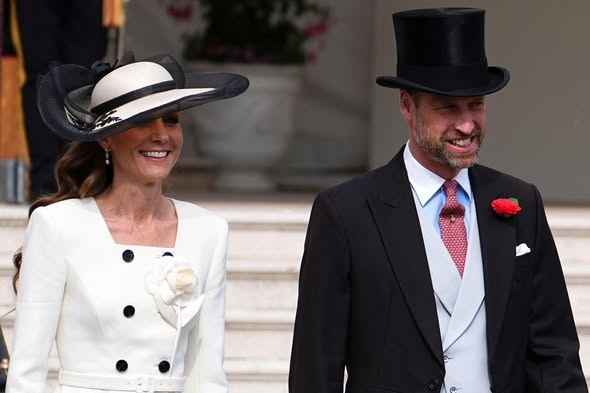
Prince William has spent his entire life preparing for a future few people could ever fully understand. As the eldest son of King Charles III and the late Princess Diana, the Prince of Wales was born into a world of royal ceremonies, public expectations, and the knowledge that he would one day become king. Yet behind the formal appearances and constitutional responsibilities, William has also shown a more relatable side, revealing interests and ambitions that offer a glimpse of the alternative lives he might have pursued.
Although royal duty has shaped his career, William has developed a strong interest in areas that extend beyond palace life. From his experience as a search-and-rescue pilot to his commitment to environmental protection and his work supporting people experiencing homelessness, the future king has demonstrated that his interests are not limited to the traditional responsibilities of the monarchy.
His professional journey raises an intriguing question: if he had not been born into the British royal family, what might Prince William have chosen to do instead?
While any alternative career remains hypothetical, his real-world experiences and publicly expressed interests provide clues about the paths that might have appealed to him. They also reveal a man who has sought opportunities to develop practical skills, contribute to society, and build a public role around issues he considers important.
Prince William’s Life Beyond Royal Expectations
For most people, choosing a career involves weighing personal interests against financial realities, educational opportunities, and long-term ambitions. For William, the decision has always been different. His position as heir to the throne means that his professional life is closely connected to the future of the British monarchy.
Nevertheless, his upbringing did not prevent him from exploring interests outside traditional royal engagements. William attended the University of St Andrews in Scotland, where he studied art history before switching to geography. His university years also provided an opportunity to experience a more ordinary student environment than the one associated with his official responsibilities.
After graduating in 2005, William undertook military training and served in the armed forces. He later trained as a search-and-rescue pilot with the Royal Air Force, gaining experience that involved teamwork, technical expertise, and making decisions under pressure.
These experiences helped shape a public image that differs from the stereotype of a royal whose life consists entirely of ceremonies and formal appearances. They also demonstrated that William was interested in practical work with a direct impact on people’s lives.
Although his ultimate responsibility remains preparation for the throne, his earlier career choices suggest that he values opportunities to learn, serve, and contribute in tangible ways.
Could Prince William Have Become a Pilot?
One of the most compelling alternatives to royal life is aviation. William’s experience as a search-and-rescue pilot showed that he could undertake demanding operational work rather than simply representing an institution.
He trained with the Royal Air Force before joining its search-and-rescue operations. Later, he worked as a pilot with the East Anglian Air Ambulance, an experience that brought him into contact with emergency medical teams and people facing serious situations.
Flying an air ambulance involves responsibilities far removed from the carefully planned schedule of a royal engagement. Pilots must work closely with medical professionals, respond to changing circumstances, and operate within demanding safety procedures.
William’s experience offered him an opportunity to participate in work where the outcome could have an immediate effect on people’s lives. It also exposed him to the pressures experienced by emergency responders and the importance of supporting those who perform difficult jobs.
He left his air ambulance role in 2017 as he took on greater royal responsibilities. The decision reflected the practical demands of his position as heir, rather than necessarily indicating that his interest in aviation had disappeared.
Had he not been destined for the throne, a longer career in aviation or emergency services might have been possible. His experience suggests that he appreciated work that combined technical skill with public service.
However, it would be inaccurate to claim that William has definitively said he would have chosen aviation as his lifelong profession. It is better understood as a credible alternative based on his actual training and professional experience.
His Military Training Revealed Another Side of the Future King
William’s military experience also offers insight into the kind of professional environment he was willing to enter.
He completed officer training at the Royal Military Academy Sandhurst and was commissioned into the British Army in 2006. He subsequently served in the armed forces, including time with the Household Cavalry, before continuing his military development through aviation.
Military training emphasizes discipline, leadership, responsibility, and the ability to work as part of a team. These qualities are relevant to royal life, but they also have value in countless careers outside the monarchy.
For William, military service provided an opportunity to experience an organizational structure in which responsibilities are clearly defined and individual performance matters. It also offered a different perspective on public service, one grounded in training and operational duties rather than public appearances.
His experience illustrates that royal responsibilities and professional development do not always exist in separate worlds. Skills learned in one environment can influence how a person approaches another.
Had William not been heir to the throne, a longer military career might have been one possible path. Still, such an outcome would remain speculative, and his actual experience should not be confused with a confirmed statement about what he would have chosen.
What can be said with confidence is that his military background helped broaden his experience beyond the ceremonial expectations associated with his position.
Prince William’s Passion for Wildlife and Environmental Protection
Another potential direction lies in environmental work. William has become increasingly associated with conservation and efforts to address environmental challenges, particularly through initiatives that encourage innovation and practical solutions.
One of his most prominent projects is the Earthshot Prize, launched in 2020 with the aim of supporting solutions to major environmental problems. The initiative focuses on areas including nature protection, clean air, ocean restoration, waste reduction, and climate action.
Its approach reflects an interest in finding ways to turn environmental concern into measurable progress. Rather than focusing solely on raising awareness, the prize seeks to recognize and support people and organizations developing potential solutions.
William’s environmental work also connects to a wider royal tradition of supporting conservation, although his initiatives have developed their own identity.
Without royal responsibilities, he might have pursued a career in conservation, environmental advocacy, or a related field. His public commitments suggest that these subjects are more than occasional interests.
Nevertheless, there is no need to assume that he would necessarily have become a full-time environmental scientist or researcher. Conservation includes many different professional roles, from policy development and fundraising to communications and project leadership.
William’s existing work suggests that he is particularly interested in bringing people together around environmental goals and encouraging practical action.
Could Charity Work Have Become His Full-Time Career?
William’s longstanding involvement in charitable causes provides another possible alternative to royal life.
Alongside his environmental work, he has supported initiatives addressing homelessness, mental health, and the well-being of young people. These issues have featured prominently in his public work and reflect a broader interest in the pressures facing individuals and communities.
His Homewards initiative, launched in 2023, focuses on efforts to demonstrate that ending homelessness is possible through collaboration among local organizations, public services, businesses, and communities.
The project reflects a practical approach to a complex social issue. Homelessness cannot be addressed through a single intervention, and long-term solutions often require coordination between housing providers, support services, employers, and local authorities.
William’s role involves using his public platform to attract attention, encourage partnerships, and help support efforts that might otherwise struggle to receive widespread recognition.
Without the responsibilities of the monarchy, he could conceivably have pursued a career in nonprofit leadership, philanthropy, or social-impact initiatives.
Such work would allow him to focus on causes he considers important while building partnerships across different sectors. His existing charitable commitments suggest that this type of work could be a natural fit, although his exact career choice cannot be known.
A Future King With an Interest in Modern Leadership
William’s possible alternative careers also reveal something about how he approaches leadership.
Unlike professions with clearly defined daily tasks, royal life requires balancing public expectations, institutional traditions, charitable commitments, and personal responsibilities. The heir to the throne must also prepare for constitutional duties that cannot simply be delegated to another career path.
Yet William’s public initiatives increasingly involve collaboration with people beyond the royal household. Environmental campaigners, scientists, business leaders, charities, and community organizations all play roles in the projects he supports.
This approach suggests that he recognizes the importance of bringing different perspectives together when addressing complicated challenges.
If he were not a royal, similar skills could be useful in business leadership, nonprofit management, public policy, or international development. These fields often require the ability to communicate a vision, build partnerships, and maintain support over time.
Still, it would be misleading to present any one of these possibilities as William’s secret ambition. His public work provides evidence of interests and capabilities, not a definitive list of careers he would have selected under different circumstances.
The more revealing point is that his experience extends beyond the ceremonial side of royal life and includes practical engagement with issues that affect ordinary people.
How Family and Personal Experience Have Shaped His Interests
William’s career has also been shaped by personal experiences, including his childhood, his mother’s influence, and the responsibilities he has taken on as an adult.
Princess Diana was widely known for her charitable work and her willingness to engage with people experiencing difficult circumstances. Her approach to public service helped shape perceptions of how members of the royal family could connect with communities and bring attention to overlooked issues.
William has pursued his own interests and developed his own projects, but his commitment to social causes has frequently been discussed in the context of that family legacy.
His role as a husband and father has also added another dimension to his public identity. William and Catherine, Princess of Wales, are raising three children while balancing family life with the expectations attached to their positions.
Those responsibilities make the idea of a completely different career increasingly hypothetical. His future is not simply a matter of personal preference; it is tied to the institution he is expected to lead.
Nevertheless, exploring alternative careers offers a useful way to understand the individual behind the title. It highlights the interests and experiences that contribute to his approach to public service.
Prince William’s Future Remains Rooted in Royal Duty
Although aviation, military service, conservation, and charity work all offer plausible alternatives, William’s life remains shaped by his position as heir to the British throne.
As the Prince of Wales, he continues to undertake official engagements, support charitable initiatives, and prepare for the responsibilities that will accompany his eventual accession.
His career path illustrates the unusual balance required of a modern royal. He must preserve important traditions while also finding ways to make the monarchy relevant to contemporary concerns.
That challenge has encouraged him to develop projects that focus on tangible problems, from homelessness to environmental protection. It has also allowed him to draw on experiences that extend beyond formal royal duties.
Ultimately, it is impossible to know exactly what William would have chosen if he had been born into a different family or had grown up without the expectation of becoming king.
His experience as a pilot, military officer, and charitable advocate nevertheless suggests that he might have been drawn to professions that combine service, leadership, and practical results.
For now, those alternative careers remain an intriguing exercise in imagining a different future for one of Britain’s most recognizable public figures. Whatever path he might have taken, the interests he has demonstrated throughout his life continue to shape the kind of king he is preparing to become.