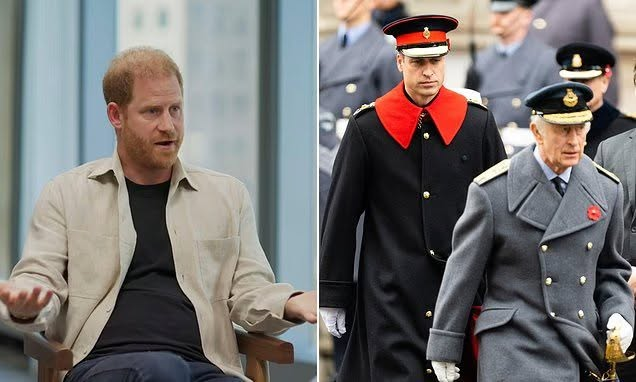
Prince Harry’s hopes of repairing his relationship with the British royal family continue to attract attention, but his calls for reconciliation are also facing growing skepticism. While the Duke of Sussex has expressed a desire to move beyond past disagreements and rebuild family connections, questions remain about whether meaningful progress is possible after years of public tension, painful revelations, and disagreements over privacy and trust.
For Harry, the prospect of reconciliation is about more than restoring appearances. It involves complicated relationships with his father, King Charles III, and his older brother, Prince William, as well as the wider royal institution from which he stepped back in 2020. Yet rebuilding those relationships may prove far more difficult than simply expressing a willingness to talk.
The challenge is that reconciliation requires more than one person’s desire for change. It depends on mutual trust, a willingness to address past grievances, and a shared understanding of what a healthier relationship should look like. As Harry continues to navigate life in the United States with his wife, Meghan Markle, the question is whether his public messages will lead to lasting progress or remain another chapter in the ongoing royal family dispute.
Prince Harry’s Desire to Reconcile With His Family
Harry’s relationship with the royal family has undergone a dramatic transformation since he and Meghan announced their decision to step back from their senior royal roles in 2020. Their departure, often referred to as “Megxit” in the media, marked a turning point in the couple’s relationship with the institution and intensified public interest in their private disagreements.
Since then, Harry has spoken openly about the difficulties surrounding his family relationships. His interviews, documentary appearances, and memoir, Spare, offered his perspective on tensions involving royal life, personal security, and relationships with senior family members.
Those revelations generated considerable discussion, but they also complicated the possibility of reconciliation. Publicly discussing private family matters can help someone explain their experiences, yet it can also leave relatives feeling exposed or misunderstood.
Harry’s more recent expressions of interest in reconciliation suggest that the possibility of rebuilding family connections remains important to him. For someone whose childhood and early adulthood were closely tied to royal life, the prospect of repairing those relationships carries emotional significance beyond public appearances and institutional responsibilities.
However, a desire to reconcile does not automatically mean that the people involved are ready to move forward. Family members may have different interpretations of past events, different expectations about privacy, and different ideas about what an apology or a fresh start should involve.
That gap between intention and practical progress is one reason some observers remain cautious about the prospect of a royal reunion.
Why Skepticism Surrounds Harry’s Reconciliation Efforts
The skepticism surrounding Harry’s calls for reconciliation is rooted in the length and complexity of the dispute. The tensions between the Sussexes and the royal family did not emerge from a single disagreement. They developed over time and became more visible as Harry and Meghan spoke publicly about their experiences.
For critics, the repeated public discussion of family matters raises questions about whether private reconciliation can succeed while the dispute continues to attract international attention. They may wonder how relatives can rebuild confidence when disagreements have already been discussed in interviews, television projects, and published accounts.
Others take a more sympathetic view, arguing that public figures should not be expected to remain silent about difficult personal experiences simply because they belong to a famous family. From this perspective, Harry’s decision to speak openly may reflect his attempt to explain his own history rather than an effort to prevent reconciliation.
Both perspectives highlight a central problem: people can interpret the same events differently, making it difficult to establish a shared starting point for rebuilding a relationship.
Skepticism does not necessarily mean reconciliation is impossible. Instead, it reflects uncertainty about whether the necessary conditions for lasting change have been established.
Meaningful progress would likely require private conversations, clearer boundaries, and a willingness to separate personal relationships from public debate. Without those elements, even sincere expressions of goodwill may struggle to produce lasting results.
King Charles and Prince Harry: A Father-Son Relationship Under Pressure
Harry’s relationship with King Charles remains one of the most closely watched aspects of the royal family dispute. Their connection carries the emotional weight of a father and son while also existing within the formal expectations surrounding the British monarchy.
The king’s position brings additional complications. As monarch, Charles must consider institutional responsibilities, public expectations, and the need to protect the privacy of other family members. Harry, meanwhile, has spoken about his own concerns and the difficulties he has experienced within the royal environment.
These different roles can make ordinary family disagreements more complicated. A conversation that might remain private in another household can become the subject of intense speculation when both participants are members of a globally recognized family.
Harry has indicated that family relationships remain important to him, and reports of contact between father and son have periodically encouraged hopes of a breakthrough. However, the existence of contact alone does not establish that deeper issues have been resolved.
Reconciliation can involve several stages, from reopening communication to rebuilding confidence and eventually establishing a more stable relationship. Each stage requires time and a willingness to accept that trust cannot simply be restored through a single conversation.
For Charles and Harry, any lasting improvement would need to account for both their personal bond and the unusual pressures surrounding their family.
Prince William Remains a Key Figure in the Royal Rift
While Harry’s relationship with his father attracts considerable attention, his strained relationship with Prince William remains another major obstacle to a broader family reconciliation.
The brothers shared a childhood shaped by their parents’ separation, their mother’s death, and the expectations associated with growing up in the royal family. For many years, their relationship was viewed as a particularly close bond between two people who had experienced similar pressures.
Their adult lives, however, have taken different directions. William has continued his role as a senior working royal and heir to the throne, while Harry has established a separate life in the United States.
Their differing responsibilities and public positions have contributed to the challenges surrounding their relationship. Harry’s accounts of family disagreements have also brought private tensions into the public sphere, making it harder for the brothers to address their differences away from outside scrutiny.
It would be premature to assume that William is unwilling to reconcile or that a reunion is impossible. His private views and the full circumstances of the brothers’ relationship cannot be established simply through public commentary.
Nevertheless, reconciliation between siblings often requires both people to acknowledge the emotional impact of past disagreements. If their understanding of events remains significantly different, finding common ground may take considerable effort.
A renewed relationship would not necessarily require the brothers to agree on every issue. It would, however, require a workable level of trust, respect, and communication.
How Meghan Markle Fits Into the Reconciliation Debate
Meghan Markle has also become central to discussions about the Sussexes’ relationship with the royal family. Her marriage to Harry brought her into an institution with centuries of traditions, public expectations, and intense media attention.
The couple’s departure from their senior royal roles followed a period of intense scrutiny and public controversy. Since moving to California, they have pursued independent professional projects and established a life outside the daily structure of royal duties.
For Harry, reconciling with his relatives would inevitably take place within the reality of his marriage and his responsibilities as a husband and father. A sustainable family relationship would need to respect those responsibilities rather than require him to separate his personal life from the people closest to him.
At the same time, any potential reconciliation would involve several people with their own experiences and perspectives. It cannot be assumed that one conversation between Harry and a family member would resolve every disagreement involving Meghan or the wider family.
The most constructive approach would likely involve recognizing that different people may have experienced the same period in different ways. Rebuilding relationships does not require everyone to share an identical account of the past, but it does require enough mutual respect to move forward.
As with the wider family dispute, speculation about Meghan’s private feelings or the conditions she might place on a reunion should be treated cautiously unless she has stated them herself.
The Problem of Trust After Years of Public Disagreements
Trust is often the most difficult element of reconciliation because it depends on consistent behavior over time. An apology or expression of goodwill can create an opening, but it cannot automatically erase years of disappointment or uncertainty.
For the royal family, privacy is particularly important because personal conversations can have implications for public duties and institutional reputation. For Harry, speaking about his experiences has been part of explaining why he chose a different life.
Those priorities are not necessarily incompatible, but they can come into conflict when the parties disagree about what should remain private and what should be shared publicly.
Rebuilding trust may require clear agreements about communication, boundaries around sensitive subjects, and a commitment to avoiding unnecessary public escalation. It may also require patience, especially if some family members are not ready to discuss every issue immediately.
The process is unlikely to unfold according to a neat timeline. Progress may happen gradually, and a temporary improvement in communication should not automatically be interpreted as a complete resolution.
This is why skepticism remains understandable. The public can observe statements and appearances, but the most important work of reconciliation would likely take place in private, beyond the reach of cameras and headlines.
Can Prince Harry and the Royal Family Find Common Ground?
Despite the challenges, reconciliation remains possible in principle. Family relationships can improve after periods of estrangement, particularly when people are willing to communicate honestly and accept that rebuilding trust takes time.
For Harry, finding common ground with his relatives could offer personal benefits beyond any public reaction. It could allow him to maintain a connection with his father and brother while continuing to build his own life with Meghan and their children.
For the royal family, a healthier relationship could reduce some of the ongoing uncertainty surrounding the Sussexes and demonstrate that personal disagreements do not have to become permanent divisions.
However, a successful outcome would depend on the people involved rather than on public pressure. Neither family members nor the wider public can force reconciliation to happen on a particular schedule.
It is also important to recognize that reconciliation does not necessarily mean returning to the past. Harry is no longer a working senior royal, and his family life is now based primarily in the United States. Any future relationship would need to reflect those realities.
A new understanding might involve less public contact but more meaningful private communication, or it might develop through small steps rather than a dramatic reunion.
The most realistic measure of progress would be whether the people involved can establish a relationship that feels respectful and sustainable, rather than whether they appear together at a high-profile event.
Prince Harry’s Reconciliation Hopes Face an Uncertain Future
Prince Harry’s calls for royal reconciliation continue to raise questions about whether years of disagreement can eventually give way to a more stable family relationship. His desire to repair important connections may be genuine, but the path forward remains complicated by questions of trust, privacy, and differing interpretations of the past.
Skepticism surrounding the process reflects the reality that reconciliation is rarely achieved through words alone. It requires consistent actions, mutual participation, and a willingness to accept that rebuilding a relationship can take considerable time.
The relationships between Harry, King Charles, and Prince William are deeply personal, even as their positions make them matters of international interest. Their private conversations and decisions will ultimately determine whether a meaningful breakthrough becomes possible.
For now, neither optimism nor pessimism can fully predict the outcome. The family may yet find a way to establish new boundaries and rebuild some of the trust that has been lost. Alternatively, progress may remain gradual and limited.
What matters most is that reconciliation, if it happens, should be measured by the quality of the relationships rather than the headlines they generate. For Prince Harry and the royal family, the challenge is not simply to appear united again. It is to determine whether they can create a healthier way of relating to one another after years of public disagreement.
Until that becomes clear, Harry’s hopes for reconciliation will remain a subject of both interest and skepticism, with the possibility of change resting ultimately in the hands of the family members themselves.