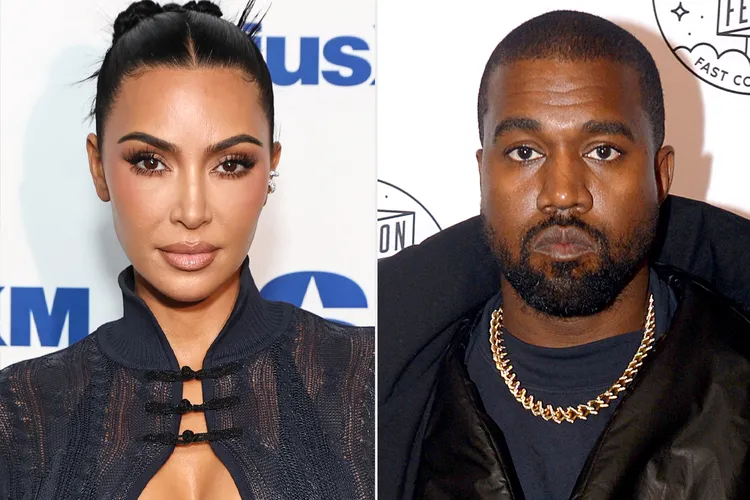
Kim Kardashian’s life has unfolded under an extraordinary level of public scrutiny, from her rise as a reality television personality to her evolution into a businesswoman, fashion figure, and one of the most recognizable celebrities in the world. Yet even after years of interviews, headlines, and television appearances, there are still questions about how best to tell her story. With the release of Citizen Kim, a new book examining Kardashian’s public life and cultural influence, attention has turned to one notable absence from the reporting process: her former husband, Kanye West.
The decision not to interview West raises an interesting question about celebrity biographies. When a book focuses on a person whose life has been deeply intertwined with another famous figure, should the author seek commentary from that person, particularly when their relationship has played such a prominent role in public conversation?
For a biography about Kardashian, West might appear to be an obvious interview subject. Their marriage, family life, public appearances, and eventual divorce became major parts of the celebrity news cycle. Nevertheless, a biographer must decide which voices are essential to the story, which perspectives can be obtained reliably, and whether an interview would meaningfully advance the book’s central argument.
The explanation behind the decision not to interview West offers an opportunity to examine the challenges of writing about Kardashian, the complicated public narrative surrounding her relationship with the rapper, and the broader questions that arise when journalists attempt to document the lives of celebrities.
Why Kanye West’s Absence From Citizen Kim Has Drawn Attention
Few celebrity relationships have attracted as much sustained attention as the marriage between Kardashian and West. Their romance brought together two powerful figures whose careers extended well beyond entertainment, creating a relationship that was frequently discussed in fashion, music, business, and popular culture.
Kardashian was already a household name when their relationship developed, while West had established himself as an influential musician and producer. Together, they became a highly visible celebrity couple, regularly appearing at major events and generating headlines through their personal and professional activities.
Their 2014 wedding marked a significant moment in their public story. Over the following years, their family life remained a subject of fascination, particularly as Kardashian continued expanding her business ventures and West pursued new creative and commercial projects.
The couple share four children: North, Saint, Chicago, and Psalm. Their family life has been discussed extensively in entertainment media, although the details of their children’s private lives require particular care and respect.
Kardashian filed for divorce in 2021, and the divorce was finalized in 2022. The end of their marriage did not eliminate public interest in their relationship. Instead, it created a new chapter in a story that had already played out across television, interviews, social media, and celebrity coverage.
Against this background, West’s absence from Citizen Kim is naturally noticeable. Readers may wonder whether his perspective could offer additional insight into Kardashian’s personal development or illuminate aspects of their relationship that were not fully understood by the public.
However, the absence of an interview does not automatically indicate that a biographer ignored an important perspective. Authors frequently make editorial decisions based on the purpose of a book, the availability of sources, and the extent to which particular testimony contributes to the story they are trying to tell.
The Challenges of Writing a Biography About Kim Kardashian
Writing about Kardashian presents a distinctive challenge because she has spent much of her adult life documenting and discussing her experiences in public.
Through reality television, interviews, social media, and business publicity, Kardashian has offered audiences numerous glimpses into her career, relationships, family life, and personal ambitions. This abundance of material provides biographers with a substantial archive, but it also creates a complicated reporting environment.
A successful biography must do more than assemble familiar headlines. It needs to place events in context, distinguish public image from documented fact, and explain how a subject’s career and influence have changed over time.
Kardashian’s transformation from reality television personality into a major entrepreneur is particularly relevant to that challenge. Her businesses, including SKIMS and SKKN BY KIM, have helped shape her identity beyond entertainment. Her involvement in criminal justice reform has also become part of her public profile.
A biography examining her cultural significance may therefore need to explore several different dimensions of her life: her role in the rise of reality television, her influence on social media, her approach to personal branding, her business strategy, and the ways celebrity culture has evolved around her.
In that context, West’s perspective could be relevant to particular chapters without necessarily being essential to the entire book.
The central question is not simply whether the author could have interviewed him. It is whether his participation would have added information that could not be established through other reliable sources.
Kanye West and the Public Story of Their Marriage
Kardashian and West’s relationship occupied an unusual position in modern celebrity culture because it brought together two individuals with substantial independent public identities.
Their relationship was often discussed as a meeting of fashion, music, business, and entertainment. West’s creative career and outspoken public persona contrasted with Kardashian’s increasingly sophisticated approach to media visibility and entrepreneurship.
Their marriage also coincided with a period when social media transformed the way celebrities communicated with fans. Public statements could spread globally within minutes, and personal disagreements could become the subject of intense online speculation.
That environment made the couple’s relationship particularly difficult to separate from the larger media ecosystem surrounding them.
Nevertheless, public attention does not necessarily provide a complete account of a private relationship. News reports and social media posts capture selected moments, while personal experiences are more complicated than the short clips or statements that often circulate online.
A biographer must therefore be cautious about interpreting public material. One person’s account of a relationship cannot automatically be treated as the definitive version, and claims about private motives require careful verification.
West’s perspective might offer valuable firsthand recollections of shared experiences. At the same time, any interview would represent his own account, shaped by his memories, interpretations, and interests. A responsible biography would need to distinguish those recollections from independently documented events.
The same standard should apply to Kardashian and every other person whose testimony contributes to the narrative.
Why Authors Make Difficult Interview Decisions
Celebrity biographies often generate questions about who was interviewed and who was left out. Readers may assume that a book becomes more authoritative when it includes testimony from every major person connected to its subject. In practice, reporting rarely works that simply.
An author may decide not to pursue an interview because the person’s contribution is unlikely to change the book’s central argument. In other cases, a subject may be unavailable, decline to participate, or be unwilling to discuss the relevant period.
Without a confirmed explanation from the author, however, it would be inappropriate to assume which of these considerations applied to Citizen Kim.
There is also a distinction between conducting an interview and establishing a reliable account. A conversation can produce interesting anecdotes, but those anecdotes may require corroboration. Conversely, documentary records, contemporary reporting, public statements, and interviews with other participants can sometimes provide a clearer timeline than a single retrospective account.
The most effective biographers combine sources rather than relying exclusively on one prominent voice.
This approach can be particularly important when a book examines a relationship that has already been the subject of intense public discussion. Interviews may add nuance, but they can also introduce competing interpretations that need to be carefully assessed.
An author’s responsibility is not necessarily to give every participant equal space. It is to explain the subject’s life fairly, support factual claims, and make editorial choices that serve the book’s purpose.
What Citizen Kim Adds to the Conversation About Kardashian
The title Citizen Kim suggests a focus on Kardashian as a figure whose significance extends beyond the traditional boundaries of celebrity gossip. Her public identity has become closely connected to conversations about fame, consumer culture, entrepreneurship, beauty standards, and the relationship between private life and public performance.
Kardashian’s career reflects the changing economics of celebrity. In earlier eras, actors and musicians often depended on film studios, record labels, or traditional media organizations to reach large audiences. Today, prominent personalities can build businesses and communicate directly with millions of followers.
Kardashian has become one of the clearest examples of this shift. Her visibility is not limited to one industry. Television, fashion, beauty, shapewear, and social media have all contributed to her commercial reach.
Her career also raises questions about how celebrity status is created and maintained. Is influence driven by talent, public attention, strategic branding, audience loyalty, or a combination of these factors? Kardashian’s trajectory provides material for examining how these forces interact.
A biography that addresses such questions may be more concerned with Kardashian’s own decisions and public evolution than with reconstructing every aspect of her marriage.
That does not make West irrelevant. Their relationship was an important chapter in Kardashian’s life, and his influence on certain aspects of her public story may deserve consideration. But a book about Kardashian need not become a biography of West or make his testimony the organizing principle of its narrative.
The challenge is to recognize the relationship’s significance without allowing it to overshadow the subject of the book.
The Difference Between Public Curiosity and Biographical Necessity
The decision not to interview West also highlights a familiar tension in celebrity journalism: the difference between what audiences are curious about and what a biography actually needs to establish.
Because Kardashian and West were such a prominent couple, readers may naturally want to hear his thoughts about her life and career. Their history remains a source of interest, particularly for people who followed their relationship through television and social media.
Yet curiosity alone does not determine the direction of a serious biography.
A book may be more interested in the structures that shaped Kardashian’s career than in the private details of her marriage. It may examine the role of television producers, business partners, family members, fashion professionals, or other people who witnessed key moments in her professional development.
The strength of that approach depends on the quality of the reporting and the clarity of the author’s argument.
Readers should also remember that a missing interview is not proof of conflict, disagreement, or deliberate exclusion. Unless the author provides a specific explanation, the reasons behind an editorial decision should not be presented as established fact.
The most useful response is to evaluate the book’s reporting, evidence, and analysis rather than judging its credibility solely by the presence or absence of one interview.
Will Kanye West’s Perspective Change How Readers See Kim Kardashian?
West’s account of their shared history would inevitably be of interest to readers exploring the couple’s relationship. However, it is impossible to know whether an interview would substantially change the way Citizen Kim presents Kardashian without examining the book’s full reporting and argument.
Biographies are strongest when they allow readers to understand a subject from multiple angles while maintaining a clear distinction between evidence and interpretation.
Kardashian’s life offers plenty of material for that kind of examination. Her rise to fame, business expansion, evolving public image, family responsibilities, and efforts to pursue interests beyond entertainment all contribute to a complicated portrait.
West remains an important part of that story, but he is not the only person capable of providing context about her life. Nor can any single interview fully explain a career that has unfolded across several industries and multiple decades of changing media culture.
Ultimately, the discussion surrounding Citizen Kim reflects a larger question about celebrity biographies: whose voices should shape the story of a famous person, and how should authors balance personal testimony with independently verifiable evidence?
The answer depends on the book’s purpose and the quality of its research.
Final Thoughts on Citizen Kim and the Missing Interview
Kim Kardashian’s story is bigger than any single relationship, even one that attracted extraordinary public attention. Her marriage to Kanye West remains a significant part of her personal history, but her career also encompasses reality television, entrepreneurship, fashion, beauty, and social influence.
The decision not to interview West for Citizen Kim therefore raises a legitimate question about the book’s reporting without automatically determining its strengths or weaknesses.
The author’s explanation is important because it can help readers understand the editorial choices behind the biography. Until those reasons are clearly established, assumptions about the decision should remain separate from confirmed information.
For readers, the more meaningful test will be whether Citizen Kim offers a well-researched, nuanced account of Kardashian’s life and cultural impact. A compelling biography should provide context, examine contradictions, and draw on credible evidence rather than depending on celebrity access alone.
West’s voice could have added another perspective to Kardashian’s story. Whether its absence makes a meaningful difference ultimately depends on how effectively the book brings together the many other voices, records, and events that have shaped one of the most closely watched public figures of her generation.