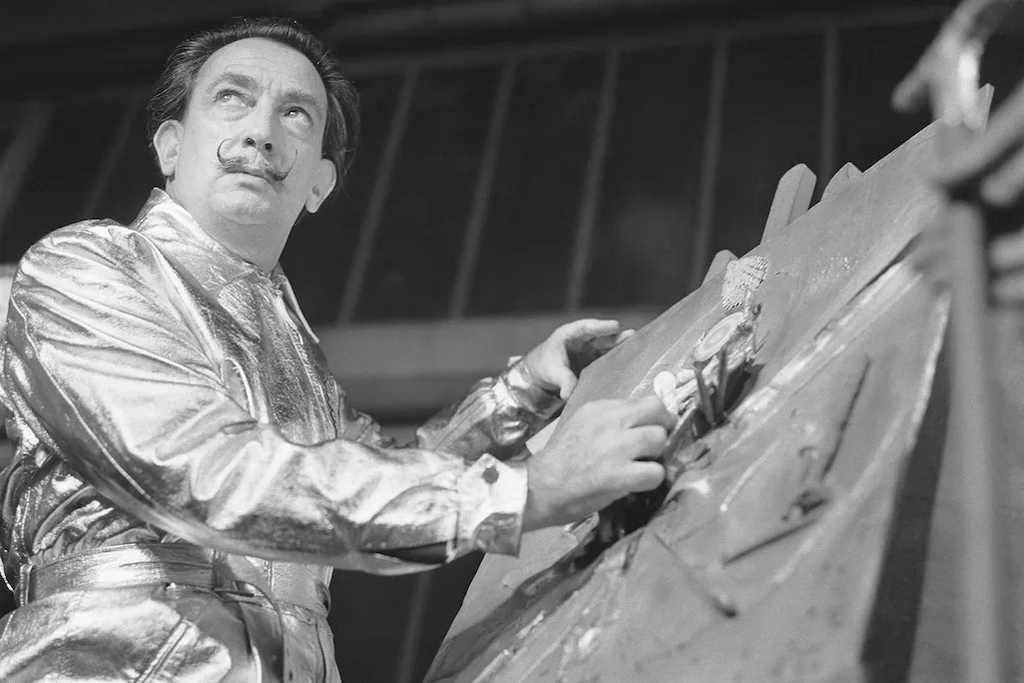
France is facing another disturbing art theft after a remarkable work designed by surrealist master Salvador Dalí disappeared from an art center in central France. The stolen object was no ordinary painting or small sculpture. It was a monumental bronze book cover weighing approximately 330 pounds, decorated with precious materials and created for an extraordinary artistic project known as Livre de l’Apocalypse.
The theft took place overnight between October 4 and October 5, 2026, at the C. Karoutzos Contemporary Art Center in Issoire, a town in the Auvergne region. The missing cover belonged to a rare book project that brought together celebrated artists and writers to reinterpret the biblical Book of Revelation.
Although the book’s precious illustrated pages were left behind, the disappearance of Dalí’s elaborate cover has raised serious questions about museum security, the protection of cultural heritage, and the vulnerability of unique artworks. For the people responsible for preserving the piece, the loss is about far more than its financial value. It represents the disappearance of an irreplaceable part of modern art history.
A Salvador Dalí Artwork Disappears From a French Art Center
The theft was discovered at the C. Karoutzos Contemporary Art Center in Issoire, where the unusual book had been exhibited. According to reports, the thieves forced their way through an exterior entrance and smashed the protective display case containing the bronze cover.
The circumstances surrounding the disappearance quickly attracted attention because of the object’s extraordinary size and weight. At approximately 330 pounds, the cover was far heavier than most artworks typically associated with a museum burglary. Removing it would have presented a considerable physical challenge, making the theft especially puzzling.
The cover was the principal object taken from the display. The book’s illustrated parchment pages remained intact, as they had been stored separately. This distinction is important: the entire book was not stolen, but a central and visually distinctive component of the project was removed.
The owner, Christian Karoutzos, an art restorer and collector who operates the center, expressed profound distress over the loss. The artwork was not simply a decorative object in his collection. It was a unique creation with a complex history, bringing together the work of several major cultural figures.
Investigators face the difficult task of determining how the thieves transported such a heavy object away from the building and what they intend to do with it. As the investigation continues, the possibility of recovering the cover remains a central concern.
What Made the Bronze Cover So Extraordinary?
The stolen object was created by Salvador Dalí for Livre de l’Apocalypse, a remarkable art book also associated with the Apocalypse of Saint John. The project was initiated by French publisher Joseph Forêt in the late 1950s and brought together artists and writers to create an elaborate visual and literary interpretation of the Book of Revelation.
Dalí’s contribution was particularly striking. Rather than treating the cover as a simple protective surface for the pages inside, he approached it as an artwork in its own right. The resulting design combined bronze with gold, precious stones, pearls and other unusual decorative elements, including seashells and forks.
A prominent religious image forms part of the design, reflecting the biblical subject at the heart of the book. The materials and sculptural details give the cover an almost theatrical quality, consistent with Dalí’s interest in combining familiar objects, symbolic imagery and unexpected visual arrangements.
The result was an object that blurred the boundaries between bookmaking, sculpture, religious art and surrealism. Its extraordinary weight and elaborate construction made it an unusual achievement even within Dalí’s extensive body of work.
The cover’s disappearance is therefore significant not only because it was designed by a world-famous artist, but also because it represented a distinctive approach to the physical form of a book. It transformed an object usually handled for reading into a monumental work intended to be seen and contemplated.
The Story Behind Livre de l’Apocalypse
The stolen cover belonged to a larger creative undertaking that began in 1958 under the direction of Joseph Forêt. The publisher sought to produce an exceptional edition inspired by the biblical Book of Revelation, the final book of the New Testament.
The project involved seven artists and seven writers, creating a collaboration between visual art and literature. Among the figures associated with the undertaking were Salvador Dalí, sculptor Ossip Zadkine, artist Léonard Foujita, writer and filmmaker Jean Cocteau, and author Jean Giono.
Their contributions helped make the volume more than an illustrated religious text. It was conceived as an ambitious artistic interpretation of a work filled with visions, dramatic imagery and themes of destruction, judgment, hope and renewal.
The completed volume contained approximately 150 parchment pages, with the illustrations and handwritten text requiring substantial time and specialized craftsmanship. The use of parchment, elaborate lettering and individual artistic contributions made the book a demanding production.
Its unusual scale and luxurious presentation also attracted attention beyond the art world. At the time of its creation, the book was described as one of the most expensive and heaviest books in the world. Its reputation rested on the combination of rare materials, artistic collaboration and the ambition of the project itself.
This history helps explain why the stolen cover cannot easily be replaced. Even if another object could be manufactured using similar materials, it would not carry the same relationship to Dalí, Forêt and the other contributors. The original cover is part of the work’s identity and historical record.
Why the Book Cover Was More Than a Valuable Object
Art thefts are often discussed in terms of financial loss, but the disappearance of Dalí’s bronze cover illustrates why cultural value is difficult to measure.
An artwork can have a market price, an insurance valuation or a historical estimate, yet none of these figures fully captures its significance. The stolen cover had a connection to a specific moment in twentieth-century art, when artists and publishers were experimenting with ambitious collaborations and unusual forms of presentation.
Its materials also made it distinctive. Bronze provided a durable sculptural foundation, while the precious decorative elements contributed to its elaborate appearance. The combination of religious imagery and Dalí’s unconventional artistic language created a piece that would be difficult to confuse with any other book cover.
The work’s uniqueness creates another problem. A mass-produced object can sometimes be replaced by an identical item. A one-of-a-kind artwork cannot. Even if its physical form were reconstructed, the replacement would not be the original object created for the project.
The theft also separates the surviving pages from a key part of their intended presentation. Although the parchment sheets remain safe, the missing cover was designed to introduce and frame the book. Its absence changes how the complete project can be displayed and understood.
For collectors, conservators and historians, the incident is a reminder that preserving cultural heritage means protecting both the individual objects and the relationships between them.
How Could Thieves Remove an Artwork Weighing 330 Pounds?
The weight of the stolen cover is one of the most striking details of the case. At roughly 150 kilograms, it would be difficult for one person to carry over any significant distance. Moving it safely would also require care because the bronze structure and its decorative elements could be damaged during transport.
Reports indicate that the thieves broke through an exterior entrance and smashed the protective display case. However, the full details of their operation and the precise method used to remove the artwork have not been publicly established.
That uncertainty has fueled questions about planning, transportation and the level of preparation involved. Yet it would be premature to assume that every aspect of the burglary was sophisticated or that investigators already know how the thieves intended to dispose of the object.
A large, recognizable artwork presents a particular challenge for anyone attempting to sell it openly. Its distinctive appearance, historical associations and unusual dimensions make it difficult to disguise as an ordinary collectible. Museums, auction houses, dealers and collectors could potentially recognize it.
One concern is that thieves might attempt to separate valuable materials from the original artwork. If the bronze were melted down or the precious decorations removed, recovering the original piece could become much more difficult. This remains a concern rather than a confirmed account of what happened to the cover.
The possibility of irreversible damage is one reason why recovering the object in its original condition would be so important.
Another Art Theft Raises Questions About French Museum Security
The Dalí theft comes amid renewed concern about the protection of artworks in France. High-profile museum burglaries and other cultural-property crimes have brought attention to the challenges faced by institutions responsible for safeguarding valuable collections.
Large national museums often have extensive security systems and dedicated teams, but smaller galleries and regional institutions may operate with more limited resources. Their collections can nevertheless contain objects of exceptional artistic and historical importance.
The incident in Issoire highlights the fact that cultural treasures are not found only in famous museums in Paris. Important works are held in private collections, local art centers, historic buildings and institutions outside the country’s largest cities.
Protecting these objects requires more than placing them behind glass. Security planning can involve monitored entrances, alarms, surveillance cameras, secure display cases, carefully controlled access and procedures for responding to suspicious activity. The precise measures appropriate for each institution depend on its building, collection and resources.
At the same time, museums must balance protection with public access. Artworks are displayed because people need opportunities to encounter, study and appreciate them. Turning every gallery into an inaccessible vault would undermine an important part of the cultural mission.
The challenge is to create security arrangements that allow visitors to experience art while reducing the risk of theft or damage. The loss of Dalí’s cover is likely to strengthen the discussion about how that balance can be achieved.
The Difficult Task of Recovering Stolen Cultural Heritage
Once an artwork has been stolen, recovery can be complicated. Investigators must establish what happened, identify those responsible and trace the object without compromising the investigation.
Unique artworks have certain advantages for identification. Photographs, catalog records, descriptions of materials and documented ownership histories can help distinguish a stolen piece from other objects. In the case of Dalí’s cover, its size, elaborate design and unusual combination of materials make it particularly recognizable.
However, the same characteristics that help identify the object can also create difficulties for recovery. A thief may avoid displaying it publicly or attempt to alter its appearance. Precious materials could be removed, while the original work might be hidden for an extended period.
Art-market professionals can play an important role by exercising due diligence when offered unusual objects and by checking ownership documentation. International cooperation can also matter when stolen cultural property crosses national borders.
For the owner and the wider art community, the immediate priority is the safe recovery of the original cover. Finding it intact would preserve not only its material components but also the historical evidence contained in its original construction and decoration.
Until investigators establish more details, the public should be cautious about rumors concerning the perpetrators, their motives or the artwork’s whereabouts. The known facts are serious enough without adding unsupported claims.
Salvador Dalí’s Legacy and the Importance of Protecting Art
Salvador Dalí remains one of the most recognizable figures associated with surrealism. His paintings, sculptures, designs and collaborations explored the strange relationship between dreams, reality, symbolism and everyday objects.
His work for Livre de l’Apocalypse demonstrates how his artistic imagination extended beyond conventional painting. By contributing an elaborate sculptural cover to a major publishing project, he helped transform the book into a physical artwork.
That contribution is part of what makes the theft so troubling. The cover cannot be understood solely as a quantity of bronze and precious materials. It is evidence of Dalí’s creative approach and of a wider collaboration involving artists, writers and a publisher who envisioned an unusually ambitious book.
Cultural objects also connect the present to earlier generations. They allow audiences to study artistic techniques, understand historical tastes and encounter the ideas that shaped creative movements. When a unique object disappears, access to that shared history is reduced.
The surviving pages of Livre de l’Apocalypse mean that much of the project remains available for preservation and study. Nevertheless, the absence of Dalí’s cover leaves a substantial gap in the complete work.
A Cultural Loss That Goes Beyond Its Price Tag
The theft of Salvador Dalí’s 330-pound bronze book cover in Issoire is a striking example of how vulnerable even extraordinary cultural objects can be. The scale of the object, the richness of its decoration and its connection to an ambitious artistic collaboration make the burglary particularly unusual.
The book’s parchment pages remain safe, but the missing cover was an essential part of the project’s identity. Its disappearance raises questions about security, the protection of private collections and the difficulty of recovering one-of-a-kind works once they have been taken.
For now, the circumstances surrounding the theft and the cover’s whereabouts remain matters for investigators to establish. A successful recovery would offer the best chance of preserving the artwork as Dalí created it.
Ultimately, the incident is a reminder that art is not valuable simply because of the materials used to make it or the price it might command. Its deeper worth comes from its history, its creative significance and its ability to connect people across generations. Protecting that heritage means ensuring that remarkable works like Dalí’s bronze cover remain part of the world’s shared cultural story.