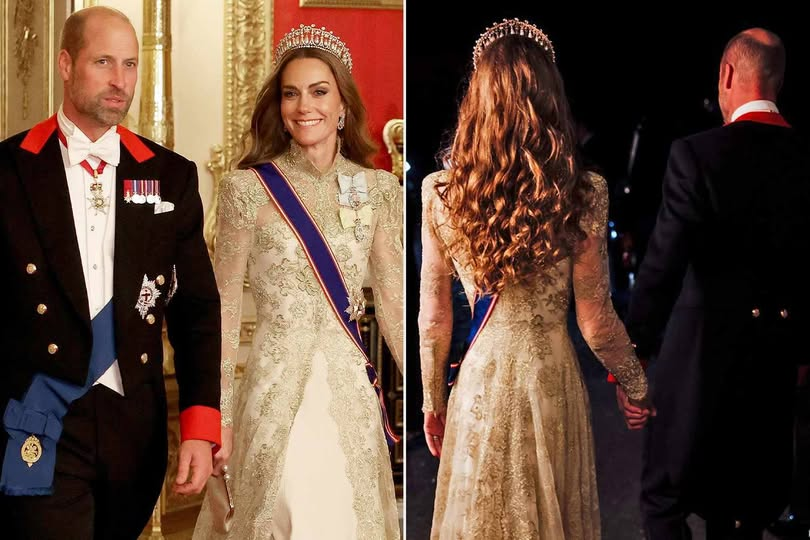
Prince William and Princess Kate have long captured the public’s imagination with their elegant appearances, understated affection, and growing influence within the British royal family. So whenever a new portrait of the Prince and Princess of Wales emerges, royal watchers are quick to examine every detail, from their clothing and expressions to the message the image might convey about their roles in the monarchy.
Their latest stunning royal portrait is no exception. While the image celebrates the couple’s enduring partnership and their position at the heart of the future of the British monarchy, an unexpected twist has added another layer of intrigue. What initially appears to be a traditional royal photograph has prompted renewed interest in the way William and Kate balance centuries-old royal expectations with a more modern public image.
Royal portraits have always served a purpose beyond simply documenting the appearance of their subjects. They communicate continuity, duty, family identity, and the values a royal household wishes to project. In the modern era, however, those messages can be delivered in ways that feel more personal and less formal than the highly structured portraits of previous generations.
For William and Kate, who have spent years preparing for increasingly significant responsibilities, every public image offers an opportunity to connect with audiences while reinforcing their commitment to the monarchy.
Although the precise nature of the reported unexpected twist requires confirmation from the original portrait and its accompanying announcement, the wider interest surrounding the couple illustrates why their public appearances continue to generate such fascination.
Prince William and Princess Kate Continue to Shape the Modern Monarchy
As the Prince and Princess of Wales, William and Kate occupy one of the most prominent positions within the British royal family. William is first in line to the throne, while Kate has become an influential figure through her work supporting early childhood development, mental health awareness, and the well-being of families.
Their public roles have evolved significantly since their wedding in 2011. Over the years, they have attended state occasions, represented the monarchy overseas, supported charitable organizations, and raised their three children while navigating the intense attention that accompanies royal life.
The couple’s approach often combines tradition with a more accessible style of public engagement. They participate in formal ceremonies and wear clothing appropriate for major royal events, but they also spend time speaking directly with members of the public, visiting community organizations, and highlighting the work of people who rarely receive international recognition.
This balance is central to their public image. They represent an institution with a long history while also trying to ensure that it remains relevant to younger generations.
A new royal portrait can reinforce that balance. Traditional elements may communicate stability and continuity, while more relaxed styling, a natural setting, or an informal expression can make the subjects appear approachable.
That combination helps explain why even small details in photographs of William and Kate can attract widespread discussion.
Why Royal Portraits Carry So Much Meaning
A royal portrait is rarely just a photograph. Throughout British history, images of monarchs and members of the royal family have helped establish public identity, document important milestones, and communicate authority.
Earlier royal portraits often emphasized grandeur through elaborate clothing, formal poses, and carefully arranged backgrounds. These images presented royalty as an institution set apart from everyday life.
Contemporary royal photography can take a different approach. While official portraits still require careful planning, photographers increasingly use natural lighting, softer compositions, and less rigid poses to convey personality as well as status.
The shift does not mean tradition has disappeared. Instead, the visual language of the monarchy has expanded to accommodate changing expectations about how public figures should communicate with their audiences.
For William and Kate, this is particularly important because their public image is closely connected to the future of the institution. Their portraits can communicate confidence, partnership, and continuity without relying entirely on ceremonial formality.
The background, clothing, body language, and expressions all contribute to the overall effect. A simple choice, such as standing side by side rather than adopting separate formal poses, can influence how viewers interpret the relationship between the subjects.
That is why a seemingly small or unexpected feature in a royal portrait can become a talking point. People are interested not only in what they see but also in what the image might reveal about the couple’s public identity.
However, interpretations of visual details should remain distinct from confirmed information about the photographer’s intentions or the palace’s message.
The Unexpected Twist Behind the Portrait
The phrase “unexpected twist” naturally invites curiosity. Royal fans may wonder whether the surprise involves the portrait’s setting, a distinctive fashion choice, a previously unseen detail, or a departure from the couple’s usual presentation.
Without a verified description of the specific image, it would be misleading to identify any one of these possibilities as the confirmed twist.
What makes such stories appealing, however, is the way royal photography encourages close observation. A detail that might seem ordinary in another setting can attract attention when it appears in an official image of the future king and queen.
Perhaps the most interesting aspect of a portrait is the contrast between what appears familiar and what feels new. William and Kate are among the most photographed people in Britain, so audiences already have a strong sense of their public style. An image that departs from that familiar presentation can therefore feel especially noteworthy.
The response also demonstrates the influence of social media on royal coverage. Photographs can be shared rapidly, inviting viewers to compare them with previous portraits and discuss everything from clothing to composition.
Yet an intriguing headline does not automatically establish that an image contains a hidden message or deliberate surprise. The most reliable interpretation depends on the photograph itself and any official explanation accompanying its release.
Until those details are established, the unexpected twist is best treated as a point of curiosity rather than a confirmed revelation.
Princess Kate’s Evolving Style and Public Image
Kate has developed one of the most recognizable wardrobes in contemporary royal life. Her fashion choices frequently attract attention because they combine established designers, British brands, classic tailoring, and occasional references to garments she has worn before.
Her approach often favors elegance over spectacle. Carefully fitted coats, tailored dresses, understated jewelry, and coordinated accessories have become familiar features of her public appearances.
But her style is not simply about clothing. Fashion can help communicate the tone of an engagement, show support for British designers, or acknowledge the traditions associated with a particular occasion.
In an official portrait, those decisions become especially visible because the image may remain in circulation for years. A garment that feels appropriate for a formal event can reinforce the image of a future queen consort, while a softer or more relaxed look may suggest warmth and accessibility.
Kate’s public image has also developed alongside her work. Her interest in early childhood development and the conditions that influence children’s long-term well-being has become an important part of her professional identity.
As a result, audiences increasingly consider her public appearances in the context of both fashion and substance. The image may attract attention first, but her charitable priorities and official responsibilities help give it a broader context.
Prince William’s Role in the Couple’s Shared Image
William’s presence in royal portraits carries its own significance. As the future king, he represents the next stage of the British monarchy, and his public image is closely connected to expectations about leadership, responsibility, and continuity.
His role has expanded over time as he has taken on more prominent engagements and continued to support causes that reflect his interests, including environmental conservation, homelessness, and the welfare of future generations.
When photographed alongside Kate, William is presented not only as an individual royal but also as part of a partnership that will eventually occupy an even more central position in the monarchy.
Their shared portraits can communicate unity without requiring elaborate symbolism. A natural expression, relaxed posture, or sense of ease between the couple may contribute to an image that feels both dignified and personal.
At the same time, their public partnership exists alongside their family life. They are parents to Prince George, Princess Charlotte, and Prince Louis, and they have generally sought to protect important aspects of their children’s lives from excessive exposure.
That balance between public responsibility and private family life is part of the broader story of their modern royal identity.
How William and Kate Balance Tradition With Family Life
One reason William and Kate remain so widely discussed is that their public roles coexist with experiences familiar to many families. They attend formal ceremonies and international engagements, but they also navigate the everyday responsibilities of raising children and maintaining a household.
The couple’s parenting approach has attracted considerable interest, particularly as their children grow older and begin to take part in selected public occasions.
Royal family photographs can sometimes offer a glimpse of that balance, although official portraits should not be treated as complete records of family life. Images are carefully selected and composed, and they inevitably capture only a small part of the subjects’ experiences.
Still, the public’s interest reflects a desire to understand how the next generation of royals will relate to the institution they are expected to serve.
For William and Kate, presenting a united public image while preserving their children’s privacy is an ongoing challenge. Their portraits contribute to the first goal, while their decisions about when and how the children appear in public help shape the second.
This tension between visibility and privacy is likely to remain a defining feature of their family life as William moves closer to his future role.
Why Every New Royal Image Becomes a Talking Point
The public fascination with royal portraits reflects a combination of history, celebrity culture, and the symbolic importance of the monarchy.
Unlike many public figures, members of the royal family represent an institution that continues across generations. Their photographs are therefore viewed not only as personal images but also as records of an evolving national story.
William and Kate attract particular attention because they are associated with the future of the monarchy. Their appearances invite discussion about how the institution might change under the next generation while maintaining its familiar traditions.
Social media has intensified that interest. Royal fans can immediately compare a new image with earlier portraits, examine fashion choices, and share their interpretations with audiences around the world.
This creates opportunities for meaningful discussion, but it can also encourage speculation. A facial expression or a small visual detail may prompt elaborate theories that are not supported by evidence.
A careful approach distinguishes what the image actually shows from what viewers imagine it might mean.
The most compelling royal photography often needs no hidden message. Its significance can come from the people pictured, the occasion being marked, and the broader historical context in which the image appears.
A Portrait That Reflects the Future of the Royal Family
Prince William and Princess Kate’s latest royal portrait has attracted interest because it promises both familiarity and surprise. The couple’s established public image gives audiences a clear point of comparison, while the reported unexpected twist encourages them to look more closely.
Without confirmation of the specific detail, it would be premature to claim that the portrait signals a major change or contains a deliberate hidden message. Nevertheless, the attention surrounding the image demonstrates the continuing fascination with the Prince and Princess of Wales.
Their public roles combine tradition, modern expectations, family responsibilities, and a growing commitment to causes that affect people’s everyday lives. A portrait can bring those different elements together in a single visual moment.
Ultimately, William and Kate’s influence extends beyond any one photograph. Their work, public appearances, and approach to family life continue to shape how audiences view the next chapter of the British monarchy.
If the new portrait contains an unexpected detail, its true significance will become clearer when that feature and its context are confirmed. Until then, the image serves as another reminder that even a familiar royal couple can capture public attention through the smallest change in presentation.
For royal watchers, that combination of tradition and curiosity is part of the enduring appeal of Prince William and Princess Kate: they represent a historic institution while remaining at the center of an evolving modern story.