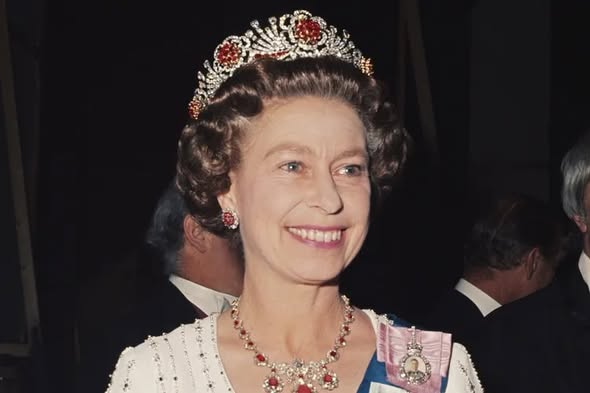
Few objects capture the magic of royalty quite like a diamond tiara. Sparkling beneath the lights of a state banquet or resting elegantly above a carefully styled hairstyle, these extraordinary jewels represent far more than beauty. They tell stories of royal marriages, historic alliances, personal milestones, and traditions passed down through generations.
Inside the British royal collection, some of the world’s most recognizable tiaras have been worn by queens, princesses, and royal brides whose appearances have become unforgettable moments in royal history. From Queen Elizabeth II’s magnificent diamond pieces to the romantic headpieces chosen by Catherine, Princess of Wales, each tiara carries its own identity and fascinating past.
For royal enthusiasts, the appeal lies not only in the diamonds, pearls, and intricate craftsmanship but also in the women who brought these jewels to life. A tiara can transform an evening gown into a historic fashion moment, connect a modern princess with generations of royal women, or quietly communicate the significance of an important state occasion.
Welcome to the dazzling world of royal tiaras, where extraordinary craftsmanship meets centuries of tradition and every glittering detail may conceal a remarkable story.
The Royal Collection: More Than Diamonds and Precious Stones
Royal tiaras occupy a special place in the history of European jewelry. Unlike ordinary accessories, many were created for queens and aristocratic families during periods when royal marriages, diplomatic relationships, and public ceremonies carried enormous symbolic importance.
The finest pieces combine precious materials with highly specialized craftsmanship. Diamonds may be arranged in delicate floral patterns, pearls can soften an elaborate design, and carefully balanced settings allow the jewels to catch the light with every movement.
Some tiaras were designed to be worn in different configurations, allowing their owners to adapt them to changing fashions. Others became famous because of the occasions on which they appeared, particularly royal weddings and state banquets.
The British royal family’s collection includes pieces with histories stretching back generations. Some jewels were inherited, others were commissioned for particular royal women, and several have been altered over time to reflect changing tastes.
Importantly, not every tiara worn by a royal belongs personally to the woman wearing it. Some pieces are held within the royal collection, while others are family heirlooms or privately owned jewels. Their ownership and availability can vary, making each appearance an interesting subject for royal jewelry enthusiasts.
Among these historic treasures, a handful stand out for their exceptional beauty and enduring associations.
The Girls of Great Britain and Ireland Tiara: A Queen’s Favorite
<AsyncImageGroup query={[“Queen Elizabeth II Girls of Great Britain and Ireland tiara portrait”,”Girls of Great Britain and Ireland tiara diamond close up royal jewelry”]} aspectRatio=”5:4″ layout=”bento” />
Few royal tiaras are as closely associated with Queen Elizabeth II as the Girls of Great Britain and Ireland Tiara.
The jewel was presented to the future queen as a wedding gift in 1947 by the Girls of Great Britain and Ireland, a committee organized to provide a special present for Princess Elizabeth. Its elegant diamond design features a distinctive arrangement of arches and decorative elements that make it recognizable in countless royal portraits.
Originally created with pearls as well as diamonds, the tiara was subsequently adapted, and Queen Elizabeth II frequently wore it in its diamond form. Its graceful silhouette made it suitable for a variety of formal occasions, helping establish it as one of her signature pieces.
The tiara also holds an affectionate place in the public imagination because it appeared so often during the late queen’s reign. For generations of viewers, its sparkling outline became almost inseparable from the image of Elizabeth II in formal royal dress.
Its appeal lies in its balance. It is elaborate enough for the most important royal occasions without overwhelming the wearer, demonstrating how thoughtful design can remain fashionable for decades.
The Lover’s Knot Tiara: Romantic Elegance Through the Generations
<AsyncImageGroup query={[“Catherine Princess of Wales Lover’s Knot tiara state banquet”,”Queen Mary Lover’s Knot tiara historic portrait”,”Princess Diana Lover’s Knot tiara portrait”]} aspectRatio=”5:4″ layout=”bento” />
The Lover’s Knot Tiara is one of the most recognizable pieces in modern royal jewelry, thanks in part to its association with Princess Diana and Catherine, Princess of Wales.
Commissioned for Queen Mary in 1913, the tiara was inspired by an earlier design associated with the Cambridge family. Its distinctive arrangement of diamond arches and dangling pearl drops creates an elegant combination of symmetry and movement.
The piece became particularly famous when Princess Diana wore it during her marriage to the then Prince Charles. Its dramatic design complemented her formal royal wardrobe and helped establish the tiara as one of the most memorable jewels associated with her public image.
In more recent years, Catherine has worn the tiara at selected formal occasions, introducing it to a new generation of royal watchers.
The connection between these two women gives the jewel an additional emotional dimension. Although Diana and Catherine have worn it in different eras and circumstances, the tiara provides a visible link between different chapters of the same royal family’s history.
Its enduring popularity also demonstrates why certain pieces become more than accessories. Through the women who wear them, they acquire stories that extend well beyond the original craftsmanship.
The Cartier Halo Tiara: A Modern Royal Bride’s Fairytale
<AsyncImageGroup query={[“Catherine Princess of Wales wedding Cartier Halo tiara 2011″,”Cartier Halo tiara diamond scroll design close up”]} aspectRatio=”5:4″ layout=”bento” />
When Catherine Middleton married Prince William at Westminster Abbey on April 29, 2011, her wedding appearance became one of the most widely photographed royal bridal moments of the modern era.
Among the most admired details was the Cartier Halo Tiara, a delicate diamond headpiece loaned to her by Queen Elizabeth II.
The tiara was made by Cartier in 1936 and was acquired by the future King George VI for his wife, Elizabeth, who later became the Queen Mother. It subsequently passed to Queen Elizabeth II, who received it as a gift from her mother on her eighteenth birthday.
Its graceful, radiating design features a series of diamond scrolls that create a light, almost floating effect around the wearer’s head.
For Catherine’s wedding, the tiara complemented her lace wedding gown without competing with its intricate detailing. The result was an appearance that felt traditional yet unmistakably modern.
The Cartier Halo Tiara has not become a regular feature of Catherine’s public wardrobe, which adds to the significance of her wedding appearance.
Its place in royal history illustrates how a single carefully chosen jewel can become permanently associated with a major life event. For many observers, it remains an essential part of the visual story of the Prince and Princess of Wales’s wedding.
Queen Mary’s Fringe Tiara: A Royal Wedding Classic
<AsyncImageGroup query={[“Princess Beatrice wedding Queen Mary Fringe tiara 2020″,”Queen Mary Fringe Tiara diamond spikes close up”]} aspectRatio=”5:4″ layout=”bento” />
The Queen Mary Fringe Tiara is another extraordinary jewel with a history closely connected to royal weddings.
Created for Queen Mary in 1919, the tiara features rows of diamond spikes that create a striking fringe effect. Its linear design differs from the softer curves of many traditional tiaras, giving it a bold and unmistakable silhouette.
The piece has been worn by several royal brides, including Queen Elizabeth II, who chose it for her wedding to Prince Philip in 1947.
Its story includes an unexpected moment: the tiara suffered damage shortly before Elizabeth’s wedding and had to be repaired by the royal jeweler. The incident became part of the jewel’s history, adding a human detail to an otherwise carefully orchestrated royal occasion.
In 2020, Princess Beatrice wore the same tiara when she married Edoardo Mapelli Mozzi in a private ceremony at Windsor.
Her choice was especially meaningful because she wore a vintage dress that had belonged to Queen Elizabeth II, combining two historic pieces in one wedding ensemble.
The appearance demonstrated how royal jewels can be reused in ways that honor family history while reflecting the personality of a new bride.
The Oriental Circlet Tiara: A Jewel of Extraordinary Grandeur
<AsyncImageGroup query={[“Queen Victoria Oriental Circlet Tiara historic royal jewelry”,”Queen Elizabeth The Queen Mother Oriental Circlet Tiara portrait”]} aspectRatio=”5:4″ layout=”bento” />
The Oriental Circlet Tiara stands out for its distinctive design and connection to Queen Victoria.
Created in the nineteenth century for Queen Victoria, the original design included opals. The jewel was later adapted, and rubies became part of its appearance, creating a richer and more dramatic combination of colors.
The tiara’s intricate arches and decorative motifs reflect the elaborate jewelry styles popular during the Victorian period. Unlike the restrained elegance of some twentieth-century designs, it possesses a more ornate, almost architectural quality.
It became strongly associated with Queen Elizabeth, the Queen Mother, who wore it on selected formal occasions.
The Oriental Circlet is particularly interesting because its history reflects changing tastes in royal jewelry. Precious stones were sometimes replaced or rearranged, allowing historic pieces to evolve without losing their essential identity.
Its relative rarity in modern public appearances has also contributed to its mystique. Unlike tiaras that became familiar through repeated use, this jewel is remembered for its grandeur and its connections to earlier generations of royal women.
It is a reminder that the royal jewelry collection is not simply a display of sparkling objects. It is also a record of changing fashion, craftsmanship, and personal preference across more than a century.
The Cambridge Lover’s Knot and the Power of Personal Style
Although the Lover’s Knot Tiara is often discussed in connection with Princess Diana, its history also illustrates how individual royal women can give the same jewel different meanings.
Queen Mary commissioned the piece in the early twentieth century, drawing inspiration from an earlier Cambridge family tiara. Its pearl drops and diamond arches were intended to create a romantic, balanced design.
When Diana wore it, the jewel became associated with her distinctive approach to royal fashion. She frequently combined historic royal pieces with contemporary silhouettes, creating a style that felt glamorous without appearing entirely bound by tradition.
Catherine’s appearances in the same tiara have offered a different interpretation. Her formal styling often emphasizes classic tailoring, restrained jewelry choices, and a polished overall appearance.
Neither approach changes the physical design of the tiara, but each demonstrates how the person wearing a jewel can influence its public meaning.
This is one reason royal jewelry continues to attract such fascination. The tiara may belong to a long historical tradition, but each appearance becomes part of a new visual story.
Why Royal Tiaras Continue to Fascinate the World
Royal tiaras endure because they combine beauty with history in a particularly compelling way.
They are often worn only at significant occasions, such as state banquets, formal receptions, and selected royal weddings. Their relative rarity makes each appearance feel special, especially when a jewel has not been seen publicly for some time.
They also connect the present with the past. A tiara worn by a modern princess may have previously belonged to a queen whose life unfolded in a very different political and social world.
That continuity gives royal jewelry an emotional significance beyond its monetary value.
For fashion enthusiasts, tiaras offer a remarkable study in design, from intricate diamond settings to the changing relationship between formal hairstyles, gowns, and accessories. For historians, they provide clues about royal marriages, inheritance, and the traditions surrounding ceremonial life.
For the wider public, they represent a glimpse into a world that is usually hidden behind palace doors.
However, the women who wear them remain just as important as the jewels themselves. Their choices determine how historic pieces are presented, remembered, and sometimes rediscovered by a new generation.
Final Thoughts: The Stories Behind the Sparkle
Inside the world of royal tiaras, every diamond and pearl has the potential to tell a story.
The Girls of Great Britain and Ireland Tiara evokes Queen Elizabeth II’s long reign. The Lover’s Knot Tiara connects Queen Mary, Princess Diana, and Catherine through a remarkable history of royal style. The Cartier Halo Tiara recalls a modern royal wedding, while the Queen Mary Fringe Tiara links generations of brides through a distinctive design.
Together, these jewels reveal how royal fashion can preserve family memories while adapting to changing times.
Their brilliance may capture attention first, but their histories are what make them truly extraordinary. Each tiara reflects the craftsmanship of its makers, the tastes of the women who wore it, and the traditions that allowed it to survive across generations.
For royal enthusiasts, the next dazzling appearance will always bring fresh questions: Which historic jewel will emerge from the collection? Who will wear it? And what story will it add to the royal family’s continuing history?
That is the enduring magic of royal tiaras. They do more than sparkle beneath the lights of a palace ballroom. They connect generations, preserve memories, and transform moments of ceremony into lasting pieces of history.