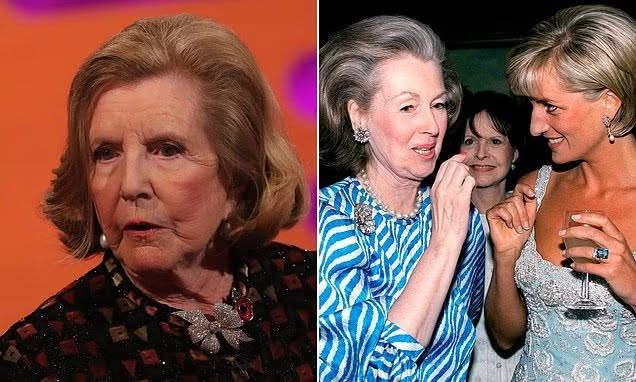
Princess Diana remains one of the most remembered and discussed members of the British royal family, decades after her life and tragic death captured the world’s attention. From her complicated marriage to King Charles III, formerly the Prince of Wales, to her extraordinary connection with the public, Diana’s personal story continues to inspire documentaries, books, television dramas, and intense conversations about the people who shaped her life.
Now, renewed debate surrounding Diana’s stepmother and the controversial nickname “Acid Raine” has brought another chapter of the Spencer family’s history into the spotlight. The discussion has prompted questions about family relationships, public perception, and whether the people connected to Diana have sometimes been defined by sensational labels rather than a fuller understanding of their lives.
As renewed attention turns toward the woman who became Diana’s stepmother, some voices have emphasized the importance of viewing the family’s history with greater nuance. Others remain fascinated by the tensions and emotional complexities associated with Diana’s upbringing.
The controversy illustrates how royal history can continue to evolve in the public imagination, particularly when familiar stories are reconsidered through a modern lens.
Why Princess Diana’s Stepmother Is Back in the Spotlight
The renewed interest in Diana’s stepmother reflects the enduring fascination with the personal relationships behind the royal family’s public image.
Before Diana became the Princess of Wales, she was a young woman growing up within an aristocratic family whose traditions, expectations, and private difficulties rarely attracted the same international attention as her later life. Her childhood and family background have since become important parts of the story people tell about her.
Diana’s parents, John Spencer and Frances Shand Kydd, separated when she was young, and her father later married Raine McCorquodale, formerly known as Raine Legge. Raine’s arrival in the Spencer household became a significant part of the family’s history.
Over time, the relationship between Diana and her stepmother attracted considerable attention. Their experiences have frequently been discussed in biographies and accounts of Diana’s early years, contributing to a narrative that has become familiar to royal enthusiasts.
However, renewed discussion offers an opportunity to reconsider how such relationships are portrayed. Family dynamics are rarely simple, and the public version of a private disagreement may leave out important context.
For those defending Raine, the central argument is that her identity should not be reduced to the most provocative stories associated with her name. Understanding her place in the Spencer family requires looking beyond the labels that have followed her through popular accounts of Diana’s life.
The Story Behind the Controversial “Acid Raine” Nickname
Few elements of the discussion have attracted as much curiosity as the nickname “Acid Raine.”
The phrase has been associated with Raine McCorquodale in accounts of her relationship with the Spencer family. Its memorable wording has helped it survive in public discussions of Diana’s childhood and family tensions.
Yet nicknames can have a powerful effect on how a person is remembered. A sharp or mocking label may become more recognizable than the person’s actual history, influencing how audiences interpret later events.
That is particularly significant when the subject is connected to a globally famous figure such as Princess Diana.
Once a nickname becomes embedded in popular storytelling, it can create an impression that is difficult to separate from the underlying facts. Readers may encounter the phrase repeatedly without necessarily knowing which details are documented, which accounts differ, and which interpretations have been shaped by years of retelling.
This is why the renewed debate deserves a measured approach.
Rather than assuming that a nickname provides a complete explanation of Raine’s character, it is more useful to examine the broader circumstances surrounding the family’s relationships. Personal disagreements, differences in temperament, and changing family roles can all influence how people experience one another.
The nickname may be part of the historical conversation, but it should not automatically serve as the final verdict on the woman behind it.
Princess Diana and the Complexities of Family Life
Princess Diana’s public image was built partly around her warmth, emotional openness, and ability to connect with people from many different backgrounds. Those qualities helped her become one of the most recognizable royal figures of the twentieth century.
Behind that public image, however, was a private individual who experienced family changes, personal disappointments, and the pressures of living within a highly visible social environment.
Her relationship with her stepmother has often been discussed within this wider context. The arrival of a new spouse after a parent’s remarriage can be difficult for any family, particularly when children are still adjusting to changes in their home life.
For a family with an aristocratic background, additional expectations and questions about household roles could make those adjustments even more complicated.
It is important, though, not to assume that every disagreement can be explained by one person’s actions or personality. Family relationships develop over time, and memories of the same experience can differ considerably between individuals.
Diana’s story remains compelling because it combines extraordinary public circumstances with deeply recognizable human experiences. Her relationships with family members remind audiences that even people surrounded by privilege and tradition can face emotional challenges that are difficult to resolve.
Looking at her stepmother through this broader perspective allows for a more balanced understanding of the people involved.
Why Some People Are Defending Diana’s Stepmother
The defense of Raine reflects a wider concern about how women connected to famous families are represented in public narratives.
A person who becomes associated with a celebrated or controversial figure may find that their own life is repeatedly interpreted through that relationship. Their decisions, personality, and private disagreements can become secondary to the story audiences already expect to hear.
In Raine’s case, the nickname associated with her has become part of the public discussion surrounding Diana’s family history. For those who believe she has been portrayed unfairly, the label risks turning a complicated person into a one-dimensional character.
Defenders may argue that it is possible to acknowledge difficult family relationships without accepting every negative characterization that has circulated over the years.
That distinction matters because historical understanding should allow room for conflicting perspectives. A person can have experienced tension within a family without every criticism directed at them necessarily being fair or complete.
Likewise, defending someone does not require dismissing another person’s experiences.
A balanced account can recognize that Diana’s family life was complicated while also questioning whether popular retellings have sometimes relied too heavily on dramatic descriptions.
The renewed debate therefore presents an opportunity to separate documented events from assumptions and to consider how the passage of time can influence the way people are remembered.
The Spencer Family’s History Continues to Fascinate Royal Watchers
The Spencer family has occupied an unusual position in British public life. Its aristocratic heritage existed long before Diana’s marriage into the royal family, but her international fame brought unprecedented attention to its private history.
Diana’s experiences encouraged audiences to look beyond official royal appearances and explore the personal relationships that helped shape her identity.
As a result, family members who might otherwise have remained relatively private became subjects of sustained public interest.
This fascination has continued because Diana’s story intersects with several enduring themes: love, belonging, family conflict, social expectations, and the tension between personal happiness and public duty.
Her stepmother’s place in that story offers another example of how individuals can become associated with a much larger historical narrative.
For longtime royal followers, revisiting the Spencer family’s past can provide new perspectives on familiar events. For newer audiences, it can reveal how much of Diana’s story extends beyond her marriage and her role as Princess of Wales.
However, the popularity of these stories also creates a responsibility to approach them carefully. A compelling narrative is not necessarily a complete one, and an entertaining nickname should not replace thoughtful consideration of historical evidence.
The most valuable discussions are those that encourage curiosity without turning real people into caricatures.
How Modern Audiences Are Rethinking Royal History
Public attitudes toward royal history have changed considerably in recent years.
Audiences increasingly question the way historical figures have been portrayed, particularly when accounts rely on secondhand stories, dramatic headlines, or simplified explanations of complex relationships.
This does not mean that every established account should be dismissed. Rather, it means that readers are more willing to consider the difference between documented information and the interpretations built around it.
The renewed debate about Diana’s stepmother fits within this broader trend.
Modern audiences may be interested not only in what happened but also in how the story became popular, why particular labels endured, and whether the people involved received a fair hearing.
There is also a growing recognition that family disputes rarely have a single explanation. Relationships can involve affection, resentment, misunderstanding, and changing circumstances at the same time.
Princess Diana’s life continues to attract attention partly because people feel emotionally connected to her story. That connection makes it especially important to distinguish empathy from certainty.
Remembering Diana does not require accepting every popular account of the people around her without question. In fact, a more thoughtful examination of her family history can deepen appreciation for the complexity of the world in which she lived.
Princess Diana’s Legacy Remains Bigger Than the Controversy
Although debates about the Spencer family continue to generate interest, Princess Diana’s legacy extends far beyond the details of her childhood or her relationship with her stepmother.
She became internationally admired for her humanitarian work, her attention to people experiencing hardship, and her ability to make public service feel personal.
Her work brought attention to issues including homelessness, HIV and AIDS, and the stigma surrounding people affected by serious illness. She also became known for challenging conventional expectations about how members of the royal family should interact with the public.
These contributions remain central to the way she is remembered.
Family controversies can offer insight into her personal experiences, but they should not overshadow the broader impact of her life. Diana was more than a character in stories about the royal household. She was a mother, a public figure, and an individual whose choices influenced conversations about compassion and the responsibilities associated with fame.
The continuing interest in her stepmother also demonstrates the lasting power of Diana’s story. Even decades later, audiences remain eager to revisit the people, relationships, and events that surrounded her.
The challenge is to explore those stories in a way that respects their complexity rather than reducing them to a collection of provocative headlines.
Final Thoughts: A Debate That Calls for a More Balanced Perspective
The renewed discussion surrounding Princess Diana’s stepmother and the “Acid Raine” nickname highlights how easily a memorable label can shape the public perception of a person.
For those defending Raine McCorquodale, the issue is not necessarily whether tensions existed within the Spencer family. It is whether those tensions should define how she is remembered.
Diana’s family history contains emotional complexities that cannot be fully explained by a single nickname or a simplified account of personal disagreements. Understanding those relationships requires patience, attention to historical context, and a willingness to acknowledge that different people may have experienced the same events differently.
As interest in the British royal family continues, the debate offers a reminder that history is often more complicated than its most memorable headlines suggest.
Princess Diana’s legacy deserves thoughtful attention, and the people connected to her story deserve to be considered with care. Revisiting the past does not mean ignoring difficult questions. It means asking them responsibly.
Ultimately, the most meaningful approach is one that preserves interest in Diana’s extraordinary life while recognizing the human complexity of the family members who shared parts of it. The “Acid Raine” controversy may continue to attract attention, but a fuller understanding of the Spencer family requires looking beyond the nickname and examining the broader story behind it.