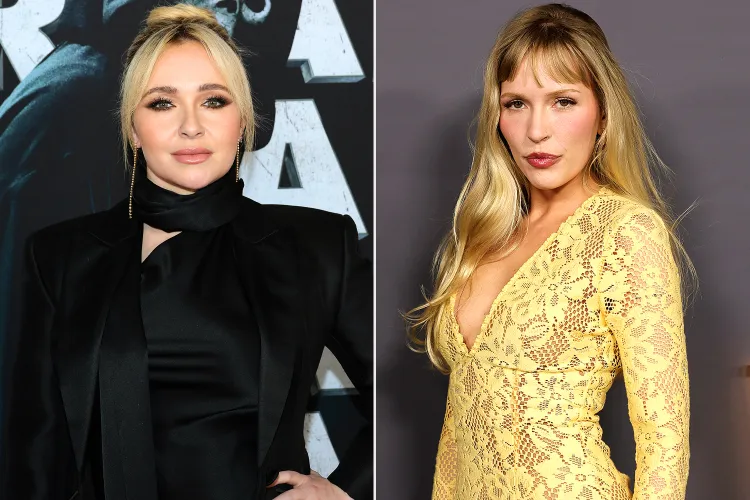
Lennon Stella has spent years developing a musical identity that reflects her personal experiences, emotional growth, and artistic ambitions. But for fans who first discovered her through the hit television drama Nashville, her connection to the series remains an important part of her story. That is one reason questions about her former castmates, including Hayden Panettiere, continue to attract attention.
The question of whether Stella might pay tribute to Panettiere through future music brings together two aspects of the singer’s life: the relationships she formed while working on Nashville and the deeply personal nature of songwriting. Although the precise details of Stella’s reported comments should be confirmed through the original interview before being treated as a definitive statement, the subject opens an interesting conversation about friendship, artistic inspiration, and the lasting influence of formative experiences.
For musicians, creating a song inspired by someone meaningful can be a powerful way to preserve a memory. Yet not every important relationship becomes the subject of a lyric, and not every tribute needs to be expressed through a public performance.
For Stella, the possibility of honoring someone connected to her early career raises a broader question: how does an artist decide which personal experiences belong in her music, and which are best kept private?
Lennon Stella’s Journey From Nashville to Music
Lennon Stella first became widely recognized through Nashville, the musical drama that introduced viewers to a world of ambitious performers, complicated relationships, and the pressures of pursuing success in the music industry.
Stella played Maddie Conrad, the daughter of country music star Rayna Jaymes, portrayed by Connie Britton. Her younger sister, Maisy Stella, played Daphne Conrad. Their on-screen family became an important part of the series, giving both sisters an opportunity to combine acting with musical performance.
The experience helped introduce Lennon to a broad audience long before she established herself as a recording artist in her own right. As the series progressed, viewers had the opportunity to watch her character grow while also becoming familiar with her musical abilities.
However, moving from a television role to a solo music career requires a significant shift. An actor performs within a story shaped by writers, directors, and fellow cast members. A recording artist must increasingly define her own creative direction, decide what she wants to communicate, and build a sound that distinguishes her from other performers.
Stella pursued that transition through original music, developing a style that blends pop influences with atmospheric production and emotionally direct songwriting.
Her career demonstrates how an early opportunity can become a starting point rather than a permanent identity. While Nashville remains an important part of her history, her work as a musician has allowed her to explore experiences and ideas beyond the character that first brought her recognition.
Hayden Panettiere’s Connection to Nashville
Hayden Panettiere was another central figure in Nashville, playing Juliette Barnes, a talented but often troubled country music star whose personal struggles frequently complicated her professional ambitions.
Juliette’s storyline explored the pressures of fame, difficult relationships, emotional vulnerability, and the challenges of trying to maintain control while living under constant public scrutiny. Panettiere’s performance helped make the character one of the series’ most memorable figures.
Although Maddie Conrad and Juliette Barnes occupied different places within the show’s fictional music industry, both characters contributed to the series’ exploration of ambition and the complicated relationship between personal life and professional success.
For viewers, the connection between Stella and Panettiere is therefore tied to a shared television history. Their association with Nashville places them within a larger creative environment that brought together performers, musicians, writers, and production teams.
Working on a long-running television series can create experiences that remain significant long after filming ends. Cast members spend substantial time collaborating, learning from one another, and navigating the unusual circumstances of working in a public-facing industry.
That does not mean every colleague becomes a close personal friend, nor does it establish what Stella and Panettiere’s private relationship is like today. It does, however, help explain why audiences may be curious about whether their shared history could inspire future creative work.
Could Lennon Stella Turn a Personal Connection Into a Song?
Songwriting often begins with a feeling that is difficult to express in ordinary conversation. A memory, a relationship, a period of uncertainty, or an unexpected change can become the starting point for a song that communicates something deeply personal.
For Lennon Stella, whose musical career has increasingly centered on her own artistic voice, the question of whether she might honor someone from her past is particularly interesting.
A tribute song does not necessarily need to tell a complete story about another person. It might capture a feeling associated with a particular period, reflect on a meaningful encounter, or explore the impact someone had on the songwriter’s life.
Sometimes the inspiration is obvious to listeners. In other cases, the connection remains private, with the artist choosing not to explain every reference or identify the people who influenced the work.
This flexibility is one of songwriting’s most appealing qualities. A musician can transform personal experiences into something that resonates with listeners who have lived through similar emotions, even when their circumstances are entirely different.
Still, it would be premature to conclude that Stella plans to write a song about Panettiere without a verified statement confirming that intention.
The distinction matters because asking an artist whether a particular person might inspire future music is not the same as announcing that a tribute is already being developed. A thoughtful answer may acknowledge someone’s significance without committing to a specific project.
For fans, the possibility can be intriguing, but the artist’s own words should remain the foundation of any discussion about her plans.
Why Fans Want Music That Reflects Real Relationships
Audiences often feel especially connected to songs that appear to reveal something about the person who wrote them. When a musician draws inspiration from real experiences, listeners may interpret the lyrics as a window into the artist’s private world.
This interest becomes stronger when the artist has a recognizable history with another public figure. Fans may look for connections between a song and a past collaboration, friendship, romantic relationship, or shared professional experience.
The result can be a fascinating conversation about how art transforms life into storytelling. However, it can also lead to speculation, particularly when listeners assume that every lyric refers to a specific person or event.
In reality, songwriting is rarely that simple. A single song may combine several experiences, imagined scenarios, and emotions that developed over time. Even lyrics that sound autobiographical may be shaped by artistic decisions rather than a literal sequence of events.
For an artist like Stella, who has moved from a television ensemble into a solo career, protecting that creative freedom can be important. Her songs do not need to function as explanations of her personal history.
If she chooses to pay tribute to someone associated with Nashville, the most meaningful approach may be one that reflects her own artistic instincts rather than public expectations.
Lennon Stella’s Musical Identity Beyond Television
One of the most interesting aspects of Stella’s career is how she has gradually established an identity separate from her television work.
Her music has explored themes such as attraction, uncertainty, emotional change, self-reflection, and the complexities of relationships. Rather than simply reproducing the country music environment associated with Nashville, she has developed a sound that draws from contemporary pop and alternative influences.
That evolution matters because artists who begin their careers in television can face persistent expectations from audiences who first encountered them as actors.
Some fans may prefer the version of the performer they remember from a favorite show, while others are eager to see how the artist changes. The challenge is finding a balance between acknowledging the past and allowing new work to stand on its own.
Stella’s musical journey illustrates how an early role can provide visibility without defining every subsequent decision.
Her connection to Nashville remains part of her story, but her future as a musician depends on the ideas, collaborations, and performances she chooses to pursue.
Whether she eventually writes about a former castmate or draws inspiration from a completely different experience, the important question is how that material contributes to her artistic development.
The Lasting Influence of Nashville
For many performers, an early television project becomes a defining chapter because it introduces them to audiences and provides an environment in which they can develop their skills.
Nashville offered a particularly distinctive experience because music was central to its storytelling. The cast had to portray characters whose professional lives revolved around songwriting, recording, and performing, creating opportunities for acting and musical talent to intersect.
That environment may have helped shape how young performers understood the relationship between storytelling and music. A scene could communicate emotion through dialogue, facial expression, or a song performed within the narrative.
For Stella, the transition into a solo career created an opportunity to explore that relationship from another perspective. Instead of interpreting a character’s musical journey, she could build songs around her own creative decisions.
The show’s legacy also continues through the audiences who remember its characters and performances. Fans who followed Maddie Conrad’s development may naturally remain interested in Stella’s later work, while viewers who connected with Juliette Barnes may continue to follow Panettiere’s career.
Their shared history gives the question of a potential musical tribute an emotional dimension, even if no such project has been confirmed.
Respecting the Difference Between Inspiration and a Confirmed Tribute
Celebrity culture often encourages audiences to search for hidden meanings in artistic work. A new song title, a lyric, or an interview comment can quickly become the subject of theories about who inspired it.
While that curiosity can make music more engaging, it is important to distinguish interpretation from confirmed information.
An artist can appreciate a former colleague without planning a song about them. A meaningful professional experience can influence someone’s outlook without becoming the subject of a specific lyric. And a tribute can take many forms beyond a dedicated recording.
Without verified comments establishing Stella’s intentions, there is no basis for saying that a song honoring Panettiere is planned, written, or scheduled for release.
What can be discussed with confidence is the broader relationship between personal experience and creative expression. Artists often carry memories of formative collaborations throughout their careers, and those memories may influence their work in ways that are not immediately visible to audiences.
Allowing that process to unfold naturally respects both the artist’s independence and the privacy of the people who may have influenced her.
What Comes Next for Lennon Stella?
Lennon Stella’s career continues to offer opportunities for artistic growth as she builds on the recognition she gained through Nashville. Her journey from television performer to recording artist demonstrates how creative identities can evolve over time.
Questions about whether she might pay tribute to Hayden Panettiere through future music reflect the lasting interest in the relationships formed during the show’s run. They also highlight the way fans connect an artist’s past experiences with the stories they may tell through music in the future.
For now, the idea of a tribute should be treated as a question rather than a confirmed announcement unless Stella’s exact comments establish otherwise.
Ultimately, the most compelling aspect of her musical future is not whether she dedicates a song to a particular former castmate. It is whether she continues creating work that feels authentic, develops her distinctive voice, and allows listeners to find meaning in the experiences she chooses to share.
The legacy of Nashville will always be part of Lennon Stella’s story. Whether that history eventually inspires a direct musical tribute or remains a quieter influence, it represents an important chapter in the journey that helped shape the artist she is today.