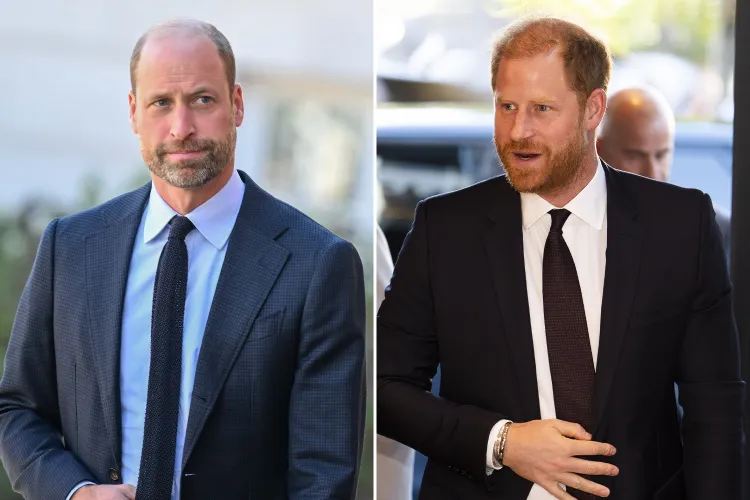
The relationship between Prince Harry and Prince William has remained one of the most closely watched family stories in the British royal family. Once known for their close bond and shared experiences growing up in the public eye, the two brothers have spent recent years navigating a deeply strained relationship marked by public disagreements, personal grievances, and questions about whether reconciliation is still possible.
Despite the challenges, Prince Harry is believed to retain hope that the rift between him and his older brother can eventually be repaired. Although the years of tension may have left lasting emotional scars, the possibility of rebuilding their relationship remains a subject of interest for royal observers and the public alike.
For two brothers whose lives have been shaped by extraordinary circumstances, reconciliation would require more than a single conversation or a brief public appearance together. It would involve rebuilding trust, addressing painful memories, and finding a way to move forward without allowing past disagreements to define their future.
The situation also highlights a universal family dilemma: whether relationships damaged by years of misunderstanding can recover when both sides have experienced hurt. In the case of Harry and William, the answer remains uncertain, but the question continues to attract attention because of the brothers’ shared history and the significance of their relationship within the royal family.
Prince Harry and Prince William: From Close Brothers to a Public Rift
For much of their lives, Prince Harry and Prince William were seen as two brothers united by circumstances few people could fully understand. Growing up as the sons of King Charles III and the late Princess Diana, they experienced intense public scrutiny from an early age.
Their childhood was shaped by royal responsibilities, media attention, and the pressures of living within one of the world’s most recognizable families. The death of their mother in 1997 was another defining experience, one that profoundly affected both brothers while they were still young.
Over the years, their shared experiences helped create an image of brotherly solidarity. William, as the elder son and heir to the throne, was expected to prepare for a future of public service, while Harry developed his own identity through military service, charitable work, and a more informal public image.
For many royal watchers, the brothers appeared to complement one another. Their different personalities did not necessarily prevent them from maintaining a close relationship, and their shared family history seemed to provide a strong foundation for their bond.
However, as adulthood brought different responsibilities and priorities, their relationship reportedly became more complicated. Their respective marriages, public roles, and differing approaches to royal life added new dimensions to an already demanding family dynamic.
What had once appeared to be an enduring partnership gradually became a relationship surrounded by speculation, unanswered questions, and public disagreement.
How Royal Family Tensions Changed Their Relationship
The breakdown in relations between Harry and William cannot be attributed to a single event. Instead, it developed amid a series of personal and institutional tensions that became increasingly difficult to separate from the brothers’ public lives.
One major turning point came in 2020, when Harry and his wife, Meghan, Duchess of Sussex, stepped back from their roles as senior working members of the royal family and subsequently established a life in the United States.
The decision represented a significant change for the monarchy and for Harry personally. It also created new questions about his relationship with William, who remained a senior working royal with responsibilities connected to the future of the institution.
The brothers were now living increasingly different lives. William continued preparing for his eventual role as king, while Harry pursued projects outside the traditional royal structure.
Their differences became more visible through interviews, public statements, and Harry’s memoir, Spare, published in 2023. The book offered his perspective on family tensions and included personal accounts that intensified public discussion about the brothers’ relationship.
For William, who generally maintains a more restrained public profile regarding family matters, the situation presented a different set of challenges. Public disagreements can make private reconciliation more difficult because every development becomes a subject of outside interpretation.
When family members discuss sensitive experiences in public, repairing a relationship may require them to navigate not only their personal feelings but also the expectations and reactions of others.
That does not necessarily make reconciliation impossible. It does, however, help explain why the process could take considerable time.
Why Prince Harry May Still Believe Reconciliation Is Possible
The possibility of repairing the relationship between Prince Harry and Prince William remains compelling because family bonds can endure even after significant periods of conflict.
For Harry, the relationship with his brother represents a connection to their childhood, their shared memories of Princess Diana, and experiences that few other people can fully understand.
Those shared experiences cannot erase disagreements, but they may provide a reason to consider reconciliation rather than permanent separation.
It is important to distinguish hope for reconciliation from evidence that an agreement has been reached. Neither brother’s private feelings can be fully established through outside speculation, and the future of their relationship remains dependent on circumstances that are not entirely public.
Nevertheless, the idea that a damaged relationship can eventually improve is consistent with how many family conflicts unfold. People may need time apart to process disagreements before they can approach one another with greater understanding.
Reconciliation does not always begin with a dramatic declaration. Sometimes it starts with a willingness to listen, a private exchange, or a decision to stop allowing every disagreement to become another source of conflict.
For brothers who have spent years under intense public scrutiny, the ability to communicate privately could be particularly important.
If Harry and William eventually choose to rebuild their relationship, they may need to create space for honest conversations that are not shaped by headlines, public expectations, or competing interpretations of their intentions.
The Meaning Behind the ‘Scars’ of a Family Dispute
The idea that lasting scars may remain even when reconciliation becomes possible captures an important distinction between repairing a relationship and returning it to its previous state.
Some experiences change the way people understand one another. Hurtful words, perceived betrayals, and prolonged periods of silence can affect trust long after the original disagreement has passed.
Even when family members decide to reconnect, they may not immediately recover the ease and familiarity they once shared.
For Harry and William, years of public tension could make this challenge especially complicated. Statements made in interviews or books cannot simply be withdrawn from public memory, and personal accounts may continue to influence how each brother understands the other.
However, lasting scars do not necessarily mean a relationship is beyond repair.
A relationship can become different without becoming meaningless. Two people may learn to communicate more carefully, establish boundaries, and acknowledge that they have different perspectives on the same events.
In some circumstances, reconciliation means rebuilding a close relationship. In others, it means finding a more limited but respectful way to remain connected.
For the royal brothers, any meaningful progress would likely depend on what each is prepared to acknowledge, what they are willing to forgive, and whether they can agree on a way to protect their relationship from further damage.
The process would not require them to forget the past. Instead, it would require them to decide how much influence the past should have over their future.
The Challenge of Rebuilding Trust Away From the Public Eye
One of the greatest obstacles to reconciliation between Prince Harry and Prince William is the attention surrounding their relationship.
For most families, disagreements can be addressed privately. Family members can meet, speak openly, and work through misunderstandings without worrying that their conversations will become international news.
The royal family operates under very different conditions.
Every appearance, photograph, statement, and reported conversation can generate speculation about the state of personal relationships. Even a brief interaction at a family event may be interpreted as evidence of a breakthrough or a fresh disagreement.
This constant attention can create additional pressure for people who are already dealing with difficult emotions.
It can also make it harder to determine what reconciliation would genuinely look like. A public meeting may suggest progress without necessarily resolving deeper problems, while the absence of visible contact does not automatically establish that private communication has stopped.
For Harry and William, meaningful reconciliation would likely require a degree of privacy and patience.
Trust is usually rebuilt through consistent actions rather than a single symbolic gesture. Keeping conversations confidential, respecting boundaries, and avoiding unnecessary public confrontation can all contribute to a more stable relationship.
Both brothers would also need the freedom to define progress on their own terms rather than responding to public demands for an immediate resolution.
The public may be interested in a reunion, but the emotional work required to make one meaningful belongs to the people involved.
How Their Different Royal Roles Complicate Reconciliation
Harry and William’s relationship is closely connected to the different positions they occupy within the monarchy.
As heir to the throne, William has responsibilities that extend beyond his immediate family. His public role requires him to maintain institutional stability, represent the monarchy, and prepare for the demands of kingship.
Harry, by contrast, has pursued an independent life since stepping away from his senior royal duties. His work, family life, and public activities operate outside the traditional structure that continues to shape William’s responsibilities.
Neither position automatically determines whether the brothers can reconcile, but their different circumstances may influence how they approach the relationship.
They may have different expectations regarding privacy, public communication, and the boundaries between personal life and institutional responsibility.
Finding common ground could therefore require them to recognize that their lives have developed along separate paths.
A repaired relationship would not necessarily mean that Harry returned to royal duties or that William changed his approach to his responsibilities. Instead, it could involve accepting those differences while preserving a meaningful family connection.
This distinction matters because reconciliation does not require two people to agree about everything. It requires enough mutual respect and trust for disagreement to exist without destroying the relationship.
Why Their Family History Still Matters
The brothers’ shared childhood and the memory of Princess Diana remain central to public interest in their relationship.
Diana was an important figure in both their lives, and her death exposed them to a level of grief and public attention that few children experience. Their memories of her form part of a shared history that predates their adult disagreements.
It would be impossible to know exactly how those experiences influence their current relationship without hearing directly from both brothers. Still, shared family history can remain meaningful even when relationships become strained.
Memories of childhood, family traditions, and formative experiences can provide common ground that is difficult to recreate elsewhere.
At the same time, shared history does not guarantee reconciliation. Family members can interpret the same experiences differently, and their memories may carry different emotional meanings.
For Harry and William, the challenge may be to recognize both what connects them and what has changed.
Their relationship today cannot simply be recreated from an earlier period in their lives. Any future connection would need to account for the people they have become, the families they have built, and the responsibilities they now carry.
That makes reconciliation potentially more difficult, but it also creates an opportunity for a more mature relationship built on clearer expectations.
Could Prince Harry and Prince William Eventually Reconcile?
Whether the brothers can repair their relationship remains an open question. A genuine reconciliation would depend on private decisions, mutual willingness, and a sustained effort to rebuild trust.
There is no guarantee that they will return to the close relationship many observers remember. Nor is it possible to conclude that the damage is permanent simply because the conflict has lasted for years.
Relationships can change in unexpected ways, particularly when people gain distance from difficult experiences and reconsider what matters most to them.
If Harry and William decide to move forward together, several elements could prove important: honest communication, respect for personal boundaries, a willingness to acknowledge hurt, and an understanding that rebuilding trust takes time.
They would also need to manage the public dimension of their relationship carefully. Allowing private conversations to remain private could give them a better opportunity to address their differences without the pressure of constant commentary.
Ultimately, reconciliation would not be measured only by whether the brothers appear together at a public event. The more meaningful question would be whether they can develop a relationship that feels sustainable and respectful to both of them.
The Bottom Line
Prince Harry and Prince William share a history that is both deeply personal and unusually public. Their relationship has been shaped by childhood experiences, family loss, royal expectations, and years of disagreements that have unfolded under international scrutiny.
Although the possibility of reconciliation remains uncertain, the idea that their relationship could improve despite lasting emotional scars offers a reminder that family conflicts do not always have to determine the future.
Repairing the bond would likely require patience, privacy, and a willingness to accept that their relationship may never look exactly as it once did.
For now, the brothers’ future remains their own to decide. Whether reconciliation eventually takes the form of a renewed close bond or a more limited family connection, any meaningful progress would need to come from genuine understanding rather than public pressure.
The lasting interest in their story reflects something larger than royal news: the hope that even relationships marked by years of hurt can sometimes find a path forward. For Harry and William, the challenge is not simply to put the past behind them, but to decide whether the bond they share is strong enough to build something new.