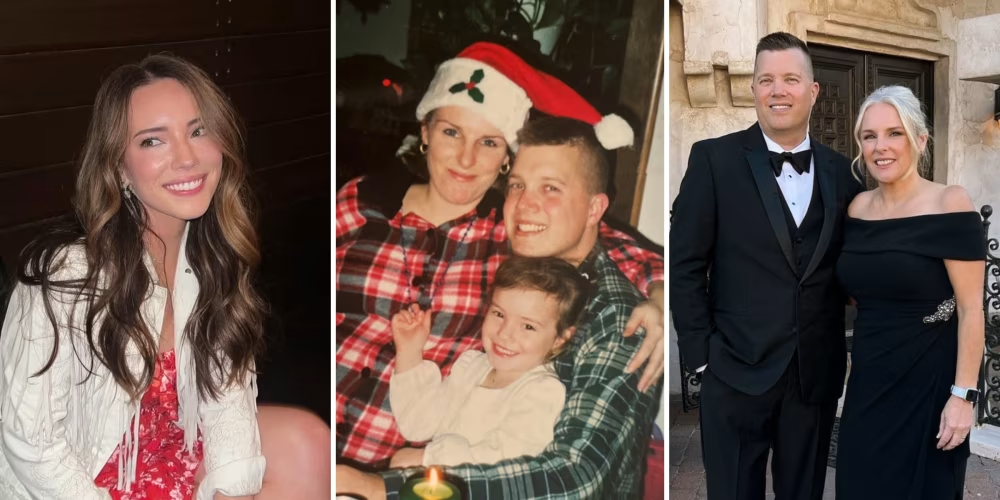
Finding love in the age of dating apps can feel like a full-time job. Between endless profiles, unexpected messages, confusing conversations, and the challenge of identifying genuine compatibility, online dating can quickly become overwhelming. For Autumn-Kyoko Cushman, a 30-year-old technology executive, the solution was surprisingly personal: she decided to let two people she trusts most help her navigate the search for a partner—her parents.
Cushman recently attracted attention online after revealing that she created a profile on Hinge and invited her mother and father to help select potential matches. Rather than handling every profile on her own, she turned the experience into a family project, sharing glimpses of the process on social media.
Her approach quickly caught people’s attention, partly because of its humor and partly because it challenged the idea that finding a romantic partner must always be a completely private, individual undertaking. With hundreds of notifications waiting on her dating profile, Cushman had plenty of potential connections to consider. The question was how to decide which ones might actually be worth pursuing.
Her answer was to bring in a team with decades of life experience and a personal investment in her happiness.
The story is more than an amusing look at a daughter asking her parents for dating advice. It also raises familiar questions about modern relationships, family influence, personal priorities, and what people really want when searching for a long-term partner.
Autumn-Kyoko Cushman Turns Her Dating Life Into a Family Project
Cushman introduced her experiment with a straightforward explanation on X: “Made a hinge at age 30 and let my parents pick potential suitors.”
The post captured the unusual nature of her approach. Dating apps are designed to give users direct control over whom they see, like, and message. Cushman, however, decided that reviewing potential partners did not have to be a solo activity.
One of her posts featured a photograph of her and her father looking through her matches together. The image offered a glimpse of a family participating in a process that many people approach alone or discuss only with close friends.
The experiment also came with a surprising number of options. A screenshot of her Hinge profile showed 577 notifications, illustrating just how busy the experience had become.
For someone trying to balance a demanding professional life with the desire to build a meaningful relationship, sorting through hundreds of notifications could easily become another source of stress.
Having her parents involved introduced a different perspective. They could help her review profiles, discuss first impressions, and consider whether a potential match appeared compatible with the kind of future she wanted.
Of course, a profile can reveal only so much about a person. A photograph, a short biography, or a few shared interests cannot establish whether two people will develop a lasting connection. Still, Cushman’s experiment offered a practical and entertaining way to begin narrowing the field.
It also demonstrated that asking for help with dating does not necessarily mean giving up personal independence. Sometimes, it simply means recognizing that trusted people can offer useful observations.
Why She Wants Her Parents to Help Choose Potential Partners
Cushman’s decision makes more sense when considered alongside the priorities she has described publicly.
She explained that she had been in a relationship for a long time, which was part of the reason she was single at 30. Her goal was not simply to collect matches or enjoy a series of casual conversations. She said she was looking for her “forever person.”
That distinction matters. Someone seeking a serious, long-term relationship may approach dating differently from someone who is primarily interested in meeting new people or exploring different connections.
For Cushman, her parents’ involvement appears to fit into a broader desire to make thoughtful choices about her future.
Parents who know their adult children well may recognize patterns that are easy to overlook when romantic interest is involved. They may notice whether a potential partner’s stated values seem compatible with their child’s priorities, or whether a profile suggests a lifestyle that could work in the long run.
At the same time, family members can have their own preferences and assumptions. A parent’s first impression is not necessarily an accurate prediction of romantic compatibility, and a person who looks ideal on paper may not create a genuine connection in real life.
Cushman’s arrangement is therefore best understood as a form of assistance rather than a transfer of decision-making power. Her parents can help identify possibilities, but the relationship itself would ultimately be hers to develop.
That balance between family advice and individual choice is especially important when the goal is a lasting partnership.
The Five Qualities She Says Matter Most
While online dating can encourage people to create lengthy checklists, Cushman described a relatively straightforward set of qualities she wants in a partner.
Her stated priorities are that a potential match should be:
- Kind.
- Intelligent.
- Curious.
- Athletic.
- Funny.
These qualities emphasize personality, shared interests, and everyday compatibility rather than a highly specific financial or professional profile.
Kindness, for example, can influence how partners communicate during disagreements, respond to stress, and treat people outside their relationship. Intelligence and curiosity may help sustain conversations, encourage personal growth, and create opportunities to learn from one another.
A sense of humor can also make ordinary life more enjoyable, particularly when a couple is navigating demanding schedules or unexpected challenges.
Being athletic may reflect a preference for an active lifestyle, although people can enjoy a successful relationship without sharing identical exercise routines or fitness goals.
Cushman’s list does not guarantee compatibility, of course. Two people can share several desirable characteristics and still have different expectations about marriage, children, work, or where they want to live.
However, her emphasis on broad personal qualities offers a contrast to the increasingly elaborate dating requirements that sometimes circulate on social media.
Rather than focusing on a long list of narrowly defined characteristics, she has presented a set of traits that could help form the foundation of a meaningful relationship.
Faith, Family, and the Future She Wants
Beyond personality, Cushman has also been open about two important aspects of her future: her Christian faith and her desire to have children.
These priorities help explain why she is approaching dating with long-term compatibility in mind.
For someone who wants to build a family, finding a partner is not only about chemistry or shared entertainment preferences. It can also involve discussions about values, parenting, religious beliefs, financial responsibilities, and how both people imagine their lives developing over time.
Cushman has also emphasized that she is close to her family. Her willingness to involve her parents in reviewing potential matches reinforces the importance she places on those relationships.
However, being close to one’s family does not necessarily mean that relatives should control every decision. Healthy family involvement can offer encouragement and perspective while leaving room for the individual to make independent choices.
In Cushman’s case, the arrangement appears to reflect a willingness to include her parents in an important personal milestone.
Her approach may resonate with people who value family input, especially those who believe that a future partner should be compatible not only with them as individuals but also with the family life they hope to build.
Ultimately, shared values need to be discussed directly between potential partners. A parent’s approval can be helpful, but it cannot replace the conversations required to build a strong relationship.
A Demanding Career Adds Another Layer to Dating
Cushman is not approaching this search without other responsibilities. She has built a career spanning military service, technology, and entrepreneurship.
She previously served in the U.S. Navy as a corpsman, a medical specialist role, before working at IBM. She later co-founded ShiftOs, an AI-powered workplace management platform that was acquired by Trusted Health in August 2026.
That professional background provides context for her comments about needing a partner who understands her lifestyle.
Entrepreneurship can demand considerable time and energy, particularly during periods of launching a business, managing a team, or navigating major organizational changes. Building a relationship alongside those responsibilities can require deliberate planning and clear communication.
Cushman has said she works a lot and wants a partner who appreciates that reality. She is not necessarily looking for someone with an identical career, but she wants someone who understands the demands of her work.
This is an important distinction. Couples do not need to pursue the same professions to build compatible lives. What matters is whether they can discuss their schedules, support one another’s ambitions, and establish expectations that feel fair to both people.
A demanding career can create challenges, especially when both partners have significant responsibilities. It can also bring opportunities for mutual respect, independence, and shared ambition.
For Cushman, the task is to find someone whose expectations align with the life she is building, rather than someone who simply looks impressive on a dating profile.
She Says Family Can Remain a Priority While Building a Career
One of the questions raised by Cushman’s dating criteria concerned how she would balance a busy professional life with her desire to have children.
Some social media users questioned whether someone who works extensively could also make family life a priority.
Cushman responded by explaining that she does not believe a woman must become a stay-at-home mother to be deeply involved in raising children.
She argued that prioritizing family is about making a conscious effort to put loved ones first, including setting boundaries around work during dinner, weekends, and other important moments.
Her response reflects a broader discussion among working adults about how to balance professional ambition with personal relationships.
There is no single arrangement that works for every family. Some parents reduce their working hours, others share childcare responsibilities, and many develop schedules that allow both partners to maintain demanding careers.
The key is that these decisions require cooperation rather than assumptions about what one person should sacrifice.
A future partner would need to share or at least respect Cushman’s understanding of family priorities. The two would also need to discuss the practical realities of parenting, including time, finances, household responsibilities, and support systems.
Her comments suggest that she is thinking about these questions before entering a new relationship, rather than postponing them until after a commitment has been made.
That kind of preparation cannot eliminate every future challenge, but it can help people recognize potential differences before they become sources of conflict.
Her Parents Also Had Something to Say About Dating Standards
Cushman’s dating experiment attracted attention during an online discussion about the expectations people set for romantic partners.
Another technology executive, Brooke LeBlanc, had recently drawn widespread attention for publishing an extensive list of qualities she wanted in a potential partner. Among the terms discussed was “post-economic,” which generated debate about financial expectations in relationships.
Cushman joined the conversation with a lighter approach, sharing a screenshot of her father’s reaction to the phrase.
Her father jokingly asked whether “post-economic” was a euphemism for a wealthy man.
The exchange gave audiences another glimpse of the family’s humor while highlighting a difference between Cushman’s publicly stated criteria and more elaborate dating checklists.
Cushman clarified that she did not care how much money a potential partner made. What mattered more was whether the person could appreciate the demands of her lifestyle and share her broader priorities.
That does not mean finances are unimportant in serious relationships. Money can affect housing decisions, family planning, work arrangements, and everyday stress. Couples generally benefit from discussing financial habits and expectations honestly.
However, income alone does not establish whether someone will be a caring or compatible partner.
Cushman’s comments place greater emphasis on how a couple might live together than on a particular financial threshold.
Her father’s humorous reaction also helped make the story relatable. Family members can sometimes express concerns in a way that cuts through complicated dating terminology and brings the conversation back to practical questions.
Can Parents Really Help Someone Find Love?
Cushman’s experiment raises a question many people may recognize: How much should parents be involved in their adult children’s romantic lives?
For some families, discussing dating preferences is completely natural. Parents may offer advice about communication, help identify warning signs, or simply provide emotional support after a difficult experience.
For others, involving family in the early stages of dating may feel uncomfortable. Some people prefer to make their own decisions and introduce a partner to relatives only after a relationship becomes more serious.
Neither approach automatically leads to better outcomes.
The value of parental involvement depends on the relationship itself, including whether the parents respect boundaries and whether the adult child feels comfortable disagreeing with them.
Parents can also bring biases. They may favor someone who resembles their own idea of a suitable partner, even if that person is not the right match for their child.
Conversely, a potential partner who initially seems unfamiliar or different may turn out to be an excellent fit.
The most useful role for parents may therefore be to help their child think clearly, rather than to make the final decision.
Cushman’s approach offers an example of how that balance might work. Her parents can help sort through profiles and share their impressions, while she remains responsible for deciding whom to meet and whether a connection feels genuine.
The process can be collaborative without becoming controlling.
Dating Apps, Too Many Choices, and the Search for Something Real
The 577 notifications on Cushman’s Hinge profile also point to a common challenge in modern online dating: having many options does not necessarily make it easier to find a suitable partner.
Dating apps can introduce users to people they might never meet through their existing social circles. They can also create a constant stream of new profiles, messages, and potential matches.
With so many options, it can become tempting to evaluate people quickly or assume that a better match is always just one more swipe away.
But relationships develop through experiences that cannot be fully captured in a profile. Communication, emotional maturity, mutual respect, and shared expectations become clearer over time.
A large number of notifications may indicate interest, but it does not tell someone who will be a compatible long-term partner.
Cushman’s decision to slow the process down by involving her parents may help make the experience more personal. Instead of treating each profile as another item to review, she can use conversations with people who know her well to clarify what she actually wants.
Still, the ultimate test will not be whether her parents approve of a particular profile. It will be whether she finds someone with whom she can build a mutually supportive relationship.
A Personal Search That Has Become a Public Conversation
Autumn-Kyoko Cushman’s decision to let her parents help review dating app matches has turned an everyday personal challenge into an online conversation about love, family, ambition, and modern relationships.
Her story stands out because it combines humor with a sincere desire to find a lasting partner. She has described the qualities that matter to her, explained why family is important, and acknowledged that her professional responsibilities will be part of any future relationship.
Rather than presenting a complicated list of demands, she has emphasized kindness, intelligence, curiosity, athleticism, and humor, alongside shared values and an understanding of her lifestyle.
Her parents’ involvement adds a playful twist, but it also illustrates a familiar truth: people often turn to those they trust when making important decisions.
Whether their advice ultimately leads Cushman to a compatible partner remains to be seen. Online attention alone cannot predict the outcome of a personal relationship, and finding a lasting connection takes more than selecting the right profile.
What her experiment does demonstrate is that dating does not have to follow one rigid formula. Some people prefer to navigate the process privately, while others welcome advice from friends or family.
For Cushman, the search for love has become a family-supported effort—one that leaves room for laughter, honest conversations, and the possibility of finding someone who shares her vision for the future.
And perhaps that is the most relatable part of the story. Behind the professional achievements and hundreds of dating notifications is a person looking for the same fundamental things many people want: companionship, mutual understanding, and someone with whom to build a life.