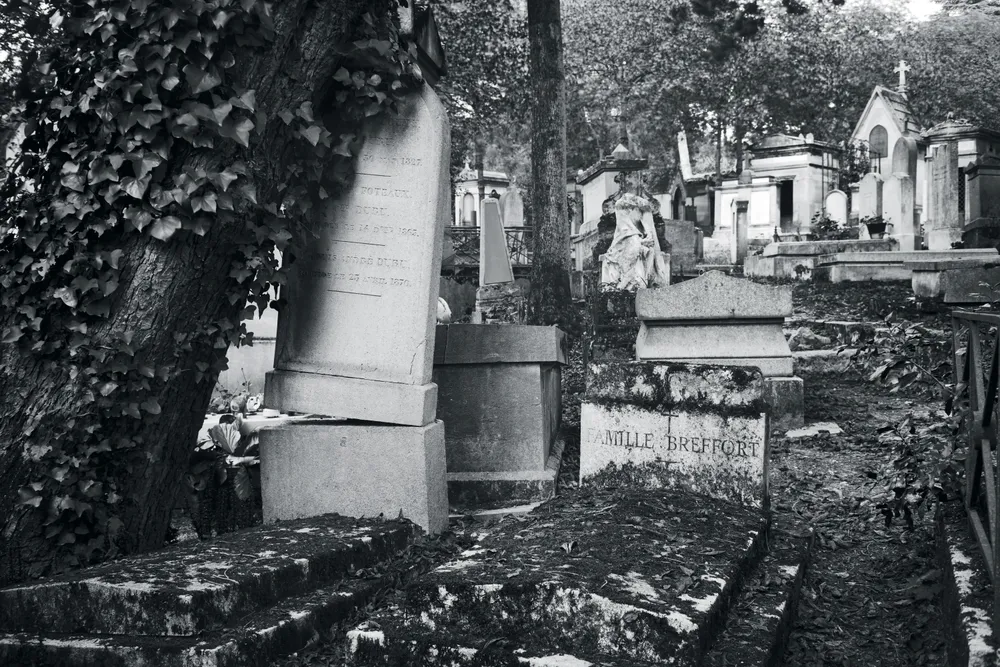
Paris is famous for its elegant boulevards, romantic gardens, historic monuments, and world-renowned museums. Yet some of the French capital’s most fascinating destinations are places traditionally associated with grief and remembrance: its grand cemeteries. Far from being bleak landscapes devoted exclusively to mourning, these burial grounds combine art, architecture, nature, and history in ways that encourage visitors to reflect on life as much as death.
From the tree-lined paths of Père-Lachaise Cemetery to the monumental tombs of Montparnasse and Montmartre, Parisian cemeteries often resemble peaceful public parks filled with sculptures, winding walkways, and carefully maintained greenery. They attract mourners, historians, artists, architecture enthusiasts, and curious travelers who come to discover the stories behind the graves.
This unusual combination of beauty and mortality was not accidental. The development of Paris’s grand cemeteries reflected changing attitudes toward public health, urban planning, landscape design, and the place of the dead within a growing city. By creating burial grounds that felt more like gardens than crowded churchyards, Paris helped establish a distinctive approach to remembering the dead—one that continues to attract millions of visitors and demonstrates how a cemetery can become a celebration of human life.
Why Paris Needed a New Kind of Cemetery
At the beginning of the 19th century, Paris faced serious challenges related to burial practices. For centuries, many residents had been buried in churchyards located within densely populated neighborhoods. As the city grew, these burial grounds became increasingly crowded, raising concerns about sanitation, public health, and the management of urban space.
One of the most notorious examples was the Cemetery of the Holy Innocents, located in the central Paris neighborhood of Les Halles. For generations, it had served as a major burial ground, but centuries of use left it severely overcrowded. The surrounding area was busy with homes, markets, and businesses, making the cemetery an increasingly difficult presence in the heart of the city.
Authorities eventually closed the cemetery in 1786, and its remains were transferred to underground quarries that became part of the Paris Catacombs. The episode highlighted the need for a more systematic approach to burial outside the most densely populated districts.
During the early 19th century, Napoleon Bonaparte’s government introduced reforms that helped shape modern French cemetery policy. A decree issued in 1804 established important principles for burial grounds, including requirements concerning their location and organization.
The objective was practical: cemeteries needed to be safer, better managed, and separated from crowded residential areas. Yet the reforms also created an opportunity to rethink how burial grounds should look and how people might experience them.
Rather than treating cemeteries simply as places where bodies were deposited, planners could design them as carefully organized landscapes that provided space for reflection, remembrance, and quiet walks.
Père-Lachaise: The Cemetery That Changed How Paris Remembered Its Dead
<AsyncImage query=”Pere Lachaise Cemetery Paris tree lined paths ornate tombs historic cemetery landscape” aspectRatio=”16:9″ width=”100%”/>
Opened in 1804, Père-Lachaise Cemetery became one of the most influential examples of this new approach. Located in eastern Paris, it was established on the grounds of a former estate associated with François d’Aix de La Chaise, a Jesuit priest who had served as confessor to King Louis XIV.
At first, the cemetery struggled to attract burials. Its location was relatively distant from the central districts, and many Parisians preferred to be buried closer to their homes or religious communities.
The authorities and cemetery administrators needed to make the new burial ground more appealing. One strategy was to emphasize its associations with famous individuals. The transfer of the remains of celebrated writers Jean de La Fontaine and Molière to Père-Lachaise in 1817 helped increase public interest.
Over time, the cemetery developed into a prestigious resting place for notable figures from French and international history. Its winding paths, mature trees, elaborate mausoleums, and sculptural monuments created an environment that differed dramatically from the crowded churchyards of earlier centuries.
Père-Lachaise became a destination in its own right. Visitors could walk through the grounds, admire artistic craftsmanship, and encounter the graves of people whose work had shaped literature, music, politics, and culture.
Today, it is closely associated with figures such as Oscar Wilde, Frédéric Chopin, Édith Piaf, and Jim Morrison. Their graves attract visitors from around the world, transforming the cemetery into a place where personal memory intersects with cultural history.
Its popularity illustrates a central feature of Parisian cemetery design: a burial ground can offer both a place for private mourning and a public landscape that encourages curiosity, contemplation, and appreciation of art.
How Cemeteries Became Gardens for the Living
The park-like character of Paris’s major cemeteries reflects a broader change in European landscape design. During the 18th and 19th centuries, landscaped gardens and picturesque scenery became increasingly influential in how people imagined peaceful outdoor spaces.
Cemetery designers could draw on these ideas by arranging paths, trees, monuments, and open areas to create a sense of movement and discovery. Instead of rows of identical graves extending across a flat field, a visitor might encounter a secluded tomb beneath a tree, a grand family mausoleum, or an elaborate sculpture around a bend in the path.
This approach helped make the cemetery feel less like an industrial space for disposing of the dead and more like a garden devoted to remembrance.
Trees and plants also softened the visual impact of stone monuments. Seasonal changes introduced another dimension to the landscape, with spring blossoms, summer foliage, autumn leaves, and winter branches creating different atmospheres throughout the year.
The greenery was not merely decorative. It provided shade, framed monuments, and created quiet spaces within the busy urban environment. For city residents, cemeteries could offer a place to walk away from traffic, noise, and the pressures of daily life.
Nevertheless, the park-like appearance should not obscure their primary purpose. These are working burial grounds, not simply outdoor museums. Families continue to visit graves, maintain memorials, and remember loved ones.
Their distinctive character comes from the coexistence of these functions. A cemetery can be a place of profound personal grief while also offering beauty and calm to people who have no direct connection to the individuals buried there.
Montparnasse and Montmartre: Different Landscapes, Shared Traditions
<AsyncImage query=”Cimetière du Montparnasse Paris cemetery mature trees stone tombs pathways” aspectRatio=”16:9″ width=”100%”/>
Père-Lachaise may be Paris’s most famous cemetery, but it is part of a wider network of historic burial grounds that reflect the city’s changing geography and culture.
Montparnasse Cemetery opened in 1824 in the southern part of Paris. It occupies land that once included farms and mills, reflecting the gradual incorporation of former outskirts into the expanding city.
The cemetery became a resting place for writers, artists, philosophers, and political figures. Among those buried there are philosopher Jean-Paul Sartre, writer Simone de Beauvoir, poet Charles Baudelaire, and photographer Man Ray.
Its atmosphere differs from that of Père-Lachaise. The landscape includes broad avenues, shaded paths, and monuments of varying styles, creating a setting in which modern French intellectual history is closely connected to the physical environment.
Montmartre Cemetery, established in 1825, occupies another distinctive setting in northern Paris. Built in a former quarry, it developed within a neighborhood known for its artistic communities and bohemian history.
The cemetery contains the graves of numerous cultural figures, including composer Hector Berlioz, writer Émile Zola, and dancer and artist Edgar Degas. Its terrain, vegetation, and proximity to the surrounding neighborhood give it a character shaped by both its industrial past and its cultural associations.
Together, these cemeteries demonstrate that Paris did not create one uniform model for remembering the dead. Each burial ground developed its own landscape and identity, but all contributed to a broader tradition in which architecture, nature, and memory could coexist.
The Art and Architecture of Remembering
One reason Parisian cemeteries attract so much attention is the extraordinary variety of their monuments.
Some graves are marked by simple stone slabs or modest crosses. Others feature elaborate family tombs, sculpted figures, classical columns, stained glass, or miniature architectural structures.
These monuments reflect changing artistic fashions and personal beliefs about death, remembrance, and social status. During the 19th century, prosperous families often commissioned elaborate tombs that expressed their identity and preserved their names for future generations.
Sculptors used figures of angels, mourners, and allegorical characters to represent grief, hope, faith, and the passage of time. Other monuments incorporated symbols such as broken columns, flowers, or extinguished torches to communicate the fragility of life.
The resulting landscape offers an outdoor record of artistic and cultural history. Visitors can observe how different periods represented mortality and how families used memorials to express affection, prestige, religious conviction, or personal loss.
The artistic value of these structures also challenges the idea that cemeteries should be understood only through sadness. A beautifully carved monument may be a work of art, but it is also evidence of a relationship between the living and someone they wished to remember.
In Paris, these meanings often overlap. A visitor may arrive to see the grave of a famous musician and leave with a deeper appreciation for the cemetery’s sculpture, landscape, and quieter memorials.
Why Parisian Cemeteries Became Tourist Attractions
The popularity of Paris’s cemeteries reflects the way travel has evolved. Visitors increasingly seek experiences that connect them with the history, culture, and everyday life of a destination, rather than focusing exclusively on its most famous monuments.
Cemeteries provide a distinctive way to explore those connections. A walk through Père-Lachaise, for example, can introduce visitors to literary history, musical heritage, political movements, and changing artistic styles within a single landscape.
Famous graves naturally attract attention, but the appeal extends beyond celebrity. The paths reveal details about family life, religious traditions, social class, and the ways different generations have commemorated those they lost.
For many visitors, the experience is also a welcome contrast to the crowded streets and heavily visited landmarks elsewhere in Paris. The atmosphere encourages slower exploration and quiet observation.
However, growing tourism creates responsibilities. Cemeteries remain places of mourning, and visitors should respect people attending graves, avoid disturbing monuments, and follow local rules regarding photography, access, and behavior.
Responsible tourism recognizes that these destinations are not simply attractions. Their significance depends on the people who continue to care for the graves and preserve the memories attached to them.
What These Grand Graveyards Reveal About Life and Death
The most striking feature of Paris’s historic cemeteries may be the way they bring apparently opposing ideas together.
Death is unavoidable, yet the spaces created to commemorate it are filled with evidence of life: names, portraits, inscriptions, flowers, and works of art. Every monument reflects a decision by someone who wanted a person or a story to remain part of the world.
The gardens also change with time. Trees grow, paths weather, flowers bloom, and families return to tend graves. The landscape is never entirely separate from the living city around it.
This connection helps explain why the cemeteries have remained meaningful long after their original creation. They preserve individual memories while also revealing broader histories of migration, creativity, politics, and social change.
Their design does not eliminate grief or turn death into something uncomplicated. Instead, it offers a setting in which loss can be acknowledged without excluding beauty, reflection, or the continuing rhythms of nature.
For some visitors, a cemetery walk is a historical excursion. For others, it is an opportunity to remember someone they loved or simply spend time in a peaceful environment. These experiences can coexist without diminishing the purpose of the place.
Conclusion: Paris’s Cemeteries Celebrate More Than Memory
Paris’s grand cemeteries emerged partly from practical necessity. Overcrowded burial grounds and growing public-health concerns forced the city to rethink where and how its dead should be buried. The reforms and landscape designs that followed helped create a distinctive tradition of spacious, carefully organized burial grounds.
Père-Lachaise, Montparnasse, and Montmartre became places where monumental architecture, sculpture, greenery, and cultural history came together. They offered families dignified spaces for remembrance while giving the wider public opportunities to explore art, nature, and the stories of remarkable individuals.
Their enduring popularity reveals something important about the relationship between cities and their past. Urban spaces do not have to serve only one purpose, and places associated with death can also provide opportunities for learning, reflection, and appreciation of life.
In Paris, the cemetery is more than the end of a journey. It is a landscape in which personal memories become part of a city’s shared history—and where the quiet presence of the dead continues to inspire the living.