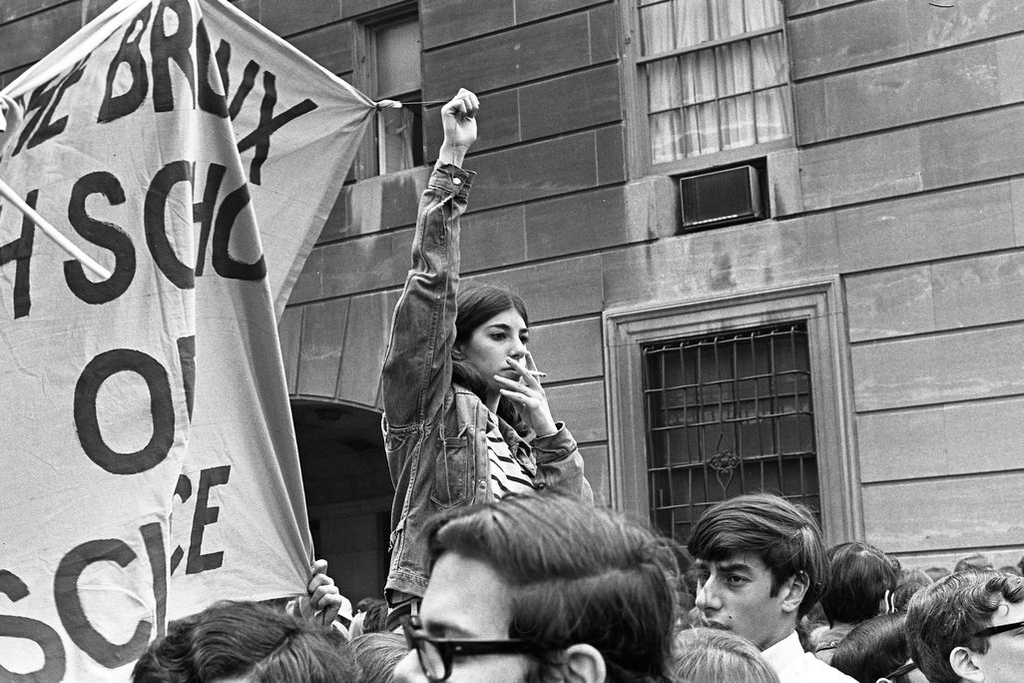
As high school students across the United States embraced political activism, some adults turned to federal authorities in an effort to shield their sons and daughters from radical influences.
The 1960s were a period of profound social and political change in the United States. High school students challenged traditional expectations, joined civil rights demonstrations, opposed the Vietnam War, and questioned the authority of institutions that had shaped their parents’ lives. For some young Americans, political activism became an essential part of growing up. For others, it created tensions at home, where parents worried that their children were becoming involved in movements they did not understand or trust.
Against this backdrop, reports about newly declassified FBI records have drawn attention to a disturbing possibility: some parents turned to federal authorities for information about their politically active teenagers, hoping to protect them from what they perceived as dangerous radical influences.
The subject highlights a complicated chapter in American history, when concerns about communism, student protest, and domestic unrest shaped relationships between families and government agencies. It also raises questions about the boundaries between parental concern, political surveillance, and young people’s right to express their beliefs.
Although the precise circumstances of individual cases must be established through the relevant records, the broader historical context is well documented. During the 1960s, the FBI monitored a range of political organizations and movements, sometimes using controversial investigative methods. Understanding how family concerns may have intersected with those activities offers a revealing look at the era’s conflicts over authority, freedom, and dissent.
Why American Teenagers Began Challenging Authority
The 1960s transformed American youth culture. A generation coming of age during the civil rights movement, the Cold War, and the Vietnam War encountered political questions that directly affected their futures.
High school students participated in demonstrations, supported racial equality, organized against segregation, and debated the morality of American military involvement in Southeast Asia. Some joined student organizations, attended political meetings, or distributed leaflets calling for social change.
These activities represented more than youthful rebellion. Many teenagers were responding to events they believed demanded action. Television coverage brought images of civil rights protests, police violence, and the war into American homes, making it increasingly difficult for young people to remain detached from national debates.
The growth of youth activism also challenged established ideas about education and family life. Schools were expected to prepare students for responsible adulthood, but politically engaged teenagers increasingly questioned whether traditional institutions were doing enough to address inequality and injustice.
For parents, the changes could be unsettling. Adults who had grown up during the Depression, World War II, or the early Cold War sometimes viewed political stability and respect for authority as essential protections against social disorder.
Their children, meanwhile, could see the same institutions as obstacles to progress.
The resulting disagreements were not simply arguments over fashion, music, or independence. They reflected competing interpretations of patriotism, democracy, and the responsibilities of citizens.
The FBI’s Expanding Interest in Domestic Political Movements
During the 1960s, the Federal Bureau of Investigation played a significant role in monitoring political activity inside the United States.
Under longtime director J. Edgar Hoover, the bureau treated certain domestic movements as potential security concerns. Its investigations included suspected communist activity, civil rights organizations, antiwar groups, and other movements that officials believed might threaten national security or public order.
The FBI’s responsibilities included investigating federal crimes and threats to national security. However, its domestic intelligence activities also generated substantial controversy because political beliefs and lawful protest could become subjects of government scrutiny.
The bureau’s surveillance of civil rights leaders, including Martin Luther King Jr., later became one of the most widely criticized examples of these practices. Investigations into political organizations sometimes extended beyond specific criminal allegations, raising concerns about the use of government power against people engaged in protected expression.
One of the most controversial programs was COINTELPRO, a series of counterintelligence operations that began in 1956 and expanded to target several domestic political groups. The program involved efforts to disrupt organizations and undermine individuals whom the FBI considered threats.
The existence and scope of these operations became more widely understood after the program was exposed in 1971 and additional records emerged in subsequent years.
This history provides important context for understanding reports that parents may have approached federal authorities about their children’s political activities. In a climate where radicalism was frequently discussed as a national security concern, a parent’s request for information could potentially intersect with a much larger surveillance system.
However, the existence of government monitoring does not establish that every parent who contacted authorities participated in an FBI operation. Individual claims must be evaluated through the documents relating to each case.
Why Some Parents May Have Turned to Federal Authorities
For parents who feared their teenagers were becoming involved in radical political movements, the 1960s presented unfamiliar challenges.
A teenager attending demonstrations or meeting with politically active peers might appear to be embracing ideas that conflicted with the family’s values. Parents worried about possible arrest, violence at protests, academic consequences, or the influence of organizations they associated with communism and revolutionary politics.
Some may have believed that contacting authorities was a responsible way to understand what their children were doing. Others could have regarded federal agencies as a source of information about groups they considered dangerous.
The Cold War contributed to these concerns. American political culture frequently portrayed communism as an ideological and security threat, and public discussion often blurred distinctions between lawful dissent, radical political beliefs, and activities that might involve criminal conduct.
That environment could encourage some adults to interpret student activism through a security-focused lens.
Yet parental motives would not necessarily have been uniform. A parent seeking help because a teenager was missing or threatened would be in a very different position from someone requesting information simply because a child had attended an antiwar meeting.
The distinction matters when interpreting historical records. A contact with the FBI might reflect fear, ideological disagreement, a specific safety concern, or a desire to obtain information about a young person’s associations.
Without examining the content of each record, it would be misleading to assume that all such parents shared the same motives or that every contact led to surveillance.
What Declassified Records Can—and Cannot—Reveal
Declassified government records can offer valuable insight into decisions and activities that were once hidden from public view. They may contain correspondence, interview summaries, investigative memoranda, reports from field offices, and references to contacts between officials and private citizens.
In cases involving families and politically active teenagers, such documents could help historians establish whether parents contacted authorities, what concerns they expressed, and how officials responded.
However, a document must be interpreted within its historical and administrative context.
An FBI file may record an allegation without confirming that it was true. A report may describe what a source claimed rather than what investigators independently established. The presence of a person’s name in a file does not, by itself, prove wrongdoing or show that the person was the subject of a sustained investigation.
Likewise, a declassified document may be incomplete. Some information can remain redacted to protect privacy, confidential sources, or other legally protected interests. Records may also reflect the assumptions and biases of the officials who created them.
For these reasons, historians typically compare archival documents with other evidence, including contemporary newspapers, personal correspondence, court records, and oral histories.
If newly released records document parents asking the FBI about their teenagers, the significance would depend on the details: what information was requested, why the contact occurred, whether investigators opened or expanded a file, and whether any action followed.
The broader story is compelling, but responsible historical analysis requires distinguishing what a record establishes from what it merely suggests.
The Conflict Between Parental Protection and Young People’s Privacy
The possibility that parents collaborated with federal authorities to monitor politically active teenagers raises difficult questions about family relationships.
Parents have a responsibility to protect their children, particularly when they believe those children may be exposed to danger. Seeking assistance can be reasonable when there is credible evidence of threats, exploitation, or criminal activity.
Political disagreement, however, is not the same as danger.
Teenagers who participate in demonstrations or explore controversial ideas are exercising forms of expression that can be important to their development. In a democratic society, young people may question government policy, challenge established beliefs, and associate with others who share their interests.
Surveillance based solely on political opinions can undermine those freedoms. It may also damage trust within families, particularly when young people discover that private conversations or associations have been reported to authorities.
The balance becomes even more complicated when the government is involved. Parents may believe they are seeking reassurance, while officials may interpret the information as a reason to examine a broader network of political associations.
The historical lesson is not that parents should never seek help. Rather, it is that concerns about safety should be evaluated carefully and should not automatically turn lawful political expression into a security issue.
Student Activism, the Vietnam War, and Generational Divisions
Opposition to the Vietnam War became one of the defining features of American student activism during the later 1960s.
As the conflict escalated and the military draft affected young men across the country, students organized demonstrations, teach-ins, campus protests, and other forms of political action. High school students also became involved, although their participation varied widely by location and community.
The movement created intense disagreements within families. Parents who viewed military service as a civic responsibility sometimes struggled to understand children who questioned the war’s legitimacy. Young activists, meanwhile, could regard their parents’ support for established policy as a failure to confront the consequences of military action.
Civil rights activism generated similar tensions. The struggle against segregation and racial discrimination challenged longstanding social arrangements, prompting both support and resistance across the country.
These movements helped reshape American politics, education, and public debate. They also demonstrated that teenagers and young adults were not merely passive recipients of adult values. Many wanted a voice in decisions affecting their lives and their country’s future.
In this environment, government scrutiny of political associations could have consequences extending beyond individual families. The possibility of being watched or reported could discourage students from attending meetings, expressing unpopular views, or participating in demonstrations.
Understanding these fears helps explain why surveillance during the period remains a subject of historical debate.
The Lasting Legacy of Political Surveillance
The controversies surrounding FBI surveillance in the 1960s contributed to broader questions about the limits of federal investigative power.
Following revelations about intelligence abuses in the early 1970s, congressional investigations examined the activities of federal agencies and the adequacy of existing oversight. The Church Committee, established by the Senate in 1975, investigated intelligence operations and documented serious concerns about surveillance of Americans.
Its findings helped intensify demands for stronger safeguards, greater accountability, and clearer limits on government monitoring.
The historical record also encouraged public debate about the distinction between legitimate investigations and attempts to suppress political dissent.
These issues remain relevant today. Governments continue to confront questions about how to respond to security threats while protecting civil liberties. Digital communication has expanded the amount of personal information that can be collected, while political polarization can make lawful activism appear threatening to those who disagree with it.
The experience of the 1960s serves as a reminder that surveillance powers require oversight. Information gathered for security purposes can affect people who have committed no crime, particularly when investigations begin with unverified reports or assumptions about political beliefs.
It also demonstrates why transparency matters. Declassified records allow the public to examine past decisions, understand how institutions operated, and debate what safeguards should apply in the future.
Conclusion: A Window Into a Turbulent Decade
Reports that newly declassified FBI records may document parents seeking information about their politically active teenagers offer a revealing lens through which to examine the tensions of the 1960s.
As high school students joined civil rights campaigns, opposed the Vietnam War, and challenged traditional authority, some families struggled to understand the changes taking place. In a Cold War environment shaped by fears of communism and domestic unrest, certain adults may have turned to federal authorities in the hope of protecting their children from influences they considered dangerous.
The broader history of FBI surveillance confirms that political movements and civil rights activism came under government scrutiny during this period. Yet the significance of any specific parental contact depends on what the relevant documents actually show. A request for information does not automatically prove that a teenager was surveilled, that an investigation was opened, or that a parent intended to suppress lawful expression.
The story ultimately raises questions that extend beyond the 1960s: Where should parental concern end and individual privacy begin? When does legitimate security work become an intrusion on civil liberties? And how can societies protect young people without treating political disagreement as evidence of wrongdoing?
Declassified records can help answer those questions, but only when read carefully and in context. By examining the evidence rather than relying on assumptions, historians can better understand a turbulent period when the conflicts taking place in American streets were also unfolding inside the nation’s homes.