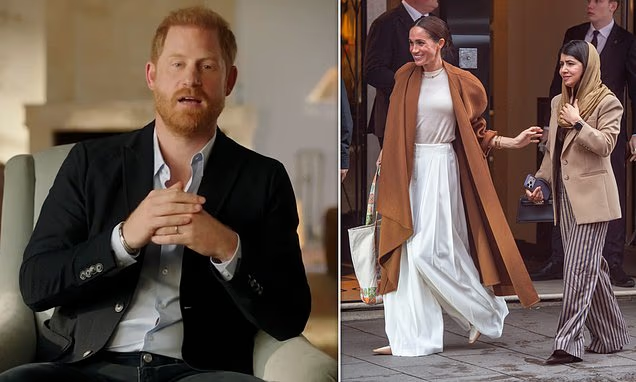
Prince Harry has continued to explore ways to share his personal experiences with audiences around the world, including discussions about grief, mental health, and the challenges of rebuilding life after major personal changes. A reported payment of up to $100,000 for a grief-focused masterclass has drawn attention to the commercial side of the Duke of Sussex’s public advocacy, raising questions about how celebrity-led wellness programs combine personal storytelling with paid digital services.
The reported arrangement described Harry as a “co-instructor” in a program focused on coping with grief. According to the claims surrounding the event, he received a fee for his participation and could potentially benefit from subscription revenue associated with the platform. The exact contractual terms, including whether any additional payments were ultimately made, should not be assumed without independently confirmed details.
The interest in the reported fee reflects the unusual position Harry occupies. As a member of the British royal family who stepped back from senior royal duties with Meghan, Duchess of Sussex, in 2020, he has developed a public profile that combines personal storytelling, charitable work, media projects, and commercial partnerships.
His willingness to discuss emotional difficulties has also become an important part of his public identity. By speaking about grief and mental health, Harry has sought to encourage conversations that many people still find difficult. At the same time, when such discussions are connected to paid programs or subscription services, questions naturally arise about the relationship between advocacy, business, and personal experience.
Prince Harry’s Reported $100,000 Grief Masterclass Fee
The reported payment of up to $100,000 for Harry’s participation in a grief-related masterclass has attracted attention because of the amount involved and the subject matter of the program.
A masterclass typically offers participants access to instruction, discussion, or personal insights from someone with recognized expertise or a distinctive life experience. In celebrity-led programs, that appeal may come partly from the instructor’s professional accomplishments and partly from their willingness to discuss personal challenges.
Harry’s involvement reportedly placed him in the role of a “co-instructor,” suggesting that he contributed to the program rather than simply appearing as a guest speaker. However, the precise scope of his responsibilities would depend on the arrangement between the Duke and the organization behind the program.
The reported figure should also be treated carefully. A payment described as “up to $100,000” does not necessarily establish that Harry received the maximum amount. Compensation can depend on the terms of an agreement, the nature of the appearance, and other conditions that may not be publicly available.
Similarly, a reported opportunity to receive part of subscription revenue is not the same as confirmation that such revenue was earned or paid out. Without verified contractual information, it is impossible to calculate Harry’s total income from the arrangement.
Nevertheless, the report highlights a broader trend: public figures increasingly participate in digital programs that turn their knowledge, experiences, and personal stories into content for paying audiences.
Why Harry Has Spoken About Grief and Mental Health
Mental health has become one of the recurring themes of Harry’s public work. Over the years, he has spoken about emotional struggles, the pressures of public life, and the importance of seeking support when dealing with difficult experiences.
His interest in these issues is closely connected to the death of his mother, Diana, Princess of Wales, in 1997. Harry was 12 years old when Diana died in a car crash in Paris. The loss occurred under intense public scrutiny, with global media attention focused on the royal family and the circumstances surrounding the tragedy.
Harry has spoken publicly about how difficult it was to process his mother’s death and how his approach to grief changed as he grew older. His reflections have helped bring attention to the fact that bereavement does not necessarily follow a predictable timeline.
For some people, grief becomes less intense over time. For others, memories and emotions can return unexpectedly, particularly during major life changes, anniversaries, or other significant moments.
Harry’s willingness to discuss his own experiences has made him a recognizable voice in conversations about emotional well-being. However, personal experience should not be confused with professional clinical expertise. A public figure can help reduce stigma and encourage people to seek support, while qualified mental health professionals remain important sources of assessment and treatment.
The reported masterclass appears to draw on the public interest in Harry’s personal perspective. Its appeal may lie in the opportunity for participants to hear how someone who has experienced highly publicized loss understands grief and emotional recovery.
Depression and the Challenges Following Megxit
The term “Megxit” became widely used in media coverage of Harry and Meghan’s decision to step back from their roles as senior working members of the British royal family in January 2020.
The couple subsequently established a life in California and pursued independent professional projects. Their decision marked a major transition, changing their relationship with the monarchy, the media, and the public responsibilities that had shaped their lives in Britain.
Harry has discussed the emotional pressures associated with his upbringing, public scrutiny, and major personal transitions. Reports connecting his comments about depression to the period after Megxit have added another dimension to the discussion of his mental health.
However, it is important to distinguish between describing emotional distress and making a definitive medical claim. Unless a specific diagnosis has been clearly established and confirmed in the relevant context, it would be inappropriate to present every reference to depression as proof of a particular clinical condition.
Major life changes can be emotionally demanding, particularly when they involve family relationships, public criticism, relocation, and uncertainty about the future. People may experience sadness, anxiety, isolation, or stress while adjusting to new circumstances.
Harry’s experiences have unfolded under unusual conditions because of his public status. Decisions that might be private for most families have often become subjects of international discussion, sometimes accompanied by strong and conflicting opinions.
His mental health advocacy has therefore operated within a complicated environment. Supporters may see his openness as a valuable contribution to reducing stigma, while critics may question how personal disclosures are presented through commercial platforms.
Both the content of his message and the circumstances in which it is delivered influence public perceptions.
How Subscription-Based Wellness Programs Make Money
The reported possibility that Harry could receive a share of subscriptions highlights how digital wellness businesses increasingly combine content, membership fees, and recognizable public figures.
Subscription platforms typically charge users for continued access to videos, courses, discussions, or other resources. Depending on the business model, instructors may receive a fixed payment, a licensing fee, compensation based on participation, a share of revenue, or a combination of these arrangements.
Celebrity involvement can help attract attention to a program, particularly when the subject relates to a personal experience that has already generated public interest.
However, the financial structure of any individual agreement depends on its actual terms. A reported revenue-sharing arrangement does not establish how much money a participant received, how many subscribers joined, or whether the program became commercially successful.
There is also a distinction between paying for access to a public figure’s perspective and paying for professional treatment. A recorded discussion about grief may offer comfort, insight, or a sense of connection, but it is not automatically a substitute for therapy or other evidence-based mental health care.
Consumers should understand what a program provides before subscribing, including the qualifications of its instructors, the scope of its content, and whether it offers educational material or clinical services.
For businesses, the challenge is to present wellness content responsibly while making clear what participants can reasonably expect.
Can Personal Grief Become a Commercial Product?
Harry’s reported involvement in a paid grief masterclass raises a question that extends beyond the Duke himself: when a public figure shares a painful personal experience for compensation, does the commercial arrangement diminish the value of the message?
There is no simple answer.
Public figures often earn income from speaking engagements, books, documentaries, and educational programs. Compensation does not automatically make their experiences less genuine or their advice less meaningful.
A paid program can also provide an opportunity to reach audiences who might not otherwise encounter a discussion about grief or emotional health. If the material encourages people to talk openly about loss and seek appropriate support, it may offer value to participants.
At the same time, grief is a sensitive subject. People dealing with bereavement may be particularly vulnerable to promises of quick relief or claims that a single course can resolve complicated emotional difficulties.
Responsible programs should avoid presenting grief as a problem that can be solved through a universal formula. They should also distinguish personal reflections from medical guidance and make clear when professional help may be appropriate.
The commercial context matters because audiences deserve transparency about what they are purchasing and what the instructor is qualified to provide.
In Harry’s case, the reported fee and possible subscription revenue have become part of the public discussion because his personal story and public profile are closely connected to the program’s appeal. The financial details deserve scrutiny, but they do not, by themselves, establish whether the program is useful or whether his participation is sincere.
The Business Side of Prince Harry’s Life After Royal Duties
Since stepping back from royal duties, Harry has developed a professional life that includes media production, public appearances, writing, and charitable initiatives.
His memoir, Spare, offered a detailed account of his upbringing, family relationships, and experiences within the royal institution. He has also participated in documentary projects and public conversations about mental health, military service, and the challenges of modern life.
These activities represent a significant change from the traditional responsibilities associated with a working royal. Instead of relying exclusively on an official royal role, Harry and Meghan have pursued projects through independent organizations and commercial partnerships.
Such work inevitably invites questions about money, influence, and public purpose. Some audiences view commercial opportunities as a reasonable way for the couple to support their independent lives and initiatives. Others scrutinize whether personal experiences are being packaged primarily for financial gain.
The reported masterclass fee fits within this broader debate. It illustrates how a globally recognizable public figure can turn personal experience into a professional opportunity, particularly when the subject aligns with issues he has discussed for years.
Yet the exact financial outcome should not be overstated. Without confirmed information about the agreement and any revenue-sharing terms, the reported maximum fee cannot be treated as a verified total payment.
What the Reported Arrangement Means for Harry’s Public Image
For Harry, the intersection of mental health advocacy and commercial activity creates both opportunities and reputational challenges.
His public profile allows him to reach people who might otherwise overlook discussions about grief. By talking about difficult experiences, he can help make emotional vulnerability seem less unusual, particularly among people who feel pressure to hide their struggles.
However, a commercial setting can change how audiences interpret the same message. Some may appreciate the opportunity to learn from a public figure, while others may question whether the program’s price is justified by the content.
The distinction between awareness and treatment is especially important. Raising awareness can encourage people to recognize emotional difficulties and seek help. Providing treatment, by contrast, requires appropriate clinical expertise and an approach suited to the individual’s needs.
Harry’s personal experiences may provide a compelling starting point for discussion, but no single person’s journey can represent everyone who experiences grief or depression.
Ultimately, the success of a grief-focused program should depend on the quality, honesty, and usefulness of its content—not simply the celebrity status of its instructor or the reported amount of money involved.
Conclusion: Grief, Advocacy, and the Business of Personal Experience
The reported payment of up to $100,000 for Prince Harry’s participation as a “co-instructor” in a grief masterclass has renewed attention to the relationship between his personal story and his commercial activities.
Harry has spoken publicly about losing his mother, navigating major life changes, and the importance of mental health. Those experiences have helped shape his public advocacy and may explain why a program focused on grief would attract interest.
At the same time, the reported fee and possible share of subscription revenue raise reasonable questions about transparency, the commercialization of personal experiences, and what audiences receive in return for paying to access wellness content.
The financial claims should be treated as reported arrangements rather than definitive proof of the total amount Harry earned. Likewise, references to depression and emotional distress should be presented with care, without assuming a diagnosis beyond what has been established.
The broader lesson is that personal storytelling and commercial work can coexist, but responsible communication matters—especially when the subject is grief. A public figure’s experience may help others feel less alone, yet it cannot replace individualized support or professional mental health care.
For Harry, the challenge is to ensure that the message about emotional well-being remains meaningful alongside the business arrangements that bring it to a wider audience. For the public, the most useful question is not simply how much a famous person was reportedly paid, but whether the information shared helps people understand grief, find appropriate support, and approach their own experiences with greater compassion.