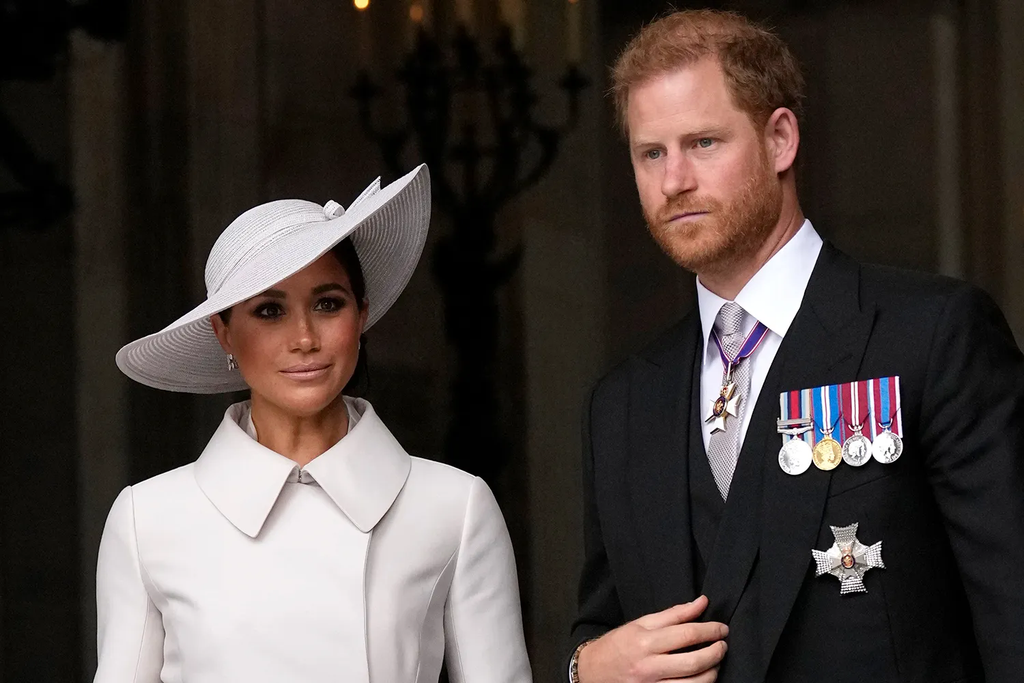
Prince Harry and Meghan Markle’s decision to step back from their senior royal roles in 2020 remains one of the most significant turning points in the modern history of the British monarchy. Years later, questions about the couple’s relationship with the royal institution, their discussions with Queen Elizabeth II, and the circumstances surrounding their departure continue to attract public attention.
A particularly contentious aspect of the story is the suggestion that Harry and Meghan never fully agreed with a royal decision made during the final months of their working royal lives. According to accounts attributed to people familiar with the couple, the arrangements surrounding their future roles left them feeling that important decisions were being made for them rather than with them. The phrase “foisted upon them” captures the frustration that has characterized some descriptions of the dispute.
However, understanding what happened requires separating documented events from personal interpretations. The couple’s departure involved discussions with the late queen, senior members of the royal family, and palace officials. Different accounts have presented the negotiations from different perspectives, and not every private conversation has been independently verified.
The story also reflects a broader question that has followed Harry and Meghan since they moved away from Britain: how much independence can a member of the royal family exercise while retaining a connection to the monarchy?
The Royal Decision That Changed Harry and Meghan’s Future
In January 2020, Prince Harry and Meghan announced that they intended to step back as senior members of the British royal family and work toward becoming financially independent. Their announcement followed months of public scrutiny and reported discussions about their future.
The couple explained that they wanted to develop a different working arrangement, dividing their time between the United Kingdom and North America while continuing to support Queen Elizabeth II. They also expressed a desire to build a more independent life for their family.
The announcement prompted an immediate response from the royal household. The proposed arrangement raised complicated questions about public duties, funding, security, and the use of royal titles.
For Harry, the decision involved more than a change of employment. He had spent his entire life within the royal institution, carrying out official engagements, supporting charitable causes, and representing the monarchy at home and abroad.
Meghan’s experience was different. Before marrying Harry in 2018, she had established a career as an actress and developed her own public identity. Joining the royal family brought new responsibilities and intense scrutiny, creating challenges that the couple later discussed publicly.
Their announcement therefore represented a major change for both of them. It was an attempt to redefine their relationship with the monarchy while establishing greater control over their professional and personal lives.
Yet the royal household faced a difficult task in determining whether the couple could continue performing some royal functions while operating independently.
Queen Elizabeth II’s Position on the Sussexes’ Future
Queen Elizabeth II approached the dispute as the head of an institution that depended on clear responsibilities and established conventions. While the monarchy had adapted to changing circumstances throughout her reign, the proposed arrangement presented an unusual challenge.
The queen’s position became clearer following a royal summit at Sandringham in January 2020. Senior members of the family discussed the implications of Harry and Meghan’s announcement and considered how their future roles could be structured.
In a statement issued later that month, Buckingham Palace confirmed that the couple would not continue undertaking official royal duties. They would no longer represent the queen in the same way as working members of the royal family, and they would relinquish certain privileges associated with their former positions.
The arrangements also addressed the couple’s use of the HRH style in an official capacity and their relationship with royal patronages.
For the monarchy, the decision established a clearer separation between official royal work and the couple’s independent activities. It also reduced the possibility that the Sussexes’ commercial projects might be confused with official royal representation.
For Harry and Meghan, however, the outcome meant that the future they had initially envisioned would look different from their proposal.
This is the central issue behind descriptions suggesting that the decision was “foisted upon them.” Such language reflects a perception that the final terms were imposed rather than fully negotiated to the couple’s satisfaction. It should not automatically be interpreted as proof that every element of the decision was made without discussion.
Why Harry and Meghan Wanted Greater Independence
Harry and Meghan’s desire for a different arrangement developed against a backdrop of intense media attention and public controversy.
The couple had repeatedly faced coverage of their relationship, their family life, and their decisions as working royals. Harry later spoke openly about his concerns regarding press intrusion and the effects that sustained public scrutiny could have on personal well-being.
Meghan also described feeling isolated and struggling with aspects of royal life. In interviews following their departure, the couple discussed tensions involving palace expectations, media coverage, and their experiences within the institution.
Their wish to establish an independent professional life was therefore connected to several objectives. They wanted greater control over their work, more flexibility in deciding which projects to pursue, and the ability to build a future for their children outside the traditional royal framework.
Financial independence was another important consideration. The couple explored opportunities in media production, public speaking, charitable initiatives, and other professional activities.
However, independence presented practical challenges. The royal family’s public responsibilities are closely connected to questions of funding, security, official representation, and constitutional expectations. A member of the family cannot necessarily retain every privilege associated with royal status while simultaneously operating outside the institution.
These competing priorities made the negotiations particularly difficult. Harry and Meghan wanted greater freedom, while the palace sought a structure that protected the distinction between official royal duties and private commercial work.
What Does “Foisted Upon Them” Mean in the Royal Dispute?
The phrase “foisted upon them” suggests that a decision was imposed on someone against their preferences or without meaningful agreement.
When applied to Harry and Meghan’s departure, it reflects the argument that the couple did not receive the precise arrangement they wanted. Their original announcement indicated a desire to step back from senior royal duties while retaining a continuing connection to the queen and the institution.
The final agreement established a more definitive separation from their official roles.
That difference helps explain why the negotiations have remained a subject of debate. From one perspective, the palace needed to establish clear rules that applied to the couple’s public responsibilities. From another, Harry and Meghan may have viewed the outcome as a restriction on the independence they had hoped to achieve.
It is important to distinguish between dissatisfaction with a decision and a claim that no discussion took place. The Sandringham meeting and subsequent palace statements demonstrate that the future arrangement was discussed at an institutional level.
The precise feelings of the individuals involved are harder to establish. Private conversations may be described differently by participants, advisers, and friends, and retrospective accounts can reflect personal interpretations.
Without a direct, verifiable statement identifying the exact decision and explaining the source’s knowledge of the private discussions, the phrase should be treated as a characterization rather than a complete account of the negotiations.
How the Decision Affected the Sussexes’ Relationship With the Royal Family
The events of early 2020 created a lasting change in Harry and Meghan’s relationship with the British royal family.
After stepping back from official duties, the couple relocated to North America and began developing independent professional projects. Their departure marked the end of their routine role as representatives of the queen.
In the years that followed, public interviews, documentaries, and Harry’s memoir, Spare, brought additional attention to disagreements within the family. Harry discussed his experiences growing up as a royal, his relationship with other members of the family, and his concerns about the institution.
These accounts generated strong reactions. Some observers praised Harry and Meghan for speaking openly about their experiences, while others criticized the couple for discussing private family matters publicly.
The differing responses illustrate how difficult it is to reconcile personal accounts with the expectations surrounding a constitutional monarchy.
The royal family has traditionally maintained a limited public response to private disputes, emphasizing continuity and official responsibilities. Harry and Meghan, by contrast, have used interviews and other platforms to explain their perspective.
Neither approach provides a complete account of every private disagreement. Nevertheless, the contrast has helped sustain public debate about the couple’s departure and the institution they left behind.
Queen Elizabeth’s Legacy and the Sussexes’ Departure
Queen Elizabeth II died in September 2022, bringing her historic reign to an end. Her death also changed the context in which the Sussexes’ relationship with the monarchy was understood.
Harry had spoken about his affection for his grandmother, and the queen remained an important figure in his life even after the couple moved away from their official roles.
Her approach to the departure reflected the responsibilities she carried as monarch. She had to consider the interests of individual family members alongside the long-term stability and public credibility of the institution.
That balancing act was not unique to the Sussexes. Throughout her reign, the queen encountered changes in social expectations, media practices, family circumstances, and public attitudes toward the monarchy.
The 2020 agreement nevertheless stood out because it involved a younger generation of royals seeking a more independent future while retaining an international public profile.
For Harry and Meghan, the decision shaped their lives in ways that extended far beyond the initial negotiations. Their move to the United States, their professional ventures, and their evolving relationship with royal relatives all followed from the change in status.
The queen’s death did not resolve every question about the departure, but it made the episode an important part of the history of her final years as monarch.
Could Harry and Meghan Ever Rebuild Their Royal Relationships?
The future of Harry and Meghan’s relationship with the royal family remains a subject of public interest. However, any assessment of reconciliation must account for the fact that relationships involve private feelings and conversations that outsiders cannot fully know.
Family relationships can change over time, particularly when people live in different countries and have different professional responsibilities. Rebuilding trust after a prolonged disagreement may require patience, communication, and a willingness to respect boundaries.
The Sussexes have established a life outside the working monarchy, while the royal family continues its official duties under King Charles III. Their positions are therefore different from those they occupied before 2020.
Any future improvement in relations would not necessarily mean a return to their former roles. Personal reconciliation and institutional reintegration are separate questions.
Public appearances, family visits, or brief statements can attract considerable speculation, but they do not automatically reveal the private state of relationships. It is more reliable to focus on confirmed developments than to interpret every gesture as evidence of a major change.
The central issue is whether the parties can find a workable relationship that respects their different circumstances and responsibilities.
Conclusion: A Royal Decision With Lasting Consequences
The suggestion that Prince Harry and Meghan Markle never agreed with Queen Elizabeth II’s royal decision captures the tension at the heart of their departure from the monarchy. The couple wanted greater independence and a different relationship with royal life, while the institution needed clear boundaries around official duties, privileges, and public representation.
The January 2020 Sandringham discussions resulted in an arrangement that ended their roles as working royals. Although the process involved discussions among senior family members and palace officials, the final outcome differed from the vision Harry and Meghan had initially presented.
Descriptions such as “foisted upon them” emphasize the possibility that the couple felt constrained by the final terms. Yet the phrase alone cannot establish every detail of their private conversations or prove that the decision was made without negotiation.
What is clear is that the agreement marked a decisive turning point. It changed the Sussexes’ professional lives, reshaped their relationship with the royal institution, and became a defining episode in the final years of Queen Elizabeth II’s reign.
Years later, the debate continues because it touches on a larger question: how can a centuries-old institution adapt when members of the next generation seek greater personal freedom?
The answer remains complicated. The Sussexes’ departure demonstrates that balancing individual ambitions with royal responsibilities can be difficult, even when the people involved share family ties and a long history. Ultimately, the episode remains an important reminder that behind the formal language of royal decisions are people navigating competing expectations, personal relationships, and the challenge of defining their own futures.