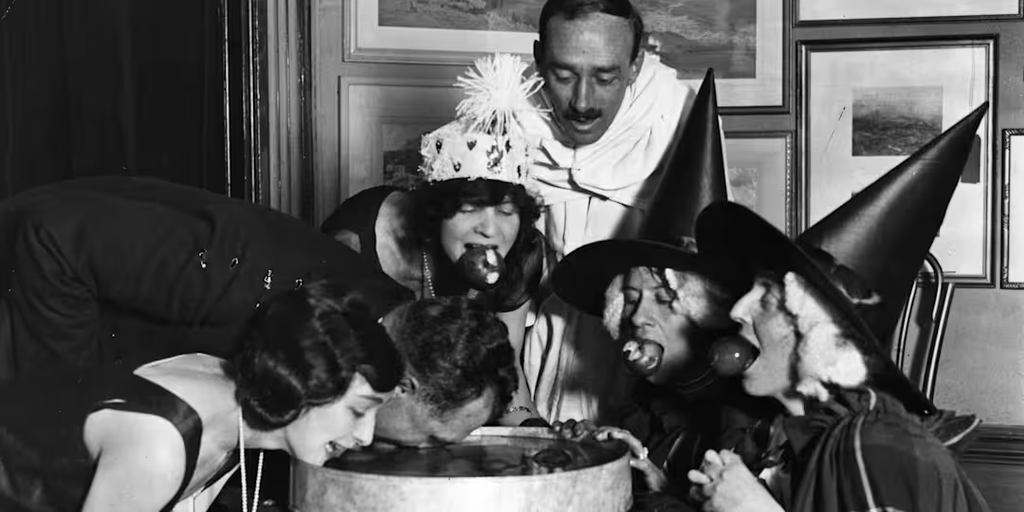
Plentiful during fall, apples have been a part of Halloween festivities for centuries.
Every autumn, as pumpkins appear on doorsteps and Halloween decorations fill shops and homes, another seasonal favorite quietly returns: the apple. From traditional apple bobbing games to caramel-coated treats and candy apples, this familiar fruit has become closely associated with Halloween celebrations. But how did apples earn their place in one of the year’s most recognizable holidays?
The answer lies in a combination of agricultural history, ancient seasonal customs, European folklore, and changing Halloween traditions. Apples have long been harvested in the fall, making them readily available when communities gathered to celebrate the end of the growing season. Over time, the fruit also became connected with courtship games, fortune-telling, and the supernatural themes that helped shape Halloween.
Although modern celebrations often focus on costumes, trick-or-treating, and candy, apples offer a reminder of the holiday’s older traditions. Their connection to autumn goes far beyond decoration or seasonal flavor. It reflects centuries of customs that evolved as people adapted older harvest celebrations into the Halloween festivities familiar today.
Why Apples Became Associated With Halloween
One of the simplest reasons apples became a Halloween staple is timing. In many parts of Europe and North America, apples ripen in late summer and autumn, with major harvests taking place during the weeks leading up to Halloween.
Before modern transportation and refrigeration made fresh produce widely available throughout the year, seasonal foods played a more prominent role in local celebrations. When communities gathered in October, apples were often among the most accessible fruits.
They could be eaten fresh, baked into pies, preserved, or used to make cider. Their versatility made them useful for both everyday meals and special occasions.
The abundance of apples also made them suitable for party games. Families could use fruit they already had on hand rather than purchasing special equipment. A bowl of water and a few apples were enough to create a simple game that could entertain children and adults alike.
As Halloween developed into a broader community celebration, these practical seasonal activities became part of its familiar traditions.
Apples were therefore associated with Halloween partly because they were available at the right time of year. Their symbolic meanings and role in folklore helped strengthen that connection.
The Ancient Origins of Halloween and Autumn Celebrations
To understand the older roots of Halloween, it helps to look at the Celtic festival of Samhain, traditionally observed around the end of October and the beginning of November.
Samhain marked a seasonal transition, often associated with the end of the harvest and the beginning of the darker part of the year. In later descriptions of Celtic tradition, it became closely connected with beliefs about the boundary between the living and the dead becoming less distinct.
The festival’s history is complex, and many modern Halloween customs cannot be traced directly to a single ancient ritual. Nevertheless, Samhain is an important part of the broader historical background to Halloween.
Apples were significant in the wider Celtic and European cultural world because they were valued foods and appeared in stories involving otherworldly places, love, knowledge, and immortality. However, it would be misleading to claim that modern apple bobbing was definitely practiced during ancient Samhain celebrations.
Halloween developed over many centuries through a combination of local customs, Christian observances, seasonal festivities, and folklore. Some traditions were adapted from earlier practices, while others emerged much later.
The apple’s place in Halloween is best understood as part of this gradual development rather than as a custom with one clearly documented ancient origin.
Apple Bobbing: The Classic Halloween Game
Few Halloween activities are more recognizable than apple bobbing. The game typically involves placing apples in a large basin of water and asking participants to catch one using only their mouths, without using their hands.
It is simple, inexpensive, and often surprisingly difficult. Apples float because their density is lower than that of water, making them move around as participants try to bite into them.
The game became particularly associated with Halloween through British and Irish customs that later influenced celebrations in North America.
Apple bobbing was not merely a children’s party activity in every historical setting. In some European traditions, apples were associated with courtship and attempts to predict romantic futures. Games involving apples could therefore take on a more symbolic meaning, especially among young people at seasonal gatherings.
Over time, the fortune-telling associations became less important in many places, while the playful challenge remained.
By the 19th and early 20th centuries, Halloween parties increasingly included organized games and refreshments. Apple bobbing fitted naturally into these gatherings because it required few supplies and could involve several people.
Today, the game remains a nostalgic Halloween activity, although some families prefer alternatives because sharing water and placing faces in a common basin can raise hygiene concerns. Individually assigned apples or other apple-themed games can offer a similar seasonal experience.
Apples, Courtship, and Halloween Fortune-Telling
Apples have appeared in European folklore for centuries, often carrying associations with romance, fertility, knowledge, and destiny.
These meanings made the fruit particularly suitable for seasonal games intended to predict future relationships. In some traditional Halloween and harvest customs, young people used apples in playful attempts to discover whom they might marry.
One well-known variation involved assigning names to apples. A person would try to catch an apple or identify one associated with a potential romantic partner. The game was sometimes interpreted as offering clues about a future spouse.
Another tradition involved peeling an apple in one long strip and tossing the peel over a shoulder. According to folklore, the shape it formed was said to reveal the initial of a future partner’s name.
The details varied by region and period, and these practices were not universal Halloween customs. They belonged to a wider collection of folk beliefs and seasonal courtship games.
Apples were especially appropriate for such traditions because they were familiar, plentiful, and easy to handle. Their appearance in stories about love and temptation also gave them symbolic associations that could be adapted to games involving luck and the future.
In modern celebrations, these fortune-telling customs are less common than costumes and candy. Still, they offer an intriguing glimpse into a time when Halloween gatherings could include activities intended not only to entertain but also to explore hopes and uncertainties about the future.
Why Apples Appear in Halloween Folklore
The apple’s cultural significance extends beyond Halloween. Across European mythology and literature, apples have appeared as symbols of beauty, temptation, wisdom, and transformation.
In Greek mythology, for example, golden apples feature in several stories involving divine power and heroic challenges. In other European traditions, magical apples appear in tales of enchanted gardens and supernatural encounters.
These stories do not all share the same origins or meanings, but together they demonstrate how the fruit became a powerful symbol in folklore.
Halloween’s association with spirits, mystery, and the supernatural made it easy for apple-related customs to fit into the holiday’s atmosphere. A simple fruit could become part of a game about destiny or a story about magic.
It is important, however, to distinguish between the apple’s broad mythological history and specific Halloween practices. Not every story involving apples contributed directly to Halloween, and many customs developed independently in different communities.
The connection is cultural rather than the result of one continuous tradition stretching unchanged from ancient mythology to modern Halloween parties.
From Fresh Fruit to Caramel and Candy Apples
While apple bobbing reflects Halloween’s older folk traditions, caramel and candy apples represent a different chapter in the fruit’s seasonal history.
Candy apples, often coated in a hard, shiny sugar shell, became popular in the United States during the early 20th century. Their development is commonly associated with confectionery makers experimenting with leftover red candy coating.
Caramel apples, which feature apples covered in soft or chewy caramel, also became popular in the United States during the 20th century. They combined the freshness and tartness of apples with the sweetness of confectionery, creating a treat that appealed to children and adults.
Both styles fit naturally into fall celebrations because apples were widely available and their coatings transformed an everyday fruit into something special.
As Halloween became increasingly commercialized, sweets played a growing role in parties, neighborhood celebrations, and trick-or-treating. Candy apples and caramel apples became seasonal favorites alongside pumpkin desserts, cookies, and other autumn treats.
Their popularity also reflects the changing nature of Halloween. Earlier customs often centered on community gatherings, folk games, and seasonal foods, while modern celebrations frequently include packaged candy and elaborate decorations.
Even so, the basic appeal remains the same: apples are familiar autumn fruit, and adding a sweet coating makes them feel festive.
Apples in Modern Halloween Celebrations
Today, apples remain part of Halloween in several forms. Some families organize apple-bobbing games, while others serve caramel apples, apple cider, or baked desserts at seasonal gatherings.
Schools, community centers, and local festivals may incorporate apples into harvest-themed activities. In areas where apple orchards are common, autumn events can include fruit picking, cider tasting, and family activities that connect Halloween with the agricultural season.
Apples also offer a useful alternative to some traditional Halloween sweets. Fresh apple slices, baked apples, or smaller portions of caramel apple can provide variety at a party, although individual dietary needs and food allergies should always be considered.
For people interested in historical traditions, apple-themed games can also provide a way to introduce children to the folklore behind Halloween. A simple activity can lead to discussions about harvest celebrations, European customs, and the way holidays change over time.
Modern celebrations do not need to reproduce historical practices exactly. Families can adapt them to suit their preferences, whether that means playing a modified bobbing game, preparing homemade treats, or visiting an orchard.
The continuing presence of apples demonstrates how seasonal foods can preserve a connection to the past even as the holiday around them evolves.
Are Apples a Traditional Halloween Food Everywhere?
Although apples are strongly associated with Halloween in parts of Britain, Ireland, and North America, they are not a universal Halloween food.
Different countries celebrate autumn festivals and commemorations of the dead in different ways. Foods associated with these occasions reflect local harvests, religious traditions, and regional ingredients.
In Mexico, for example, Día de los Muertos celebrations commonly feature foods such as pan de muerto, a traditional bread prepared for the occasion. In other places, families may prepare special dishes to honor deceased relatives or celebrate the changing seasons.
Halloween itself has also spread internationally, with local communities adapting its customs to their own cultural settings.
Apples remain particularly prominent in regions where they are widely grown and where British and Irish Halloween traditions influenced later celebrations. Their role is therefore shaped by both agriculture and cultural history.
Recognizing these differences helps explain why apples are a familiar Halloween symbol in some places but less important in others.
Conclusion: The Lasting Connection Between Apples and Halloween
Apples became part of Halloween through a combination of seasonal availability, European folklore, harvest customs, and changing social traditions.
Their autumn harvest made them a natural choice for gatherings held around the end of October. Over time, apple-related games became associated with courtship and fortune-telling, while apple bobbing developed into one of the holiday’s best-known activities.
Later, candy apples and caramel apples added a sweet, festive dimension to Halloween celebrations, reflecting the growing popularity of confectionery and organized parties.
Although some popular explanations connect apples directly to ancient Celtic rituals, the historical record is more complicated. Halloween developed through many influences, and not every modern custom can be traced to a specific ancient practice.
What is clear is that apples have remained relevant because they are versatile, familiar, and closely tied to the autumn season. They can be eaten fresh, transformed into treats, or used in games that bring people together.
The next time an apple appears beside a pumpkin or on a Halloween party table, it is worth remembering that the fruit represents more than a seasonal snack. It carries echoes of harvest traditions, old folk beliefs, and generations of people finding simple ways to celebrate the arrival of autumn.