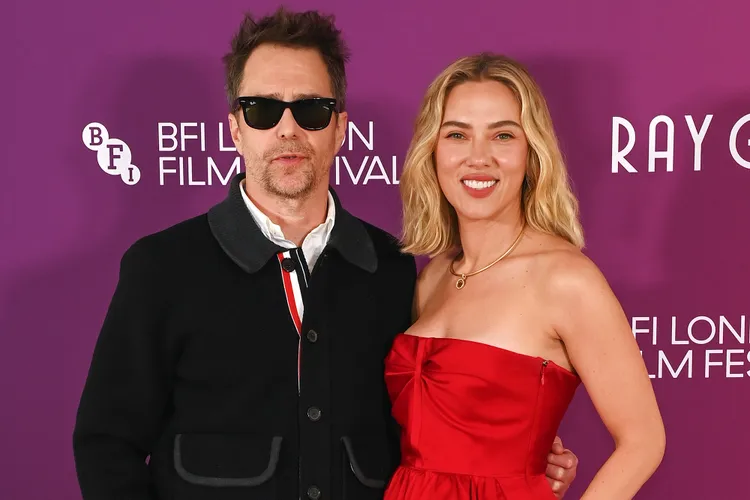
Another major attraction is the film’s director, Brad Bird, whose work has helped shape modern animation. Bird is known for directing The Iron Giant, The Incredibles, Ratatouille, and Incredibles 2. His projects frequently combine striking visual design with characters who have complicated emotional lives.
For Johansson, the opportunity to work with Bird was a major reason she joined the project. She has expressed admiration for his filmmaking and described the collaboration as a dream opportunity.
Ray Gunn also represents a long-developed creative ambition for Bird. The film draws on classic detective stories, science-fiction imagery, and the visual language of Art Deco design to create a world that feels both familiar and unusual.
The setting, Metropia, is an enormous alternate-future city inspired by a vision of what the world might have imagined in the late 1930s. Its towering buildings, flying vehicles, and mixture of human and alien residents create a striking backdrop for a detective story.
This visual approach gives Johansson and Rockwell an unusual environment in which to develop their characters. Their voices must communicate the emotional details that a live-action film might convey through facial expressions, gestures, and physical interaction.
The result depends on a close relationship between the voice performances and the animation. Bird’s direction encourages the characters to feel spontaneous rather than overly polished, allowing moments of awkwardness, humor, and tension to become part of the storytelling.
The Voice Cast Brings More Star Power
Johansson and Rockwell are joined by a talented ensemble that includes Tom Waits, Bobby Cannavale, Michelle Rodriguez, Alan Tudyk, and Patton Oswalt.
Waits voices Eye-Ra, Ray Gunn’s alien sidekick, adding another distinctive performer to the film’s unusual world. His recognizable gravelly voice offers a natural fit for a character living in a city filled with strange personalities and dangerous situations.
Cannavale, Rodriguez, Tudyk, and Oswalt bring additional experience in comedy, drama, and animation. Their participation helps establish Ray Gunn as a substantial ensemble production rather than a simple two-character detective story.
The supporting cast is important because the fictional city is designed to feel crowded with different personalities, social groups, and competing interests. A mystery involving murder, corruption, and a famous multimedia personality naturally creates opportunities for a variety of characters to influence the investigation.
At the center, however, remains the relationship between Ray Gunn and Venus Nova. Their contrasting personalities provide the foundation for the story, while the surrounding characters complicate the detective’s efforts to understand what is really happening.
For Johansson and Rockwell, the supporting cast also creates opportunities to explore different tones within the same film. The story combines noir tension with science-fiction spectacle and moments of humor, requiring performances that can move naturally between those elements.
What Makes Their Partnership Work?
The strongest collaborations often develop when performers understand how one another approaches a scene. Johansson’s comments suggest that familiarity and mutual respect are central to her relationship with Rockwell.
They have now worked together across different genres and production styles, from superhero action to historical comedy and animated science fiction. That experience gives them a shared understanding of timing, reactions, and the small choices that make performances feel believable.
Their friendship also allows them to approach scenes without excessive formality. Rather than trying to make every exchange sound perfect, they can respond to one another and allow unexpected moments to shape the performance.
That quality is particularly valuable in a detective story, where dialogue often depends on what characters choose not to say as much as what they reveal. A pause, a change in tone, or an unexpectedly funny response can alter the meaning of an entire exchange.
In Ray Gunn, the characters must navigate a world where appearances can be deceptive and personal motives are not always clear. The chemistry between the two leads helps make those interactions engaging.
The film therefore offers more than another reunion between familiar actors. It demonstrates how an established creative relationship can continue to develop when the performers are placed in a completely different storytelling environment.
Conclusion: Scarlett Johansson and Sam Rockwell’s Chemistry Returns in ‘Ray Gunn’
Scarlett Johansson’s praise for Sam Rockwell has added another reason to look forward to Ray Gunn, the animated science-fiction detective film directed by Brad Bird.
By describing their relationship as one built on friendship and mutual admiration, Johansson has explained why working with Rockwell continues to be enjoyable after their collaborations on Iron Man 2 and Jojo Rabbit.
Their third film together places them in a new creative environment. Rockwell voices Raymond Gunn, a private investigator caught in a dangerous mystery, while Johansson voices Venus Nova, a celebrated multimedia star whose circumstances draw the detective into a complicated case.
The film’s alternate-reality setting, retro-futuristic city, and blend of detective noir and science fiction give the actors plenty of opportunities to explore different dimensions of their performances. Bird’s direction and the supporting voice cast further strengthen the project’s appeal.
Ray Gunn is scheduled for a limited theatrical release on December 4, 2026, followed by its Netflix streaming debut on December 18.
For Johansson and Rockwell, the project is another opportunity to turn a longstanding professional connection into an entertaining on-screen partnership—even when their performances are heard rather than seen.
Their reunion suggests that great chemistry is not necessarily about repeating what worked before. Sometimes, it is about taking a familiar creative partnership into an entirely new world and discovering what the two performers can create together next.