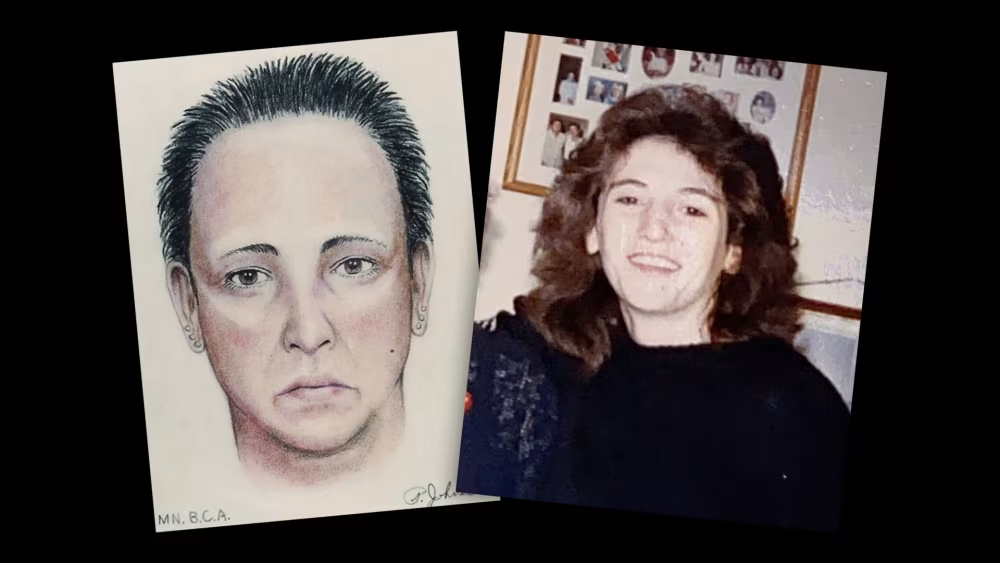
For more than three decades, a woman whose remains were discovered in two Minnesota lakes remained unidentified, leaving investigators with unanswered questions about her identity and the circumstances surrounding her death. Known as Bone Lake Jane Doe, the woman became the subject of a long-running investigation that remained unresolved for 33 years.
On June 11, 2026, the Washington County Sheriff’s Office announced a significant breakthrough: the woman had been identified as Denise Elaine Sexton Hartley. The announcement brought an end to the long period during which authorities were unable to put a name to the remains discovered in June 1993.
Although the identification represents an important milestone, it does not necessarily answer every question surrounding the case. Investigators must still examine the circumstances of Hartley’s death and determine what information may help explain how her remains came to be found in two separate lakes in Minnesota.
The case highlights the challenges of identifying people whose remains have gone undiscovered or unidentified for years. It also demonstrates why investigators continue to revisit cold cases as forensic science advances and new information becomes available.
For Denise Elaine Sexton Hartley, the announcement restores her identity to a case that had remained a mystery for more than three decades. For investigators, it creates an opportunity to learn more about the woman behind the Jane Doe designation and to seek answers about what happened in the summer of 1993.
Who Was Bone Lake Jane Doe?
Before her identification, the woman was known as Bone Lake Jane Doe, a name used to distinguish an unidentified person in investigative records. The designation reflected a central difficulty in the case: despite the discovery of her remains, authorities had not established who she was.
The Washington County Sheriff’s Office announced on June 11, 2026, that the woman was Denise Elaine Sexton Hartley. The identification was an important development because a confirmed name can help investigators connect an unidentified-person case with missing-person records, personal history, and information from people who may have known the individual.
However, a name alone does not provide a complete account of a person’s life. Questions about Hartley’s background, her movements before her death, and the circumstances that brought her remains to two lakes remain important to understanding the case.
When an unidentified person is finally named, investigators may have new avenues to explore. They can examine historical records, search for people who had contact with the individual, and compare information about the person’s life with evidence preserved from the original investigation.
Such work can be particularly important in cases that have remained unresolved for decades. Memories may have faded, records may be scattered across different locations, and people who could provide useful information may not realize that details they remember are relevant.
Hartley’s identification therefore represents more than a change in an official record. It gives investigators a clearer starting point for examining the circumstances surrounding a case that had remained open to questions for 33 years.
The June 1993 Discovery in Two Minnesota Lakes
The case dates back to June 1993, when a woman’s remains were discovered in two separate lakes in Minnesota. The unusual circumstances of the discovery prompted an investigation, but the woman’s identity remained unknown for decades.
Finding remains in separate locations can create additional challenges for investigators. Authorities may need to determine whether the discoveries are connected, establish what evidence can be recovered from each location, and reconstruct the sequence of events that led to the remains being found.
The condition of human remains can also affect the investigative process. Exposure to water and the passage of time may complicate identification, while environmental conditions can influence the evidence available to forensic specialists.
In an unidentified-person case, investigators may examine the remains for information that can help establish identity. Depending on the evidence available, this can include forensic anthropology, dental records, fingerprints, DNA analysis, and comparisons with missing-person reports.
The discovery in June 1993 became the starting point for the Bone Lake Jane Doe investigation. Yet without a confirmed identity, it would have been difficult to connect the case to a particular person’s history or to seek information from people who knew her.
The announcement in June 2026 finally provided that missing identification. Even so, the precise circumstances surrounding the discovery and the events that preceded it must be distinguished from the fact of identification itself.
The central questions remain what happened to Denise Elaine Sexton Hartley and how investigators can establish a clearer understanding of her final days.
Why Identifying Jane Does Can Take Decades
Cases involving unidentified human remains can remain unresolved for years, even when investigators have preserved evidence and pursued available leads. The reasons vary from case to case, but a lack of identifying information can make every subsequent step more difficult.
When authorities cannot establish a person’s name, they may have no clear way to contact relatives or compare the case with a specific missing-person report. If a missing person was reported in another state or under incomplete information, connecting that report to unidentified remains may require extensive investigation.
In older cases, forensic technology also presented limitations that have since changed. DNA analysis, digital databases, and improved methods for comparing records have created additional opportunities to revisit cases that once seemed difficult to solve.
However, advances in technology do not guarantee that every unidentified person will be named quickly. Investigators still need usable evidence, reliable comparisons, and careful analysis before reaching a conclusion.
The passage of time can create further obstacles. Witnesses may move away, memories may become less precise, and documents may be difficult to locate. Investigators may also need to coordinate with multiple agencies when a case involves different jurisdictions.
The identification of Bone Lake Jane Doe illustrates the importance of continuing to review unresolved cases. A case that remained unidentified for 33 years can still reach a significant turning point when investigators establish a reliable connection between the remains and a person’s identity.
The specific method used to identify Hartley should be distinguished from general advances in forensic science unless authorities have confirmed the details. What the announcement establishes is that investigators were ultimately able to identify the woman after decades of uncertainty.
What Happens After an Unidentified Person Is Named?
Identifying a Jane Doe is often one of the most important milestones in a cold-case investigation. Yet it does not necessarily resolve the questions surrounding the person’s death.
Once an identity is established, investigators can examine information that may not have been accessible during the initial investigation. This may include historical records, missing-person information, family connections, and details about the person’s activities before the discovery of the remains.
Authorities may also revisit evidence collected in 1993. New analytical techniques or a better understanding of the circumstances may help investigators assess earlier findings from a different perspective.
Another important step is reconstructing a timeline. Investigators may seek to determine when Hartley was last known to be alive, where she had been, and whether anyone remembers seeing or speaking with her around the time of her death.
Witness information can be valuable, especially when combined with other evidence. Someone who remembers an unusual event or a conversation from decades ago may provide a lead that investigators can examine further.
However, investigators must evaluate each lead carefully. A person’s recollection or association with a case is not proof of wrongdoing, and conclusions must be based on evidence rather than speculation.
The objective is to establish the facts surrounding Hartley’s death and determine whether additional investigative steps are warranted.
The Importance of the Washington County Sheriff’s Office Announcement
The June 11, 2026, announcement by the Washington County Sheriff’s Office marked a major development in a case that had remained unresolved since the discovery of the remains in 1993.
Official identification announcements are important because they provide a documented connection between an unidentified person and a confirmed identity. They also allow investigators to communicate the development to the public and potentially reach people who may possess relevant information.
In long-running cases, public awareness can be particularly valuable. Someone who knew the person may have moved away or lost contact with investigators over the years. A renewed announcement can bring the case to the attention of people who were unaware that the person had remained unidentified.
It can also encourage individuals to reconsider information they previously dismissed as unimportant. A remembered conversation, a detail about someone’s movements, or knowledge of a person’s circumstances may become relevant when considered alongside other evidence.
At the same time, an official announcement should not be interpreted as proof that all aspects of a case have been resolved. Confirming the identity of the person is different from determining exactly how the person died or whether another individual was responsible.
For Bone Lake Jane Doe, the identification is a substantial step forward. The broader investigation must still address the questions surrounding the discovery of her remains and the events leading up to it.
Remembering the Person Behind the Jane Doe Name
Unidentified-person cases are often discussed through the details of a discovery: the location, the date, the condition of the remains, and the investigative challenges. Those details are necessary, but they represent only one part of the story.
Behind the name Bone Lake Jane Doe was a person who had a life before becoming the subject of an investigation. The identification of Denise Elaine Sexton Hartley restores her name to the record and provides a more personal foundation for understanding the case.
For anyone who knew Hartley, learning that her remains had finally been identified may bring a mixture of relief and renewed sadness. An identification can resolve one long-standing uncertainty, but it may also raise difficult questions about the circumstances surrounding a death.
The announcement also serves as a reminder that unidentified people should not be reduced to case numbers or anonymous labels. Every identification represents an opportunity to recognize the person involved and, where possible, reconnect the investigation with their history.
Cold-case work requires patience because answers may emerge slowly. Investigators must preserve evidence, examine new information, and remain open to developments even after many years have passed.
The identification of Hartley demonstrates why that work matters. After 33 years, authorities have established who the woman was, giving the case a new direction and making further investigation possible.
Bone Lake Jane Doe: An Identification, but Not the End of the Story
The identification of Bone Lake Jane Doe as Denise Elaine Sexton Hartley marks a major development in a Minnesota cold case that began in June 1993.
Her remains were discovered in two separate lakes, but her identity remained unknown for 33 years. On June 11, 2026, the Washington County Sheriff’s Office announced that investigators had identified her, ending a long period of uncertainty over who the woman was.
The breakthrough represents an important achievement in the investigation. It gives authorities a confirmed name and creates opportunities to examine Hartley’s history, revisit evidence, and seek information that may clarify the circumstances surrounding her death.
Nevertheless, important questions remain. The identification alone does not establish what happened to Hartley or explain why her remains were found in two separate lakes. Those questions require further investigation and evidence-based conclusions.
The case highlights the value of persistent cold-case work and the importance of continuing to seek answers even when decades have passed. Advances in forensic science and renewed investigative attention can help authorities make progress, although each case presents its own challenges.
For Denise Elaine Sexton Hartley, the announcement means she is no longer known only as Bone Lake Jane Doe. Her name has been restored to the case, providing a meaningful step toward understanding her story.
The next challenge is to establish what happened in the summer of 1993. After 33 years, the identification has brought investigators closer to answering that question, but the search for a fuller account of Hartley’s final days continues.