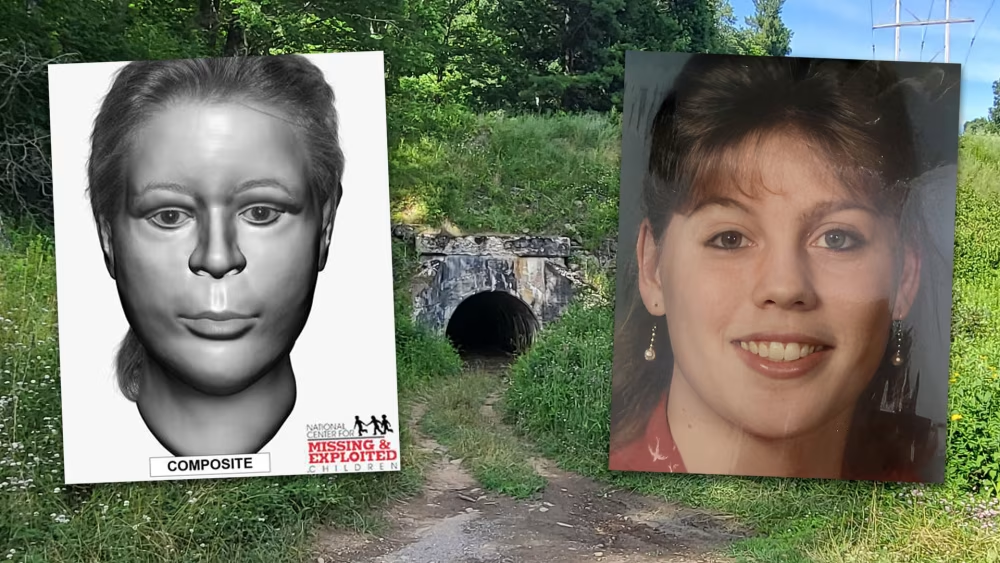
For more than three decades, a woman whose remains were discovered in rural Pennsylvania remained unidentified, known only as a Jane Doe in investigative records. Now, authorities have announced that the woman has been identified as Windy Buchanan, bringing a significant development to a case that has remained unresolved since the summer of 1990.
The remains were found in July 1990 in Monroe Township, Clarion County, Pennsylvania. Although the discovery prompted an investigation, the woman’s identity remained a mystery for 36 years. The announcement has given investigators a name to associate with the case and offers a new starting point for efforts to understand the circumstances surrounding her death.
However, identifying the woman is only one part of the investigation. Authorities are still working to establish what happened that summer, including the events that led to the discovery of her remains. Important questions remain unanswered, and investigators must continue examining the available evidence to determine how the case unfolded.
The identification of Windy Buchanan highlights the importance of persistent investigative work and the growing role of modern identification methods in cold cases. It also brings renewed attention to the human story behind an unidentified-person investigation: a woman whose name remained unknown for decades and whose circumstances have yet to be fully explained.
Who Was Windy Buchanan?
For years, the woman found in Clarion County was known to investigators as a Jane Doe, a designation commonly used when a person’s identity has not been established. Without a confirmed name, investigators face significant challenges when attempting to reconstruct someone’s final days, identify relatives, or understand the circumstances surrounding a death.
The announcement identifying the woman as Windy Buchanan marks an important change in the case. Her name replaces the anonymous designation that followed her remains for more than three decades and provides investigators with a more specific foundation for further inquiries.
Despite this breakthrough, many details about Buchanan’s life and final movements have not been established publicly in the information available about the case. Questions about where she had been living, whom she had last seen, and what brought her to Monroe Township remain important areas for investigators to examine.
These unanswered questions matter because identifying a person does not automatically explain how or why that person died. Investigators must establish a reliable timeline and assess any available evidence before drawing conclusions about the circumstances.
For Buchanan’s family, friends, or anyone who may have known her, the identification could be especially significant. Someone who once knew her may remember a detail that seemed unimportant at the time but could now help investigators understand what happened.
The announcement therefore represents an important step, but it should not be mistaken for the conclusion of the investigation.
The July 1990 Discovery in Monroe Township
The case began in July 1990, when human remains were discovered in Monroe Township, a community in Clarion County in northwestern Pennsylvania.
At the time, the discovery initiated an investigation into the identity of the person and the circumstances surrounding the death. Establishing who someone is can be difficult when investigators have limited identifying information or cannot immediately connect the remains to a missing-person report.
In cases involving unidentified remains, investigators typically document the discovery location, examine the available physical evidence, and work with forensic specialists to determine what information can be established. Depending on the condition of the remains and the evidence available, this process may include forensic anthropology, dental comparisons, fingerprint analysis, or DNA testing.
The methods available to investigators in 1990 were also different from many of the techniques used today. Advances in forensic science and identification technology have created new opportunities to revisit cases that once seemed unlikely to be solved.
Nevertheless, the discovery of remains is only the beginning of a complicated process. Investigators must establish the person’s identity, determine what can be learned about the circumstances of death, and assess whether the available evidence supports further investigative leads.
In Buchanan’s case, the remains remained unidentified for 36 years. That lengthy period underscores the difficulties associated with cases in which investigators cannot establish a person’s identity soon after the initial discovery.
The location in Monroe Township remains a central part of the case because understanding the circumstances of the discovery may help authorities reconstruct the events that brought Buchanan there.
Why the Case Remained Unsolved for 36 Years
Cold cases can remain unresolved for many reasons. Investigators may lack reliable witness accounts, physical evidence may be limited, and the person involved may not have been reported missing in a way that allows authorities to make an immediate connection.
When remains are unidentified, even basic investigative questions become difficult to answer. Without a name, authorities may have no clear way to contact relatives, obtain personal history, or compare the case with information held by other agencies.
Over time, records may become difficult to locate, witnesses may move away, and memories of events may fade. In some cases, people who could have provided useful information may no longer be available to investigators.
The passage of time does not necessarily mean that a case has been forgotten. Law enforcement agencies may preserve records and evidence while periodically reviewing unresolved investigations as new information or techniques become available.
Modern forensic methods have helped authorities revisit some older cases with fresh possibilities. DNA analysis, improved databases, digital recordkeeping, and renewed public attention can sometimes produce leads that were unavailable decades earlier.
However, it is important not to assume which particular method led to Buchanan’s identification unless authorities have confirmed it. The announcement establishes her identity, but the specific investigative steps responsible for the breakthrough should be distinguished from general developments in cold-case investigations.
What is clear is that the identification gives investigators a new avenue to explore. Information associated with Buchanan’s identity may help authorities compare existing records, examine her known connections, and search for evidence that could clarify the events of July 1990.
What Happens After a Jane Doe Is Identified?
Identifying unidentified human remains is often a major milestone, but it does not necessarily resolve the larger case. Investigators must still determine the circumstances surrounding the person’s death and whether any criminal activity was involved.
The next stage may involve reviewing the original investigation, reassessing physical evidence, and comparing the case file with information that has become available since 1990.
Investigators may also seek to establish Buchanan’s movements before her death. This can include identifying places she visited, people she knew, and any contact she may have had with individuals who could provide relevant information.
Witness interviews can be particularly important in long-running investigations. People who knew Buchanan may remember conversations, relationships, or events that were never connected to the case when the remains were first discovered.
Authorities may also examine whether other records contain information that could help establish a timeline. Depending on the evidence, this process could involve missing-person records, historical reports, or other documentation from the period.
Every lead must be evaluated carefully. A name, an association, or a recollection may provide a useful starting point, but investigators need corroborating evidence before reaching conclusions.
The central question remains what happened to Windy Buchanan during the summer of 1990. Establishing her identity makes it possible to investigate that question with a clearer understanding of who she was.
Investigators Continue Seeking Answers
Authorities are working to determine what happened in Monroe Township that summer. The identification of Buchanan may help investigators revisit the case with a better understanding of the person at its center, but the circumstances surrounding her death remain unresolved.
Important questions include what brought Buchanan to the area, when she died, and whether anyone has information that could help explain the events leading to the discovery of her remains.
Investigators may also need to determine whether the evidence supports a criminal investigation or another explanation for the death. Until the relevant facts have been established, it would be premature to speculate about a suspect, a motive, or the precise circumstances involved.
Members of the public can sometimes play a valuable role in cold-case investigations. A person who knew Buchanan, remembers seeing her in the area, or recalls a conversation from that period may have information that was never shared with authorities.
Even seemingly minor details can become important when considered alongside other evidence. Investigators must assess such information carefully, especially when many years have passed and memories may be incomplete.
Anyone with relevant information should follow official guidance from the investigating authorities and provide details through the appropriate law enforcement channels.
The continuing investigation is an opportunity to build on the identification breakthrough and seek a clearer account of what happened to Buchanan.
The Human Cost of Unidentified-Person Cases
Behind every Jane Doe case is a person whose life extended far beyond the circumstances in which their remains were discovered. The term may be used in official records, but it cannot capture the relationships, experiences, and memories that formed that person’s life.
For 36 years, the woman found in Monroe Township remained unidentified. That uncertainty may also have affected people who knew her, including relatives or friends who were left without a clear explanation of what had happened.
An identification can provide an important form of recognition. It allows authorities to use the person’s name, reconnect the investigation with her history, and potentially give loved ones information they have waited years to receive.
However, identification does not eliminate every uncertainty. Families may still need answers about a person’s final days, the circumstances of death, and whether anyone was responsible.
These cases also demonstrate why preserving evidence and continuing to review unresolved investigations can matter. New technology and renewed investigative attention may create opportunities to identify people who remained unknown for decades.
The identification of Windy Buchanan is therefore significant not only because it changes the status of a longstanding case, but also because it restores a name to a woman whose story has remained incomplete.
A Name Revealed, but the Mystery Remains
The identification of Windy Buchanan after 36 years marks an important development in the investigation into the remains found in Monroe Township, Clarion County, Pennsylvania, in July 1990.
For decades, the woman was known only as Jane Doe. Authorities have now established her identity, giving the case a new foundation for further investigation. Yet the questions surrounding her death remain, and officials are continuing to work to determine what happened that summer.
The breakthrough illustrates both the challenges and the possibilities of cold-case investigations. Time can make evidence harder to interpret and witnesses more difficult to locate, but a case can still move forward when investigators gain new information or find ways to reassess what they already know.
For Windy Buchanan, the identification means that her name is no longer missing from the record of the case. For investigators, it opens the door to further questions about her life, her movements, and the circumstances that led to the discovery of her remains.
The investigation is not over. Authorities are still seeking answers, and any reliable information connected to Buchanan or the events of July 1990 could help clarify the case.
After 36 years, a long-standing mystery has reached an important turning point. The next challenge is to determine what happened to Windy Buchanan—and to establish the facts that have remained unknown for so long.