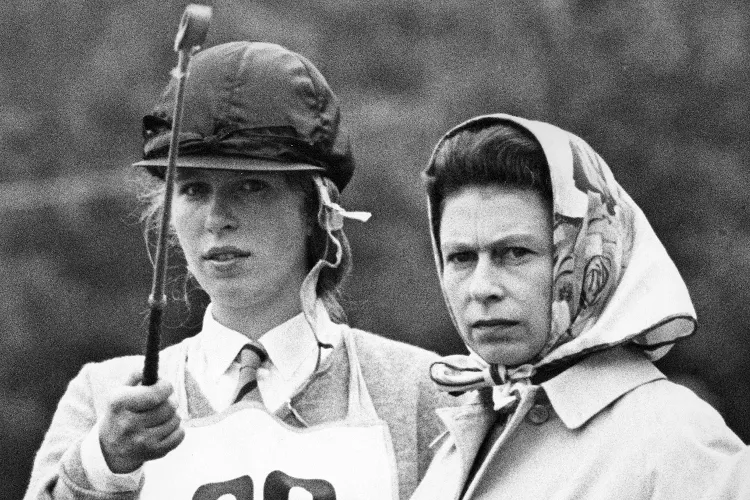
Queen Elizabeth II and her only daughter, Princess Anne, shared one of the most enduring relationships in the British royal family. Their bond was shaped by decades of public service, family milestones, and a mutual passion for horses that connected them both inside and outside their official duties. From childhood photographs at royal residences to memorable appearances at equestrian events, images of the late monarch and the Princess Royal offer a fascinating look at their relationship over the years.
Princess Anne was born on August 15, 1950, when her mother was still Princess Elizabeth and her grandfather, King George VI, occupied the throne. Just two years later, Elizabeth became queen, beginning a reign that would last more than seven decades. Anne grew up alongside the extraordinary demands of royal life, eventually developing a reputation for independence, discipline, and an unwavering commitment to public service.
Although the queen and her daughter often appeared together at official ceremonies, some of their most revealing photographs capture quieter moments: watching horses, attending competitions, sharing family celebrations, or standing together during important events in the monarchy’s history.
Looking back through 24 memorable photographs offers a visual journey through their lives, highlighting not only their changing appearances but also the interests, traditions, and family connections they shared.
1. Princess Anne’s Early Childhood With Her Mother
Photographs from Princess Anne’s early years show a young royal growing up in a family that was already under intense public attention. Born at Clarence House in London, Anne spent her earliest years before her mother’s accession to the throne transformed the family’s daily life.
In childhood photographs, Elizabeth often appears beside her daughter in carefully arranged family portraits. These images reflect the conventions of royal photography during the early 1950s, when formal poses were common even for private family occasions.
Yet the photographs also preserve an important moment in the queen’s personal life. Before becoming monarch, Elizabeth was a young mother raising her children while preparing for responsibilities that would soon become central to her existence.
Anne’s childhood would be shaped by this unusual combination of family life and public duty. Her relationship with her mother developed within a household where the needs of the monarchy were always present.
2. A Family Portrait With King George VI
Family photographs featuring Elizabeth, Anne, and King George VI offer a glimpse into the final years of the previous royal generation.
Anne was still very young when her grandfather died in February 1952. His death brought Elizabeth to the throne and changed the future of the entire family.
Images from this period capture the transition between two eras of the monarchy. Elizabeth was no longer simply a daughter and mother; she had become the sovereign, responsible for representing the United Kingdom and the Commonwealth.
For Anne, the change occurred during childhood, before she could fully understand the scale of her mother’s new responsibilities.
3. The Coronation Year: 1953
Queen Elizabeth II’s coronation on June 2, 1953, was one of the defining events of the 20th-century British monarchy. Anne, then two years old, was too young to play a significant public role in the ceremony, but family photographs from the period remain important records of the new reign.
The coronation brought together royal traditions, military pageantry, and a vast international audience. For Elizabeth, it marked the formal beginning of her reign, even though she had become queen more than a year earlier.
Anne’s place in the family during this historic moment illustrated how the private and public dimensions of royal life were closely intertwined.
4. Growing Up at Balmoral
Balmoral Castle in Scotland became an important setting for the royal family’s private life. Photographs taken there often show a more relaxed side of the monarchy, away from the formal atmosphere of state occasions.
Elizabeth had a deep affection for the Scottish countryside, and Balmoral provided opportunities for walking, outdoor activities, and time with family.
For Anne, the estate also offered space to pursue interests that would become important throughout her life. The countryside and its traditions helped nurture her enthusiasm for horses and outdoor pursuits.
Photographs from Balmoral often have a more informal quality than official portraits, making them particularly valuable for understanding the family beyond its public image.
5. Princess Anne Discovers Her Love of Horses
One of the strongest connections between Elizabeth and Anne was their shared interest in horses.
The queen’s enthusiasm for horses began early in her life. She learned to ride as a child and maintained an interest in breeding, racing, and equestrian activities throughout her reign.
Anne developed a similar passion, becoming an accomplished equestrian and eventually competing at the highest international level.
Photographs of mother and daughter around horses reveal a common interest that extended beyond royal tradition. For both women, horses represented a lifelong pursuit requiring patience, discipline, and detailed knowledge.
Their shared enthusiasm also created opportunities for them to spend time together in settings where their roles as monarch and princess became less prominent than their identities as riders and horse enthusiasts.
6. Queen Elizabeth Watches Anne’s Equestrian Development
As Anne grew older, her interest in competitive riding became increasingly important. The princess trained seriously and developed a reputation for determination and athletic ability.
Photographs from equestrian events show the queen observing a world she understood well. Elizabeth’s own knowledge of horses gave her a personal appreciation of the preparation, skill, and commitment required to compete.
For Anne, equestrian sport offered a field in which success depended on performance rather than royal status. Her achievements were the result of years of training and experience.
The relationship between mother and daughter therefore included a shared appreciation of the work behind the public moments.
7. Princess Anne at the 1976 Montreal Olympics
One of the most significant milestones in Anne’s sporting career came at the 1976 Olympic Games in Montreal, where she competed in equestrian eventing.
Riding the horse Goodwill, Anne became the first member of the British royal family to compete in the modern Olympic Games. Her participation was a notable achievement, placing her among elite international athletes rather than simply spectators at a sporting event.
Although she did not win an individual medal, her Olympic appearance demonstrated her dedication to equestrian competition.
Queen Elizabeth’s own passion for horses gave the achievement special meaning within the family. Photographs connected to Anne’s sporting career preserve a period when the princess was pursuing an ambition that required substantial commitment and personal discipline.
8. Mother and Daughter at Royal Ascot
Royal Ascot was another event that brought together the queen’s love of horses and the family’s public responsibilities.
The annual race meeting has long been associated with British royal tradition. For Elizabeth, it combined her enthusiasm for racing with an important place on the royal calendar.
Anne frequently appeared at the event, sharing her mother’s interest in the sport and its equestrian traditions.
Photographs of the two women at Ascot show how their personal interests could intersect with official appearances. Their clothing, expressions, and positions within the royal party became part of the visual record of a tradition that continued for decades.
9. Princess Anne’s Wedding to Mark Phillips
Anne married Mark Phillips at Westminster Abbey on November 14, 1973. The wedding was a major national event, attracting extensive public attention.
Queen Elizabeth watched her daughter begin a new chapter of her life, marking an important family milestone during the early years of Anne’s adult public role.
Wedding photographs capture the queen as both monarch and mother. The ceremony was steeped in royal tradition, but its personal significance was unmistakable.
Anne’s marriage also brought renewed public interest in her life beyond equestrian competition and official duties.
10. The Birth of Peter Phillips
Princess Anne and Mark Phillips welcomed their first child, Peter Phillips, in November 1977. His birth made Queen Elizabeth a grandmother and introduced another generation into the royal family.
Photographs of Elizabeth with her grandchildren offer a different perspective on her life. While the monarch was responsible for constitutional duties and public engagements, she also maintained an important place within her extended family.
Anne’s experience as a mother created another point of connection between the two women. Their relationship continued to evolve as Anne balanced family responsibilities with her growing public workload.
11. Zara Phillips Joins the Family
Anne’s second child, Zara Phillips, was born in May 1981. Like her mother, Zara developed a strong interest in equestrian sport and went on to achieve considerable success.
The family’s shared enthusiasm for horses became especially visible across three generations. Elizabeth, Anne, and Zara each pursued equestrian interests in different ways, connecting personal achievement with a longstanding royal tradition.
Photographs featuring the three women at sporting events or family gatherings illustrate how a passion can become part of a family’s identity.
12. Princess Anne Marries Timothy Laurence
Anne married Timothy Laurence in Scotland in December 1992. Their wedding was a quieter affair than her first marriage, reflecting a different stage of her life.
Queen Elizabeth remained an important presence during this period, as Anne continued to develop her role as one of the monarchy’s most active working members.
The photographs associated with the marriage provide a record of a personal milestone that took place alongside Anne’s continuing public responsibilities.
13. Mother and Daughter at the Trooping the Colour Ceremony
Trooping the Colour is one of the most recognizable annual events in the British royal calendar. It celebrates the sovereign’s official birthday with a military parade and ceremonial displays.
Queen Elizabeth and Princess Anne appeared together at numerous editions of the ceremony. Their appearances reflected the continuity of the monarchy and Anne’s longstanding position within the royal family.
Photographs from the event show the two women participating in a tradition that brought together military service, royal history, and public celebration.
14. Queen Elizabeth and Anne at a State Occasion
State occasions placed the queen at the center of diplomatic and ceremonial life. Anne frequently accompanied her mother at important events, representing the royal family in settings that demanded formality and precision.
The images reveal the contrast between their public roles. Elizabeth was the sovereign, while Anne supported the monarchy through official duties and international engagements.
Despite the difference in their positions, both women shared a strong work ethic and a commitment to representing the institution.
15. Princess Anne’s Royal Tours
Anne became one of the monarchy’s most active representatives, undertaking extensive travel on behalf of the crown.
Photographs from royal tours show her meeting community groups, attending ceremonies, and visiting organizations in the United Kingdom and overseas.
Elizabeth’s own life had been shaped by decades of international travel and Commonwealth engagement. Anne’s workload reflected the same expectation that members of the royal family should maintain relationships with communities and institutions across many countries.
Their shared commitment to public service became one of the most enduring features of their relationship.
16. Queen Elizabeth and Anne at a Family Celebration
Family celebrations offered opportunities for the royal household to gather outside the strict structure of official engagements.
Photographs from birthdays, anniversaries, and other milestones preserve the personal connections that continued alongside the monarchy’s public responsibilities.
For Elizabeth and Anne, these occasions brought together generations of the family, including Anne’s children and grandchildren.
Such photographs are especially meaningful because they show the family’s continuity through changing circumstances and decades of public attention.
17. The Queen’s Jubilee Celebrations
Queen Elizabeth’s Silver, Golden, Diamond, and Platinum Jubilees marked major milestones in her reign.
Princess Anne appeared at many of the associated events, joining other members of the royal family in celebrations that reflected the queen’s relationship with the public.
The Platinum Jubilee in 2022 was particularly significant, marking 70 years since Elizabeth became monarch. Anne’s participation highlighted her longstanding support for her mother and the institution she represented.
Photographs from these occasions capture a relationship that had developed across almost the entire span of Elizabeth’s reign.
18. Anne Receives the Princess Royal Title
Elizabeth granted Anne the title of Princess Royal in 1987. The title is traditionally given to the monarch’s eldest daughter, although it is not automatically inherited and can only be held by one person at a time.
The title reflected Anne’s established position within the royal family and her growing public responsibilities.
Photographs from this period show a princess who had become increasingly independent in her work and public image.
Her relationship with the queen remained shaped by both family ties and shared responsibilities within the monarchy.
19. A Shared Interest in Horse Breeding
Beyond riding and racing, Elizabeth and Anne shared an interest in horse breeding.
The queen maintained a long-standing involvement in the breeding and ownership of racehorses, while Anne’s knowledge of equestrian sport gave her a personal understanding of the work involved.
Photographs taken around stables and equestrian facilities reveal an interest that required sustained attention rather than occasional participation.
For both women, horses were not simply symbols of royal tradition. They were part of a serious, lifelong interest that connected them to the countryside and to the practical world of animal care and competition.
20. Queen Elizabeth and Anne During the Later Years of the Reign
As Elizabeth grew older, Anne continued to undertake a substantial number of public engagements.
Photographs from the later decades of the queen’s reign often show the pair attending ceremonies, commemorations, and family events.
Anne became known for her efficiency and dedication, frequently carrying out duties on behalf of the monarchy while maintaining a relatively low-key personal profile.
The images reflect a relationship that had matured over many decades, from a mother raising a young daughter to a monarch relying on an experienced adult child to support the institution.
21. A Mother-Daughter Bond Beyond Public Duties
The demands of royal life often made Elizabeth and Anne’s private relationship difficult to separate from their official responsibilities.
Nevertheless, photographs from family gatherings, outdoor occasions, and equestrian events offer glimpses of their shared interests and personal connection.
Their relationship was not always presented through public displays of emotion. Both women were known for their reserved approach to personal matters, and their bond was often more visible through shared activities and long-term support.
The absence of dramatic public gestures does not diminish the significance of a relationship sustained across decades of change.
22. Anne’s Role During the Queen’s Final Years
During Elizabeth’s final years, Anne continued to serve as one of the monarchy’s most dependable working members.
She attended important events and supported her mother’s public responsibilities while also maintaining her own schedule of engagements.
The queen’s age and health gradually changed the demands of her role, but the monarchy continued to rely on experienced family members to represent the institution.
Photographs from this period highlight Anne’s place as a daughter and a senior royal who had spent her life learning how the monarchy operated.
23. The Queen’s Final Days and Anne’s Farewell
Queen Elizabeth II died at Balmoral Castle on September 8, 2022, at the age of 96.
Princess Anne was with her mother during the final period of the queen’s life and later spoke publicly about the privilege of accompanying her during her final hours.
The queen’s death brought an end to a reign lasting 70 years and 214 days. Her funeral and the associated commemorations drew attention from around the world.
Photographs of Anne during the period of mourning captured a deeply personal loss alongside her public responsibilities as a senior member of the royal family.
For a daughter whose entire life had been shaped by her mother’s reign, the moment represented the end of an extraordinary chapter.
24. Remembering Queen Elizabeth and Princess Anne Together
Looking back at photographs of Queen Elizabeth and Princess Anne reveals a relationship that evolved through childhood, motherhood, public service, and shared interests.
Their love of horses provided a recurring connection across decades, while their participation in royal ceremonies demonstrated their commitment to the monarchy.
Anne’s independence and dedication helped establish her own identity within the royal family, but her relationship with Elizabeth remained an important part of her life.
The photographs also preserve a broader history of the British monarchy, documenting changes in fashion, family traditions, public expectations, and the responsibilities carried by successive generations.
Conclusion: A Lifelong Bond Captured in Photographs
The story of Queen Elizabeth II and Princess Anne can be understood through more than official portraits and ceremonial appearances. Their photographs capture a mother and daughter whose lives were shaped by the unique demands of royal duty, but also by shared interests and family milestones.
From Anne’s childhood to her Olympic equestrian career, from Royal Ascot to the queen’s Platinum Jubilee, the images reflect a relationship that endured through decades of change.
Their mutual love of horses provided a lasting connection, while their commitment to public service linked their personal lives to the institution they represented.
Although Queen Elizabeth died in 2022, photographs of the two women remain a valuable record of their bond. Together, they tell the story of a royal mother and daughter whose relationship unfolded across one of the longest and most consequential reigns in British history.