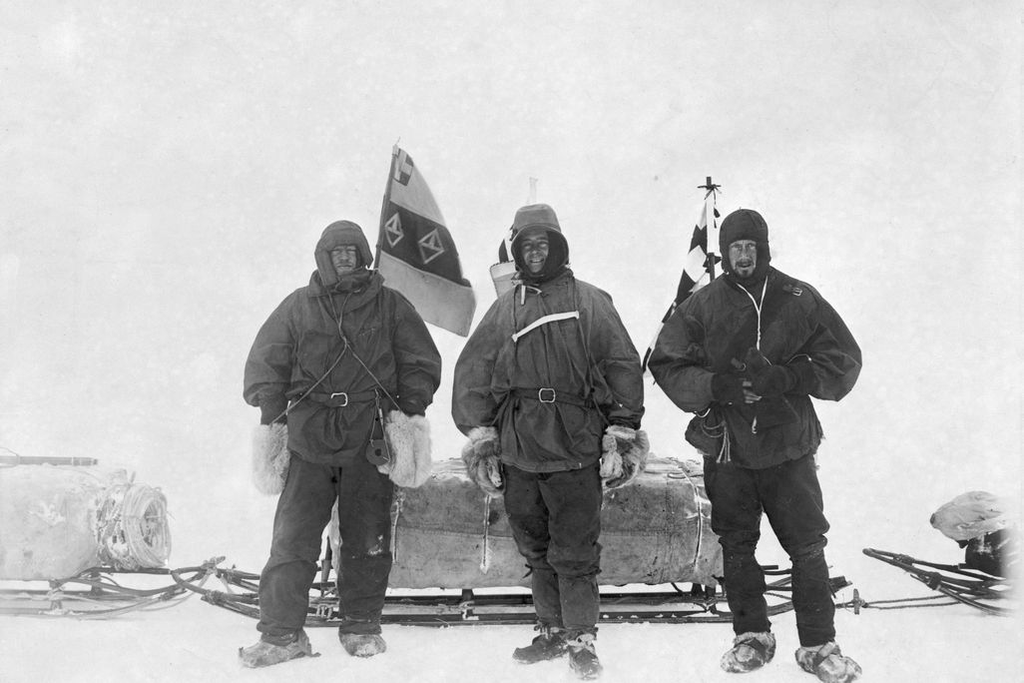
A new scientific expedition is bringing modern technology to the history of Antarctic exploration, with researchers planning to create detailed three-dimensional digital twins of historic polar shipwrecks connected to the journeys of some of the world’s most famous explorers. By documenting these vessels and their underwater remains, scientists hope to preserve important evidence of the dangerous voyages that helped shape humanity’s understanding of Antarctica.
The project connects the history of polar exploration with advances in underwater archaeology, digital mapping, and marine conservation. Three-dimensional digital twins can capture the shape, structure, and visible condition of a shipwreck in remarkable detail, allowing researchers to study a site virtually without repeatedly disturbing its fragile remains.
The history behind these wrecks is equally compelling. British explorers Robert Falcon Scott and Ernest Shackleton became central figures in the race to explore Antarctica during the early twentieth century. Their expeditions relied on ships that carried crews, scientific equipment, food, and supplies into some of the harshest waters on Earth. Both men helped expand knowledge of the frozen continent, but neither achieved the ultimate distinction of being the first person to reach the geographic South Pole.
The planned digital documentation offers an opportunity to connect their ambitions with the physical remains of the vessels that made polar exploration possible. It also highlights how technology is changing the way historians and scientists investigate the past.
Why Researchers Are Creating 3D Digital Twins of Polar Shipwrecks
A digital twin is a detailed digital representation of a real-world object, structure, or environment. In underwater archaeology, researchers can create these models by collecting photographs, video footage, sonar measurements, and other spatial data.
Specialized software combines the information to produce a three-dimensional model that researchers can examine from different angles. Depending on the quality of the data, the model may reveal details such as hull damage, structural changes, missing components, and the relationship between a wreck and the surrounding seabed.
For historic shipwrecks, this technology can provide several advantages. Physical exploration underwater is expensive, time-consuming, and potentially dangerous, particularly in remote polar regions. Digital models allow researchers to study a vessel repeatedly without requiring a diver or remotely operated vehicle to return to the site for every observation.
The models can also create a record of a wreck’s condition at a particular point in time. If future surveys detect deterioration, researchers can compare new data with earlier models and identify changes that might otherwise go unnoticed.
For ships associated with Antarctic exploration, the benefits extend beyond archaeology. A vessel’s construction, damage, and surviving equipment can help researchers understand how early explorers traveled, worked, and responded to the environmental challenges of the Southern Ocean.
The digital record may also make these historic sites accessible to students, museums, and members of the public who will never have the opportunity to visit them in person.
Robert Falcon Scott and the Terra Nova Expedition
Robert Falcon Scott was one of Britain’s most prominent Antarctic explorers. His expeditions helped advance scientific research on the continent while contributing to the intense international competition to reach the South Pole.
Scott’s second major Antarctic expedition, the British Antarctic Expedition of 1910–1913, used the ship Terra Nova. The vessel transported the expedition’s personnel, equipment, and supplies to Antarctica, supporting a program that combined geographical exploration with scientific investigations.
The expedition arrived in Antarctica in 1911, and Scott’s party established a base at Cape Evans on Ross Island. From there, teams undertook scientific work and prepared for journeys across the Antarctic interior.
Scott’s principal geographical objective was to reach the South Pole. At the time, the pole represented one of the last major prizes in exploration, and several nations were investing resources in attempts to reach it.
However, Scott faced a formidable rival: Norwegian explorer Roald Amundsen.
Amundsen’s expedition reached the South Pole on December 14, 1911, beating Scott’s party to the destination. Scott and his companions arrived on January 17, 1912, and discovered evidence that the Norwegian team had already been there.
The return journey proved disastrous. Scott and four companions died while attempting to return to their base across the Antarctic ice. Their deaths transformed the expedition into one of the most tragic episodes in polar exploration.
The Terra Nova, meanwhile, played a vital role in supporting the expedition and transporting its members and scientific collections. Its story demonstrates that polar exploration depended not only on the endurance of those traveling across the ice but also on the ships and crews that sustained them.
Importantly, Scott’s expedition was not solely a race to the South Pole. Its scientific investigations produced valuable observations and collections that contributed to knowledge of Antarctica and its environment.
Ernest Shackleton and His Ambitions in Antarctica
Ernest Shackleton was another major figure in the heroic age of Antarctic exploration. He participated in Scott’s earlier Discovery expedition before leading his own expedition aboard the ship Nimrod from 1907 to 1909.
During that expedition, Shackleton and his companions traveled to within approximately 97 nautical miles of the South Pole before turning back because their supplies and physical condition made continuing too dangerous. Although they did not reach the pole, their journey established a new record for the southernmost latitude reached at the time.
Shackleton later led the Imperial Trans-Antarctic Expedition of 1914–1917, which used the ship Endurance. That vessel became trapped in sea ice and was eventually crushed, forcing the expedition members to abandon it. Shackleton’s leadership during the extraordinary struggle to save his crew became one of the most celebrated survival stories in exploration history.
Another vessel associated with Shackleton was the Quest, which he used for the Shackleton–Rowett Expedition of 1921–1922. This expedition was intended to explore parts of the Antarctic and sub-Antarctic regions, but its plans were cut short when Shackleton died aboard the ship at South Georgia on January 5, 1922.
These voyages are sometimes confused because Shackleton’s career involved several ships and multiple expeditions. The Nimrod, Endurance, and Quest served different purposes and belonged to different phases of his exploration career.
That distinction is important when interpreting any new shipwreck survey. A ship’s historical association must be established carefully, and a wreck should not be attributed to a particular expedition without reliable evidence.
The Race to the South Pole Changed Polar Exploration Forever
The competition to reach the South Pole reached its climax in 1911 and 1912, when Amundsen and Scott led rival expeditions toward the same geographical destination.
The two teams used different strategies. Amundsen relied heavily on dogsleds and techniques informed by Arctic travel, while Scott’s expedition used a combination of transport methods, including ponies, motor sledges, and man-hauling.
Amundsen’s team reached the pole first and returned safely. Scott’s party arrived more than a month later and perished during the return journey.
The outcome became a defining episode in the history of exploration. It highlighted the importance of logistics, equipment, route planning, and the ability to adapt to extreme conditions.
It also demonstrated the dangers of attempting to cross Antarctica, where temperatures can plunge far below freezing, weather can change rapidly, and the distances between safe shelters are immense.
Although Scott and Shackleton are often remembered in connection with the race, they were not the only figures shaping the era. Amundsen’s achievement, the work of supporting crews, and the knowledge of people who understood polar travel all contributed to the history of Antarctic exploration.
Modern researchers can revisit these journeys through diaries, photographs, scientific records, ship designs, and surviving artifacts. Three-dimensional models of shipwrecks add another layer of evidence, allowing historians to study the material remains of expeditions that took place more than a century ago.
How Underwater Archaeology Can Preserve Polar History
Shipwrecks are physical archives. Even when a vessel has been damaged by time, ice, or water, its remaining structure can provide clues about the technology and conditions of its era.
Researchers may study hull construction, fastenings, machinery, cargo, and surviving equipment to understand how a ship was built and used. The distribution of debris can also help explain how a vessel was damaged or how it came to rest on the seabed.
In polar environments, these investigations present unusual challenges. Water temperatures are extremely low, visibility may be limited, and weather conditions can make access difficult. Ice and powerful currents can also complicate underwater operations.
Three-dimensional surveying can help researchers plan investigations more carefully. A digital model may identify areas requiring closer examination and help teams determine which information can be collected safely without disturbing the wreck.
Photogrammetry, which uses overlapping photographs to reconstruct a three-dimensional scene, is one method commonly used to create digital models. Sonar systems can supplement photography by measuring underwater structures and mapping areas where visibility is poor.
Depending on the site, researchers may use remotely operated vehicles equipped with cameras, lights, and measurement instruments. These machines allow scientists to inspect a wreck without requiring divers to enter hazardous conditions.
The resulting data can be stored, analyzed, and shared with other researchers. Over time, the models may become important reference points for understanding changes in the condition of historic wrecks.
Why Digital Preservation Matters for Future Generations
Historic shipwrecks are vulnerable to natural deterioration and, in some cases, damage caused by human activity. Metal corrodes, wooden components weaken, and fragile objects may gradually disappear.
Creating a digital record cannot prevent every form of deterioration, but it can preserve detailed information about a wreck even if the physical structure changes.
For historians, that record can support new research questions. Researchers may compare construction features across vessels, examine damage patterns, or use spatial measurements to test earlier interpretations of a ship’s history.
For educators and museums, three-dimensional models can make polar history more engaging. Visitors may be able to explore a shipwreck virtually, inspect its structure, and understand how the vessel supported an expedition.
Digital models may also help connect maritime history with wider scientific themes, including climate, ocean conditions, engineering, and the logistics of operating in remote environments.
Nevertheless, digital documentation must be approached carefully. A model is only as reliable as the data used to create it, and missing or obscured areas may limit what researchers can conclude. Detailed scans should therefore be accompanied by records explaining how the data were collected and where uncertainty remains.
Preservation also requires respect for the historical significance of wreck sites. Archaeologists and conservation specialists must consider legal protections, environmental effects, and the importance of leaving fragile remains undisturbed whenever possible.
The Enduring Legacy of the Heroic Age of Antarctic Exploration
The early twentieth century was a period of extraordinary ambition in Antarctica. Explorers sought geographical discoveries, conducted scientific research, and attempted journeys that tested the limits of human endurance.
Scott, Shackleton, and Amundsen became famous for different reasons, but their achievements depended on networks of sailors, scientists, mechanics, medical personnel, and other expedition members. Ships were essential to these efforts, carrying people and supplies across vast distances and connecting isolated bases with the outside world.
Today, the remains of historic vessels can help researchers reconstruct these journeys more accurately. Modern technology provides ways to examine physical evidence that earlier generations could only describe in writing or record through photographs.
The proposed creation of three-dimensional digital twins represents a meeting point between historical preservation and technological innovation. By capturing the condition of polar shipwrecks, researchers can protect information that might otherwise be lost and create new opportunities for study.
The distinction between the Terra Nova, Endurance, and Quest also reminds us that the history of Antarctic exploration is complex. Each vessel served a different expedition, and each contributed to a different chapter in the story of human efforts to understand the southernmost continent.
Conclusion: Bringing the History of Polar Exploration Into the Digital Age
A new expedition to create 3D digital twins of historic polar shipwrecks could provide researchers with valuable tools for preserving the material history of Antarctic exploration. Detailed digital models can help scientists document fragile wrecks, examine their construction, and make their stories accessible to audiences around the world.
The history behind these vessels remains compelling. Robert Falcon Scott’s Terra Nova expedition ended in tragedy after Roald Amundsen reached the South Pole first, while Ernest Shackleton’s career included remarkable journeys aboard the Nimrod, Endurance, and Quest.
Neither Scott nor Shackleton became the first person to reach the geographic South Pole, but both left lasting marks on the history of exploration. Their expeditions expanded scientific knowledge, tested the limits of human endurance, and revealed the importance of planning and cooperation in extreme environments.
By combining archaeology with digital technology, researchers can preserve more than the outlines of old ships. They can protect evidence of the people, decisions, and ambitions that shaped the exploration of Antarctica.
More than a century after the heroic age of polar exploration, these vessels continue to offer lessons about discovery, survival, and the responsibility to preserve history for future generations.