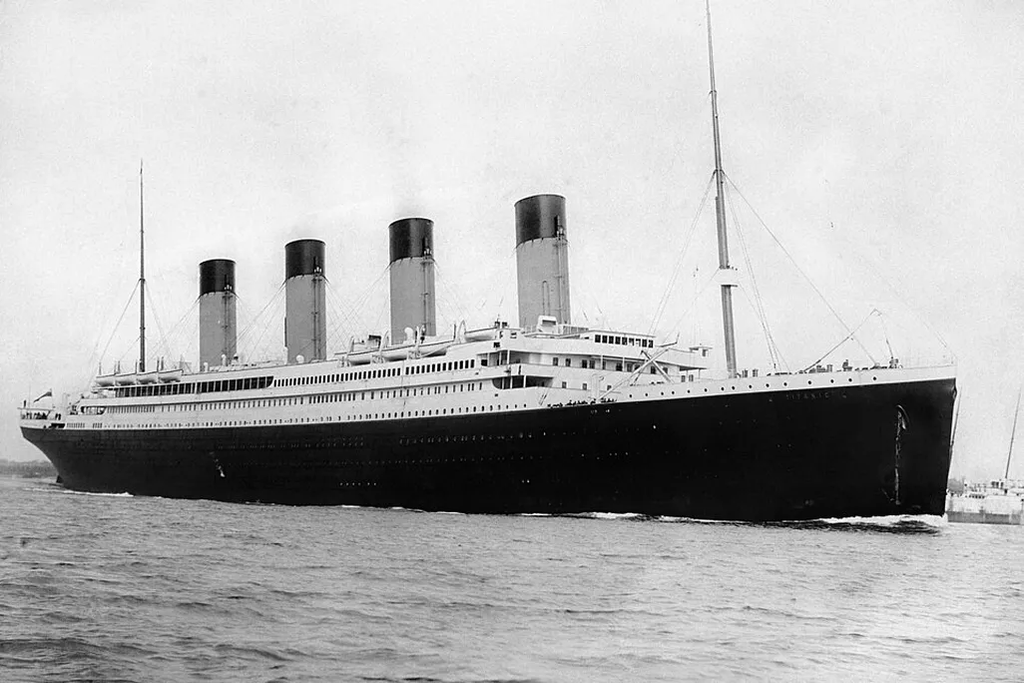
The sinking of the RMS Titanic remains one of the most famous maritime disasters in history. On April 15, 1912, the luxurious ocean liner sank in the North Atlantic after striking an iceberg, killing more than 1,500 people and leaving a lasting mark on public memory. Yet beyond the familiar stories of wealthy passengers, heroic crew members, and lifeboats launched into freezing waters, personal letters and eyewitness accounts offer a more intimate understanding of life aboard the ship before tragedy struck.
One such letter, written aboard the Titanic just days before the disaster, provides a glimpse into the experiences of second-class passengers. Rather than describing an impending catastrophe, the letter reportedly recounts pleasant weather and the bustle of activity as the great liner prepared to cross the Atlantic. Its ordinary observations are part of what makes the document compelling: the writer was describing an everyday journey without knowing that the ship would soon become the setting for one of the deadliest peacetime maritime disasters of its era.
Now offered for auction, the letter connects modern readers with a moment when the Titanic was still a symbol of technological ambition, luxury, and confidence in ocean travel. It also highlights the experiences of passengers whose stories have sometimes received less attention than those of the ship’s wealthiest travelers.
A Letter From the Titanic Before the Disaster
The Titanic departed Southampton, England, on April 10, 1912, beginning its maiden voyage to New York City. The ship was among the largest and most ambitious passenger liners of its time, designed to carry travelers across the Atlantic in exceptional comfort.
A letter written during the voyage offers a personal record of the atmosphere aboard the vessel. According to the description accompanying the auction, the writer mentioned good weather and the busy activity surrounding the ship as it prepared for its transatlantic journey.
Such details may seem ordinary, but they are valuable to historians because they capture the experience of travel as passengers encountered it. Historical accounts of the Titanic often focus on the collision, the evacuation, and the desperate final hours. A letter written before the disaster preserves a different perspective: a passenger’s impressions before anyone aboard understood how the voyage would end.
Personal correspondence was a familiar way for travelers in the early twentieth century to remain connected with relatives and friends. Passengers frequently wrote about their surroundings, their accommodations, the people they met, and the progress of their journeys.
For the person who wrote this letter, the Titanic was still a remarkable ship carrying passengers toward a new destination. The surviving document allows readers to consider how ordinary the voyage may have seemed before the events of April 14 and 15 transformed its place in history.
Why Second-Class Passengers Matter to Titanic History
The Titanic carried passengers in three principal accommodation classes, each offering a different experience of ocean travel. First class catered to wealthy travelers with spacious suites, elegant dining rooms, and access to some of the ship’s most elaborate public spaces. Third class, often called steerage, accommodated many immigrants and families traveling in search of new opportunities.
Second class occupied a position between these two groups. Its passengers generally enjoyed comfortable cabins, dining facilities, and communal spaces, although their accommodations were less elaborate than those available to first-class travelers.
Second-class passengers included professionals, teachers, clergy members, families, and people traveling for work or personal reasons. Their experiences demonstrate that the Titanic was not simply a floating palace for the rich. It was also a passenger ship serving people with different backgrounds, budgets, and ambitions.
The surviving letter is especially interesting because it offers a glimpse into this middle tier of travel. Instead of presenting the ship only through the experiences of prominent or wealthy individuals, it draws attention to passengers whose lives may otherwise be represented mainly by passenger lists and brief historical records.
Their stories matter because the disaster affected people from many social classes. Although passengers had different accommodations and access to certain facilities, everyone aboard faced the same fundamental danger when the ship began to sink.
A personal letter can help restore some individuality to those lives. It reminds readers that every name on a passenger list belonged to someone with relationships, plans, expectations, and a future that seemed open when the voyage began.
Life Aboard the Titanic During Its Maiden Voyage
When the Titanic entered service in April 1912, it represented a major achievement in shipbuilding. Built by Harland and Wolff in Belfast for the White Star Line, the liner was designed to combine size, comfort, and modern engineering.
The ship measured approximately 882 feet in length and featured a series of passenger facilities that reflected the different classes of accommodation. Its design included restaurants and dining rooms, lounges, reading areas, promenades, and other spaces intended to make a long Atlantic crossing more comfortable.
For many passengers, the voyage offered an opportunity to experience one of the most talked-about ships in the world. Some were traveling to the United States to begin new lives, while others were visiting relatives, conducting business, or enjoying an overseas journey.
Daily life aboard the Titanic followed the familiar rhythms of an ocean crossing. Passengers ate meals, exchanged conversation, read, walked on deck, and watched the changing conditions of the sea. Crew members carried out the work required to keep the ship operating, from serving meals to maintaining equipment and navigating the vessel.
The letter’s reported references to pleasant weather and activity aboard the ship fit within this ordinary picture of life at sea. Its value lies partly in the contrast between the calm atmosphere described and the tragedy that would soon unfold.
However, the exact wording, date, and full circumstances of the letter should be confirmed through the auction catalogue and examination of the original document. Without those details, it is best to avoid attributing additional observations or emotions to the writer.
The Titanic’s Final Days Before the Collision
The Titanic left Southampton on April 10, 1912, and called at Cherbourg, France, and Queenstown—now Cobh—in Ireland before continuing westward across the Atlantic.
The ship was carrying more than 2,200 passengers and crew members when it began the ocean crossing, although the precise total varies among historical records. Its destination was New York, where passengers expected to arrive after several days at sea.
For those aboard, the journey initially proceeded as an ordinary maiden voyage. The ship traveled through changing weather conditions, and passengers continued their routines while the crew maintained navigation and shipboard operations.
On the night of April 14, the Titanic struck an iceberg in the North Atlantic. The collision damaged the ship’s hull below the waterline, allowing seawater to enter several forward compartments. The vessel had been designed with watertight compartments, but the damage extended across too many of them for the ship to remain afloat.
The crew began preparing lifeboats and attempting to evacuate passengers. Yet the ship did not carry enough lifeboat capacity for everyone aboard, a fact that contributed to the scale of the loss of life.
In the early hours of April 15, the Titanic sank. More than 1,500 people died, while approximately 700 survived, most of them rescued by the Carpathia.
The disaster shocked the world and prompted investigations into maritime safety, lifeboat requirements, emergency procedures, and the responsibilities of shipping companies.
Against this background, a letter written only days earlier offers an unusually personal connection to the voyage before its catastrophic end.
What the Letter Reveals About Ordinary Passengers
The most striking feature of a pre-disaster letter is often what it does not contain. A passenger writing about the weather or the activity aboard a ship was not necessarily recording a historic moment. They were communicating with someone who was not there, describing the details of an experience that seemed ordinary at the time.
That ordinary quality gives the document its emotional force today. Readers know what happened afterward, while the writer could not have known how dramatically the future would change.
The letter also raises questions about the everyday experiences of second-class passengers. What did they notice about the ship? How did they describe the atmosphere? What details seemed worth sharing with family or friends?
The reported references to good weather and bustling activity suggest an account centered on the immediate experience of the voyage rather than on grand claims about the ship’s engineering or status. Such observations can help historians understand how passengers perceived their surroundings in real time.
Still, the document should not be treated as representative of every second-class passenger. One person’s letter provides an individual perspective, not a complete account of the experiences of an entire group.
Its importance lies in the particular voice it preserves. When a personal document survives for more than a century, it can bring a specific moment into focus in a way that a general historical summary cannot.
Why Titanic Memorabilia Continues to Attract Collectors
Artifacts connected to the Titanic continue to interest collectors, historians, and members of the public because they preserve physical connections to a disaster that changed maritime history.
Letters, postcards, menus, tickets, photographs, and other surviving objects can reveal details about the ship and the people who traveled aboard it. Their value depends on factors such as authenticity, provenance, condition, rarity, and historical significance.
A letter written aboard the Titanic is particularly compelling because it connects a specific person with the ship during its brief maiden voyage. Unlike an object created later to commemorate the disaster, a contemporary letter records information from the period itself.
Auction interest may reflect both the document’s historical importance and its emotional appeal. Collectors may see it as a rare artifact, while researchers may value its potential to add detail to the historical record.
Nevertheless, an auction estimate or sale price does not necessarily measure an artifact’s scholarly importance. A modest personal document can be valuable to historians even if it does not attract the highest financial offer.
For any Titanic letter, careful authentication is essential. Handwriting, paper, postal markings, provenance, and the document’s contents may all help establish its origin and relationship to the voyage.
The Lasting Legacy of the Titanic
More than a century after the sinking, the Titanic remains a powerful subject because its story combines technological ambition, social inequality, human courage, and preventable tragedy.
The ship was celebrated for its size and luxurious design, yet the disaster exposed serious weaknesses in emergency planning and maritime safety. Investigations after the sinking helped drive changes in international regulations, including stronger requirements for lifeboat capacity and continuous radio watches.
The disaster also left a lasting human legacy. Families lost loved ones, survivors carried memories of the night for the rest of their lives, and the names of passengers and crew became part of a shared historical story.
Documents such as the letter now offered for auction add another dimension to that story. They show that the people aboard the Titanic were not simply figures in a famous tragedy. They were travelers who had boarded a ship with plans, expectations, and everyday concerns.
A note about good weather or the activity of a departing vessel may appear unremarkable on its own. Viewed through the knowledge of what followed, however, it becomes a poignant record of a moment before history changed.
Conclusion: A Personal Glimpse of the Titanic Before It Sank
A letter written aboard the Titanic days before its sinking offers a rare opportunity to view the famous liner through the eyes of an ordinary passenger. Its reported descriptions of good weather and bustling activity capture the atmosphere of a voyage that, at the time, was still moving toward its expected destination in New York.
The document also brings attention to second-class passengers, whose experiences are an essential part of the ship’s history but may receive less attention than those of its wealthiest travelers. Their lives, journeys, and hopes were as real as those of everyone else aboard.
Now being offered for auction, the letter connects modern readers with the Titanic before the collision and sinking turned the vessel into an enduring symbol of maritime tragedy. Its significance rests not only in its association with a famous ship but also in the ordinary human perspective it preserves.
Ultimately, the letter reminds us that history is often most powerful when seen through small personal details. Before the Titanic became known around the world for its tragic final hours, it was a working passenger liner filled with people going about their lives. A surviving letter allows us to glimpse that brief moment—and to remember the individuals behind one of history’s most familiar disasters.