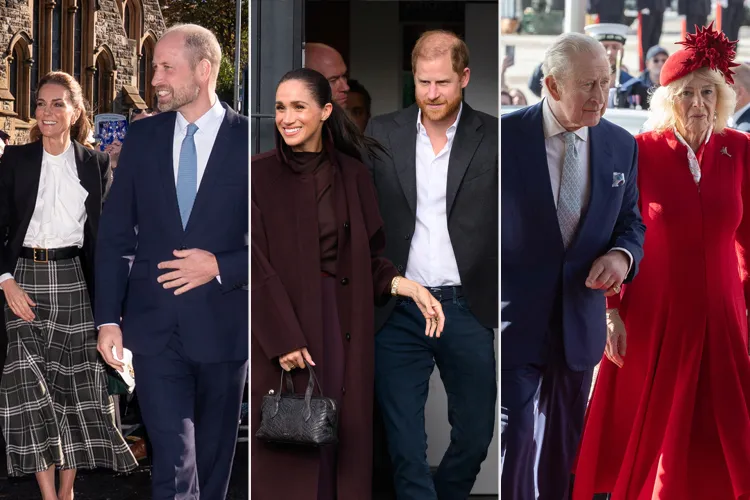
The British royal family continues to attract attention whenever its most prominent members appear in public, but a day featuring separate outings by King Charles III and Queen Camilla, Prince William and Catherine, Princess of Wales, and Prince Harry and Meghan Markle would be especially unusual. With the senior royals carrying out official duties in Britain and the Sussexes maintaining their own public commitments, such a day would highlight the different paths the two branches of the family have taken.
The suggestion that one of these appearances was kept quiet adds another layer of intrigue. Royal engagements range from heavily publicized ceremonies and official visits to smaller meetings, private appointments, and charitable activities that receive little immediate attention. Not every event is announced in advance, and not every royal appearance is intended to become a major news story.
However, the distinction between a genuinely private engagement and an event deliberately concealed from the public is important. Without confirmed details about the particular outing, it would be misleading to suggest that a secret meeting took place or that any member of the family was intentionally avoiding publicity.
What makes the prospect of these same-day appearances interesting is the wider context. Charles and Camilla continue to represent the monarchy at the highest level, William and Catherine are central to its future, and Harry and Meghan have established an independent life in the United States. Their public appearances offer a window into three different approaches to royal identity, duty, and life in the spotlight.
King Charles and Queen Camilla Continue Their Royal Duties
King Charles III and Queen Camilla remain at the center of the British monarchy’s public life. Their engagements can include state occasions, visits to charities, meetings with community organizations, and events highlighting causes that have long been important to the royal family.
For Charles, public appearances are closely connected to his responsibilities as monarch. Official engagements provide opportunities to meet people from different backgrounds, recognize community achievements, and draw attention to organizations working across Britain and beyond.
Camilla’s work also reflects a range of longstanding interests, including literacy, support for victims of domestic abuse, and initiatives addressing other social issues. Her engagements frequently involve meeting charities, campaigners, volunteers, and members of the public.
Although royal appearances are often carefully scheduled, the public may not always see every detail of the work that takes place behind the scenes. Preparatory meetings, private discussions, and smaller appointments can form part of a busy working schedule without receiving the same coverage as a state banquet or major public ceremony.
This is a normal feature of institutional life rather than evidence of a hidden agenda. The monarchy combines highly visible ceremonial duties with less public administrative and charitable work.
For Charles and Camilla, the challenge is to maintain public engagement while adapting the institution to modern expectations. Their appearances are therefore judged not only by their visibility but also by the causes they support and the relationships they build with the communities they visit.
Prince William and Kate’s Quiet Visit to Cornwall
Among the three royal appearances, the reported low-profile visit by William and Catherine to Nansledan in Cornwall was particularly notable because details emerged after the engagement had taken place.
The visit focused on a new initiative connecting Catherine’s Centre for Early Childhood with William’s Duchy of Cornwall estate. The collaboration explores how nature and the surrounding environment can contribute to healthy development during the earliest years of a child’s life.
Early childhood development has become one of Catherine’s most established areas of public work. Through her centre, she has emphasized the importance of the first five years of life and the relationships, environments, and experiences that help shape children’s development.
William’s involvement through the Duchy of Cornwall brings a complementary dimension to the project, connecting the initiative with land, communities, and the natural environment.
The decision to keep the visit relatively quiet has prompted interest because it coincided with Charles and Camilla’s major engagement in Wales. It is possible that a lower-profile approach helped prevent competing royal headlines, although the precise reasoning behind the scheduling and publicity arrangements should not be assumed without confirmation.
There is also an important distinction between a private visit and a secretive one. Royal engagements sometimes take place without a large press presence, particularly when the purpose is to focus on discussions, local projects, or the people directly involved.
For William and Catherine, the Cornwall visit offered an opportunity to highlight a subject closely associated with their work without turning the engagement into a major ceremonial occasion.
The initiative also illustrates how their responsibilities can complement one another. Catherine’s work focuses on children’s early development, while William’s role includes stewardship of the Duchy and engagement with communities connected to the estate.
Rather than being simply another appearance on the royal calendar, the visit connected two areas of interest through a shared project.
Harry and Meghan’s Nottingham Outing Adds Another Dimension
Prince Harry and Meghan Markle also attracted attention with their reported joint appearances in Nottingham on the same day.
Since stepping back from their roles as working members of the royal family in 2020, the Duke and Duchess of Sussex have pursued a different professional and charitable path. Their work has included projects involving mental health, community support, veterans, and digital well-being.
Their public appearances are therefore distinct from the official engagements undertaken by Charles and Camilla or William and Catherine. Although Harry remains a member of the royal family, he and Meghan no longer carry out their former duties as senior working royals.
A joint visit to charitable organizations in Nottingham provided an opportunity to focus attention on community initiatives while bringing the couple back into the British public eye.
Their appearances continue to attract considerable interest because of the history surrounding Harry’s departure from royal duties and the widely reported tensions between him and other members of his family.
However, a shared day of public engagements does not, by itself, indicate that the different branches of the family were coordinating their activities or preparing for a reconciliation.
It is equally important not to interpret the Sussexes’ presence in Britain as proof of a private family gathering. Public visits to charities and meetings with community organizations can take place independently of personal relationships within the family.
For Harry and Meghan, the central question remains how they define their public roles outside the working monarchy. Their activities allow them to support causes they consider important while maintaining an identity separate from the institution in which Harry grew up.
The contrast between their Nottingham engagements and the formal royal visit to Wales illustrates the different responsibilities and public expectations now surrounding the two branches of the family.
Does the Same-Day Timing Mean Anything for the Royal Family?
When several prominent members of the royal family appear in public on the same day, it is natural for observers to consider whether their schedules are connected.
The monarchy has a demanding calendar of official engagements, and different members regularly undertake separate duties across Britain and overseas. With numerous charities, institutions, and communities requiring attention, simultaneous appearances are not unusual in themselves.
Nevertheless, the public visibility of Charles, Camilla, William, Catherine, Harry, and Meghan means their schedules can attract additional scrutiny.
Royal engagements are often planned well in advance. Travel arrangements, security, organizational commitments, and the availability of the people being visited all influence when an appearance takes place.
In some circumstances, publicity plans may also be coordinated to ensure that an important engagement receives appropriate attention. But that does not mean every difference in announcement timing reflects a deliberate strategy.
The Cornwall visit is an example of why caution matters. Its details emerged after the event, and the timing invited comparisons with the King’s engagement in Wales. That sequence is interesting, but it does not independently establish the reason for the quieter approach.
Similarly, Harry and Meghan’s appearance in Nottingham should be understood in the context of their own schedule rather than automatically treated as a response to the activities of other royals.
A responsible account of royal news needs to distinguish between confirmed events, reasonable possibilities, and speculation about private motives.
The same-day appearances provide a useful snapshot of the royal family’s different public roles. They do not necessarily reveal a hidden plan or a significant change in family relationships.
The Continuing Divide Between Royal Duty and Private Life
The royal family has always had to balance public responsibility with private relationships, but that balance has become particularly visible since Harry and Meghan stepped away from their working roles.
Charles and Camilla represent the monarchy at the highest level, carrying out official duties on behalf of the Crown. William and Catherine are senior working royals whose responsibilities also reflect their position in the institution’s future.
Harry and Meghan, by contrast, have built their lives and professional activities outside the system of working royal duties. Their public appearances can still generate significant interest, but they operate under different expectations and arrangements.
These distinctions are important because the word “royal” can conceal very different responsibilities. A state engagement, a charitable visit, and a private family occasion may all involve members of the same family, yet each has a different purpose and level of public accountability.
The family’s relationships are also separate from its official calendar. A royal may carry out a public duty successfully without resolving a personal disagreement, just as a private conversation between relatives would not necessarily change the institution’s public responsibilities.
Although reports have described communication between Charles and Harry, the precise state of the relationships among individual family members cannot be determined simply by observing where they appear or how frequently they are photographed together.
The most useful way to understand the family’s public life is to consider each engagement on its own terms while recognizing the broader context in which it takes place.
What These Three Outings Reveal About the Modern Monarchy
Taken together, the three sets of appearances illustrate the different ways members of the royal family maintain a public presence.
Charles and Camilla’s visit to Wales represented the monarchy’s formal constitutional and ceremonial role. Their engagement highlighted the King’s responsibilities and the institution’s connection with the nations that make up the United Kingdom.
William and Catherine’s visit to Cornwall focused on early childhood development and the relationship between a charitable initiative and the Duchy of Cornwall. Its quieter presentation demonstrated that some royal work can take place without the scale of publicity associated with major ceremonies.
Harry and Meghan’s Nottingham appearances reflected their separate approach to public service and charitable engagement since leaving their former working roles.
Each outing had its own purpose, audience, and institutional context. Their coincidence on the same day created a compelling point of comparison, but it did not make the events interchangeable.
For the monarchy, maintaining public relevance requires more than appearing at high-profile occasions. It also involves supporting charities, listening to communities, and demonstrating that royal responsibilities can respond to contemporary concerns.
For the Sussexes, public engagement involves defining a different path while remaining connected to their existing charitable interests and international profile.
The contrast between these approaches helps explain why even an ordinary day of separate appearances can attract substantial attention. The royal family is both a public institution and a group of individuals whose lives continue to be examined through the lens of tradition, duty, and personal history.
Conclusion: A Rare Day of Royal Appearances, With One Visit Kept Low-Key
The reported same-day appearances by King Charles and Queen Camilla, Prince William and Catherine, and Prince Harry and Meghan offered a striking snapshot of the British royal family’s current public life.
While Charles and Camilla carried out an important engagement in Wales, William and Catherine visited Nansledan in Cornwall to launch a collaboration focused on early childhood development. Harry and Meghan, meanwhile, made joint appearances in Nottingham, drawing attention to their continuing charitable activities in Britain.
The Cornwall visit stood out because details emerged after the event, prompting questions about why it had not received the same advance publicity as the King’s engagement. A quieter approach may have helped keep the focus on the Wales visit, but the precise motivation should not be presented as established fact without confirmation.
More broadly, the day highlighted the different responsibilities now held by the senior working royals and the Sussexes. Their paths remain distinct, even as public interest continues to connect their appearances and family histories.
Ultimately, the significance of the day lies less in speculation about hidden motives than in what the engagements themselves represented: constitutional duty, early childhood development, and charitable work.
The royal family’s public calendar may occasionally bring its most recognizable members into the spotlight at the same time. Yet each appearance has its own purpose, and the reasons behind a quieter visit may be far more practical than the headlines suggest.