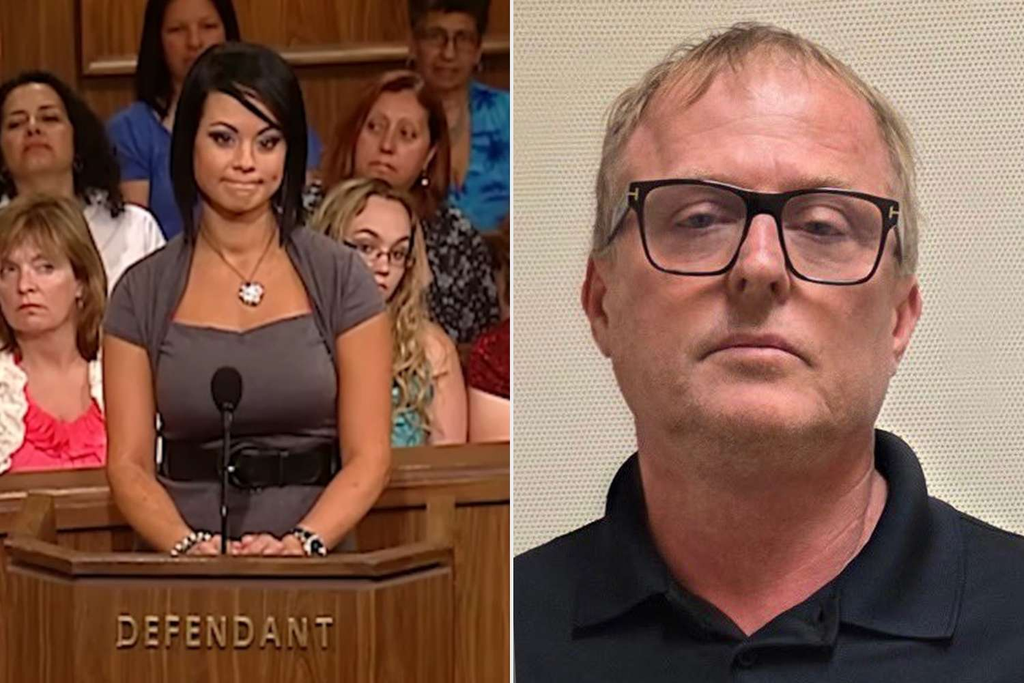
For nearly 15 years, the disappearance of Michelle Parker remained one of Florida’s most troubling missing-person cases. The 33-year-old mother of three vanished in November 2011, just hours after appearing on the television courtroom show The People’s Court alongside her former fiancé, Dale Smith Jr. Despite years of investigation, public appeals, and unanswered questions, Parker’s whereabouts remained unknown.
Now, the case has taken a significant turn. Smith has been charged with Parker’s murder, bringing renewed attention to a disappearance that has haunted her family and captured public interest for more than a decade. The development represents a major step in the investigation, although a criminal charge is an allegation that must be tested through the legal process.
Parker’s case became widely known because of the unusual circumstances surrounding the day she disappeared. Her television appearance with Smith placed the former couple in front of a national audience shortly before she vanished. Yet the most important questions have always extended beyond that broadcast: What happened to Parker after she left the studio, where did she go, and what evidence could finally explain her disappearance?
The new charge has renewed hopes for answers while underscoring the painful uncertainty experienced by families of missing people. After years of waiting, Parker’s loved ones may finally have an opportunity to see the case move toward a courtroom resolution.
Who Was Michelle Parker?
Michelle Parker was a 33-year-old mother living in the Orlando, Florida, area when she disappeared in November 2011. She was raising three children and had personal and family responsibilities that made her sudden disappearance particularly alarming to those who knew her.
People who disappear without explanation leave behind more than an unanswered police report. Their families are left to navigate uncertainty, wondering whether their loved one is safe, whether they will return, and whether investigators will ever establish what happened.
In Parker’s case, the circumstances surrounding her final known day became an important part of the public story. Her appearance on The People’s Court with Smith attracted attention because it placed the former couple together in a nationally televised setting shortly before she disappeared.
The program typically features people presenting disputes before a television judge, allowing audiences to watch disagreements unfold in a courtroom-style environment. Parker and Smith appeared on the show to address a dispute involving money, according to accounts of the case.
Their appearance later became a striking detail in the investigation. A television programme intended to resolve a disagreement became associated with a missing-person case that would remain unresolved for years.
However, the broadcast alone could not explain what happened afterward. Understanding Parker’s disappearance required investigators to examine the events following the recording, collect evidence, and establish a reliable timeline.
For her family, the passage of time did not diminish the importance of finding answers.
The Day Michelle Parker Disappeared
Parker disappeared on November 17, 2011, after a series of events that would later become central to the investigation.
Earlier that day, she appeared on The People’s Court with Smith, her former fiancé. The televised dispute provided a documented point of reference for investigators trying to reconstruct the couple’s activities and circumstances around the time she vanished.
After the appearance, Parker was reported missing. Her disappearance quickly raised concern because she had three children and had not returned as expected.
Investigators began working to determine her last known movements and identify people who might have information about what happened. As with many missing-person cases, establishing a detailed timeline was essential.
Detectives would have needed to consider available witness accounts, communications, potential sightings, and other evidence that could help establish Parker’s whereabouts after the television appearance.
The public also became familiar with the case through news coverage and appeals for information. Parker’s connection to a televised dispute made the disappearance particularly memorable, but it was the unexplained loss of a mother and the lack of clear answers that gave the case its lasting emotional weight.
As days turned into weeks and then years, the central question remained unanswered: What happened to Michelle Parker?
The absence of a confirmed explanation left her family facing a kind of uncertainty that can be difficult to resolve. Without knowing what happened to a missing loved one, relatives may struggle to find closure or make sense of their loss.
Why “The People’s Court” Appearance Drew Attention
Parker’s appearance on The People’s Court became one of the most widely discussed elements of the case because it offered a public record of her interaction with Smith shortly before she disappeared.
Television appearances can create a misleading sense that viewers know the people involved. Audiences see a limited portion of a dispute, shaped by the programme’s format and editing, but they do not necessarily know the full history of a relationship or what happened outside the recording.
In Parker’s case, the broadcast attracted attention because the timing was so striking. A dispute that had been presented for television became part of the timeline surrounding a disappearance.
That connection helped the case reach a wider audience and encouraged people to revisit the programme while trying to understand the events.
Nevertheless, the appearance should not be treated as proof of responsibility for the disappearance or the alleged murder. A televised disagreement can provide context, but criminal responsibility must be established through evidence relevant to the charges.
Investigators must distinguish between details that are emotionally compelling and information that can help establish what actually happened.
This distinction is especially important in high-profile cases. Public familiarity with a person or a dramatic detail can shape perceptions long before the evidence has been fully examined in court.
The television appearance made Parker’s case unusual, but it could not, by itself, resolve the mystery.
Dale Smith Jr. Faces a Murder Charge Nearly 15 Years Later
The decision to charge Dale Smith Jr. with Parker’s murder marks a significant development in a case that had remained unresolved for nearly 15 years.
According to the announcement described in reports surrounding the case, Smith, Parker’s former fiancé, is now facing a murder charge connected to her disappearance.
The timing has brought renewed scrutiny to the investigation and raised questions about what evidence led authorities to take this step after so many years.
Long-running criminal investigations can develop as detectives revisit evidence, receive new information, reassess earlier leads, or use investigative methods that were unavailable or less advanced at the time of the original inquiry.
However, without the full details of the charging documents and the evidence cited by prosecutors, it would be inappropriate to speculate about which specific development prompted the charge.
The central legal distinction is that being charged with murder does not mean a person has been convicted. Prosecutors must present evidence supporting the allegations, and the defense has the opportunity to challenge that evidence through the judicial process.
Smith’s legal position and the details of the case should therefore be understood in the context of the proceedings as they develop.
For Parker’s family, the charge may represent an important step toward accountability and a clearer understanding of what happened. Yet a charge alone does not provide every answer, and the legal process must determine what the evidence establishes.
How a Missing-Person Investigation Can Continue for Years
Cases involving people who disappear without explanation can be especially difficult to solve. Investigators may have limited physical evidence, uncertain timelines, conflicting accounts, or no confirmed location for the missing person.
In the early stages, detectives typically work to establish the circumstances of the disappearance. They may interview relatives and acquaintances, examine phone and financial records where legally available, review surveillance footage, and investigate reported sightings.
As time passes, some evidence may become harder to obtain. Witnesses may move away, memories can fade, and records may no longer be available. At the same time, new information can emerge unexpectedly.
Cold-case investigations often depend on carefully reviewing the original evidence rather than assuming that earlier conclusions were necessarily complete. Investigators may revisit interviews, compare timelines, examine preserved physical evidence, and consider whether technological advances could provide additional insight.
A case can remain open even when there are few public developments. Investigators may continue evaluating leads without releasing every detail, particularly when disclosure could affect a future prosecution.
The Michelle Parker investigation illustrates why the passage of time does not automatically end the search for answers. Although nearly 15 years passed between her disappearance and the reported murder charge, authorities continued to pursue the case.
The precise evidence behind the latest development remains essential to understanding how investigators reached this point.
The Impact on Michelle Parker’s Family
For the family of a missing person, time does not necessarily bring resolution. Anniversaries, birthdays, and family milestones can become reminders of the unanswered questions surrounding the disappearance.
Parker’s three children were an important part of her life when she vanished. Her disappearance meant that her family had to confront the sudden absence of a mother while also dealing with uncertainty about what had happened to her.
Families in similar circumstances often experience a difficult mixture of hope, grief, frustration, and exhaustion. Without a confirmed account of events, it can be hard to determine how to move forward.
A major investigative development may bring renewed hope, but it can also reopen painful memories. The possibility of a criminal trial may require relatives to revisit the disappearance and hear details that are emotionally difficult.
Even so, a formal charge can provide a path toward answers that were previously unavailable. Court proceedings may bring evidence into the public record, allow witnesses to testify, and give the family a clearer understanding of the allegations.
The outcome cannot be predicted in advance. What matters is that the case is being addressed through a legal process capable of evaluating the evidence.
For Parker’s loved ones, the pursuit of justice is not simply a matter of headlines. It concerns the life of a woman who disappeared and the years her family spent waiting for answers.
The Difference Between Suspicion and Proof
The long-running public interest in Parker’s disappearance demonstrates how easily a high-profile case can become surrounded by theories and assumptions.
When a person disappears, people naturally look for explanations. They may focus on the last people seen with the missing person, a reported argument, or a detail that seems unusual in retrospect.
But suspicion is not proof. A person’s relationship with a missing individual, a public disagreement, or their presence in a timeline does not independently establish criminal responsibility.
A murder charge is a formal allegation, not a final determination of guilt. The prosecution must prove its case under the applicable legal standard, and the defense is entitled to challenge the evidence and present its own account.
This process helps distinguish documented facts from speculation and ensures that serious accusations are assessed fairly.
It is also important to remember the person at the centre of the case. Parker should not be reduced to the circumstances of her disappearance or to the television appearance that made her story widely known. She was a mother whose life and absence affected people who knew and loved her.
A careful account of the case must therefore balance public interest with respect for the legal process and the people involved.
What Happens Next in the Michelle Parker Case?
The next stage will depend on the progress of the criminal proceedings against Smith and the evidence presented by prosecutors.
Court filings and hearings may clarify the allegations, explain the legal basis for the charge, and establish the timetable for future proceedings. Depending on the case, additional information may emerge through witness testimony, evidentiary hearings, or other formal steps.
Investigators may also continue working to establish the circumstances of Parker’s disappearance and determine whether any outstanding questions can be answered.
It is important not to assume that the filing of a murder charge necessarily means every aspect of the case has been resolved. A charge may represent a major investigative milestone, but the prosecution must still present its evidence and the court must evaluate the case.
For Parker’s family, the process may offer an opportunity to learn more about the events that led to her disappearance. For the wider public, it will provide a chance to understand the evidence rather than rely on speculation surrounding a case that has attracted attention for years.
Until the proceedings establish further facts, the most responsible approach is to follow confirmed developments and preserve the distinction between allegations and proven findings.
Conclusion: A Long-Awaited Development in a Case That Never Faded
The reported murder charge against Dale Smith Jr. has brought renewed attention to the disappearance of Michelle Parker, the Florida mother who vanished in November 2011 after appearing on The People’s Court with her former fiancé.
For nearly 15 years, the circumstances of Parker’s disappearance remained a source of concern and unanswered questions. The television appearance made the case particularly memorable, but the deeper story has always been about a missing woman and the family left waiting for answers.
The new charge represents a significant development, although it does not establish guilt by itself. The evidence must be examined through the court process, and the allegations must be proven according to the law.
As the case moves forward, the hope is that the proceedings will provide greater clarity about what happened to Parker and allow her family to move closer to understanding the loss they have endured.
Her disappearance remains a reminder of the lasting impact of unresolved missing-person cases. Nearly 15 years later, the search for answers continues—not only to determine legal responsibility, but also to honour Michelle Parker’s memory and the people whose lives were changed when she vanished.