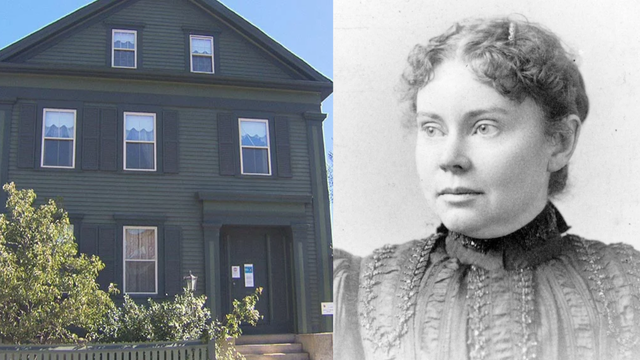
Few places in American history combine mystery, tragedy, and enduring public fascination quite like the Lizzie Borden House in Fall River, Massachusetts. The Victorian residence became infamous after Andrew Borden and his second wife, Abby Borden, were murdered there in August 1892. More than a century later, the case continues to inspire books, documentaries, podcasts, and visitors eager to understand what happened inside the house.
Today, the former Borden residence operates as a bed-and-breakfast and historical attraction, allowing guests to experience the building beyond the usual guided tour. For visitors interested in true crime, spending a night in a house associated with one of America’s most notorious unsolved mysteries can be an unsettling prospect. The rooms preserve a connection to the past, while the questions surrounding the murders continue to shape the atmosphere.
But what is it actually like to stay in such a place? Beyond the ghost stories and sensational headlines, the experience raises more interesting questions about history, memory, and the human desire to get close to a mystery that has never been definitively solved.
Inside the House That Became a True-Crime Landmark
The Lizzie Borden House stands in Fall River, a Massachusetts city whose industrial growth helped make it an important center of textile manufacturing during the nineteenth century. The Borden family lived in the city during a period when wealth, social status, and family reputation played important roles in community life.
Andrew Borden was a prosperous businessman known for his financial success and comparatively modest lifestyle. His household included his second wife, Abby, his daughters Lizzie and Emma from his first marriage, and Bridget Sullivan, the family’s live-in domestic worker.
The house itself is a traditional Victorian residence, with period architectural features that help visitors imagine domestic life in the late nineteenth century. Its rooms, staircases, furnishings, and narrow passages provide a setting very different from the modern homes most guests know.
Yet the building’s reputation comes from what happened there on August 4, 1892.
Andrew and Abby Borden were found dead inside the house, both victims of fatal blows to the head. The shocking murders attracted widespread attention, and suspicion eventually focused on Andrew’s younger daughter, Lizzie.
Although Lizzie was arrested and tried for the killings, she was acquitted in 1893. No one else was convicted of the murders, and the case remains unresolved in the legal sense.
That combination of violent deaths, a prominent suspect, and an acquittal helped transform the house into a lasting symbol of American true-crime history.
The Room Where Abby Borden Was Found
One of the most disturbing aspects of visiting the property is the connection between its ordinary domestic spaces and the events that occurred there.
Abby Borden was found in an upstairs guest bedroom on the morning of August 4, 1892. Andrew was discovered later that morning on a sofa in the downstairs sitting room.
The fact that the killings took place inside a family home makes the case especially unsettling. There was no distant battlefield or isolated crime scene. The deaths occurred in rooms used for everyday activities, surrounded by familiar household objects and routines.
For a visitor staying overnight, the knowledge of that history can change the way the building feels. A bedroom may appear comfortable and ordinary during daylight, yet its historical associations can become more prominent when the house grows quiet.
However, it is important to distinguish between the historical record and the atmosphere a visitor experiences. A room’s association with a murder does not establish that anything supernatural occurred there, and feelings of unease can arise simply from knowing what happened.
The emotional response is understandable. People often react strongly to places connected with tragedy because physical surroundings help make historical events feel more immediate.
Reading about a murder in a book creates distance. Standing in the building where it occurred can make the story feel tangible in a way that photographs and written accounts cannot fully reproduce.
That is part of the reason historical crime locations attract so much attention.
What Happened on August 4, 1892?
The events of that morning remain central to the mystery.
Andrew Borden was found dead on a sitting-room sofa, while Abby Borden had been discovered upstairs earlier. Both had suffered severe head injuries inflicted with a sharp-edged weapon.
Lizzie was at home when the deaths were discovered. Her statements and actions became important parts of the investigation, alongside testimony from Bridget Sullivan and other witnesses.
Investigators examined the household, questioned people connected to the family, and considered possible motives. The case generated intense public interest, partly because Lizzie came from a socially prominent family and partly because the violence seemed difficult to reconcile with the household’s outwardly ordinary life.
The investigation also reflected the limitations of nineteenth-century forensic science. Modern DNA testing, digital evidence, and many contemporary investigative techniques were not available. Investigators relied heavily on physical observations, witness testimony, medical evidence, and the interpretation of events.
Lizzie was eventually charged with the murders and stood trial in 1893. The prosecution argued that she was responsible, while the defense challenged the evidence and the reliability of the case against her.
After deliberation, the jury acquitted her.
The verdict meant that Lizzie was not legally found guilty of the murders. It did not establish who committed them, and no alternative perpetrator was conclusively identified.
The distinction is essential when revisiting the case today. Lizzie remains the central figure in popular accounts, but suspicion is not the same as proof, and the mystery should not be presented as though the question of guilt has been definitively settled.
The Mystery That Continues to Divide Historians
More than 130 years after the murders, the Lizzie Borden case continues to attract competing theories.
Some writers and researchers have argued that Lizzie may have had a motive connected to family tensions and financial matters. Others have questioned the evidence used against her, examined the timeline, or considered alternative explanations.
The relationship between Lizzie and her stepmother has frequently attracted attention. Historical accounts describe tensions within the family, but the exact nature and significance of those relationships remain subjects of interpretation.
The financial circumstances of the household have also featured prominently in discussions of possible motives. Andrew Borden was wealthy, but accounts of family disagreements and inheritance arrangements have often been used to construct theories about what might have happened.
However, a plausible motive does not prove that a person committed a crime. Nor does an unusual behavior or an apparent inconsistency necessarily establish guilt.
The case is particularly vulnerable to speculation because so much time has passed and the available evidence has limitations. Each new retelling may emphasize different details, making the mystery appear more solvable than the historical record allows.
For anyone visiting the house, the most revealing discovery may be that there is no universally accepted answer waiting inside its walls.
The building preserves the setting, but it cannot resolve the evidence that divided investigators, lawyers, and observers more than a century ago.
What Is It Like to Spend the Night There?
Staying overnight in a historic house associated with a famous crime is a very different experience from visiting it for a short tour.
During a daytime visit, guests may focus on architectural details, historical explanations, photographs, and the guide’s account of the case. The presence of other visitors creates a social atmosphere that can make the subject feel less immediate.
At night, the same rooms may feel quieter and more intimate. Familiar sounds, such as footsteps on old floorboards, doors moving, or pipes making noise, can become more noticeable when there are fewer distractions.
In an old building, such sounds usually have ordinary explanations related to the structure, temperature changes, plumbing, or other environmental factors. Nevertheless, when visitors already know a room’s history, they may interpret unfamiliar noises through the lens of the story.
That does not make their feelings imaginary. A place can create a genuine emotional response without offering evidence of paranormal activity.
The experience also encourages visitors to think about the difference between historical significance and modern storytelling. The house is a real location connected to documented deaths, but its reputation has been shaped by generations of books, stage productions, films, and popular legends.
For some guests, the attraction lies in the chance to examine a famous historical setting. For others, the appeal is the atmosphere of a place where an enduring mystery unfolded.
Either way, the experience is best approached with respect for the people who lived and died there, rather than treating their tragedy as nothing more than entertainment.
Are the Ghost Stories About the Lizzie Borden House True?
The Lizzie Borden House has developed a reputation as a destination for people interested in paranormal stories. Visitors and paranormal enthusiasts have reported unusual sensations or experiences associated with the property.
Such accounts can contribute to the attraction’s atmosphere, but they are not the same as independently verified evidence of ghosts.
There are several reasons why historic buildings can feel eerie. Their age, lighting, unfamiliar sounds, and unusual layouts may create a sense of unease. Expectations also influence perception: someone who arrives anticipating a supernatural encounter may be more likely to interpret an ordinary sound or sensation as unusual.
The historical events themselves provide plenty of material for the imagination. Knowing that two people were murdered inside a house can make its quietest corners feel significant, even when nothing unusual is happening.
Visitors do not need to believe in ghosts to find the experience memorable. The documented history is compelling on its own, and the unanswered questions surrounding the murders provide a more substantial reason for the house’s continued fame.
The responsible approach is to treat paranormal claims as personal reports rather than established facts. The building’s historical importance does not depend on whether supernatural explanations can be demonstrated.
How the Lizzie Borden Case Became Part of American Popular Culture
The murders became a national sensation in the 1890s, when newspapers played a major role in shaping public opinion. Dramatic reporting, courtroom coverage, and public fascination helped establish Lizzie Borden as a figure whose name would remain familiar long after the trial ended.
Over time, the case inspired books, theatrical works, songs, films, television programmes, and countless retellings. Some focused on the legal proceedings, while others explored possible motives or imagined what might have happened inside the house.
This repeated attention has created a complicated relationship between the historical case and the cultural legend surrounding it.
The popular version often emphasizes dramatic details and presents a mystery with a clear central suspect. The historical record, by contrast, contains uncertainties, conflicting interpretations, and evidence that must be considered within the context of the period.
The house has become a physical centre for that cultural fascination. Visitors can connect the familiar story to an actual place, making the past feel closer.
Yet the popularity of the case also creates a responsibility to remember the victims. Andrew and Abby Borden were real people whose deaths devastated a family and community. Their lives should not disappear entirely behind the public fascination with Lizzie and the question of who was responsible.
What a Night in the House Can Teach Us About History
The most valuable aspect of staying in a historic crime location may be the opportunity to consider how history is remembered.
A house can preserve architectural features and offer clues about the way people lived, but it cannot communicate every detail of their experiences. Visitors rely on documents, testimony, historical research, and interpretation to understand what happened.
The Lizzie Borden House illustrates how a single event can shape the identity of a building for generations. The murders transformed an ordinary family residence into a landmark associated with a mystery that continues to attract visitors.
At the same time, the house encourages reflection on the limits of certainty. More than a century of investigation and discussion has not produced a universally accepted answer to the central question.
That uncertainty is frustrating for anyone hoping for a definitive conclusion, but it is also an important part of historical inquiry. Sometimes the available evidence does not allow researchers to establish exactly what happened.
Responsible historical interpretation requires acknowledging those limits rather than filling every gap with speculation.
Conclusion: A Night Surrounded by History, Not Answers
Spending a night in the house associated with the Lizzie Borden murders offers an unusual opportunity to experience one of America’s most famous true-crime locations. Its rooms connect visitors to the events of August 1892, when Andrew and Abby Borden were killed in their home and Lizzie later faced trial for the murders.
Her acquittal left the case unresolved, allowing theories and cultural interpretations to develop over generations. The house’s reputation has since expanded beyond its documented history, attracting people interested in architecture, criminal investigations, and paranormal stories.
But the most important discovery may not be a strange sound in the night or an eerie feeling in an upstairs bedroom. It may be a clearer understanding of the difference between what is known, what is suspected, and what remains impossible to establish with confidence.
The house preserves the setting of a tragedy, but it does not provide a final answer to the mystery. Its enduring significance lies in the historical questions it raises, the lives affected by the murders, and the way a single unsolved case can remain part of America’s cultural imagination for more than a century.
For visitors willing to look beyond the ghost stories, the experience offers something more lasting: a chance to confront the limits of historical certainty and remember the real people behind one of the country’s most enduring mysteries.