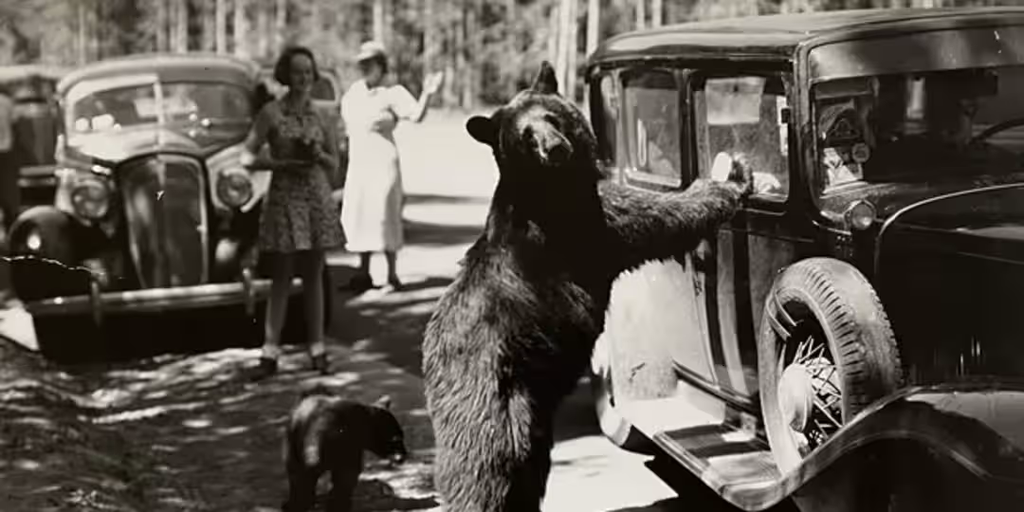
Today, visitors to America’s national parks are warned to keep their distance from bears, secure their food, and never feed wild animals. These rules exist for an important reason: a bear that becomes accustomed to human food can lose its natural fear of people, creating dangerous encounters for both wildlife and visitors.
But the history of bear management in America’s national parks tells a surprising story. During much of the twentieth century, some parks encouraged visitors to watch bears gather around designated feeding areas. In certain locations, park staff even helped organize spectacles in which bears competed for discarded food while crowds gathered to observe the action.
What was once treated as an entertaining attraction eventually became a serious wildlife-management problem. Bears learned to associate people with easy meals, visitors approached animals for better views, and encounters that appeared amusing could quickly become dangerous. The practice also disrupted natural feeding habits and contributed to conflicts between humans and wildlife.
The transformation from bear-feeding spectacles to modern wildlife-safety rules reflects a major change in how America’s national parks understand conservation. It is a story about unintended consequences, evolving scientific knowledge, and the difficult task of protecting animals in places that millions of people want to visit.
When Bears Became a National Park Attraction
America’s national parks were established to protect remarkable landscapes, preserve natural features, and give the public opportunities to experience the outdoors. However, early tourism sometimes treated wildlife as part of the entertainment rather than as animals that needed space and protection.
During the late nineteenth and early twentieth centuries, many visitors expected a national park trip to include close encounters with animals. Seeing a bear in the wild could be exciting, but watching several bears gather around a food source offered an even more predictable spectacle.
In some parks, bears learned to visit campgrounds, garbage dumps, and other places where food scraps were readily available. Park visitors could observe the animals from roadsides or designated viewing areas, while photographers captured images of bears gathering, fighting over food, or climbing around discarded provisions.
Yellowstone National Park became particularly associated with bear-viewing attractions. At various points in its history, bears gathered at garbage dumps where food waste was accessible. The park also developed organized bear-feeding demonstrations that drew crowds, turning a natural animal into a regular part of the visitor experience.
These activities reflected the attitudes of their time. Wildlife was often managed to make parks attractive to tourists, and the possibility of seeing large animals up close was considered a valuable part of the experience.
The idea seemed practical enough. Food waste needed to be disposed of, bears were already attracted to it, and visitors enjoyed watching the animals. What park managers did not fully appreciate at first was how strongly repeated feeding could influence bear behavior.
The attraction created an expectation that bears would appear in predictable places, encouraging people to gather wherever food was available. Over time, this relationship became increasingly difficult to control.
How Bear-Feeding Shows Worked
Bear-feeding spectacles varied by park and period, but the general principle was straightforward: food was placed where bears could reach it, and visitors gathered to watch.
At Yellowstone, garbage dumps became well-known places for observing bears. In some periods, park personnel also organized public feeding demonstrations. Visitors could watch bears arrive, compete for food, and interact with one another.
The scenes could appear entertaining. Bears are powerful, intelligent animals, and their movements naturally attract attention. A group of bears scrambling for food could create a dramatic display that visitors might remember long after leaving the park.
However, these spectacles did not reflect normal bear behavior. In the wild, bears spend considerable time searching for natural foods, including vegetation, berries, insects, fish, and other available resources, depending on the species, season, and habitat.
When large quantities of human food became easily available, the animals had an incentive to return repeatedly to the same locations. They could learn that roads, campgrounds, garbage areas, and groups of people were associated with food.
That association created problems for park managers. Bears that repeatedly found food near humans could become increasingly comfortable approaching developed areas. Visitors, meanwhile, could begin to see close encounters as normal rather than recognizing them as potentially dangerous.
Feeding areas also attracted multiple bears, sometimes bringing animals into competition with one another. A situation that appeared amusing from a distance could involve aggression, sudden movements, and unpredictable behavior.
The central problem was that the attraction encouraged bears to behave in ways that benefited tourism in the short term but created risks over the long term.
The Dangerous Consequences of Feeding Wild Bears
Bears are large, strong animals whose behavior can change quickly when food is involved. Even a bear that appears calm may react defensively if it feels threatened, is surprised, or believes another animal or person is interfering with its food.
When people repeatedly feed bears, several problems can develop.
First, bears may lose some of their natural wariness around humans. Instead of avoiding developed areas, they may begin approaching campsites, picnic areas, roads, and buildings in search of food.
Second, bears can become more persistent when they discover that people carry attractive food. A bear may investigate a cooler, approach a vehicle, or enter a campground because previous experiences have rewarded similar behavior.
Third, close encounters become more likely. Visitors may approach a bear to take photographs, offer food, or get a better view. Children may not recognize the danger, and adults may underestimate how quickly a large animal can move.
The risks are not limited to physical attacks. A bear that repeatedly obtains food from people may become a serious management concern even if it has not injured anyone.
Park officials may have to relocate the animal, use other deterrence methods, or, in severe cases, euthanize it when the risk to public safety becomes unacceptable.
This creates a tragic outcome. Human behavior teaches the bear to approach people, but the animal may ultimately suffer the consequences of that learned behavior.
Wildlife managers often describe bears that seek human food as food-conditioned. This is different from simple habituation, which occurs when an animal becomes accustomed to people and no longer reacts strongly to their presence. The two processes can overlap, but food conditioning is especially concerning because it gives bears a direct reason to approach humans.
The history of bear-feeding attractions demonstrated how an activity intended to entertain visitors could contribute to dangerous wildlife conflicts.
Yellowstone’s Changing Approach to Bears
Yellowstone National Park offers an important example of how attitudes toward wildlife management changed over time.
For decades, bears gathering at garbage dumps were part of the park’s visitor experience. These viewing opportunities helped create memorable encounters, but they also encouraged bears to depend on human food waste.
As knowledge of bear behavior improved, park managers increasingly recognized the disadvantages of the practice. Feeding bears and allowing them to obtain garbage could alter their behavior, create safety risks, and interfere with natural ecological processes.
Yellowstone gradually moved away from treating bear-feeding as entertainment. Public garbage-dump viewing and organized feeding practices were discontinued as management priorities shifted toward reducing human food sources and restoring more natural bear behavior.
The change required more than simply stopping a show. Park officials had to address the underlying reasons bears were gathering near people.
Garbage disposal practices needed improvement, food storage rules became increasingly important, and visitors had to learn that feeding wildlife was dangerous rather than harmless.
These changes also required a shift in public expectations. People visiting a national park might hope to see a bear, but they could no longer assume that the animal would appear at a convenient viewing area.
Instead, the goal became to allow wildlife to live with less interference while helping visitors understand how to observe animals responsibly.
Yellowstone’s experience illustrates an important conservation principle: protecting wildlife sometimes means ending practices that have become popular traditions.
Why Park Rangers Stopped Encouraging Bear Feeding
The movement away from bear-feeding attractions was part of a broader change in national park management.
As research and practical experience revealed more about animal behavior, wildlife managers increasingly emphasized natural feeding patterns, habitat protection, and the prevention of dangerous human-wildlife encounters.
Rangers were no longer expected simply to help visitors see animals. They also had to educate the public about the risks of approaching, feeding, or disturbing wildlife.
This change reflected a more comprehensive understanding of conservation. The purpose of a national park is not merely to display animals for human enjoyment; it is also to preserve ecosystems and allow wildlife to behave naturally.
Feeding bears can interfere with those objectives. Human food is not a suitable replacement for a bear’s natural diet, and the availability of easy meals can encourage animals to spend time in developed areas instead of foraging across their normal habitat.
Food waste can also contain packaging and other materials that animals may swallow accidentally. Meanwhile, concentrations of bears around garbage can increase competition and create additional opportunities for conflict.
Modern park management therefore focuses on limiting access to human food, reducing attractants, and preventing visitors from creating habits that bears may continue to seek out.
The change does not mean that rangers can eliminate every dangerous encounter. Bears remain wild animals, and their behavior cannot be predicted perfectly. However, removing artificial food sources can reduce the likelihood that bears will repeatedly approach people.
How Modern National Parks Protect Bears and Visitors
Today, national parks use a combination of education, infrastructure, and enforcement to reduce conflicts between bears and people.
Bear-Resistant Food Storage
Many parks require visitors to store food, garbage, toiletries, and other scented items in bear-resistant containers or designated storage facilities. In some locations, bear-resistant food lockers are provided at campsites.
These measures reduce the chance that bears will discover easy meals around tents, vehicles, and picnic areas.
Proper Garbage Disposal
Garbage containers designed to resist bears help prevent animals from accessing discarded food. Park staff also work to keep waste areas secure and encourage visitors to dispose of rubbish properly.
This approach addresses one of the major problems associated with historical feeding sites: the repeated availability of food waste.
Clear Visitor Education
Signs, ranger talks, and park information materials explain why visitors should never feed wildlife. People are encouraged to maintain appropriate distances and avoid approaching animals for photographs.
Visitors must also understand that feeding wildlife can endanger the animal, not just the person offering the food.
Monitoring and Wildlife Management
Park personnel monitor bear activity, respond to reports of animals entering developed areas, and use management strategies suited to local conditions.
Depending on the situation, these measures may include closing an area temporarily, removing attractants, using deterrents, or relocating an animal when appropriate.
The overall goal is to reduce opportunities for bears to associate people with food while allowing visitors to enjoy the park safely.
What Visitors Should Do If They Encounter a Bear
Although modern management practices have reduced many avoidable conflicts, visitors can still encounter bears in national parks. Knowing how to respond is essential.
The correct response depends on the species, the animal’s behavior, the terrain, and the circumstances of the encounter. Visitors should follow the specific guidance provided by park authorities.
In general, people should never approach a bear, attempt to feed it, or move closer for a photograph. They should give the animal plenty of space and avoid blocking its path.
Food and scented items should be stored according to park regulations. Campers should keep campsites clean, dispose of rubbish properly, and never leave food unattended where bears can reach it.
If a bear approaches, visitors should remain aware of their surroundings, avoid sudden actions that could escalate the situation, and follow the relevant park’s safety instructions. Bear spray can be an important safety tool in areas where it is recommended, but visitors should learn how to carry and use it correctly before entering bear habitat.
Most importantly, people should resist the temptation to turn an unexpected wildlife encounter into a spectacle. A bear is not performing for an audience. It is a wild animal responding to its surroundings.
The Lasting Lesson of America’s Bear-Feeding Era
The history of feeding bears to entertain visitors reveals how conservation practices can change when the consequences of human behavior become clearer.
What once seemed like a harmless attraction helped create conditions in which bears learned to associate people with food. That association encouraged animals to enter developed areas, increased the likelihood of dangerous encounters, and sometimes placed bears themselves at risk.
The shift away from feeding spectacles was therefore about more than changing visitor entertainment. It reflected a deeper commitment to allowing wildlife to remain wild.
National parks continue to welcome millions of visitors, and the chance to see a bear in its natural habitat remains one of the most memorable experiences an outdoor traveler can have. But the most responsible encounter is one that does not interfere with the animal’s behavior.
The old feeding shows offered predictable entertainment. Modern conservation asks visitors to accept something less controlled but far more meaningful: the opportunity to observe wildlife on its own terms.
Conclusion: From Bear-Feeding Shows to Wildlife Conservation
America’s national parks have learned important lessons from the era when bears were fed to draw crowds. In places such as Yellowstone, practices that once attracted visitors eventually revealed serious problems, including food conditioning, altered animal behavior, and increased risks to people and wildlife.
Today, park management emphasizes secure food storage, responsible garbage disposal, visitor education, and respect for natural animal behavior. These measures help reduce conflicts and protect bears from the consequences of becoming too comfortable around humans.
The story also serves as a reminder that good intentions do not always produce good outcomes. An attraction may seem entertaining in the moment, but its long-term effects can be difficult to reverse.
The best way to appreciate a bear in America’s national parks is not to make it approach a crowd for food. It is to preserve the conditions that allow it to forage, move, and live naturally, with enough distance between wildlife and people to protect both.
That lesson remains central to modern conservation: wildlife should not have to perform for visitors to deserve protection.