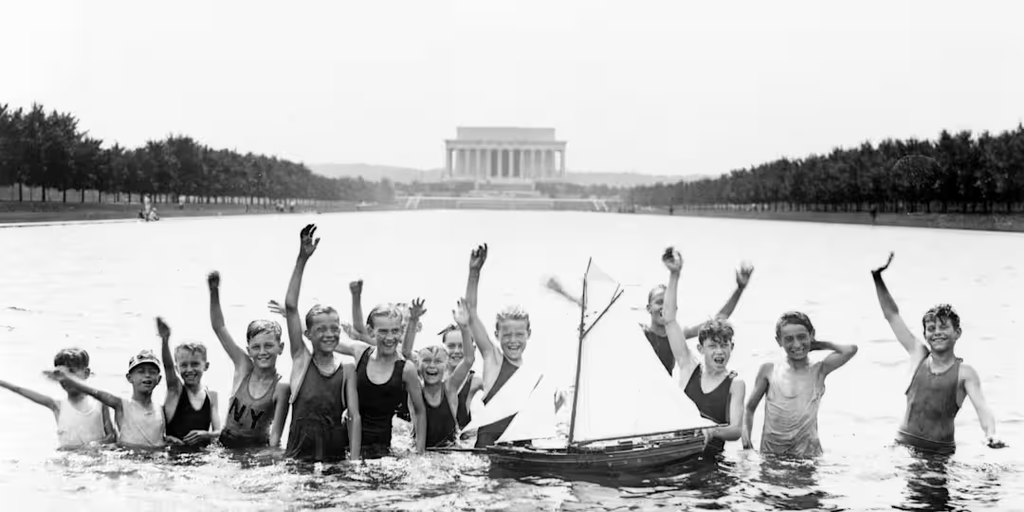
The Lincoln Memorial Reflecting Pool is one of the most recognizable landmarks in Washington, D.C. Stretching between the Lincoln Memorial and the Washington Monument, its long, reflective surface creates a striking view that has become synonymous with the National Mall. Millions of visitors have walked beside its water, photographed its reflections, and gathered along its edges for historic ceremonies and public events.
Yet beneath this familiar scene lies a surprising story about the challenges of maintaining an aging national monument. Over several decades, the area around the Reflecting Pool experienced significant settlement, with the ground and surrounding infrastructure reportedly sinking by approximately a foot in places. What appeared to be a simple change in elevation revealed a more complicated problem involving soil conditions, water management, aging infrastructure, and the preservation of one of America’s most important public spaces.
The effort to protect the Reflecting Pool illustrates how even the most celebrated landmarks require constant attention. Behind the photographs and historic memories are engineers, architects, construction workers, and preservation specialists working to ensure that the National Mall remains safe, accessible, and visually impressive for future generations.
The Lincoln Memorial Reflecting Pool: A Symbol of American History
The Reflecting Pool occupies a central position on the National Mall, the monumental landscape connecting several of the nation’s most significant memorials and public spaces.
Completed in the early 1920s, the pool was designed as part of the landscape surrounding the Lincoln Memorial. Its long, rectangular shape creates a visual axis between the memorial dedicated to Abraham Lincoln and the Washington Monument to the east.
The design is simple but powerful. On calm days, the water mirrors the sky, trees, monuments, and surrounding landscape. The resulting reflection gives visitors a sense of symmetry and scale while emphasizing the architectural importance of the Lincoln Memorial.
However, the pool is more than a decorative feature. It has become a gathering place for events that have shaped American public life.
In 1963, the area served as the setting for the March on Washington for Jobs and Freedom, during which Martin Luther King Jr. delivered his historic “I Have a Dream” speech. The surrounding grounds have also hosted demonstrations, commemorations, concerts, and presidential ceremonies.
Because of these associations, the Reflecting Pool holds significance beyond its physical appearance. It is a place where architecture, landscape, politics, and collective memory intersect.
Maintaining the pool therefore requires more than keeping its water clean. The National Park Service must also preserve the surrounding landscape, protect underground infrastructure, manage drainage, and ensure that the area can accommodate millions of visitors.
These responsibilities became especially important as the site aged and its physical condition required closer attention.
Why Was the Reflecting Pool Area Sinking?
The idea that a famous national landmark could gradually sink may sound surprising, but changes in ground elevation are not unusual around large structures built on complex soil conditions.
The National Mall sits in a landscape shaped by natural geological processes and extensive human modification. Parts of the area contain soils and sediments associated with the Potomac River and its surrounding lowlands. Over time, construction, groundwater conditions, drainage patterns, and the weight of infrastructure can influence how the ground behaves.
When soil settles or compresses, the surface above it may gradually change elevation. This process, commonly known as settlement, can affect roads, pathways, foundations, buried utilities, and other structures.
The reported sinking of the Reflecting Pool area by approximately a foot over several decades highlights the potential consequences of these gradual changes. However, it is important to distinguish between the settlement of surrounding ground or infrastructure and the movement of the entire pool as a single structure. The exact location and extent of any settlement depend on the particular conditions being measured.
A change in elevation can create several practical problems. Paths may become uneven, drainage systems may no longer function as intended, and underground pipes can experience stress. Even relatively small shifts can become significant when they affect a large public space used by millions of people.
Water management is particularly important around a reflecting pool. The surrounding landscape must direct rainwater appropriately, while the pool itself requires systems capable of maintaining water quality and controlling circulation.
If the ground and infrastructure move unevenly, these systems may need adjustments or repairs to continue operating properly.
The challenge is not necessarily that a landmark is about to disappear beneath the ground. Rather, gradual settlement can create maintenance problems that become more expensive and disruptive if they are allowed to continue.
How Ground Settlement Can Threaten a Historic Landmark
Ground settlement is a concern for engineers because it can occur slowly, making it difficult to recognize the full extent of a problem until visible signs appear.
A building may develop cracks, a walkway may become uneven, or a drainage system may begin to function less effectively. Around a large water feature, the consequences can extend across multiple systems.
The Reflecting Pool’s scale makes maintenance especially demanding. Its long basin, surrounding paths, landscaped areas, and underground utilities must function together. A problem in one part of the site can affect other areas, particularly when water movement and ground conditions are involved.
For example, uneven settlement can change the direction in which rainwater flows. Instead of draining away as intended, water may collect in low spots or place additional pressure on nearby infrastructure.
Buried pipes can also be affected when the ground around them shifts. Depending on their material, age, and installation, they may require inspection, adjustment, or replacement.
The historic setting adds another layer of complexity. Work must protect the visual character of the National Mall while addressing practical engineering requirements. Any major intervention must be carefully planned to avoid damaging significant landscape features or disrupting the visitor experience more than necessary.
This is why maintaining historic public spaces often involves collaboration among engineers, landscape architects, preservation specialists, contractors, and government agencies.
Their task is to identify developing problems, determine their causes, and choose repairs that provide lasting benefits without compromising the landmark’s historical character.
The Major Restoration Effort That Helped Protect the Pool
One of the most significant modern rehabilitation projects at the Lincoln Memorial Reflecting Pool took place between 2010 and 2012.
The project addressed deteriorating infrastructure and the pool’s water-management systems. The work included improvements to the basin and its supporting systems, with the goal of making the landmark more reliable and sustainable over the long term.
Before the rehabilitation, the pool relied on a system that required substantial maintenance. The restoration introduced a more efficient approach to supplying and circulating water, drawing water from the Tidal Basin rather than depending on the previous arrangement.
The project also involved repairs to the pool’s structure and improvements to the surrounding facilities. These measures were intended to reduce operational problems, improve water management, and help preserve the appearance of the historic landscape.
The restoration was not simply a cosmetic makeover. Large public water features depend on an interconnected network of structural components, pipes, pumps, drainage systems, and carefully managed ground conditions.
Replacing or repairing these systems can be essential to protecting the visible landmark above them.
It is important, however, not to attribute every reported instance of settlement to this single project or to assume that the rehabilitation permanently eliminated all ground movement. The 2010–2012 work addressed major infrastructure needs, while ongoing inspection and maintenance remain necessary at a site of this size and age.
The broader lesson is that protecting a historic landmark often requires substantial work that visitors may never notice. A successful restoration allows the place to continue looking familiar even as important components beneath the surface are repaired or modernized.
Engineering Challenges Beneath the National Mall
The Reflecting Pool is part of a larger landscape where engineering decisions must account for the interaction between water, soil, weather, and heavy public use.
Washington, D.C., experiences seasonal temperature changes, rainfall, and periods of high humidity. These conditions affect outdoor infrastructure and can increase the need for drainage management, surface repairs, and regular inspections.
Water features require particular care because their operation depends on maintaining a controlled relationship between the basin, the surrounding ground, and the systems that supply and remove water.
Engineers must consider several questions when evaluating such a site:
- Is the basin structurally sound?
- Are pipes and drainage systems functioning correctly?
- Has the surrounding ground settled unevenly?
- Are walkways and other public surfaces safe?
- Can the water system operate efficiently without unnecessary waste?
The answers help determine whether routine maintenance is sufficient or whether more extensive rehabilitation is necessary.
Historic landscapes also require decisions about how much modern technology to introduce. New equipment can improve efficiency and reliability, but its installation must respect the site’s appearance and historical importance.
In many cases, the most effective solution is a combination of careful monitoring, targeted repairs, and upgrades to systems that have reached the end of their useful lives.
The Reflecting Pool demonstrates why infrastructure maintenance should be treated as a continuing responsibility rather than a one-time project.
Why Saving the Reflecting Pool Matters to Visitors
For many people, a visit to the National Mall is one of the defining experiences of a trip to Washington, D.C. The Reflecting Pool provides a space for walking, reflection, photography, and quiet observation between visits to nearby monuments.
Its visual impact depends on the relationship between the water and the surrounding architecture. The Lincoln Memorial rises at one end, while the Washington Monument stands in the distance. Trees, open lawns, and the changing sky complete the scene.
If the pool were allowed to deteriorate, the consequences would extend beyond a single water feature. The landscape’s visual balance could suffer, visitor access might become more difficult, and the condition of the surrounding public space could decline.
The site’s historical significance makes these concerns particularly important. The Reflecting Pool has witnessed major events in American history and continues to serve as a setting for public gatherings and national commemorations.
Preserving it means protecting both a physical landmark and the place where generations of Americans have experienced moments of political expression, remembrance, and shared civic life.
That responsibility requires investment, planning, and patience. Construction projects may temporarily disrupt access, but the long-term goal is to keep the landscape functioning for future visitors.
The Importance of Maintaining America’s Historic Monuments
The challenges surrounding the Reflecting Pool reflect a broader issue facing historic landmarks throughout the United States.
Monuments and memorials are often designed to appear permanent. Their stone surfaces, carefully planned landscapes, and monumental proportions can create the impression that they will remain unchanged indefinitely.
In reality, every structure is subject to wear, weather, shifting ground, aging materials, and the demands of public use.
Preservation therefore involves more than restoring a monument’s appearance after visible damage occurs. It also requires monitoring the systems that support it and identifying potential problems before they become serious.
Regular inspections can reveal early signs of settlement, deterioration, drainage failure, or structural stress. Addressing these issues promptly may help prevent more expensive repairs in the future.
At the same time, preservation specialists must balance engineering needs with historical authenticity. A repair that improves structural performance but significantly changes a landmark’s appearance may create a different set of problems.
The most successful preservation projects consider both requirements, ensuring that historic sites remain safe and functional without losing the qualities that make them meaningful.
For the National Mall, this work is especially important because its monuments are used continuously. They are not simply historic objects protected behind barriers; they are active public spaces that welcome visitors, support demonstrations, and host national events.
Their continued use depends on reliable infrastructure as much as on careful historical stewardship.
The Lincoln Memorial Reflecting Pool: A Landmark Worth Protecting
The story of the Lincoln Memorial Reflecting Pool is a reminder that even America’s most familiar landmarks depend on careful engineering and continuous maintenance.
The reported settlement of the surrounding area by approximately a foot over several decades highlights the way ground conditions and aging infrastructure can affect a historic landscape. Yet settlement is only one part of the larger challenge. Drainage, water circulation, structural integrity, and public safety all contribute to the pool’s long-term condition.
The major rehabilitation carried out between 2010 and 2012 helped address important infrastructure problems and improve the pool’s water-management systems. Continued monitoring and maintenance remain essential, as they are for any large historic site exposed to weather, changing ground conditions, and heavy public use.
For visitors, the Reflecting Pool may appear to be a simple expanse of water stretching toward the Washington Monument. Behind that familiar view, however, lies a complex system that must work properly every day.
Protecting the pool means preserving a place connected to some of the most important moments in American history. It also demonstrates a broader principle: landmarks do not survive through symbolism alone. They endure because people are willing to study their condition, invest in their upkeep, and address problems before they threaten the places future generations hope to see.
The next time visitors stand beside the Reflecting Pool and watch the Lincoln Memorial shimmer across the water, they may see only a peaceful reflection. But that view is also the result of decades of planning, engineering, and preservation work—an ongoing effort to keep a national landmark standing strong.