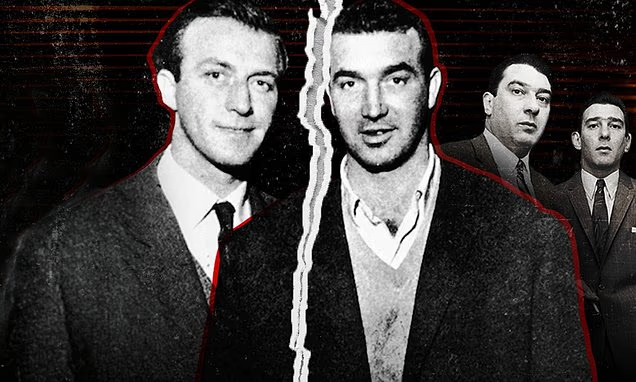
For decades, the names of the Kray twins and the Richardson brothers have occupied a notorious place in British criminal history. Their reputations have inspired books, documentaries and films depicting London’s underworld during the 1950s and 1960s, when organised crime, protection rackets and violent disputes shaped the public image of the capital’s criminal gangs.
The Krays, Ronnie and Reggie, became synonymous with London’s East End, while Charlie and Eddie Richardson were associated with a criminal organisation operating in south London. Their names are frequently linked in stories about rival gangs, territorial disputes and the violent underworld of post-war Britain.
Yet the familiar narrative of an epic Krays-versus-Richardsons gang war may oversimplify a much more complicated history. Behind the dramatic headlines were changing relationships, criminal partnerships, personal grievances and rival interpretations of events. The Richardson organisation, in particular, became notorious for violence associated with its members and the allegations surrounding its activities.
Understanding how these criminal networks developed requires separating documented events from stories that grew more sensational with time. The idea of two rival dynasties locked in a single, continuous battle may be compelling, but it risks obscuring the internal tensions and shifting loyalties that shaped London’s criminal underworld.
The Kray Twins: East London’s Most Notorious Gangsters
Ronnie and Reggie Kray became two of Britain’s most recognisable organised criminals during the 1950s and 1960s. Growing up in London’s East End, the twins built a reputation through a combination of intimidation, criminal enterprise and carefully cultivated public visibility.
Their organisation, commonly associated with the name the Firm, operated through activities that included protection rackets, illegal gambling and other criminal ventures. Violence and threats were central to the reputation they developed, although popular accounts sometimes blurred the distinction between established facts and the mythology surrounding them.
The brothers also cultivated connections with celebrities, politicians and public figures. Their presence in London’s nightlife helped create an image that combined criminal notoriety with a degree of social glamour.
That image later became a central part of the Krays’ legend. Films and television portrayals often presented the twins as larger-than-life figures whose influence extended across the capital.
However, their eventual downfall was rooted in criminal investigations and prosecutions rather than a dramatic showdown with a rival family. In 1969, Ronnie and Reggie Kray were convicted of murder and received life sentences.
Their convictions marked a major turning point in the history of London’s organised crime. They also helped transform the brothers from active criminals into enduring figures in British popular culture.
The Richardson Brothers and the Reputation of the Torture Gang
South London’s Richardson organisation developed a very different reputation, becoming associated with some of the most disturbing accounts of criminal violence in post-war Britain.
Charlie Richardson was a central figure in the organisation, which operated through criminal enterprises and was linked to serious allegations involving intimidation, extortion and violence. His brother Eddie was also associated with the gang.
The organisation became widely known as the Torture Gang because of reports and allegations concerning the brutal treatment of people suspected of disloyalty, owing money or otherwise coming into conflict with members of the group.
The label itself contributed to the gang’s notoriety. Newspaper coverage and later retellings emphasised the brutality associated with the organisation, helping establish an image that became inseparable from its name.
Yet the history of the Richardsons should not be reduced to sensational descriptions of violence. Their organisation existed within a wider criminal environment involving gambling, protection rackets, personal relationships and competition over money and influence.
As with the Krays, the difference between a group’s public reputation and the full details of its activities is important. Claims about specific incidents need to be assessed against court records, contemporary reporting and reliable historical accounts rather than repeated simply because they have become familiar parts of gangland folklore.
Was the Krays-versus-Richardsons Feud Really a Gangland War?
The supposed rivalry between the Krays and the Richardson brothers has long provided material for stories about London’s criminal underworld. The image of two powerful families competing for control of the capital is dramatic, straightforward and easy to reproduce.
But criminal relationships rarely fit such simple narratives.
Organised crime groups may compete in one area while maintaining practical relationships in another. Individuals can share contacts, conduct business through intermediaries or develop personal grievances that do not necessarily represent a sustained conflict between entire organisations.
The Krays and the Richardsons operated in different parts of London, and their reputations developed within overlapping criminal and social environments. Their names became linked in accounts of the period, but that does not automatically establish a continuous, organised war between the two groups.
To describe the rivalry as entirely fictional would also require evidence. Personal hostility, disputes and competition may have existed at particular times. The more cautious conclusion is that the popular image of a single, all-consuming gang war can oversimplify a complicated collection of relationships and incidents.
The distinction matters because gangland mythology often turns fragmented events into a coherent drama. Once a story becomes popular, later accounts may repeat its central claims without carefully examining where the evidence ends and embellishment begins.
In this case, the rivalry narrative may distract from a more revealing question: what internal pressures and personal conflicts contributed to the decline of the Richardson organisation itself?
Inside the Richardson Organisation: Power, Money and Loyalty
Criminal organisations depend heavily on relationships that are often built around financial interests, intimidation and personal loyalty. Unlike legitimate businesses, they cannot rely on transparent contracts or ordinary dispute-resolution systems to settle disagreements.
That creates particular vulnerabilities. Members may have competing interests, disputes over money can become personal, and fear may keep people silent until relationships deteriorate beyond repair.
The Richardson organisation’s reputation for violence illustrates the consequences of operating within such an environment. Intimidation may help a group establish short-term control, but it can also generate resentment, fear and instability.
A gang that depends on coercion may struggle to maintain loyalty when members begin to doubt whether their interests are protected. Personal relationships can become difficult to separate from criminal business, and disagreements may escalate because ordinary channels for resolving conflict are unavailable.
However, identifying these general pressures does not establish the precise private dispute that ultimately damaged a particular organisation. Claims that a specific family disagreement or betrayal was the decisive cause must be supported by reliable evidence.
The history of the Richardson gang is best approached through documented criminal proceedings, contemporary accounts and carefully attributed testimony. Without that foundation, an explanation of its internal collapse risks becoming another unverified gangland story.
The 1960s Crackdown That Changed London’s Underworld
The Richardson organisation’s decline unfolded against a broader period of law-enforcement activity targeting organised crime.
In 1967, Charlie Richardson was convicted of offences involving violence and criminal activity and received a lengthy prison sentence. Members of the organisation were also prosecuted in connection with serious offences.
These legal developments were significant because they weakened the group’s ability to operate as it had before. Arrests and convictions could disrupt relationships, remove influential figures from the streets and expose criminal networks to greater scrutiny.
The consequences extended beyond the individuals convicted. Organised crime groups rely on a combination of leadership, communication, money and the willingness of members to remain involved. When key figures are imprisoned, the organisation may struggle to maintain its previous structure.
The Krays experienced a comparable turning point in 1969, when their murder convictions led to life imprisonment. Their removal from London’s criminal scene helped bring an end to the period in which they had exercised their most visible influence.
These developments illustrate an important distinction between gangland legend and criminal history. While popular narratives often emphasise rivalries and personal vendettas, police investigations, prosecutions and prison sentences can have a more direct effect on the survival of criminal organisations.
How Gangland Mythology Took Hold
The Krays and the Richardson brothers became subjects of fascination partly because their stories combined crime with family identity, violence, loyalty and public notoriety.
The media played a significant role in shaping their reputations. Dramatic descriptions of gangland figures helped attract attention, while later biographies, documentaries and films brought the stories to new audiences.
Over time, repeated accounts could turn complex events into familiar formulas: rival families, dangerous alliances, sudden betrayals and violent revenge.
Such stories are not necessarily invented from nothing. They often draw on genuine criminal cases and documented acts of violence. The problem arises when embellishments, disputed claims and later interpretations are presented as if they were equally well established.
The label “Torture Gang,” for example, conveys the Richardson organisation’s notorious reputation, but it can also encourage audiences to approach its history primarily through sensational accounts of brutality.
Likewise, the idea of an uninterrupted war between the Krays and the Richardsons can make London’s criminal past seem like a contest between two clearly defined sides. In reality, the relationships between criminals, associates and rival networks were often more complicated.
Examining the evidence does not make the history less significant. It makes it possible to understand the period without relying entirely on the mythology that grew around it.
The Family Feud Question: Separating Evidence From Speculation
The suggestion that a simmering family feud was the real force that finally tore apart the Richardson organisation is a compelling premise. It offers a personal explanation for the decline of a notorious criminal group, shifting attention away from the better-known story of rivalry with the Krays.
However, a claim of this kind requires careful examination. To establish that a particular family feud was decisive, historians would need reliable evidence identifying the people involved, the nature of the dispute and its connection to the organisation’s eventual collapse.
Without those details, it would be misleading to present a private feud as the definitive explanation.
A more firmly grounded account considers the combined effects of criminal prosecutions, internal relationships, financial interests and the pressures associated with maintaining a violent organisation. These factors provide a broader framework for understanding why criminal groups can lose influence, even when their public reputations remain powerful.
The distinction is especially important when accounts rely on retrospective testimony. Memories can be incomplete, and people who once occupied the same criminal environment may describe events differently. Such accounts can be valuable, but they need to be evaluated alongside other evidence.
The most convincing explanation is not necessarily the most dramatic one. It is the one that best fits the available records.
The Legacy of the Krays and the Richardsons
More than half a century after their most notorious years, the Krays and the Richardson brothers remain part of Britain’s criminal folklore.
Their stories continue to inspire interest because they combine family relationships, violence, ambition and the consequences of criminal power. Yet the enduring fascination with these figures can make it difficult to distinguish historical reality from the dramatic versions created by popular culture.
The Krays’ convictions and the prosecutions involving Charlie Richardson are documented milestones in the history of London’s organised crime. The wider stories of rivalries, personal grievances and internal disputes require more careful assessment, particularly when they are used to explain the rise or fall of an entire organisation.
Ultimately, the supposed rivalry between the Krays and the Richardson brothers should not automatically be accepted as the defining conflict of London’s gangland history. Nor should an alleged family feud be treated as the proven cause of the Richardson organisation’s decline without clear supporting evidence.
The history is more complicated than either explanation suggests. Criminal networks were shaped by money, intimidation, relationships and the persistent attention of law enforcement. Those forces help explain why notorious organisations could appear powerful for years before losing their influence.
The enduring lesson is that gangland legends may preserve fragments of real events, but understanding what actually happened requires looking beyond the headlines. By separating documented history from sensational storytelling, it becomes possible to examine the Krays, the Richardson brothers and London’s criminal past with greater accuracy and perspective.