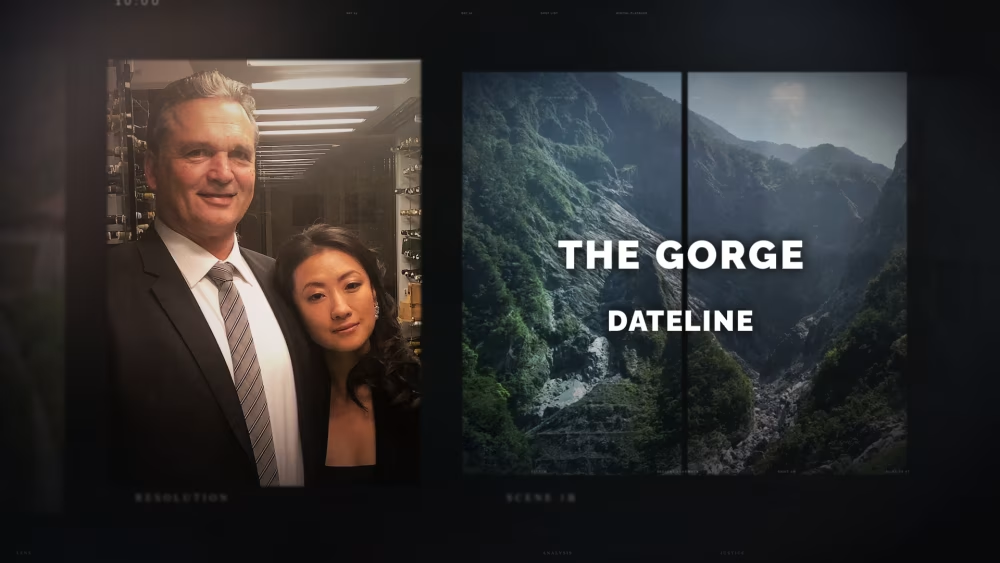
The disappearance of Alice Ku, a California tutor who went missing in Taiwan in 2019, is the focus of the Dateline episode “The Gorge.” Reported by Andrea Canning, the episode revisits a troubling case that raises questions about the circumstances surrounding Ku’s disappearance and the challenges investigators face when someone vanishes far from home.
Cases involving missing people often leave families struggling with uncertainty. When a disappearance occurs overseas, the situation can become even more complicated, involving different jurisdictions, unfamiliar surroundings and the difficulty of obtaining clear answers across international borders.
Through its examination of Ku’s case, Dateline brings renewed attention to the questions surrounding her disappearance and the importance of continuing to seek answers when a person’s fate remains uncertain.
For viewers interested in true-crime investigations, “The Gorge” offers an opportunity to learn about the case and consider the emotional and investigative challenges that accompany a disappearance.
Who Was Alice Ku?
Alice Ku was a California tutor whose disappearance in Taiwan in 2019 became the subject of a troubling missing-person case.
Although a person’s occupation may seem like a small detail in a complicated investigation, it can help audiences begin to understand the individual behind the headlines. A missing-person case is not simply a collection of dates, locations and unanswered questions. It concerns someone whose absence affects family members, friends and others who want to know what happened.
When a person disappears, the first questions often concern their last known movements, the circumstances of their disappearance and whether anyone has information that could help establish a reliable timeline.
In Ku’s case, the fact that she went missing in Taiwan while connected to a life in California adds an international dimension to the story. Establishing what happened can require attention to local circumstances, available records and information from people who may have known her.
It is important, however, to distinguish between confirmed information and unanswered questions. A disappearance does not, by itself, establish that a crime occurred, and the absence of a clear explanation should not be treated as proof of any particular theory.
The purpose of examining a case carefully is to understand what is known, identify what remains unresolved and avoid allowing speculation to replace evidence.
What Happened to Alice Ku in Taiwan in 2019?
The central question in the Alice Ku case is straightforward but difficult: What happened to her after she went missing in Taiwan in 2019?
That question lies at the heart of the Dateline episode “The Gorge.” Andrea Canning reports on the case, directing attention to the disappearance and the circumstances that make it worthy of further examination.
Taiwan provides the geographical setting for a case that also has connections to California. Whenever someone disappears in another country, investigators and relatives may face additional practical challenges. Information can be spread across different locations, and the people seeking answers may need to navigate unfamiliar systems and procedures.
Investigations into missing-person cases typically begin by establishing a timeline. Investigators may examine the last confirmed sightings, contact people who interacted with the missing person and review available records. Depending on the circumstances, they may also search relevant locations and assess information provided by members of the public.
However, not every missing-person investigation produces immediate answers. Witness accounts may be incomplete, records may offer only part of the picture, and important questions can remain unresolved even after considerable effort.
Without verified details establishing the precise sequence of events in Ku’s case, it would be inappropriate to present a particular explanation for her disappearance as fact.
That uncertainty is part of what makes responsible reporting important. A careful account should explain the questions surrounding a case without inventing evidence, attributing unsupported motives or suggesting that an unproven theory has been established.
Why Is the Case Featured on Dateline?
Dateline NBC has built a long-running reputation for reporting on criminal investigations, missing-person cases and stories involving unresolved questions. Its reports frequently combine interviews, available records, investigative context and narrative storytelling to help audiences understand complicated events.
The episode “The Gorge,” reported by Andrea Canning, turns attention to Ku’s disappearance and the questions associated with the case.
For true-crime programmes, the challenge is to make a complicated story understandable without losing sight of the people affected by it. Viewers may be drawn to the mystery of a disappearance, but the human consequences remain central.
A missing-person case can involve years of uncertainty for relatives and friends. Without a clear explanation, ordinary milestones may become difficult to experience without remembering the person who is absent. The inability to confirm what happened can prevent families from finding the closure they seek.
Investigative television can bring renewed public attention to such cases. By presenting information to a broad audience, a programme may encourage people to reconsider details, recognise information they previously overlooked or learn about questions that remain unanswered.
Nevertheless, a television report is not a substitute for verified investigative findings. Viewers should distinguish between documented evidence, attributed statements, investigative possibilities and questions that have not been resolved.
Understanding those differences makes it easier to follow the story while avoiding conclusions that the available information may not support.
Andrea Canning Reports on the Disappearance
Andrea Canning is a correspondent associated with Dateline NBC, where she has reported on a wide range of criminal cases and human-interest investigations.
Her work often involves explaining the sequence of events in a case, presenting relevant perspectives and helping audiences understand why certain questions remain important.
In “The Gorge,” Canning reports on Alice Ku’s disappearance in Taiwan. The episode provides a television format through which viewers can engage with the case and learn more about the circumstances addressed in the programme.
Investigative reporting requires a balance between storytelling and accuracy. A compelling narrative may include unanswered questions, but those questions should not be presented as evidence of guilt or proof of a particular explanation.
This is especially important in cases involving missing people, where relatives may still be searching for information and where inaccurate claims can cause further distress.
Responsible coverage recognises the difference between what investigators have established and what remains unknown. It also acknowledges that the people involved are more than characters in a mystery. They have families, relationships and lives that extend beyond the circumstances of a disappearance.
By focusing on the case itself, the episode invites viewers to consider the importance of evidence, persistence and careful examination when the available answers are incomplete.
The Challenges of Investigating an International Disappearance
Missing-person investigations can be difficult under any circumstances. When a person disappears outside their home country, additional complications may arise.
One challenge is establishing a reliable timeline. Investigators need to determine when the person was last seen, where they were known to have travelled and which details can be independently confirmed.
Another challenge involves communication. Family members may be thousands of kilometres away from the location where the disappearance occurred. Differences in language, local procedures and access to information can make it harder to follow developments.
International cases can also require cooperation between authorities in different jurisdictions. The appropriate procedures depend on the circumstances, the available evidence and the laws that apply.
Technology can assist with some aspects of an investigation. Depending on what is available and legally accessible, records, communications and other information may help establish movements or clarify events. Yet technology does not automatically solve a case. Investigators must still determine whether information is reliable and how it fits with the wider evidence.
These challenges should not be taken as evidence that investigators have overlooked a particular clue or that one explanation is necessarily correct. They simply illustrate why establishing the facts of an international disappearance can require time, cooperation and careful analysis.
The Alice Ku case provides a context for considering these broader issues while keeping the distinction between general investigative challenges and case-specific facts clear.
Why Missing-Person Cases Continue to Attract Public Attention
Stories about missing people often attract sustained interest because they confront audiences with an unsettling possibility: someone can disappear, leaving others without a clear explanation of what happened.
Unlike a case with an established outcome, a disappearance may leave several questions open. People may wonder about the person’s last known movements, the circumstances of the disappearance and whether additional information could clarify the timeline.
True-crime programmes can help audiences engage with these questions, but they also carry a responsibility to treat the people involved with dignity.
It is easy for online discussions to turn uncertainty into speculation. A photograph, a brief statement or an incomplete timeline may prompt theories that cannot be supported by the available evidence. Once repeated widely, such theories can be mistaken for established facts.
A more responsible approach is to remain attentive to confirmed information and acknowledge the limits of what is known.
For families affected by a disappearance, public awareness may be valuable when it brings forward credible information. At the same time, unsupported accusations and intrusive speculation can create additional difficulties.
The most meaningful attention is therefore attention that respects the missing person, recognises the impact on loved ones and prioritises reliable information over sensational claims.
How to Watch the Dateline Episode “The Gorge” Now
Viewers who want to learn more about Alice Ku’s disappearance can look for Dateline NBC‘s “The Gorge,” reported by Andrea Canning.
Availability may vary depending on the viewer’s country, streaming service and the programme’s current distribution arrangements. Checking the official Dateline NBC website, NBC’s programme listings or an authorised streaming platform is the best way to determine whether the episode is available to watch.
Before viewing, audiences may wish to approach the case with an understanding that not every question surrounding a disappearance necessarily has a confirmed answer. The episode’s reporting can provide context, but any conclusions should be based on the evidence presented rather than assumptions about what might have happened.
For viewers interested in investigative journalism, the programme offers a chance to examine a case involving an American tutor who disappeared in Taiwan and to consider the difficulties of understanding an event when crucial information may remain unavailable.
The Questions That Remain at the Heart of Alice Ku’s Story
The disappearance of Alice Ku in Taiwan in 2019 remains the central subject of Dateline‘s “The Gorge.” Through Andrea Canning’s reporting, the episode brings attention to a case that highlights the uncertainty and emotional weight often associated with missing-person investigations.
The most important question is not simply why the case remains intriguing to viewers. It is what reliable information can establish about Ku’s disappearance and whether further evidence can help clarify the circumstances.
Until facts are confirmed, it is essential to avoid treating speculation as a conclusion. A responsible examination of the case recognises the limits of the available information while maintaining interest in the search for answers.
For those watching “The Gorge,” the story serves as a reminder that behind every missing-person investigation is a real individual whose absence matters to others.
The pursuit of answers depends on evidence, careful reporting and a willingness to distinguish what is known from what remains uncertain. Those principles are essential to understanding Alice Ku’s case and to approaching missing-person stories with the seriousness and respect they deserve.