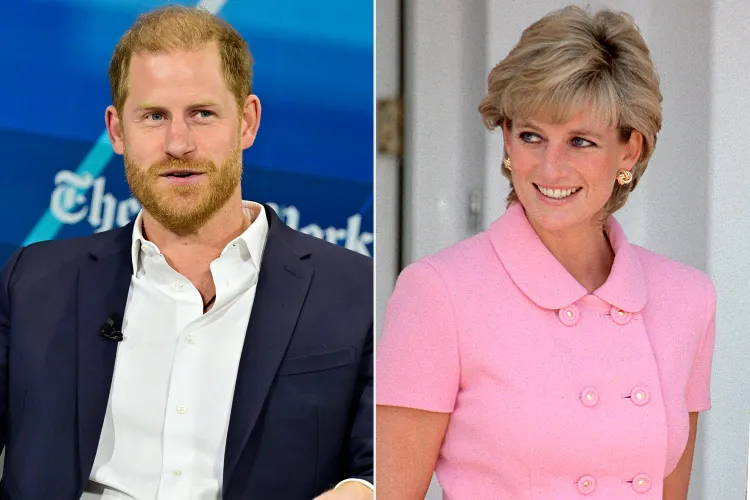
Prince Harry has offered a deeply personal look into his lifelong journey with grief, revealing how one important realization about his late mother, Princess Diana, helped him change his relationship with loss. In a new MasterClass focused on grief and resilience, the Duke of Sussex reflected on the emotional struggles he experienced after Diana’s death in 1997 and explained how years of processing his emotions eventually led him toward a different understanding of happiness, healing, and his mother’s enduring influence.
For much of his life, Harry said, he struggled with the idea that feeling happy without his mother might somehow mean he was forgetting her. The emotional weight of that belief contributed to years of numbness and difficulty confronting his loss. Eventually, however, he came to understand something that changed his perspective: he believed Diana would have wanted him to find happiness rather than remain trapped in sadness.
That realization became a turning point. It helped him see that moving forward did not mean abandoning his mother’s memory. Instead, he could carry her influence with him while building a meaningful life of his own. His reflections offer a personal perspective on grief that may resonate with anyone who has struggled to reconcile the pain of losing someone they love with the possibility of experiencing joy again.
Prince Harry Opens Up About His Long Journey With Grief
Princess Diana died in a car crash in Paris on August 31, 1997, when Prince Harry was just 12 years old. Her death shocked the world and left her two sons, Prince William and Prince Harry, facing a profound personal loss under extraordinary public scrutiny.
For Harry, the experience of losing his mother at such a young age became a defining part of his life. While the world remembered Diana as a beloved royal figure known for her compassion and charitable work, Harry had to confront the loss of the person who had raised him and provided him with love, guidance, and a sense of security.
In his recent MasterClass, titled Redefining Grief: Building Resilience Through Loss, Harry discussed how difficult it had been to process those emotions. Speaking alongside neuroscientist Dr. Mary-Frances O’Connor, he explored the psychological and physical effects of grief and the ways unresolved emotions can influence a person’s life long after a loss occurs.
Harry described spending years feeling emotionally numb. Rather than fully confronting his sadness, he often continued moving forward without understanding how deeply his loss continued to affect him.
His experience illustrates how grief does not necessarily follow a straightforward path. Some people express their pain openly, while others find themselves withdrawing emotionally or concentrating on work and responsibilities to avoid confronting difficult feelings.
For Harry, understanding those patterns required time, reflection, and professional support.
The Guilt He Felt About Being Happy Without Diana
One of the most revealing parts of Harry’s account concerned the guilt he experienced whenever he considered the possibility of feeling happy without his mother.
He explained that he had spent a long time feeling emotionally shut down because he worried that happiness might represent disloyalty to Diana’s memory.
“I’d spent so long emotionally numb, to a large extent, because I felt disloyal and guilty for the possibility of being happy and joyful without her,” Harry shared.
He also explained that he had felt compelled to remain sad or emotionally numb as a way of proving that he still missed her.
This belief created a painful emotional conflict. On one hand, Harry wanted to move forward and experience the opportunities life offered him. On the other, he felt that allowing himself to feel joy might somehow weaken the connection he continued to have with his mother.
Such feelings are not uncommon among people who have experienced bereavement. Some individuals feel guilty when they laugh, celebrate an achievement, begin a new relationship, or discover a new source of happiness after someone close to them dies.
They may worry that moving forward means leaving the person behind.
Harry’s reflections highlight why grief can be so complicated. The loss itself is painful, but the emotions surrounding that loss can continue to shape everyday decisions long afterward.
For him, the challenge was not simply learning to live without Diana. It was understanding that he did not need to remain unhappy to demonstrate the importance of their relationship.
The Realization That Changed His Outlook on Life
After years of struggling with those feelings, Harry eventually arrived at a different understanding of what his mother might have wanted for him.
“The reality is, what I discovered was actually that she just wanted me to be happy,” he said.
He described the realization as a major mental shift that changed how he viewed his life and his relationship with grief.
“It freed me, and it gave me a whole different outlook on life,” he explained.
The importance of that realization lies in its simplicity. Harry came to understand that happiness did not have to compete with remembrance. He could miss Diana, acknowledge the pain of her absence, and still allow himself to experience joy.
Rather than measuring his love for his mother through sadness, he could begin to honor her through the life he chose to build.
This distinction can be meaningful for anyone dealing with bereavement. Grief is not a test of loyalty, and suffering continuously is not a requirement for remembering someone.
People can preserve memories, traditions, and emotional connections while gradually returning to activities that bring them fulfillment. Healing does not erase the past or diminish the importance of the person who has died.
For Harry, the shift offered a new way to understand his mother’s place in his life. Diana could remain an important influence without his grief having to define every part of his identity.
How Unresolved Grief Affected Prince Harry
During the MasterClass, Harry also discussed how his efforts to keep painful emotions at a distance influenced other aspects of his life.
He explained that adrenaline and constant activity had sometimes helped him keep moving without fully confronting his feelings. His military career, in particular, provided a strong sense of purpose and structure during a period when he was still carrying unresolved grief.
Military service gave Harry demanding responsibilities and a clear focus. Yet he later reflected on the possibility that remaining busy had also served as a distraction from emotions he had not fully processed.
This does not mean that his military service was without genuine value or that every difficult experience he encountered stemmed from grief. Rather, his account suggests that people can sometimes rely on intense activity to avoid emotions they do not yet know how to manage.
Harry also spoke about experiencing anxiety, depression, and panic attacks during different periods of his life. He described how ordinary situations could sometimes trigger overwhelming physical reactions, making it difficult to understand what was happening inside him.
His reflections underline the importance of recognizing that emotional distress can affect both the mind and the body. Grief may appear as sadness, but it can also be accompanied by anxiety, exhaustion, emotional withdrawal, or difficulty concentrating.
For Harry, recognizing these patterns was part of a broader process of understanding himself and learning healthier ways to respond to stress.
His willingness to discuss these experiences publicly also contributes to a wider conversation about mental health, particularly among people who feel pressure to appear strong even when they are struggling privately.
How Therapy Helped Harry Reconnect With Memories of His Mother
Another significant part of Harry’s MasterClass involved the role of memory in the grieving process.
Harry described how some memories of Diana had become difficult to access after years of emotional suppression. He had worried about losing details of her voice and laughter, which made the distance created by her death feel even more painful.
As part of his therapeutic work, a therapist suggested using scent to help reconnect with memories of his mother.
Harry recalled the experience of using Diana’s perfume and how its familiar scent brought back memories and emotions he had struggled to reach.
He described feeling as though the scent transported him to another time, helping him reconnect with experiences that had seemed distant or inaccessible.
The experience reflects the powerful relationship between smell and memory. The brain’s olfactory system has close connections with regions involved in emotion and memory, including the amygdala and hippocampus. A familiar scent can sometimes bring back vivid associations with a person, place, or moment from the past.
For Harry, the experience was not simply about remembering a particular fragrance. It was about allowing himself to reconnect with the emotional complexity of his relationship with Diana.
He had previously described building an emotional and mental barrier around memories, with both painful and happy experiences becoming difficult to access. Through therapy, he began to find ways to approach those memories without treating them as something he had to avoid.
The process illustrates how grief can involve not only learning to accept someone’s absence but also finding ways to maintain a meaningful connection with the memories that remain.
Princess Diana’s Legacy Continues to Shape Harry’s Life
Although Harry has spent decades learning to live with his mother’s death, he has repeatedly emphasized that Diana remains an important influence on his values and charitable work.
He has often spoken about her compassion and her willingness to engage with people who were frequently overlooked or stigmatized. During her life, Diana became known for supporting causes related to homelessness, HIV and AIDS awareness, and the campaign against landmines.
Her public approach to charity helped challenge social attitudes and encouraged people to look beyond labels when considering those facing difficult circumstances.
Harry has developed his own charitable interests, including support for wounded, injured, and sick military personnel and veterans through the Invictus Games. He has also supported initiatives focused on mental health and the well-being of children and families.
Reflecting on his work, Harry said he hoped his mother would be proud of the causes he supports.
He explained that the work he had chosen over the years often resembled the causes Diana herself had championed, even though he had not necessarily recognized those connections at the time.
This sense of continuity allows Harry to understand his mother’s legacy as something active rather than purely historical.
Diana’s influence does not exist only in photographs, public memories, or accounts of her royal life. For Harry, it also appears in the values he tries to carry forward and the people he hopes to help.
His reflections suggest that remembering someone can become a source of motivation, especially when their values continue to guide meaningful decisions.
Learning to Carry a Loved One Without Remaining Trapped in Grief
One of Harry’s most thoughtful observations concerned the way people continue to carry the memory of someone they have lost throughout their lives.
He explained that grief involves more than accepting a death and then moving on as though the relationship had ended completely.
Instead, a person may continue to feel connected to the deceased through memories, values, habits, and the influence that person had on their life.
Harry described this ongoing connection as something that ultimately energizes his work.
This perspective challenges the idea that healing requires forgetting or emotionally distancing oneself from the person who has died. For many people, a continuing connection can be an important part of adjusting to loss.
A parent may continue to influence a child’s decisions long after their death. A partner may preserve traditions that were meaningful to their relationship. A friend may inspire someone to support a cause that mattered deeply to them.
These connections do not prevent healing. They can become part of how people understand their experiences and build meaning after a loss.
Harry’s account also acknowledges that grief can change over time. Some memories may remain painful, while others gradually become sources of comfort. Certain anniversaries or life events may bring sadness back to the surface, even after years of adjustment.
There is no single timetable for this process. What matters is finding ways to acknowledge the loss while allowing life to continue.
Why Harry’s Message Matters to Others Experiencing Loss
Harry’s willingness to speak openly about grief arrives amid growing public discussion about mental health and the importance of seeking support.
His experience may be particularly meaningful to people who feel that they must hide their emotions, maintain a strong public image, or continue functioning without acknowledging their pain.
The belief that grief should look a certain way can make an already difficult experience even harder. Some people cry frequently, while others feel numb. Some find comfort in talking about the person they lost, while others need time before they can discuss their memories.
None of these reactions automatically determines how much someone loved the person who died.
Harry’s story also demonstrates that professional support can help people understand patterns they may have carried for years. Therapy does not remove the fact of a loss, but it can offer tools for processing emotions, recognizing triggers, and developing healthier ways to cope.
His account should not be understood as a universal formula for healing. Everyone experiences bereavement differently, and the path forward depends on individual circumstances, relationships, and available support.
Nevertheless, his central message is broadly relatable: experiencing happiness after a loss does not mean that love has disappeared.
For those who have felt guilty about enjoying life after a bereavement, that distinction may provide a valuable perspective. Remembering someone and living fully are not opposing choices.
Prince Harry’s Continuing Commitment to Mental Health Awareness
Harry’s MasterClass, Redefining Grief: Building Resilience Through Loss, places his personal experiences within a wider discussion of the psychological and neurological effects of bereavement.
By working alongside neuroscientist Dr. Mary-Frances O’Connor, he explores grief not only as an emotional experience but also as a process that involves memory, attachment, and the body’s response to stress.
The project reflects his continuing interest in mental health and the importance of creating spaces where difficult experiences can be discussed openly.
The MasterClass was released ahead of World Mental Health Day, observed annually on October 10. It also supports bereavement-related charities, connecting the discussion to organizations that help people cope with loss.
Harry’s participation does not make him a substitute for mental health professionals. Instead, his role is that of someone sharing personal experiences in the hope that others may recognize aspects of their own struggles and feel less alone.
Public figures speaking about emotional difficulties can help reduce the stigma surrounding mental health, particularly when they acknowledge that recovery is not always immediate or straightforward.
Harry’s account is significant because it does not present grief as something that can be solved with a single insight. His realization about Diana emerged after years of difficulty, reflection, and therapeutic work.
The lesson is not that grief disappears when people change their thinking. It is that a different understanding of loss can make room for a different relationship with the future.
Conclusion: The Freedom Prince Harry Found in Remembering Diana
Prince Harry’s latest reflections on Princess Diana reveal a deeply personal truth about grief: the ability to experience happiness does not weaken the bond with someone who has died.
For years, Harry struggled with the belief that sadness and emotional numbness were ways of demonstrating his continued love for his mother. Through reflection and therapy, he came to understand that he could honor Diana without denying himself the possibility of joy.
His realization that she would have wanted him to be happy changed his outlook on life and helped him see her legacy in a new way. Rather than remaining defined by the pain of her absence, he could carry her memory into his family life, charitable work, and personal values.
Diana’s death remains an important part of Harry’s story, but it does not have to determine every chapter that follows. His account offers a reminder that healing is not the same as forgetting, and moving forward is not a betrayal of the past.
Ultimately, the freedom Harry describes comes from recognizing that love and grief can coexist with happiness. A person can continue to miss someone, remember their influence, and find meaning in their absence while still embracing the life ahead.
For Harry, that understanding has helped transform his relationship with his mother’s memory. And for others navigating loss, his message offers a gentle reminder that honoring someone you love does not require you to stop living fully.