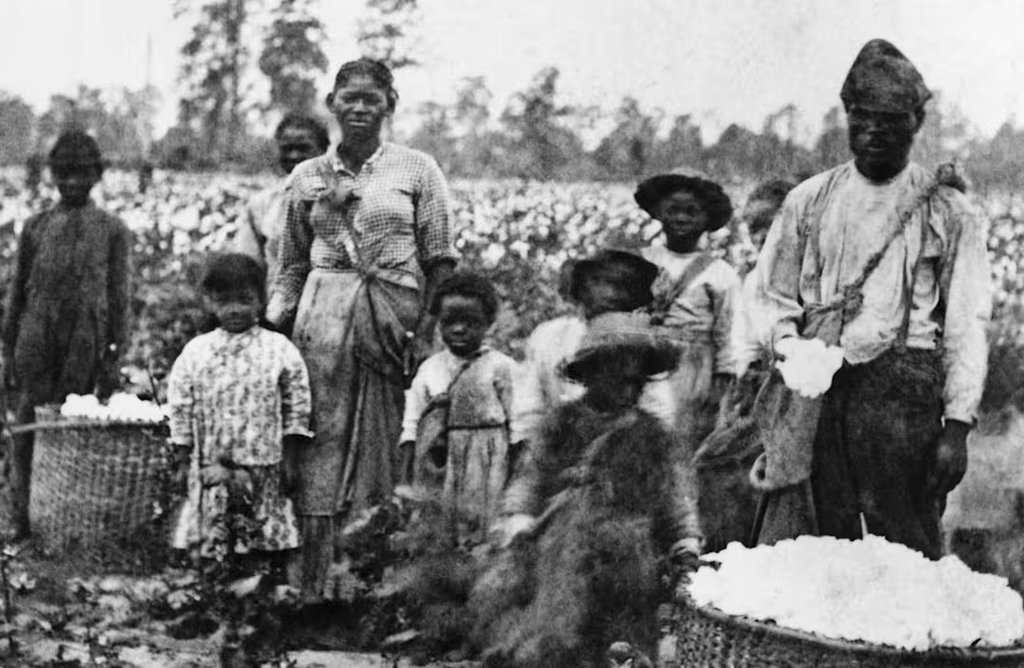
Black history is an essential part of American history, reflecting centuries of struggle, resilience, creativity and achievement. From the arrival of the first enslaved Africans in English North America to the Civil Rights Movement and the election of the first Black president, African Americans have helped shape the nation’s culture, economy, politics, science and social institutions.
The history of Black Americans includes painful periods of slavery, segregation and racial discrimination, as well as extraordinary achievements in education, literature, music, sports, public service and technology. Each generation has contributed to the ongoing pursuit of freedom and equality.
Understanding important Black history milestones provides a clearer picture of how the United States developed and how African Americans challenged injustice while expanding opportunities for future generations.
This timeline highlights key events, people and achievements that have influenced Black history in America.
1619: Africans Arrive in English North America
In 1619, a group of Africans arrived at Point Comfort in the English colony of Virginia. Their arrival is widely recognised as an important milestone in the history of slavery in what would become the United States.
The individuals had been taken from a Portuguese slave ship by English privateers. Their legal status and circumstances were complex, and the system of hereditary racial slavery developed gradually over subsequent decades.
Over time, colonial laws increasingly tied enslavement to African ancestry, creating a system in which generations of Black people were denied freedom and legal rights. Enslaved Africans and their descendants performed forced labour in agriculture, domestic service and other industries that contributed to colonial wealth.
Despite the brutality of slavery, African Americans preserved cultural traditions, built communities and resisted oppression in numerous ways. Their resistance included escape, rebellion, maintaining family and cultural ties, and challenging slavery through legal and political action.
The events beginning in the seventeenth century laid the foundation for conflicts over freedom and citizenship that would continue for centuries.
1776: The Declaration of Independence and the Contradiction of Slavery
On July 4, 1776, the American colonies adopted the Declaration of Independence, asserting that all men were created equal and possessed certain unalienable rights.
However, slavery remained legal in much of the new nation. The contrast between the Declaration’s language of liberty and the continued enslavement of African Americans exposed a fundamental contradiction in the country’s founding ideals.
Black Americans participated in the Revolutionary War on both sides, seeking freedom, security or opportunities unavailable to them under slavery. Some enslaved people gained freedom by serving in military forces, while others continued to face bondage after the war.
Free Black communities also developed in several parts of the country, establishing churches, schools and organisations despite widespread discrimination.
The ideals of independence would later become important arguments for abolitionists and civil rights activists. Generations of Black Americans used the nation’s founding principles to demand that freedom and citizenship apply equally to everyone.
1863: The Emancipation Proclamation
During the American Civil War, President Abraham Lincoln issued the Emancipation Proclamation, which took effect on January 1, 1863.
The proclamation declared enslaved people in areas still rebelling against the United States to be free. It did not immediately end slavery throughout the country, and it did not apply to every place where slavery remained legal.
Nevertheless, the proclamation changed the character of the war by making emancipation a central Union objective. It also strengthened the path toward the eventual abolition of slavery and enabled Black men to enlist in the Union Army and Navy in growing numbers.
Approximately 180,000 Black soldiers served in the Union Army during the Civil War, while thousands more served in the Navy. Their participation played an important role in the Union victory.
In 1865, the Thirteenth Amendment to the Constitution abolished slavery throughout the United States, except as punishment for a crime under the amendment’s wording.
Emancipation marked a historic turning point, although formerly enslaved people still faced severe economic hardship, racial violence and political resistance.
1865–1877: Reconstruction and the Fight for Citizenship
Following the Civil War, the United States entered the Reconstruction era, a period of political and social transformation in the former Confederate states.
The Fourteenth Amendment, ratified in 1868, established national citizenship for people born or naturalised in the United States and included an equal protection clause. The Fifteenth Amendment, ratified in 1870, prohibited denying voting rights on the basis of race, colour or previous condition of servitude.
During Reconstruction, Black men voted, held public office and participated in rebuilding Southern political institutions. African Americans established schools, churches, businesses and community organisations that helped support newly expanded opportunities.
However, Reconstruction faced determined opposition. White supremacist violence, discriminatory laws and political compromises undermined many of its achievements. After federal efforts to protect civil rights weakened, Southern states increasingly imposed segregation and barriers to Black political participation.
The Reconstruction amendments remained crucial constitutional protections, but their promises would require generations of further struggle to become more fully realised.
1896: Plessy v. Ferguson and Legalised Segregation
In 1896, the United States Supreme Court issued its decision in Plessy v. Ferguson, upholding a Louisiana law that required racial segregation on railway carriages.
The ruling endorsed the doctrine known as “separate but equal,” allowing racial separation in public facilities so long as the facilities were supposedly equal. In practice, segregation systematically disadvantaged Black Americans and reinforced racial hierarchy.
Across the South, segregation expanded through laws and customs affecting schools, transportation, public accommodations and other aspects of everyday life. Black citizens also faced poll taxes, literacy tests, intimidation and violence designed to limit voting rights.
African American communities continued to resist through journalism, education, litigation, activism and institution-building. Leaders such as Ida B. Wells documented racial violence, while organisations and legal advocates challenged discriminatory practices.
The Supreme Court’s approach to segregation would eventually be rejected in important areas, particularly through the Civil Rights Movement of the twentieth century.
1909: The Founding of the NAACP
The National Association for the Advancement of Colored People, commonly known as the NAACP, was founded in 1909.
The organisation emerged amid widespread racial discrimination, segregation and violence. Its founders and early supporters included both Black and white activists who sought to advance civil rights through public advocacy, legal action and political pressure.
The NAACP became especially influential in challenging discriminatory laws and practices through the courts. Its legal strategy helped build the foundation for major victories against segregation, including the Supreme Court’s 1954 decision in Brown v. Board of Education.
The organisation also supported voter protection, investigated racial violence and advocated for federal civil rights legislation.
Its history illustrates the importance of long-term institutions in social movements. While protests can bring immediate attention to injustice, legal organisations and community networks can sustain campaigns over many years.
The NAACP remains one of the country’s best-known civil rights organisations.
1920s: The Harlem Renaissance
The Harlem Renaissance was a major flowering of African American literature, music, art and intellectual life during the 1920s and into the 1930s.
Centred in Harlem, New York City, the movement brought national attention to Black artistic achievement and encouraged new ways of representing African American identity and experience.
Writers such as Langston Hughes and Zora Neale Hurston explored themes of race, community, migration and everyday life. Musicians, visual artists and performers also helped shape the period’s creative energy.
Jazz and blues became increasingly influential in American culture, while Black newspapers, literary magazines and cultural organisations supported new voices.
The Harlem Renaissance did not eliminate racial discrimination, and Black artists continued to encounter barriers in publishing, employment and public recognition. Nevertheless, the movement challenged stereotypes and expanded the visibility of African American cultural contributions.
Its influence can still be seen in literature, music, theatre and visual arts today.
1954–1965: The Civil Rights Movement Transforms American Law
The modern Civil Rights Movement brought national attention to racial segregation and the denial of basic rights. Activists used court cases, boycotts, sit-ins, marches and other forms of nonviolent protest to challenge discriminatory systems.
In 1954, the Supreme Court ruled in Brown v. Board of Education that racial segregation in public schools was unconstitutional. The following year, the Montgomery Bus Boycott demonstrated the power of sustained community action.
In 1960, Black college students launched sit-ins at segregated lunch counters in Greensboro, North Carolina, inspiring similar protests across the South. The Freedom Rides of 1961 challenged segregation in interstate transportation.
In August 1963, hundreds of thousands of people joined the March on Washington for Jobs and Freedom. Martin Luther King Jr. delivered his historic “I Have a Dream” speech, calling for a nation where racial equality would become a reality.
These campaigns helped build support for landmark federal legislation. The Civil Rights Act of 1964 prohibited discrimination in major areas of public life and employment. The Voting Rights Act of 1965 targeted racial discrimination in voting.
Although racial inequality persisted, these laws fundamentally changed the legal framework governing civil rights in the United States.
1968: The Fair Housing Act
Housing discrimination was another major barrier to equality. Black families often faced restrictions in where they could buy or rent homes, while discriminatory lending practices and segregated neighbourhoods limited access to economic opportunities.
In April 1968, following the assassination of Martin Luther King Jr., Congress passed the Fair Housing Act as part of the Civil Rights Act of 1968. The law prohibited discrimination in the sale, rental and financing of housing based on race, colour, religion and national origin. Additional protected categories were incorporated through later amendments.
The legislation represented an important effort to address discrimination beyond schools, workplaces and voting booths.
However, housing inequality did not disappear with the passage of the law. Differences in wealth, neighbourhood investment, lending access and housing opportunities continued to affect many communities.
The Fair Housing Act remains a significant milestone in the broader effort to make equal opportunity meaningful in everyday life.
2008: Barack Obama Is Elected President
On November 4, 2008, Barack Obama was elected the 44th president of the United States, becoming the first African American to hold the office.
His election was a historic moment in a country whose history included slavery, segregation and long-standing barriers to Black political participation.
Obama’s victory followed decades of activism, legal reform and expanding political participation. It was widely recognised as a symbol of progress, although it did not mean that racial inequality had ended.
During his presidency, Obama addressed a broad range of national and international issues, including the economy, healthcare, foreign policy and education. His election also influenced discussions about race, representation and the meaning of the American presidency.
The historic nature of his achievement remains important, but it is best understood as one milestone in a much longer story rather than the conclusion of the struggle for equality.
2020: Racial Justice Protests Reach Global Audiences
In 2020, protests against racial injustice spread across the United States and many other countries following the killing of George Floyd, a Black man, by a white Minneapolis police officer.
The video of Floyd’s death circulated widely and prompted demonstrations calling for police accountability, changes to law enforcement practices and broader action against racial inequality.
The protests brought together people from different backgrounds and renewed public debate about policing, systemic discrimination and the treatment of Black communities.
Activists used demonstrations, social media, community organising and public advocacy to demand reforms. Responses varied across cities and institutions, and debates continued over the most effective approaches to improving public safety and accountability.
The events of 2020 demonstrated how digital communication could spread awareness rapidly and connect local campaigns with international movements.
They also showed that the history of Black civil rights remains an ongoing story, shaped by new challenges as well as earlier achievements.
Why Black History Milestones Matter
The timeline of Black history reveals a long and complex journey from enslavement and legal exclusion toward expanded freedom, citizenship and opportunity.
Each milestone represents the efforts of people who challenged the conditions of their time. Some organised protests, others pursued legal reforms, created art, built institutions or entered public service. Their contributions helped shape the country’s laws, culture and understanding of equality.
Progress was rarely automatic. Landmark decisions and legislation often followed years of organising, sacrifice and resistance. Even after major victories, communities continued to confront discrimination and unequal access to resources.
Learning about Black history therefore requires recognising both achievements and unfinished struggles. It also means understanding that African American history is not separate from American history: it is central to the nation’s development.
From the first Africans brought to English North America to the modern struggle for racial justice, these milestones demonstrate the importance of courage, community and persistence. Their legacy continues to influence conversations about freedom, democracy and equal rights in the United States and beyond.