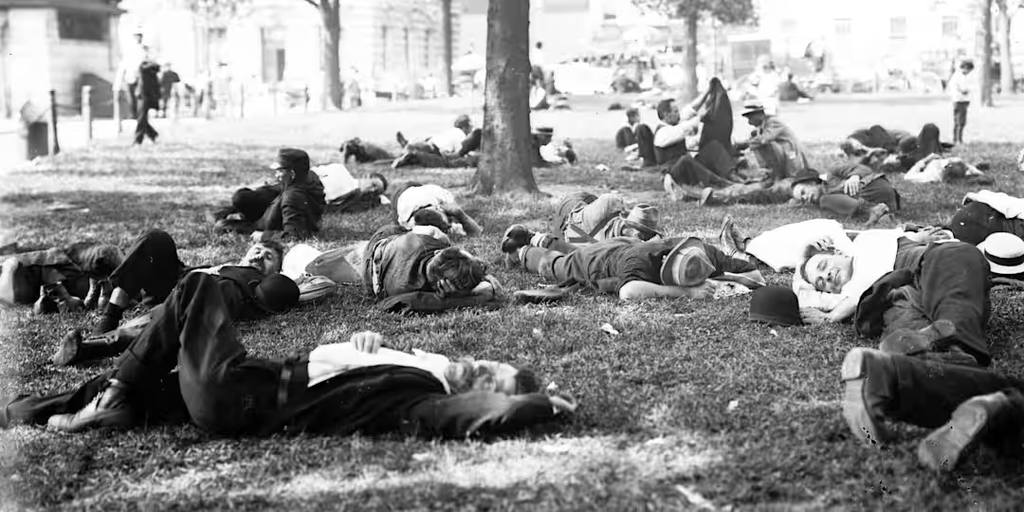
In July 1911, an extraordinary heat wave swept across the northeastern United States, turning cities into dangerous furnaces and pushing thousands of people to the limits of human endurance. Temperatures climbed above 100 degrees Fahrenheit in several communities, railway tracks buckled under the intense heat, factories struggled to operate, and exhausted residents abandoned their overheated homes to sleep in public parks. For many, finding relief became a desperate struggle that continued long after the sun went down.
The deadly heat wave lasted approximately 11 days in the Northeast, leaving hundreds dead and many more seriously ill. In New York City alone, reports recorded 211 deaths associated with the heat by July 13. Boston, Philadelphia, and other cities also suffered devastating losses. Some people reportedly became confused or behaved erratically as exhaustion and oppressive humidity took their toll, contributing to the disaster’s enduring reputation as a heat wave that seemed to drive people mad.
More than a century later, the 1911 heat wave remains a chilling example of how extreme weather can threaten entire communities. In an era before widespread air conditioning, modern heat alerts, and today’s understanding of heat-related illness, ordinary people had few reliable ways to escape the dangerous conditions.
When the 1911 Heat Wave Turned Deadly
The summer of 1911 began without the kind of warning that might have prepared residents for the extraordinary conditions ahead. In early July, a prolonged period of intense heat settled over the northeastern United States, affecting communities from Pennsylvania to Maine.
The temperatures became particularly dangerous around July 4 and July 5. In Boston, the thermometer reached approximately 104 degrees Fahrenheit, while Nashua, New Hampshire, recorded 106 degrees. Other parts of New England also experienced exceptionally high temperatures.
For residents accustomed to warm summer weather, the problem was not simply that afternoons felt uncomfortable. The heat persisted for days, leaving buildings, streets, and crowded neighborhoods with little opportunity to cool down.
Humidity made conditions even worse. When the air contains substantial moisture, sweat evaporates less efficiently, reducing the body’s ability to release excess heat. Even when the temperature fell somewhat after sunset, many people continued to suffer because their homes remained hot and poorly ventilated.
The combination of high temperatures, humid air, and inadequate cooling created a serious public health emergency.
Newspaper reports described people collapsing in streets, horses falling under the strain of the weather, and families searching desperately for cooler places to spend the night. As the days passed, the heat began affecting not only individual health but also transportation, commerce, and the everyday functioning of major cities.
Why People Had Almost No Escape From the Heat
One of the most important reasons the 1911 heat wave became so deadly was the limited availability of modern cooling technology.
Air conditioning existed in the early twentieth century, but it was not a practical household solution for ordinary families. Most city residents had to rely on open windows, fans where available, shaded streets, and whatever breeze they could find.
These methods offered little protection when the outside air remained hot and humid throughout the day and night.
Many working-class families lived in crowded apartment buildings and tenement housing. Rooms could become unbearably warm, particularly on upper floors beneath roofs that absorbed the sun’s heat. Poor ventilation made it difficult for hot air to escape, while overcrowded living conditions increased the discomfort.
For parents with young children, the situation was especially frightening. Infants and small children are vulnerable to heat because their bodies can become dangerously overheated, and they depend on adults to recognize the warning signs and provide relief.
Older people and those already suffering from illness also faced elevated risks. People working outdoors or in factories had fewer opportunities to rest in cool surroundings, while workers performing physically demanding tasks continued to generate body heat.
At night, many residents faced an impossible choice: remain inside hot apartments or seek relief outdoors, where safety and comfort were not guaranteed.
The heat did not affect everyone equally. People with money could sometimes afford more comfortable accommodations or travel to cooler places. Those living in cramped housing and working long hours often had the fewest options.
The disaster exposed how poverty, crowded urban development, and inadequate public infrastructure could turn extreme weather into a deadly emergency.
Thousands Slept in Parks to Escape the Heat
As temperatures continued to rise, residents began leaving their homes in search of cooler air.
Public parks became makeshift sleeping areas. Families spread blankets across the grass, while exhausted adults attempted to rest beneath trees. Others slept on sidewalks, rooftops, porches, and other outdoor spaces where they hoped to catch a breeze.
In Boston, approximately 5,000 people reportedly spent the night on Boston Common during the heat wave. The sight of so many residents sleeping outdoors illustrated just how unbearable indoor conditions had become.
New York City residents also sought relief in public spaces. Some gathered in parks, while others headed toward waterfront areas in the hope that the air near the water would be cooler.
The usual boundaries between private and public life temporarily changed. Bedrooms and apartments offered so little relief that people were willing to sleep in open spaces surrounded by strangers.
Yet outdoor sleeping did not guarantee safety. Hot nights continued to expose people to dangerous conditions, and sleeping on rooftops or other elevated surfaces introduced additional risks. Crowded public areas could also leave personal belongings vulnerable to theft.
For parents, the nights were particularly difficult. Babies cried as their families tried to keep them comfortable, and exhausted adults struggled to rest while worrying about their children’s health.
The scene was a striking reminder that extreme heat can transform ordinary public spaces into emergency shelters, especially when homes are unable to provide protection.
How Extreme Heat Affected People’s Minds and Behavior
The title of the 1911 heat wave often refers to reports of people being driven to madness by the unbearable conditions. Historical newspaper accounts described individuals who appeared confused, became aggressive, or behaved in ways that shocked witnesses.
However, the phrase should be understood as a dramatic description of the crisis rather than evidence that heat literally drove an entire population insane.
Severe heat can affect the brain and nervous system. Heat exhaustion may cause weakness, dizziness, headaches, nausea, and unusual fatigue. More severe heat illness can lead to confusion, altered behavior, seizures, or loss of consciousness.
Dehydration and prolonged sleep deprivation can make matters worse. When people cannot rest properly for several nights, their ability to concentrate, manage emotions, and make sound decisions may deteriorate.
These dangers were especially concerning in 1911, when public understanding of heat illness was less developed and medical care was not equipped with all the tools available today.
Newspapers reported incidents in which people appeared to lose control of their behavior. Some individuals reportedly became desperate enough to attempt dangerous acts in search of relief. Such accounts contributed to the impression that the heat was affecting people’s minds as well as their bodies.
It is important, however, not to assume that every reported incident had the same cause. Historical reports sometimes used sensational language, and individual behavior could have been influenced by many factors.
What is clear is that the heat created an environment of extraordinary physical and emotional strain. People were exhausted, frightened, and desperate for relief, while families watched loved ones struggle in conditions they could barely escape.
The episode demonstrated that extreme weather can threaten mental functioning as well as physical health.
Railways Buckled and Cities Began to Slow Down
The 1911 heat wave affected more than the people who endured it. It also placed enormous pressure on the infrastructure that kept northeastern cities running.
Railway tracks were particularly vulnerable to extreme temperatures. Steel expands when heated, and under certain conditions, rails can develop dangerous bends or distortions. These changes, commonly known as track buckling, can threaten the safe operation of trains.
The heat wave brought reports of railway problems across the affected region. Transportation disruptions added another layer of difficulty to an already stressful emergency.
Factories also struggled as workers faced increasingly dangerous conditions. Some businesses suspended operations, while other workplaces reduced activity because of the heat.
Mail delivery and other services were disrupted in some communities. Horses used to pull carriages and transport goods suffered under the extreme temperatures, with reports describing animals collapsing in the streets.
The heat also affected roads and other surfaces. Tar softened in the sun, making some streets sticky and uncomfortable for pedestrians and vehicles.
These problems revealed the vulnerability of cities built around systems that depended on workers, animals, machinery, and transportation networks functioning reliably.
When extreme heat affected all these elements at once, the consequences spread far beyond the weather itself. Businesses lost working hours, transportation became less dependable, and residents found it increasingly difficult to carry out ordinary activities.
The heat wave was no longer simply an inconvenience. It had become a threat to the functioning of entire urban communities.
The Human Cost: Hundreds of Deaths
The most devastating consequence of the 1911 heat wave was the loss of human life.
New York City reported 211 heat-related deaths by July 13. Philadelphia also suffered a substantial death toll, with contemporary accounts reporting approximately 159 deaths associated with the heat during the crisis.
Across the Northeast, the confirmed death toll was at least 380, although some historical estimates have suggested that as many as 2,000 people may have died. The variation reflects differences in reporting, the period included in each estimate, and the difficulty of determining whether heat was the direct or contributing cause of death.
Some victims died from heatstroke or other heat-related illnesses. Others drowned while attempting to cool themselves in rivers, lakes, ponds, or the ocean.
These drownings illustrate the desperation of the situation. People sought immediate relief from the punishing temperatures, sometimes entering water without fully appreciating the dangers of swimming while exhausted or overheated.
The most vulnerable residents faced especially serious risks. Infants, elderly people, outdoor workers, and those with existing medical problems could be overwhelmed by conditions that healthier adults might survive.
The number of deaths also highlights the limitations of historical statistics. Medical records and public reporting from the period did not always distinguish heatstroke from other causes of death consistently. Some fatalities may therefore have been omitted from official counts.
Behind every number was a person whose family and community experienced a sudden loss. The disaster affected not only those who died but also relatives, neighbors, and coworkers who struggled to understand why the heat had become so deadly.
How Cities Tried to Help Residents Survive
As the emergency worsened, city officials and local communities attempted to provide relief.
Public water supplies became essential. In some places, authorities used fire hydrants to flush streets and provide temporary cooling, while businesses and local organizations helped distribute drinking water.
People also searched for ways to create airflow. Some rode open streetcars or traveled around the city to catch a breeze. Others visited parks, waterfronts, and public areas where conditions seemed marginally more tolerable.
Ice was another valuable resource. Before household refrigerators became widespread, blocks of ice were commonly used to keep food cool. During the heat wave, maintaining ice deliveries became especially important for families and businesses trying to preserve perishable food.
The emergency demonstrated how quickly ordinary supplies could become critical during extreme weather. Water, shade, ice, ventilation, and access to safer sleeping spaces were no longer merely conveniences. They could help determine whether people survived the crisis.
However, the available measures could not fully compensate for the absence of widespread air conditioning, comprehensive heat-warning systems, and modern public health guidance.
The experience offered an early lesson in urban emergency planning: when dangerous heat persists for several days, communities need more than individual improvisation. They need coordinated ways to reach vulnerable residents, provide safe cooling spaces, and ensure access to water and medical assistance.
The Storm That Finally Broke the Heat
After days of oppressive temperatures, thunderstorms eventually helped bring the heat wave to an end in parts of the Northeast.
The storms offered relief from the relentless heat, but they also introduced new dangers. Severe weather can bring lightning, powerful winds, falling debris, and sudden changes in conditions.
Reports from the period recorded additional deaths associated with storms that arrived as the heat began to subside. The long-awaited change in weather therefore did not immediately end the danger for everyone.
Nevertheless, the return of more manageable temperatures allowed exhausted communities to begin recovering.
Residents could gradually return to their homes, businesses resumed normal activities, and transportation systems worked toward restoring regular service. Families mourned those they had lost, while officials and newspapers reflected on the scale of the disaster.
The experience remained a warning about how quickly weather conditions can overwhelm a city that lacks adequate preparation.
What the Killer Heat Wave of 1911 Teaches Us Today
The 1911 heat wave remains relevant because extreme heat continues to threaten public health, particularly in densely populated cities.
Modern communities have access to weather forecasts, heat alerts, air conditioning, and improved medical knowledge. Yet these protections are not equally available to everyone. People without reliable cooling, those who work outdoors, older adults, infants, and people with certain medical conditions can still face serious risks during prolonged hot weather.
The historical disaster also demonstrates why high temperatures must be considered alongside humidity. When the air is humid, the body cannot cool itself through sweating as effectively. This means that even temperatures below an area’s absolute record can become dangerous under the wrong conditions.
Recognizing the warning signs of heat illness is essential. Heavy sweating, weakness, dizziness, headache, and nausea can indicate heat exhaustion. Confusion, seizures, or loss of consciousness may signal a life-threatening emergency requiring immediate medical attention.
Cities can reduce risks by providing shaded public spaces, accessible cooling centers, reliable drinking water, and clear emergency communication. Employers also have an important role in protecting workers through rest breaks, hydration, shade, and appropriate responses to dangerous weather.
The experience of 1911 further shows that heat is not merely a matter of discomfort. It can disrupt transport, damage infrastructure, interrupt work, and place enormous pressure on hospitals and emergency services.
Conclusion: Remembering the Deadly Heat Wave of 1911
The killer heat wave of 1911 transformed the northeastern United States into a region struggling to survive days of relentless heat and humidity. Railway tracks buckled, businesses slowed or closed, horses collapsed, and thousands of residents abandoned their homes to sleep in parks and other outdoor spaces.
Hundreds of people died, while historical estimates suggest the total may have been considerably higher. Contemporary accounts of confusion and desperate behavior helped give the event its reputation as a heat wave that drove people insane, but the deeper explanation lies in the physical and psychological strain caused by extreme conditions.
For a society without widespread household air conditioning or modern heat-warning systems, the crisis exposed how vulnerable ordinary people could be when the weather became dangerous.
More than a century later, the story remains a powerful reminder that heat waves are serious natural hazards, not simply uncomfortable spells of summer weather. The suffering experienced in 1911 underscores the importance of public preparedness, accessible cooling, medical awareness, and protection for those most at risk.
The tragedy is remembered not only for its extraordinary temperatures, but also for the lives lost and the communities forced to endure conditions they had few ways to escape. Its lessons remain important whenever prolonged heat threatens to turn familiar streets, homes, and workplaces into dangerous environments.