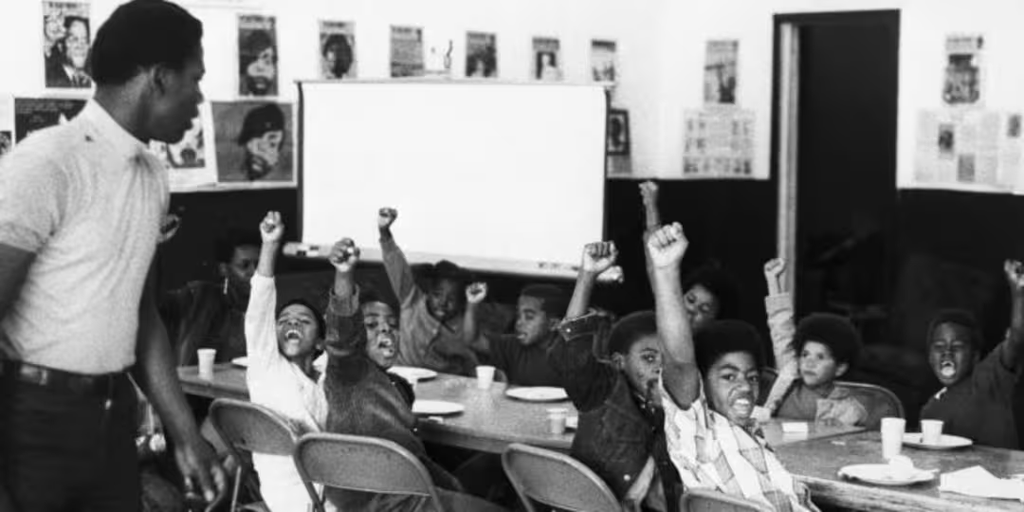
The Black Panther Party is often remembered for its militant image, its calls for Black liberation and its confrontations with American law enforcement. Yet one of the organization’s most influential community initiatives focused on a basic human need: making sure children had breakfast before going to school.
Through its Free Breakfast for School Children Program, the Black Panthers served meals to children in communities where poverty and food insecurity were serious concerns. Volunteers organized kitchens, prepared food and helped young students begin their school days with something to eat. What started as a community effort eventually became one of the party’s best-known survival programs, demonstrating how local action could address immediate needs while challenging broader political and economic inequalities.
The program also carried a powerful message. The Panthers argued that children should not have to learn on empty stomachs while families struggled to afford basic necessities. By feeding children, the organization sought to support their health and education while drawing attention to the government’s responsibility to address poverty.
The initiative gained attention far beyond the neighborhoods where it operated. Its popularity placed pressure on political leaders to confront childhood hunger and helped demonstrate that community-based programs could make a practical difference. The history of the Black Panther breakfast program offers an important perspective on the organization’s legacy and the continuing struggle to ensure that every child has access to nutritious food.
The Black Panther Party and Its Community Mission
The Black Panther Party was founded in Oakland, California, in 1966 by Huey P. Newton and Bobby Seale. Emerging during the civil rights era, the organization called for Black self-determination, an end to police brutality and fundamental changes to the social and economic conditions affecting Black communities.
The Panthers initially became widely associated with armed patrols intended to monitor police activity and with a political philosophy that emphasized resistance to racial oppression. Their public image was often shaped by confrontations with law enforcement and government officials.
However, the organization also developed a series of community initiatives designed to meet people’s immediate needs. These efforts became known as survival programs because they addressed problems that could not wait for broader political changes.
The Panthers recognized that demands for equality had to connect with the daily realities of people living in disadvantaged neighborhoods. Food, medical care, education, housing and access to essential services were not abstract political issues. They affected whether families could remain healthy, whether children could concentrate at school and whether communities could build a more secure future.
The Free Breakfast for School Children Program became one of the clearest expressions of this approach.
Rather than limiting its activities to political speeches or demonstrations, the party mobilized volunteers to provide a service that families could use immediately. The initiative connected the organization’s larger criticism of inequality with a practical response to childhood hunger.
For the Panthers, feeding children was both an act of community care and a statement about social responsibility.
How the Free Breakfast for School Children Program Began
The Black Panther Party launched its Free Breakfast for School Children Program in Oakland in 1969. The initiative emerged from the organization’s broader effort to establish survival programs that addressed the needs of people in underserved communities.
Volunteers and local supporters worked to organize breakfast services, often relying on donated food, community facilities and the labor of party members. Churches and other neighborhood spaces could serve as gathering places where children received meals before heading to school.
The process required much more than announcing that breakfast would be available. Volunteers had to obtain ingredients, prepare food, arrange serving spaces, coordinate schedules and ensure that children could eat before classes began.
Community participation was essential. Local residents and supporters helped make the initiative possible, turning an ambitious political idea into a daily service.
The meals themselves were straightforward, but their importance was considerable. For children whose families faced financial hardship, breakfast could provide nourishment that might otherwise be unavailable at the beginning of the school day.
The program also reduced some of the pressure on parents who struggled to provide food consistently. By offering breakfast without charge, the Panthers created a place where children could receive a meal without their families having to pay.
The initiative expanded beyond Oakland as the party’s chapters and supporters established similar programs in other locations. Its growth demonstrated how a local effort could become part of a wider movement when communities recognized a shared need.
The breakfast program was not a substitute for comprehensive public assistance, but it provided direct support while drawing attention to the larger problem of hunger.
Why Childhood Hunger Was a Serious Concern
The breakfast program emerged in a period when poverty and racial inequality shaped opportunities for many American families. Black communities frequently faced barriers to employment, housing, education and access to resources, consequences of longstanding discrimination and unequal economic conditions.
For households struggling to cover rent, transportation and other essential expenses, food could become another source of financial pressure. Children were especially vulnerable because they depended on adults and institutions to provide consistent nourishment.
Hunger does not simply disappear when a child enters a classroom. A student who has not eaten may find it more difficult to concentrate, participate in lessons or remain comfortable throughout the morning.
Nutrition alone cannot explain every educational challenge, and breakfast does not automatically resolve the broader disadvantages children may face. Nevertheless, access to food is an important part of supporting students’ readiness to learn.
The Panthers’ program made this connection visible. It showed that school success was influenced not only by teachers and classroom materials but also by the conditions children experienced before arriving at school.
The issue also raised questions about public responsibility. If children were regularly going hungry, should the burden of feeding them fall entirely on families and charitable organizations, or should public institutions play a larger role?
The breakfast initiative offered a direct response to the immediate problem while challenging political leaders to consider the wider circumstances behind it.
In this sense, the program connected an ordinary meal with a much larger debate about economic opportunity, racial inequality and the obligations of society toward children.
What Happened During a Typical Breakfast Service?
Although arrangements varied by location, the basic goal of the Free Breakfast for School Children Program was simple: provide children with food before the school day began.
Organizing a breakfast service required coordination among the people responsible for obtaining food, preparing meals and welcoming students. Volunteers helped create a routine that children could rely on, while local supporters contributed resources and practical assistance.
The atmosphere was intended to be accessible to families who needed help. Because the meals were free, children could receive breakfast without the financial barriers that sometimes prevent households from accessing other services.
The initiative also depended on trust. Parents needed to know that their children could attend and receive food, while volunteers had to maintain a reliable service despite limited resources.
These daily responsibilities illustrate an important part of the Panthers’ community work that can be overlooked when the organization is discussed primarily through its confrontational politics.
Preparing breakfast is not a dramatic political gesture. It requires consistent effort, cooperation and attention to basic practical details. The program’s effectiveness depended on people showing up, organizing supplies and carrying out the work.
That routine gave the initiative a tangible impact. Instead of offering only a promise that conditions should improve, the Panthers provided a service that addressed an immediate need.
For the children who received meals, the most important aspect may simply have been having breakfast before class. For the organization, the program also demonstrated how collective action could help communities respond to problems that existing institutions had not adequately addressed.
How the Program Put Pressure on Political Leaders
The Free Breakfast for School Children Program attracted attention because it demonstrated that a community organization could mobilize resources to feed children while publicly challenging the government over poverty and inequality.
The Panthers’ political message emphasized that basic necessities should not be treated as privileges available only to families with sufficient income. By organizing breakfast services, the party made that argument visible through practical action.
The program also created a public comparison between what volunteers were doing and what many families believed public institutions should provide. If a grassroots organization could organize meals through donations and community labor, the initiative raised questions about why childhood hunger remained a persistent problem.
Its popularity helped draw attention to the importance of school breakfast and the connection between food access and education. It also challenged stereotypes that portrayed the Panthers only as a militant organization, showing that its activities included organized social services.
The program should not be understood as the sole cause of later government efforts to expand school meals. Federal child nutrition initiatives had their own histories, and public school meal policy developed through multiple political, social and institutional forces.
Nevertheless, the Panthers’ work became part of the wider national conversation about hunger and the responsibility of government to support children.
By meeting an immediate need, the program strengthened the organization’s criticism of social inequality. Its work suggested that political accountability could be pursued not only through protest but also through services that demonstrated what communities needed and what could be done to help.
The Government’s Response and the Politics of the Breakfast Program
The Black Panther breakfast initiative developed during a period of intense political conflict. Federal authorities closely monitored the organization, which faced surveillance and law enforcement pressure during the late 1960s and early 1970s.
The Federal Bureau of Investigation’s COINTELPRO operations targeted the Panthers and other organizations that authorities considered threats. Government efforts against the party included surveillance and actions intended to disrupt its activities. These efforts formed part of a broader and deeply controversial history of state responses to radical political movements.
The breakfast program operated within that larger political environment. Although providing food to children was a community service, it was also connected to an organization whose political demands challenged established power structures.
The initiative therefore attracted attention in ways that a conventional charity program might not have experienced. Its public popularity could improve the Panthers’ standing within communities and demonstrate the organization’s ability to organize people around shared needs.
The party’s survival programs also complicated attempts to define it through a single image. The Panthers could be militant in their political rhetoric while also organizing services aimed at supporting children and families.
This does not mean that every aspect of the organization was beyond criticism, or that its programs operated without practical limitations. Rather, the breakfast initiative shows why the Panthers’ history cannot be understood solely through images of armed members or confrontations with police.
The program’s social purpose and its political significance were intertwined. Feeding children helped families, while the visible success of that effort strengthened the party’s argument that communities needed meaningful support and greater control over the conditions shaping their lives.
The Relationship Between Food and Education
One of the most enduring ideas behind the breakfast program was that children cannot be expected to learn effectively if their basic needs are neglected.
Education is shaped by many factors, including teaching quality, classroom resources, family circumstances, health and access to stable housing. Food is another essential part of that picture.
When students have reliable access to meals, they are better positioned to participate in the school day without the additional burden of hunger. School meal programs can also reduce some of the financial pressure on households facing food insecurity.
The Panthers’ initiative highlighted these connections decades before contemporary discussions about student nutrition became familiar to many audiences.
Its message was not simply that children should receive a charitable meal. It was that food access should be recognized as part of the conditions required for children to thrive.
This distinction matters because charity and public policy operate differently. A community program can provide immediate relief, but it may depend on donations, volunteers and resources that fluctuate over time. A public program can potentially reach more children through stable funding and established systems, although its effectiveness depends on how it is designed and implemented.
The breakfast initiative demonstrated the value of direct community action while drawing attention to the need for more dependable solutions.
Its history remains relevant because childhood food insecurity continues to be a concern in many communities. Families can experience financial hardship even when parents are working, and the cost of living can make it difficult to consistently provide nutritious meals.
The underlying question raised by the Panthers remains important: how can communities ensure that every child has the nourishment needed to participate fully in school and everyday life?
The Lasting Legacy of the Black Panther Breakfast Program
The Free Breakfast for School Children Program became one of the most widely remembered examples of the Black Panther Party’s community initiatives.
Its legacy rests partly on the immediate service it provided. Children received meals, volunteers developed practical organizing skills, and families gained access to a resource that could ease the burden of food insecurity.
The initiative also contributed to a broader understanding of community activism. Social movements often seek political change through demonstrations, public campaigns and demands for legislation. The Panthers’ breakfast program illustrated another approach: organizing services that address people’s needs while making a political argument about why those needs remain unmet.
The model demonstrated the importance of local participation. Community members were not simply passive recipients of assistance; they could help organize the resources, spaces and labor required to deliver it.
The program also showed that a relatively simple service could carry a larger message. A breakfast meal might appear ordinary, but providing it to children who needed it challenged the idea that hunger was an unavoidable personal problem rather than a social issue requiring collective attention.
It is important to recognize that the Panthers’ program was one part of a larger history of school meals and anti-hunger advocacy. Teachers, parent groups, churches, community organizations and government agencies have all played roles in efforts to improve children’s access to food.
The breakfast program’s significance lies not in replacing those efforts but in demonstrating how grassroots activism could bring urgency and visibility to the issue.
It remains a notable example of how a political organization sought to connect its principles with the practical realities of daily life.
Lessons for Today’s Fight Against Childhood Hunger
The history of the Black Panther breakfast program offers several lessons for contemporary efforts to address food insecurity.
First, immediate assistance matters. Children who need breakfast cannot wait for long-term economic reforms to take effect. Community programs can provide meaningful support while broader solutions are developed.
Second, dependable access to food requires planning and resources. Volunteers and donations can make an important difference, but sustainable programs also need consistent funding, effective coordination and partnerships with institutions that can help reach families.
Third, hunger should not be separated from the wider conditions that shape family life. Income, housing costs, access to healthcare and employment opportunities can all affect whether households can consistently afford food.
Finally, community participation can help identify needs that may be overlooked by decision-makers. Organizations working directly with families often gain practical insight into the barriers children face and the kinds of assistance that would be most useful.
The Panthers’ experience also reminds us that a community service can be both compassionate and political. Feeding children helps them directly, but it can also raise questions about why they were hungry in the first place and what society should do to prevent the problem from continuing.
Those questions remain relevant to modern debates about free school meals, nutrition assistance and educational opportunity.
Conclusion: A Breakfast Program With a Bigger Message
The Black Panther Party’s Free Breakfast for School Children Program began as a practical effort to address childhood hunger and became one of the most important examples of the organization’s community activism.
By organizing volunteers and providing free meals before school, the Panthers helped children access breakfast while highlighting the relationship between poverty, nutrition and educational opportunity.
The program also challenged the public’s understanding of the organization, demonstrating that its activities extended beyond its best-known confrontations with law enforcement. Its members pursued community initiatives that sought to meet immediate needs while advancing a broader argument about racial and economic inequality.
Although the program was not the sole force behind changes in school meal policy, it helped bring attention to the responsibility of communities and public institutions to support children.
Its central lesson remains straightforward: children should not have to begin the school day hungry, and access to food should not depend entirely on a family’s financial circumstances.
More than a historical footnote, the breakfast program stands as an example of grassroots organizing that combined direct assistance with a demand for social change. Its story continues to inform discussions about school nutrition, community action and the ongoing effort to ensure that every child has the opportunity to learn and thrive.