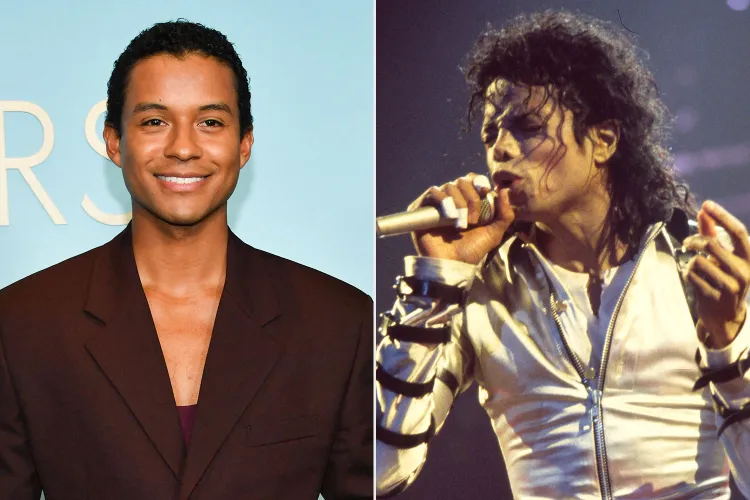
Playing one of the greatest entertainers in music history is an enormous challenge, but for Jaafar Jackson, portraying his uncle Michael Jackson in the biographical film Michael required much more than learning iconic dance moves and recreating unforgettable performances. It also meant pushing his own vocal abilities to their limits. In fact, one particularly demanding musical scene left the rising actor unable to use his voice the following day.
The song behind the experience was Michael Jackson’s legendary 1979 hit, “Don’t Stop ‘Til You Get Enough.” While recreating the recording session for the biopic, Jaafar had to sing the song in an exceptionally high falsetto, attempting to capture the distinctive vocal energy that helped make his uncle a global superstar.
The effort was so intense that Jaafar recalled losing his voice the very next day. His experience offered a fascinating look at the physical demands involved in bringing Michael Jackson’s musical legacy back to the screen.
Jaafar Jackson Reveals the Michael Jackson Song That Cost Him His Voice
During a recent conversation about the making of Michael, Jaafar reflected on the challenges of recreating some of his uncle’s most recognizable musical moments.
One scene that stood out involved Michael recording “Don’t Stop ‘Til You Get Enough” in the studio alongside legendary producer Quincy Jones and recording engineer Bruce Swedien.
For Jaafar, the sequence was particularly demanding because of the high vocal range required. He explained that he sang the song in falsetto throughout the scene, putting considerable strain on his voice.
The following day, he discovered that his voice had effectively disappeared.
The experience made him appreciate the extraordinary work behind a recording that audiences might otherwise simply enjoy as a timeless dance classic. Hearing a finished song does not always reveal the effort, precision, and physical endurance required to create it.
Jaafar also described the challenge as an opportunity to understand Michael’s vocal ability more deeply. Rather than simply imitating a familiar melody, he had to experience firsthand how demanding the performance could be.
It was a memorable lesson for an actor stepping into the shoes of one of the most influential performers in music history.
Why “Don’t Stop ‘Til You Get Enough” Was So Difficult to Recreate
Released in 1979, “Don’t Stop ‘Til You Get Enough” became one of Michael Jackson’s defining solo hits. Featured on his Off the Wall album, the track demonstrated his growing independence as an artist and helped establish the direction of his extraordinary solo career.
The song is instantly recognizable for its infectious rhythm, layered vocals, energetic arrangement, and Michael’s distinctive falsetto.
That high-pitched vocal style is an essential part of the recording’s personality. It gives the song a sense of excitement and movement that continues to make it a favorite on dance floors and radio playlists decades after its release.
For Jaafar, recreating the recording session meant reproducing the physical and emotional intensity behind that sound.
The challenge was not simply singing the correct notes. He also needed to capture the spirit of a young Michael Jackson discovering new creative possibilities in the recording studio.
The song represented an important moment in Michael’s artistic development. After years of performing with his brothers as part of the Jackson 5, he was increasingly establishing himself as a solo performer with his own musical identity.
Working with Quincy Jones helped bring that ambition to life.
By recreating the session, Jaafar was able to explore a significant turning point in his uncle’s career while experiencing some of the demands that came with the original recording.
Quincy Jones and the Beginning of Michael Jackson’s Solo Breakthrough
Quincy Jones played a major role in shaping Michael Jackson’s solo career during this period.
The legendary producer collaborated with Michael on Off the Wall, followed by the groundbreaking albums Thriller and Bad. Their partnership helped create some of the most recognizable music in modern popular culture.
“Don’t Stop ‘Til You Get Enough” was particularly important because it demonstrated Michael’s ability to lead a recording with a distinctive sound and creative vision.
The song was written by Michael himself, making it an especially personal achievement. Its success helped establish him as more than a talented performer who had grown up in a famous musical family.
He was becoming a powerful solo artist with a sound audiences could immediately recognize.
For Jaafar, recreating the moment when Michael worked with Quincy Jones offered an opportunity to portray the ambition and excitement surrounding that period.
He was not simply performing a famous song. He was representing the moment when his uncle was taking greater control of his artistic future.
That historical context made the scene especially meaningful.
Does Jaafar Jackson Really Sing in the Michael Biopic?
One of the biggest questions surrounding Michael has been how the filmmakers recreated the singer’s unmistakable voice.
Jaafar explained that the movie uses a combination of his own vocals and Michael Jackson’s original recordings.
During performance scenes, he often sang live into the microphone while Michael’s original track played underneath. The final soundtrack blends the two voices to create a convincing musical experience.
There are also moments when viewers hear Jaafar singing without Michael’s original vocals. These sections allowed the actor to contribute more directly to the film’s musical storytelling.
This approach was important because Michael Jackson’s voice is one of the most recognizable in entertainment history. Reproducing it convincingly requires more than a similar vocal range. The timing, phrasing, emotional delivery, and distinctive vocal details all contribute to the sound.
Using original recordings alongside Jaafar’s performance helped preserve the authenticity of Michael’s music while allowing the actor to participate in the scenes.
The result is a combination of family resemblance, performance, and carefully crafted sound production.
For Jaafar, the experience also provided a new appreciation for the technical and artistic work behind the songs millions of people know by heart.
Jaafar Jackson’s Transformation Into His Famous Uncle
Before landing the role, Jaafar was not widely known as a film actor. He was already connected to music and came from the Jackson family, but portraying Michael required him to take on an entirely different level of preparation.
He spent years studying his uncle’s performances, movements, expressions, and mannerisms.
One of the most demanding aspects was recreating Michael’s choreography. The King of Pop was famous for his extraordinary precision, from the moonwalk to the smallest gestures that made his performances instantly recognizable.
Jaafar worked extensively with choreographers to reproduce these details.
The famous Motown 25 performance, in which Michael performed “Billie Jean” and introduced the moonwalk to a television audience in 1983, was among the moments requiring particular attention.
Jaafar explained that the team aimed to recreate the performance frame by frame, matching the original movements as closely as possible.
That level of detail demonstrates how seriously he approached the responsibility of portraying his uncle.
His preparation also extended beyond physical performance. He studied Michael’s life, personality, career development, and creative philosophy to understand the person behind the global image.
For Jaafar, the goal was not merely to look like Michael Jackson. It was to capture the emotion and humanity that made him such a compelling performer.
The Emotional Challenge of Playing a Family Legend
Taking on the role of Michael Jackson carried a unique emotional responsibility.
Jaafar was not portraying an unfamiliar celebrity or a historical figure he had only studied through photographs. He was bringing a member of his own family to life.
That connection may have helped him understand certain aspects of Michael’s personality, but it also made the expectations particularly intense.
Fans around the world have strong memories of Michael’s music, performances, and public image. Many have spent decades listening to his albums and watching his music videos.
For Jaafar, knowing that audiences would compare his performance with those memories created an enormous challenge.
He had to respect the original while still delivering a believable portrayal.
His experience recording “Don’t Stop ‘Til You Get Enough” illustrates how demanding that responsibility could become. Even with his family connection and musical background, matching Michael’s vocal abilities required significant effort.
Losing his voice after the scene was a reminder that the legendary sound audiences hear on a finished recording did not come without hard work.
Why Michael Jackson’s Music Remains So Powerful
More than a decade after Michael Jackson’s death in 2009, his music continues to attract listeners across generations.
Songs such as “Billie Jean,” “Beat It,” “Thriller,” and “Don’t Stop ‘Til You Get Enough” remain essential parts of pop music history.
His influence can be heard in contemporary music, dance performances, music videos, and live entertainment. Artists continue to study his ability to combine vocal performance, choreography, storytelling, and visual spectacle.
The biopic Michael offers audiences an opportunity to revisit the early chapters of that remarkable career.
By focusing on the Jackson 5 years and Michael’s rise as a solo performer, the film explores how a young musician developed into one of the most recognizable entertainers in the world.
Jaafar’s involvement adds another dimension to the story. His family connection gives the project a personal quality, while his performance introduces Michael’s legacy to audiences who may be discovering the singer’s music for the first time.
Jaafar Jackson’s Vocal Struggle Reveals the Work Behind a Legend
Jaafar Jackson’s experience with “Don’t Stop ‘Til You Get Enough” may sound surprising, but it highlights the extraordinary demands of recreating Michael Jackson’s musical performances.
The fact that one scene left him without his voice the following day shows how much effort went into capturing the high falsetto that helped define the original recording.
It also gave Jaafar a deeper appreciation for his uncle’s abilities and the creative process behind one of Michael’s most celebrated songs.
For audiences, the finished scene may appear effortless. The music flows, the performance feels natural, and the familiar melody brings back memories of Michael’s extraordinary career.
Behind that moment, however, was an actor working hard to honor a musical legend.
Ultimately, Jaafar’s story is about more than losing his voice after singing a famous song. It is about discovering the dedication required to recreate a sound that has influenced generations.
And as viewers revisit “Don’t Stop ‘Til You Get Enough” through the Michael biopic, they may gain a new appreciation for both the original recording and the remarkable effort involved in bringing it back to life.