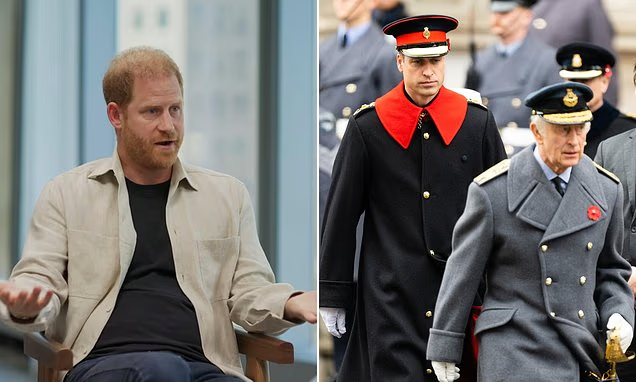
Prince Harry’s relationship with the British royal family has become one of the most complicated and closely followed family stories of the modern monarchy. For years, the Duke of Sussex has spoken about his desire for reconciliation, suggesting that he would welcome a better relationship with his father, King Charles III, and his brother, Prince William. Yet those appeals have often appeared alongside public criticism, deeply personal revelations and renewed accusations about the way he was treated within the royal institution.
This apparent contradiction has left royal observers questioning what reconciliation would actually look like for Harry. Does he want a private family relationship, a public acknowledgement of past grievances, or a combination of both? And after years of interviews, documentaries and a bestselling memoir, could his relatives have become increasingly reluctant to trust his promises of peace?
The tension did not begin with his departure from royal duties in 2020. Even before Megxit, Harry was already expressing frustration with aspects of royal life while maintaining that family bonds remained important. Since then, the distance between the Sussexes and the monarchy has grown, making every new statement about reconciliation carry additional weight.
Before Megxit: Early Signs of a Growing Divide
Before Prince Harry and Meghan Markle stepped away from their senior royal roles, there were already signs that Harry was struggling with the expectations surrounding his position.
In interviews and public appearances, he occasionally spoke about the pressures of royal life, the difficulties of growing up under intense media attention and his determination to protect his family. His comments suggested that his relationship with the institution was becoming increasingly complicated.
At the same time, Harry continued to participate in major royal occasions and appeared alongside Prince William and other members of the family. To outside observers, there was still an expectation that the brothers could eventually find common ground, even as reports of disagreements and strained relationships began to circulate.
The announcement that Harry and Meghan intended to step back from their senior royal responsibilities changed everything. Their decision, widely known as Megxit, created a major constitutional and family challenge. The couple sought greater independence and a different working arrangement, while the royal household faced difficult questions about their future roles.
For Harry, the move was presented as an effort to build a healthier and more independent life. However, it also marked the beginning of a much more public disagreement with the family he had once represented.
The Oprah Interview: A Turning Point in the Royal Relationship
One of the most significant moments in the breakdown of the relationship came in March 2021, when Harry and Meghan sat down with Oprah Winfrey for a televised interview.
The conversation included serious allegations about their experiences within the royal household, including claims about a lack of support, concerns about media treatment and tensions surrounding Meghan’s place in the family. Harry also discussed his relationship with his father and brother, describing emotional distance and unresolved difficulties.
The interview attracted worldwide attention and intensified the divide between the Sussexes and the monarchy. For many viewers, it was a deeply personal account of a couple who felt isolated. For others, it represented a damaging public airing of private family disputes.
Harry’s comments about wanting a better relationship with his relatives were particularly significant. Despite the criticism, he did not present reconciliation as impossible. Instead, his remarks suggested that communication and accountability could eventually help repair the damage.
However, the interview also raised an important question: how could private trust be restored when family disagreements were being discussed in front of a global audience?
That question would become increasingly relevant as the years passed.
The Netflix Documentary and the Search for Understanding
Harry and Meghan’s Netflix documentary brought further attention to their experiences as working members of the royal family and their decision to establish a new life in the United States.
The series explored their relationship, the intense public attention surrounding their marriage and the difficulties they said they experienced within the institution. Harry also discussed his family history and the emotional consequences of growing up in the public eye.
For supporters of the couple, the documentary offered important context about their decision to leave. They viewed it as an opportunity for Harry and Meghan to tell their story in their own words.
Critics, however, questioned whether the project made reconciliation more difficult. The documentary revisited sensitive family matters and presented the Sussexes’ perspective on events that other royal family members were unlikely to discuss publicly.
The result was another complicated chapter in Harry’s relationship with his relatives. While he continued to express the importance of family, the public nature of the disclosures made it harder to imagine how private conversations might rebuild confidence.
Spare: A Memoir That Changed the Conversation
The publication of Harry’s memoir, Spare, in January 2023, added another major dimension to the family dispute.
The book contained personal accounts of his childhood, military service, marriage and experiences inside the monarchy. It also described difficult relationships with Prince William and other relatives, bringing private disagreements into even sharper public focus.
Harry’s account of his relationship with his brother attracted particular attention. The memoir portrayed a complicated bond shaped by affection, rivalry, grief and disagreement. It suggested that the brothers had once shared a close connection but had become increasingly distant.
Harry also wrote about his relationship with King Charles, expressing feelings of hurt and disappointment while describing his desire for a more meaningful connection with his father.
The memoir was not simply a criticism of royal life. It was also an attempt by Harry to explain how he believed he had reached a breaking point. Nevertheless, the detail and tone of some passages prompted questions about whether his relatives could feel comfortable rebuilding a relationship while their private lives remained part of a bestselling book.
For family members who value discretion, the publication may have reinforced concerns about whether private discussions would remain private.
Repeated Appeals for Reconciliation
Despite the continuing criticism, Harry has repeatedly indicated that he does not want his family relationships to remain permanently broken.
In interviews, he has spoken about the importance of resolving disagreements and finding a way forward. His comments about his father and brother have often suggested that he would prefer a healthier relationship rather than an endless public conflict.
These appeals have created a recurring pattern: Harry describes the emotional distance between himself and his relatives, criticises decisions or behaviour that he believes contributed to the breakdown, and then leaves open the possibility of reconciliation.
From his perspective, these positions may not be contradictory. Harry may believe that acknowledging painful experiences is necessary before genuine healing can happen. In that view, reconciliation does not require him to remain silent about the past.
However, his relatives may see the situation differently. They may interpret repeated public criticism as evidence that the relationship cannot be repaired safely without clear boundaries.
This difference in expectations could be one of the biggest obstacles to progress.
King Charles and the Hope of a Father-Son Relationship
Harry’s relationship with King Charles has attracted particular attention because it carries the emotional weight of a father and son who have experienced years of distance.
When Charles became monarch, there was renewed speculation about whether his new position might create an opportunity for the family to reconnect. Harry’s public comments have suggested that he still wants a relationship with his father, even when he has expressed disappointment about past experiences.
For Charles, however, reconciliation may involve more than simply agreeing to meet. A private relationship would require confidence that conversations would not become the subject of future interviews or public disclosures.
The King’s responsibilities also make the situation more complicated. As monarch, Charles must balance his role as a father with the demands of the institution and the wider royal family.
Any progress is therefore likely to depend on private communication, mutual understanding and a willingness to avoid turning personal disagreements into public disputes.
Prince William: The Most Difficult Relationship to Repair?
If Harry’s relationship with his father is emotionally complicated, his relationship with Prince William may be even more challenging.
The brothers grew up sharing extraordinary circumstances. They experienced the death of their mother, Princess Diana, while still young and later navigated public duties under intense scrutiny.
For many years, they were presented as a close partnership within the royal family. Their adult lives eventually took different directions, and Harry’s departure from royal duties marked a major change in their relationship.
Harry’s public accounts of disagreements with William have made reconciliation particularly sensitive. The memoir and subsequent interviews have exposed the depth of the tensions, while William has generally avoided responding publicly in detail.
That silence should not automatically be interpreted as proof that William has rejected reconciliation. It may reflect a preference for privacy or a decision not to deepen an already painful public dispute.
Nevertheless, rebuilding trust between the brothers would likely require time, honesty and a willingness to keep sensitive conversations away from the public spotlight.
The Latest Interview and the Question of Trust
Harry’s more recent comments about family relationships have once again raised the possibility of reconciliation. His public position has continued to suggest that he would prefer peace to permanent estrangement, even as unresolved disagreements remain.
Yet the central challenge is no longer simply whether Harry wants to reconnect. It is whether the people he hopes to reconnect with believe that a private relationship can be maintained without another public confrontation.
Trust is often harder to rebuild than affection. Family members may still care about one another while feeling uncertain about how much they can safely share. Years of public disagreement can create a situation in which even sincere attempts at reconciliation are viewed with caution.
For Harry, speaking openly may be part of how he processes his experiences. For his relatives, the same openness may feel like an ongoing exposure of private family matters. Unless both sides understand this difference, their expectations may continue to clash.
Why the Royal Family May Be Hesitant to Believe Him
It would be unfair to claim that every member of the royal family has rejected Harry’s attempts at reconciliation. Their private feelings are not fully known, and the absence of public statements does not reveal what happens behind palace doors.
However, several factors could explain why rebuilding confidence may be difficult.
First, the family dispute has played out over several years and across multiple media platforms. Each new interview or publication has the potential to revive old disagreements.
Second, reconciliation requires more than expressions of goodwill. It depends on consistent behaviour, respect for boundaries and a shared understanding of what should remain private.
Third, the people involved may have very different ideas about accountability. Harry may want his experiences acknowledged before moving forward, while his relatives may believe that public criticism must stop before meaningful conversations can begin.
Finally, the monarchy is not an ordinary family. Private disagreements can quickly become public controversies because of the institution’s visibility and constitutional role. That makes every attempt at reconciliation more complicated.
Can Prince Harry and His Family Ever Find Peace?
Prince Harry’s story is ultimately about more than a disagreement between a son and his father or two brothers who have grown apart. It is about the difficult balance between personal identity, family loyalty, public responsibility and the desire to move beyond painful experiences.
His repeated calls for reconciliation suggest that the royal family remains important to him. At the same time, his willingness to criticise the institution and discuss family tensions publicly has created obstacles that cannot be solved through statements alone.
Whether his relatives eventually trust his intentions will depend on what happens away from cameras and headlines. Private conversations, clear boundaries and a sustained commitment to discretion may offer a better chance of progress than another public appeal.
For now, the possibility of reconciliation remains uncertain. Harry may continue to hope that the family can find a way forward, but rebuilding relationships damaged over many years will require patience from everyone involved.
The most important question may not be whether Prince Harry still wants his family back. It may be whether all sides can agree on what reconciliation means — and whether they are prepared to protect that relationship once it begins to heal.