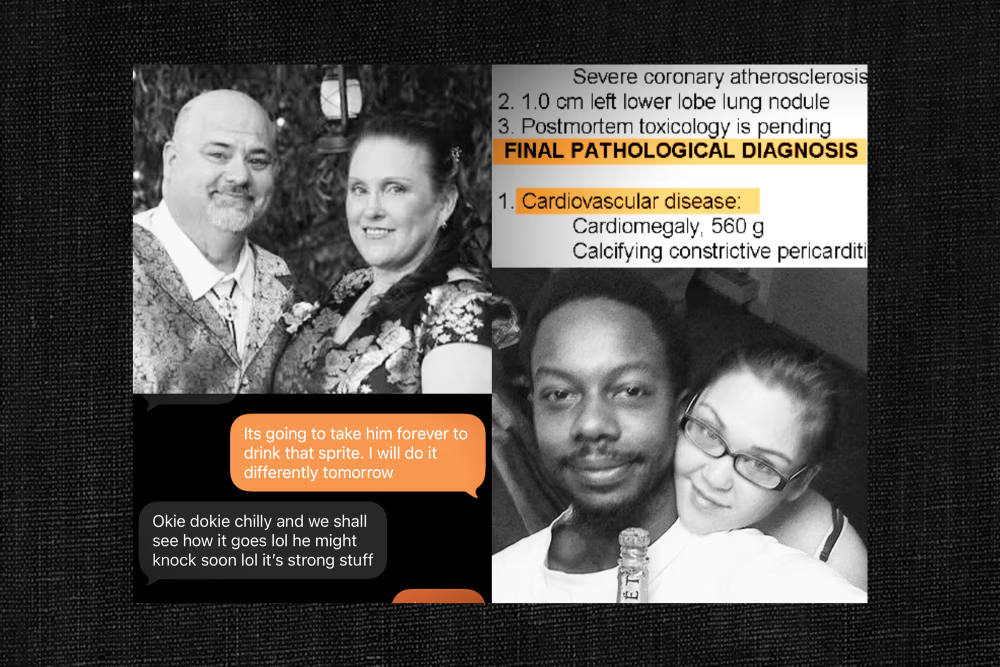
An investigation into the death of an Indiana man took an unexpected turn after his wife handed her phone over to authorities. What investigators reportedly found on the device raised questions about another death in the family and prompted a closer examination of the circumstances surrounding the passing of the woman’s son-in-law.
According to officials, a mother and daughter allegedly discussed a plan to poison a husband, setting off a case that would eventually involve questions about family relationships, digital evidence, and whether a similar scheme might have been carried out before. The allegations have drawn attention to the role that electronic communications can play in modern criminal investigations, particularly when investigators are trying to determine whether two seemingly separate deaths are connected.
The central question is deeply troubling: Were investigators looking at an isolated alleged plot, or could the evidence point to a broader pattern of suspected wrongdoing?
Although the allegations remain subject to the legal process, the case highlights how a single piece of evidence can change the direction of an investigation. A phone that might initially appear to be just another item collected after a death can become a crucial source of information when authorities begin reconstructing events and examining possible motives.
An Unexpected Discovery After an Indiana Husband’s Death
When someone dies unexpectedly, investigators may need to examine the circumstances carefully before determining what happened. Depending on the case, that process can involve interviews with relatives, medical records, forensic testing, and an examination of electronic devices.
In this Indiana case, officials say the investigation took a significant turn after a woman voluntarily turned over her phone following her husband’s death. Investigators reportedly discovered information that prompted further scrutiny of communications involving the woman and her daughter.
The discovery raised questions about whether the two had discussed poisoning the husband. More importantly, it reportedly led authorities to examine the death of the daughter’s husband, opening the possibility that the two cases could be connected.
At that point, investigators faced several difficult questions. What exactly had the mother and daughter discussed? Did their communications describe a genuine plan, or could the messages be interpreted differently when considered in their full context? And was there evidence linking either woman to an earlier death?
These questions are central to understanding the case. Digital messages can help investigators establish timelines and relationships between people, but the meaning of any particular communication must be assessed alongside other evidence.
The discovery of suspicious messages does not automatically establish that a poisoning occurred or that a person is responsible for a death. Investigators must examine the surrounding circumstances and determine whether the evidence supports criminal charges.
Nevertheless, the reported findings were significant enough to prompt a broader investigation, transforming the examination of one man’s death into a case involving multiple family members and potentially related events.
Why Investigators Examined the Mother’s Phone
Smartphones have become an important source of evidence in criminal investigations. Text messages, call records, photographs, location information, and other digital material can help authorities reconstruct what happened before and after a suspected crime.
In cases involving possible poisoning, investigators may need to establish whether a victim had been exposed to a harmful substance, when that exposure occurred, and who might have had the opportunity to administer it. Communications between people under investigation can provide leads, particularly when they appear to describe preparations, intentions, or discussions about a potential victim.
The phone in the Indiana case reportedly drew investigators’ attention to conversations between a mother and her daughter. Officials’ allegations that the pair plotted to poison a husband raised questions about whether the communications reflected a specific plan and whether any actions had followed.
A digital investigation can also uncover information that was not initially considered relevant. A message about an earlier event, a reference to a family member, or a conversation that predates a death may prompt investigators to revisit an existing timeline.
However, electronic evidence must be interpreted carefully. Messages can be incomplete, lack context, or contain statements that do not reflect actual conduct. Investigators generally need to compare digital findings with witness accounts, forensic evidence, medical information, and other records before drawing conclusions.
The reported discovery illustrates why investigators sometimes expand an inquiry after reviewing a device that was voluntarily provided. Evidence collected in connection with one death can lead to new questions about another, especially when communications appear to connect the people involved.
The Daughter’s Husband Becomes Part of the Investigation
One of the most unsettling aspects of the case is the reported connection to the death of the mother’s son-in-law.
According to the account provided by officials, information discovered on the mother’s phone prompted investigators to look more closely at the daughter’s husband’s death. That development raised the possibility that the inquiry involved more than a single alleged poisoning plan.
When investigators examine two deaths that may be connected, they must determine whether there is reliable evidence linking the events. Similar circumstances can justify further scrutiny, but they do not, on their own, prove that the same person was responsible or that both deaths resulted from criminal conduct.
Authorities may compare medical findings, toxicology results, timelines, communications, and witness statements. They may also examine whether individuals involved in one investigation had access to the other potential victim or whether there were discussions that could provide a clearer picture of what happened.
In a suspected poisoning case, determining the cause of death can be particularly complicated. Some substances may cause symptoms that resemble natural illness, while others may be difficult to identify without appropriate testing. The specific circumstances vary considerably, and investigators must rely on qualified forensic and medical professionals.
The alleged connection between the two deaths therefore raises an important investigative question: Does the available evidence demonstrate a common pattern, or did the initial discovery simply reveal information that required further examination?
Answering that question requires evidence rather than assumptions. The fact that authorities expanded the investigation signals that they considered the information important, but the ultimate conclusions must come from the findings and the legal proceedings.
Had the Alleged Plot Been Carried Out Before?
The question of whether the mother and daughter had acted similarly before is at the heart of the public interest surrounding the case.
When authorities investigate an alleged attempt to poison one person and discover information relating to another person’s death, they may consider whether the events share a common explanation. Investigators may revisit earlier records, reexamine evidence, or seek additional expert analysis to determine whether a previously unexplained death warrants renewed scrutiny.
That process can be important because an earlier death may have been investigated under different assumptions. If new information emerges, authorities may have reason to reassess those assumptions and determine whether the available evidence supports a different conclusion.
But a suspected pattern is not the same as a proven pattern.
The question in the headline must therefore be treated as an investigative issue rather than an established conclusion. The existence of alleged discussions about poisoning does not automatically prove that anyone was poisoned, that a death was caused deliberately, or that the people involved had previously committed a similar crime.
For investigators, the task is to establish a reliable connection between the alleged plan and any actual harm. That may require forensic testing, expert testimony, corroborating communications, and evidence establishing what each person knew or did.
For the public, the distinction is equally important. A case can raise serious concerns without every suspicion becoming a confirmed fact. Responsible reporting must separate official allegations from evidence that has been established in court.
The investigation’s focus on the son-in-law’s death suggests that authorities considered the possibility of a connection significant enough to examine. Whether that examination ultimately establishes wrongdoing depends on the evidence and the legal standards that apply.
The Role of Motive in an Alleged Poisoning Case
In many criminal investigations, authorities try to understand why a person might have wanted to harm another individual. Possible motives can help investigators develop leads, identify relevant relationships, and determine which communications or events deserve closer examination.
Family relationships can make such investigations especially complex. Spouses and relatives may share homes, finances, responsibilities, and personal histories. Disagreements or tensions may exist, but those circumstances alone do not establish criminal intent.
In the Indiana case, the alleged discussions between a mother and daughter have placed their relationship under scrutiny. Investigators would need to establish not only what was said, but also whether the communications support the claim that the two intended to poison a husband.
The distinction between an expressed thought and a criminal act can be legally significant. Depending on the jurisdiction and the circumstances, an alleged plan may raise separate legal questions from an attempt to carry it out or a completed crime. The precise charges and required elements depend on the applicable law.
Authorities must also consider each person’s individual role. If two people are alleged to have acted together, investigators need evidence showing what each person allegedly did, knew, or intended. A family relationship or participation in a conversation does not automatically establish equal responsibility.
Ultimately, motive may help explain the circumstances, but it cannot replace proof. Investigators and prosecutors must build their conclusions around admissible evidence and the legal requirements of the case.
Why Digital Evidence Can Change a Criminal Investigation
The Indiana investigation demonstrates a broader reality of modern law enforcement: information stored on personal devices can become important long after a conversation has taken place.
People routinely use smartphones to communicate about relationships, work, family responsibilities, and personal concerns. When a death becomes the subject of a criminal investigation, those records may help establish a timeline or reveal connections that witnesses have not identified.
Digital evidence can be particularly valuable when investigators are trying to understand events that occurred privately. Messages may indicate when individuals communicated, what subjects they discussed, and whether their accounts align with the available evidence.
Yet the same technology also creates challenges. Investigators must establish the authenticity and context of communications, follow applicable legal procedures, and avoid interpreting isolated messages as conclusive proof. A complete assessment may require examining conversations before and after the messages that first attracted attention.
In cases involving more than one possible victim, digital records can also help authorities determine whether the same individuals were discussing separate events. That does not mean every reference to a death is incriminating. The significance of a message depends on its content, context, and relationship to other evidence.
For prosecutors, the challenge is to explain the evidence clearly and establish why it supports the charges. For the defense, the opportunity may include challenging the interpretation, reliability, or legal admissibility of that evidence.
The result is a process in which digital information can be highly influential without being sufficient on its own to resolve every question.
The Importance of Forensic Evidence in Suspected Poisoning
Allegations involving poisoning often require specialized medical and forensic analysis. Unlike some crimes that leave immediately visible signs, poisoning may involve symptoms that are difficult to distinguish from illness or other medical conditions.
Investigators may review autopsy findings, toxicology reports, medical histories, and other available evidence to determine whether a harmful substance was present and whether it contributed to a person’s death. The results must be interpreted by qualified experts in light of the specific circumstances.
Even when a substance is detected, investigators may need to establish how and when exposure occurred. They must also consider whether the substance was responsible for the death or whether other medical factors played a role.
These questions can become especially complicated when a death occurred some time before investigators identified a possible criminal connection. The availability and quality of evidence may vary, and experts must explain the limits of what can be concluded.
In the Indiana case, the reported discovery on the mother’s phone prompted investigators to examine the son-in-law’s death. The importance of that development lies in the questions it raised, not in any assumption that the allegations have already been proven.
The strength of a poisoning case depends on how well the evidence supports the alleged sequence of events. Communications may help establish intent or opportunity, while forensic findings may address the cause of death. When these forms of evidence are considered together, investigators may be better positioned to determine whether a crime occurred.
Presumption of Innocence and the Legal Process
Cases involving alleged crimes within a family can provoke strong public reactions, particularly when the allegations concern a spouse’s death or the possible targeting of another relative.
However, allegations must be distinguished from proven facts. The presumption of innocence is a fundamental principle of the American criminal justice system, and the burden of proving criminal guilt rests with the prosecution.
An investigation may uncover troubling communications, prompt additional forensic testing, or lead authorities to pursue charges. Each development can be significant, but none should be confused with a final judicial determination.
The legal process provides a framework for examining evidence, challenging interpretations, and determining whether the prosecution has met its burden. Defendants have the opportunity to contest the allegations, and courts must evaluate the evidence according to applicable law.
This process is especially important when a case involves more than one death. Investigators may reasonably explore possible connections, but each alleged offense must be supported by evidence sufficient to establish the relevant elements.
The public may want immediate answers, particularly when a case raises the possibility that a death initially understood in one way could have involved criminal conduct. Yet careful investigation takes time, and premature conclusions can obscure the difference between suspicion and proof.
A Case Defined by Questions Still Requiring Answers
The reported discovery of information on an Indiana mother’s phone transformed an investigation into her husband’s death and drew renewed attention to the death of her son-in-law.
Officials’ allegations that the mother and daughter plotted to poison a husband raise serious questions about their communications, their intentions, and whether the alleged plan was connected to any completed crime. The investigation also highlights how evidence from one case can lead authorities to revisit another death.
The central question remains whether investigators can establish a reliable link between the alleged poisoning plot and the circumstances surrounding the son-in-law’s death. Answering it requires more than troubling messages or a suspected pattern. It requires evidence that can withstand careful scrutiny and, if charges are brought, examination in court.
Forensic findings, digital records, witness testimony, and the legal arguments presented by both sides may all play a role in determining what happened. Until the relevant facts are established, it is essential to distinguish official allegations from proven conclusions.
The case serves as a reminder that the investigation of an unexpected death can change direction when new information emerges. A phone voluntarily provided to authorities may reveal leads that were not previously apparent, prompting investigators to reconsider timelines and examine possible connections.
Whether the Indiana investigation ultimately establishes a connection between the two deaths remains the decisive question. For now, the allegations have opened a troubling line of inquiry, while the evidence and the legal process will determine what conclusions can responsibly be drawn.