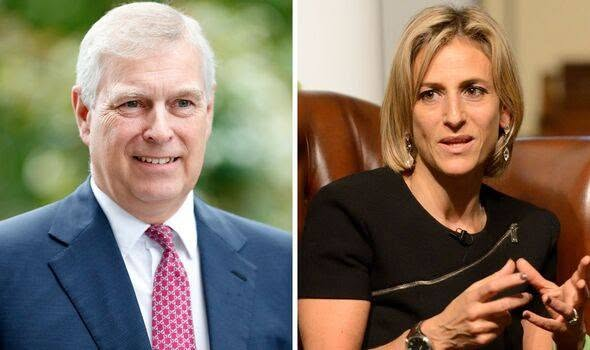
Seven years after Prince Andrew sat down with BBC journalist Emily Maitlis for one of the most controversial television interviews in modern royal history, a photographer who witnessed the extraordinary encounter has revealed another surprising detail about what happened behind the scenes.
Mark Harrison, the photographer assigned to capture images of the former Duke of York during the infamous 2019 Newsnight interview, has shared a previously little-known explanation Andrew reportedly gave when the cameras were not rolling. The conversation concerned one of the interview’s most memorable and heavily criticized moments: Andrew’s claim that he was unable to sweat.
During the televised discussion, Andrew connected his alleged inability to perspire to an unusual medical condition that he said had developed after an adrenaline-related incident during the Falklands War. But according to Harrison’s more recent recollection, Andrew offered a different and more detailed explanation privately, linking the condition to the training he received as a Royal Navy helicopter pilot.
The revelation has renewed interest in an interview that continues to attract attention because of its extraordinary answers, uncomfortable exchanges, and lasting consequences for the British monarchy.
Mark Harrison Reveals What Happened When the Cameras Were Off
Harrison was not simply an observer who watched the interview unfold on television. He was present at Buckingham Palace on the day of the recording, tasked with photographing Andrew and Maitlis before and after their historic conversation.
In a recent account of the experience, Harrison recalled that Andrew had discussed his inability to sweat during an off-camera conversation. According to the photographer, Andrew connected the condition to the training he had received as a helicopter pilot in the Royal Navy.
The explanation reportedly involved learning to resist natural instincts when facing danger. Harrison recalled Andrew describing how a pilot might instinctively want to turn away from an incoming missile, while military training taught him to do the opposite and move against that instinct.
Andrew reportedly suggested that this training had somehow contributed to the absence of sweating he described during the interview.
It was an unusual explanation, especially considering how much attention the subject would later receive. However, it is important to distinguish between what Harrison says Andrew told people privately and what has been independently established. The photographer’s recollection documents Andrew’s reported explanation; it does not independently verify the medical claim or establish a medical cause.
The Sweating Claim That Became One of the Interview’s Most Memorable Moments
When Andrew appeared on Newsnight on November 16, 2019, he was expected to address serious questions about his association with Jeffrey Epstein and allegations made by Virginia Giuffre.
Instead, several parts of the interview became widely discussed for reasons that extended far beyond the original questions.
One particularly memorable exchange concerned Andrew’s explanation that he could not sweat normally. Maitlis asked him about an allegation involving a night out at Tramp nightclub in London and the account of a young woman who said she had danced with him.
Andrew denied the allegation and offered an explanation involving a medical condition. He said that, following an incident during the Falklands War, he had experienced a condition in which he was unable to sweat.
He described the condition as connected to an adrenaline overdose and the effects of an experience during his military service.
The explanation attracted widespread scrutiny because it was being used as part of his response to a specific allegation. The interview did not establish that the medical condition existed or that it supported his account of the events in question.
Harrison’s new recollection adds another layer to the story by suggesting that Andrew had discussed the subject in more detail before or around the recording.
Why the Helicopter Pilot Training Explanation Is So Unusual
The connection Andrew reportedly made between helicopter pilot training and his inability to sweat is likely to surprise many viewers who remember the original interview.
Military aviation training can involve preparing pilots to respond to dangerous situations in ways that differ from ordinary instinctive reactions. In the account recalled by Harrison, Andrew described training designed to prevent a pilot from responding automatically to the threat of an incoming missile.
According to the photographer, Andrew believed that learning to override natural reactions had played a role in his reported medical condition.
However, the explanation should be understood as Andrew’s reported personal account, rather than a medically verified conclusion. Harrison was recounting a conversation, not presenting a clinical assessment.
That distinction matters because the sweating explanation became part of a much larger public debate about the credibility of Andrew’s answers during the interview.
The issue was not simply whether a medical condition could affect perspiration. It was how the explanation fitted into the wider account Andrew was giving when questioned about his past association with Epstein and allegations involving Giuffre.
The Photographer Who Captured a Historic Royal Moment
Mark Harrison’s involvement in the interview was almost accidental.
The award-winning photographer has previously described receiving an unexpected call about a mysterious assignment. He was not initially told exactly what the job involved and had very little time to decide whether to accept it.
After agreeing, he was instructed to arrive at Buckingham Palace dressed appropriately for a formal royal assignment. Only after reaching the location did he discover the significance of the work.
Harrison was asked to photograph Andrew and Maitlis around the interview. The production team was concerned that the prince might decide to leave during the questioning, so the photographer was instructed to keep working and capture what happened.
He later recalled photographing Andrew before the interview, when the former royal appeared relaxed and confident, as well as capturing images after the conversation had ended.
Those photographs became closely associated with one of the most consequential interviews ever given by a senior member of the British Royal Family.
The images helped tell the story of an encounter that would soon become international news.
Andrew’s Surprising Reaction After the Interview
Perhaps one of Harrison’s most striking recollections concerns Andrew’s mood immediately after the interview.
Many viewers who watched the broadcast later believed that the prince had struggled to answer Maitlis’s questions convincingly. His explanations were widely criticized, and the interview generated an extraordinary public reaction.
But Harrison recalled that Andrew appeared upbeat and confident after the cameras stopped rolling.
The photographer has previously described the moment when Andrew reportedly remarked that he thought the interview had gone really well.
That reaction became one of the most astonishing behind-the-scenes details associated with the broadcast.
It suggested a significant difference between how Andrew viewed his performance at the time and how audiences would respond once the interview was shown.
Harrison’s recollection also helps explain why the photographs taken immediately afterward became so memorable. The images captured a moment when the people involved may not yet have fully understood the scale of the controversy that was about to unfold.
Emily Maitlis and the Interview That Changed Everything
For Emily Maitlis, the Newsnight appearance became one of the defining interviews of her career.
Her questioning focused on Andrew’s relationship with Epstein, the allegations made by Giuffre, and the circumstances surrounding a photograph showing Andrew with Giuffre and Ghislaine Maxwell.
Andrew denied having sexual contact with Giuffre and said he had no recollection of meeting her, despite the existence of the photograph. He also questioned aspects of the photograph’s provenance.
The interview became particularly controversial because of the way Andrew responded to questions that many viewers considered serious and difficult.
Maitlis continued to press him on inconsistencies and details, creating a conversation that quickly became a major international news story.
The BBC interview was initially intended to allow Andrew to address public concern about his association with Epstein. Instead, it intensified scrutiny of his judgment and damaged his standing within the Royal Family.
The Lasting Consequences of the Newsnight Interview
The consequences of the 2019 broadcast were significant.
Just days after the interview aired, Andrew announced that he would step back from public duties. The decision followed widespread criticism and concern about the potential impact of the controversy on the Royal Family.
He subsequently lost his remaining military affiliations and royal patronages. In 2022, he settled Giuffre’s civil sexual-assault lawsuit in the United States without an admission of liability. Andrew had denied the allegations.
The controversy continued to affect his public standing and the monarchy’s reputation.
The interview also became the subject of books, documentaries, television discussions, and Netflix’s 2024 film Scoop, which dramatized the efforts of the BBC team to secure the conversation.
Harrison’s photographs were an important part of the story, helping preserve the atmosphere and personalities surrounding the interview.
Why This New Revelation Matters
Harrison’s account does not change what viewers saw during the original broadcast, but it provides another perspective on the events surrounding it.
The reported off-camera explanation suggests that Andrew had discussed his sweating condition in more detail than the audience heard during the televised exchange. It also highlights how much of the interview’s preparation and surrounding conversations remained outside the public view.
For royal watchers, the revelation is another reminder that even a carefully arranged interview can produce unexpected moments. What happens before and after the cameras roll can sometimes be just as revealing as the broadcast itself.
It also demonstrates the lasting importance of eyewitness accounts. Photographers, producers, and other members of a television crew may notice details that never make it into the final program but later help audiences understand how an extraordinary event unfolded.
Final Thoughts
Seven years after Prince Andrew’s infamous Newsnight interview, Mark Harrison’s latest recollection has brought fresh attention to one of its most unusual explanations.
According to the photographer, Andrew privately connected his claimed inability to sweat to the instinct-control training he experienced as a Royal Navy helicopter pilot. The account offers a new detail about the conversation behind the broadcast, although it does not independently establish the medical explanation.
The original interview remains a defining moment in the modern history of the British monarchy. Its questions, answers, and consequences continue to be examined, while the people who witnessed it firsthand are still sharing details about what happened behind the scenes.
For anyone who remembers watching the interview unfold, Harrison’s revelation provides another fascinating piece of the story — and a reminder that some of the most surprising moments took place when the cameras were not rolling.