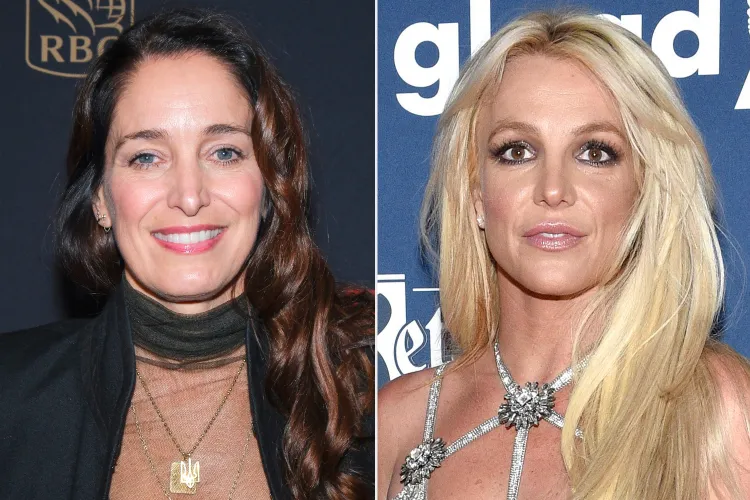
Britney Spears has spent decades building a distinctive musical identity, combining catchy pop melodies, expressive vocals, and performances that have helped define modern pop culture. Behind some of her recordings, however, are creative collaborations that reveal how a particular vocal idea can help shape a song. One such story involves Canadian singer-songwriter Chantal Kreviazuk, who reportedly encouraged Spears to channel the spirit of Marilyn Monroe’s famous “Happy Birthday, Mr. President” performance while recording “If I’m Dancing.”
The connection brings together three recognizable names from different corners of entertainment history: Spears, one of pop music’s most influential performers; Kreviazuk, an accomplished songwriter and recording artist; and Monroe, whose breathy delivery of “Happy Birthday” to President John F. Kennedy in 1962 became an enduring moment in American popular culture.
The suggestion was more than a reference to an iconic performance. It offered a creative direction for Spears’ vocal delivery, illustrating how artists can draw inspiration from familiar cultural images while developing something new. In a recording studio, a short instruction can influence the mood of a vocal, the personality of a song, and the way listeners experience its lyrics.
“If I’m Dancing” appeared on Spears’ 2016 album Glory, a project that explored a variety of pop styles and highlighted the singer’s willingness to experiment with different sounds. The track’s unusual production and playful approach made it stand out within the album, while the story behind its vocal direction offers another perspective on the creative decisions that helped shape the record.
Chantal Kreviazuk’s Creative Advice to Britney Spears
Chantal Kreviazuk has built a respected career as a singer-songwriter, musician, and collaborator. Known for her own recordings as well as her songwriting work with other artists, she has experience approaching music from both the performer’s and the writer’s perspectives.
That combination can be particularly valuable during recording sessions. A songwriter may understand how a lyric is intended to sound emotionally, but translating that intention into a vocal performance often requires experimentation. Suggestions about tone, phrasing, timing, or attitude can help a singer discover a different interpretation of the material.
The reported Marilyn Monroe reference offered Spears a recognizable point of inspiration. Monroe’s delivery of “Happy Birthday, Mr. President” was famously intimate and breathy, contrasting with the more conventional style associated with a public birthday greeting. The performance became memorable because of the way Monroe used her voice, timing, and stage presence to create a distinctive atmosphere.
Asking Spears to channel that spirit for “If I’m Dancing” connected a contemporary pop recording with a historic performance known for its unmistakable character.
Such creative directions do not necessarily mean that a singer is expected to imitate another performer exactly. Instead, a reference can help communicate an emotional quality that would otherwise be difficult to describe. A producer or songwriter might ask for a vocal to sound playful, restrained, flirtatious, dramatic, or almost whispered. Referring to a familiar performance can make the desired mood easier to understand.
For a singer as experienced as Spears, this kind of suggestion can provide a starting point rather than a strict formula. Her interpretation would still depend on her own instincts, vocal choices, and the musical arrangement surrounding her.
The story also highlights the collaborative nature of recording. Although listeners often associate a finished song primarily with the artist whose name appears on the album, the final performance may reflect ideas contributed by songwriters, producers, engineers, musicians, and other creative partners.
Why Marilyn Monroe’s ‘Happy Birthday’ Performance Remains Iconic
Marilyn Monroe’s performance of “Happy Birthday, Mr. President” took place on May 19, 1962, during a televised celebration for President John F. Kennedy’s 45th birthday at Madison Square Garden in New York City.
Monroe appeared before an audience that included political figures and celebrities, wearing a form-fitting, sparkling dress. Her breathy, intimate delivery of the familiar birthday song differed dramatically from an ordinary rendition, creating a moment that became closely associated with both Monroe’s image and the public fascination surrounding Kennedy.
The performance was brief, but its impact lasted far beyond the event itself. It became one of the most frequently remembered moments in Monroe’s career, often discussed in connection with her screen persona, her vocal style, and the relationship between celebrity and spectacle.
Part of the performance’s enduring appeal comes from its simplicity. The song itself was familiar to nearly everyone in the audience, yet Monroe transformed it through phrasing, timing, and a deliberately distinctive delivery. The contrast between an everyday melody and an unusually intimate presentation made the moment feel theatrical and unexpected.
Monroe had developed a screen presence built around glamour, humor, vulnerability, and carefully controlled performance. Her breathy voice became one of the recognizable elements of that persona, although her abilities extended beyond the public image most commonly associated with her.
For musicians, Monroe’s performance offers an example of how delivery can change the meaning of familiar words. The same lyric can sound playful, sincere, teasing, or dramatic depending on how a performer approaches it.
That is why references to Monroe continue to appear in conversations about music, film, fashion, and celebrity culture. Her influence is not limited to the films she made during her lifetime. Certain gestures, looks, and performances have become part of a broader cultural vocabulary that artists can draw upon when creating new work.
Britney Spears and the Creative Direction Behind ‘If I’m Dancing’
Released in 2016 as part of Glory, “If I’m Dancing” presented a different side of Spears’ pop sound. The album included a range of musical approaches, from polished dance-pop to more atmospheric and experimental arrangements. Rather than relying on one consistent formula, the project explored different textures and vocal moods.
“If I’m Dancing” stood out for its unusual production, layered sounds, and energetic rhythmic structure. The song moves through a collection of musical ideas that give it a somewhat unpredictable character, setting it apart from more straightforward pop tracks.
The title itself suggests movement and self-expression, while the production places considerable emphasis on rhythm and texture. Instead of presenting the song as a conventional ballad or a simple dance-floor anthem, the track uses its arrangement to create a more unconventional atmosphere.
Vocal direction plays an important role in music with this kind of production. When the instrumental arrangement contains many competing elements, the singer’s phrasing and tone can help establish a central personality. A deliberately breathy or playful delivery can add contrast, allowing the voice to become part of the song’s texture rather than simply carrying the melody.
The Monroe reference fits within that creative approach. Her “Happy Birthday” performance is remembered partly because of the contrast between a familiar tune and an unexpected vocal interpretation. Applying a similar idea to a modern pop recording can introduce a sense of character without requiring the song to reproduce the original performance.
Spears had already demonstrated her ability to adapt her voice to different musical settings throughout her career. From the youthful energy of her early singles to more mature and atmospheric recordings, she has worked with a variety of producers and songwriters to explore different sides of her sound.
Glory arrived at a point when Spears had an extensive catalog behind her. The album offered another opportunity to experiment with vocal presentation and contemporary production, making “If I’m Dancing” a useful example of how unusual ideas can contribute to a larger artistic project.
How a Simple Reference Can Transform a Vocal Performance
Recording a song involves far more than singing the written melody correctly. Artists and producers regularly make decisions about breath, emphasis, tone, rhythm, and the emotional distance between the singer and the listener.
A vocalist can deliver the same words in several different ways. A strong, full voice may communicate confidence, while a softer delivery can create a sense of intimacy. A slightly exaggerated phrase might sound humorous or theatrical, whereas a restrained interpretation can make a lyric feel more serious.
These choices are especially important in pop music, where a singer’s vocal identity often becomes a central part of a song’s appeal.
Creative references can help communicate a desired effect quickly. Instead of offering a lengthy technical explanation, a collaborator may point to a particular recording, performance, or film scene. The reference gives everyone involved a shared example to discuss.
The instruction to channel Marilyn Monroe would therefore have offered a recognizable artistic shorthand. It pointed toward a particular kind of breathiness and theatrical intimacy, allowing Spears to explore a vocal color that suited the song’s unusual atmosphere.
That does not mean that Monroe’s style can be reduced to a single technique. Her famous birthday performance involved more than a soft voice. Its impact also depended on the setting, the audience, the public figures involved, and the cultural context surrounding the event.
Likewise, a modern recording must work within its own musical framework. The arrangement, tempo, lyrics, and intended mood all affect how a vocal reference can be used.
The most effective collaborations allow an artist to take an idea and make it their own. Rather than copying another performer note for note, the singer adapts the inspiration to fit the song and their personal style.
In Spears’ case, the reported suggestion illustrates how a cultural reference can become part of the creative process behind a pop recording.
Chantal Kreviazuk’s Role in the Wider Music Industry
Kreviazuk is known for her work as a solo artist and songwriter, with a career that has included recording albums, performing live, and contributing to songs associated with other musicians.
Her background is significant because songwriting and performance often require different but complementary ways of thinking. Writers consider the structure, emotional content, and language of a song, while performers must find a way to communicate those elements through voice and interpretation.
An experienced songwriter may recognize opportunities to make a lyric more distinctive by changing the way it is delivered. Sometimes the solution involves a melodic adjustment or a different rhythm. In other cases, it may be a matter of tone or attitude.
These details can have a substantial effect on the finished recording, even when they are difficult for listeners to identify consciously.
Collaboration is particularly important in mainstream pop, where a song may pass through several stages of development before it reaches an audience. Writers contribute lyrics and melodies, producers shape the arrangement and sound, and singers interpret the material through their performances.
Each participant brings a different perspective, and the final recording reflects the interaction between those ideas.
Kreviazuk’s reported advice to Spears offers a glimpse into that process. It illustrates how a songwriter’s creative suggestion can help an established performer approach a song from a different angle.
The story also reinforces the importance of contributors whose work may be less visible to the public than that of the headline artist. While Spears is the central voice on “If I’m Dancing,” the song exists within a wider creative network involving the people who helped develop its sound and performance.
Britney Spears’ Career Has Always Included Reinvention
Since her breakthrough in the late 1990s, Spears has remained one of the most recognizable names in pop music. Her debut single, “…Baby One More Time,” became an international hit and helped establish her as a defining young star of her generation.
She followed that success with albums and singles that explored different forms of pop, including dance-oriented production, electronic influences, and more personal lyrical themes. Songs such as “Oops!… I Did It Again,” “Toxic,” and “Gimme More” became important parts of her musical legacy.
Her career has also been shaped by intense public attention. As her fame grew, her personal life became a recurring subject of media coverage, sometimes overshadowing the creative work that established her reputation.
In 2008, Spears was placed under a conservatorship that controlled significant aspects of her personal and financial affairs. The arrangement became the focus of extensive public debate and legal proceedings before it ended in November 2021. The movement advocating for an end to the conservatorship also brought renewed attention to questions of autonomy, privacy, and the treatment of public figures.
These experiences form part of the broader context of Spears’ career, but they do not define the full range of her musical work. Her recordings continue to attract listeners because of their melodies, production, performances, and influence on the development of contemporary pop.
Glory demonstrated her continued willingness to work with different musical ideas, even after years of commercial success. Tracks such as “If I’m Dancing” offered something less conventional than the straightforward hooks that had characterized some of her earlier hits.
The reported Monroe-inspired vocal direction is one example of that experimentation. It points to a creative process in which the artist’s familiar identity can coexist with new approaches to sound and performance.
The Lasting Connection Between Pop Music and Hollywood Icons
The relationship between Britney Spears’ recording and Marilyn Monroe’s famous birthday performance illustrates the way popular culture continually revisits its own history.
Artists frequently draw inspiration from earlier performers, whether through fashion, choreography, vocal style, imagery, or storytelling. These references can help create an immediate emotional connection with an audience because they draw on memories and associations that listeners already recognize.
Monroe remains an especially influential figure because her image combines glamour with a distinctive sense of theatricality. Her films, photographs, and public appearances have continued to inspire musicians, actors, designers, and visual artists long after her death in 1962.
Spears, meanwhile, became a defining pop figure of a later era, developing a public identity shaped by music videos, live performances, recording technology, and the rapid growth of celebrity media.
Although their careers took place in different cultural environments, both performers understood the importance of presentation. The way a voice sounds, the way a person moves, and the way an audience encounters a performance can all contribute to its lasting impact.
The connection between Monroe and “If I’m Dancing” also demonstrates that inspiration does not always arrive through a direct musical quotation. Sometimes the influence lies in a mood or a performance technique rather than a melody.
That distinction allows artists to engage with cultural history while creating work that belongs to their own era.
Why the Story Behind ‘If I’m Dancing’ Matters
The reported advice from Kreviazuk adds another layer to the story of “If I’m Dancing.” It provides an example of how a creative suggestion can help shape a recording and how an iconic performance from decades earlier can find a new context in contemporary pop music.
For fans of Spears, the anecdote offers a glimpse into the collaborative decisions that take place behind the scenes. A finished track may sound effortless, but its character can emerge from numerous conversations, experiments, and adjustments made during the recording process.
For those interested in Monroe’s legacy, the connection demonstrates how her performance style continues to resonate across generations. Her rendition of “Happy Birthday, Mr. President” remains a recognizable cultural reference because of its unusual delivery and the circumstances in which it took place.
And for Kreviazuk, the story highlights the creative influence that songwriters and collaborators can have when working with major recording artists. Their contributions may not always receive the same attention as a headline performer, but a well-chosen suggestion can become an important part of a song’s identity.
Ultimately, the appeal of the story lies in the meeting of different creative perspectives. Spears brought her experience as a pop performer, Kreviazuk contributed a musical idea, and Monroe’s celebrated performance provided a point of reference.
The result is a reminder that pop music rarely develops in isolation. It grows through collaboration, experimentation, and the continued exchange of ideas between artists and generations.
With Glory and “If I’m Dancing,” Spears explored a sound that allowed room for unusual vocal choices and inventive production. The reported suggestion to channel Monroe captures the spirit of that process: sometimes, a familiar cultural memory can inspire a performance to take an unexpected direction.