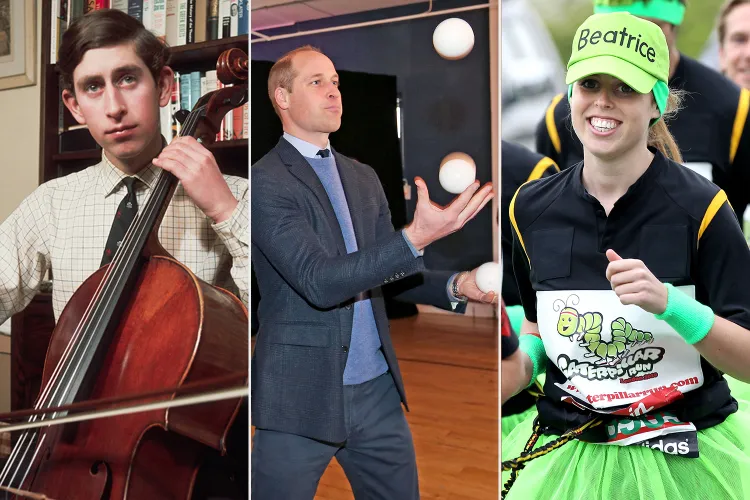
The British royal family is famous for its centuries-old traditions, grand ceremonies, public appearances, and carefully maintained royal image. From attending state banquets to representing the monarchy at important national events, members of the House of Windsor often appear to lead highly structured lives. However, behind the formal uniforms, elegant gowns, and palace engagements, several royals have surprisingly creative and entertaining sides.
Some members of the British royal family possess artistic abilities, while others have demonstrated impressive musical skills, sporting talents, or unexpected hobbies. From painting and photography to dancing, juggling, and performing music, these lesser-known interests reveal a more personal side of royal life.
Although royal duties frequently dominate public attention, these hidden talents offer a fascinating glimpse into the personalities of the people behind the titles. They also demonstrate that creativity and individuality have always played an important role within the monarchy.
Here is a closer look at some of the British royal family’s most interesting hidden talents and the surprising abilities that fans may not know about.
King Charles III: A Passion for Painting and Watercolors
<PRIVATE_PERSON> King Charles III has long demonstrated an interest in the arts, particularly painting and watercolor landscapes. While much of his public life revolves around constitutional responsibilities and charitable commitments, his creative interests have remained an important part of his personal identity.
The King developed an appreciation for drawing and painting during his younger years. Over time, watercolor painting became one of his favorite artistic pursuits, allowing him to capture landscapes, gardens, architecture, and memorable locations from his travels.
His paintings often feature peaceful countryside scenes, mountain views, and historic buildings. Rather than pursuing art as a professional career, Charles has treated painting as a personal creative outlet and a way to observe the world more closely.
His artistic interests also connect with his wider commitment to supporting British creativity, architecture, craftsmanship, and heritage.
Charles has previously exhibited and published collections of his artwork, demonstrating that his interest in painting is much more than a casual hobby. For a monarch whose schedule is filled with official engagements, finding time for creativity offers a welcome opportunity for personal expression.
Princess Catherine: Photography and Artistic Creativity
The Princess of Wales, Catherine, is widely admired for her fashion choices, public speaking, and dedication to family and charitable causes. However, one of her most recognizable creative interests is photography.
Photography has become an important way for Catherine to document family life and capture meaningful moments. She has frequently taken photographs of her children, Prince George, Princess Charlotte, and Prince Louis, offering the public occasional glimpses into their lives away from royal engagements.
Her photographs often feature natural lighting, relaxed expressions, and intimate family moments. Rather than relying entirely on formal royal portraits, Catherine has helped establish a more personal visual approach to sharing family milestones.
Her interest in photography also extends beyond family snapshots. She has demonstrated an appreciation for visual storytelling and the emotional power of images.
This creative ability complements her wider interest in art and visual communication. It also gives her a distinctive way to connect with the public, allowing important royal moments to feel warmer and more relatable.
For Catherine, photography is not simply about taking pictures. It is also about preserving memories and telling stories through carefully captured images.
Princess Anne: A Remarkable Sporting Background
Princess Anne may be better known for her extraordinary work ethic and commitment to royal responsibilities, but she also has an impressive sporting history.
The Princess Royal developed a passion for horse riding at an early age, following a family tradition closely associated with the monarchy. Her dedication eventually led her to compete internationally in equestrian events.
In 1976, Anne represented Great Britain at the Olympic Games in Montreal, becoming the first British royal to compete in the modern Olympic Games.
Her participation in the equestrian eventing competition remains one of the most remarkable sporting achievements in royal history.
Anne’s ability to balance demanding athletic training with royal responsibilities demonstrated her determination and discipline. Although she eventually stepped away from competitive riding, her connection to equestrian sport has remained a defining part of her life.
Her sporting accomplishments also helped establish a different public image of the royal family, showing that members of the monarchy could pursue demanding personal ambitions beyond traditional ceremonial duties.
Prince William: A Talent for Sports and Adventure
Prince William has inherited a strong interest in outdoor activities and competitive sports. Throughout his life, he has participated in various sporting pursuits, including football, polo, skiing, and other outdoor adventures.
His interest in sports is closely connected to his childhood experiences and his family’s enthusiasm for physical activities.
Football is particularly important to William. As president of the Football Association, he has regularly demonstrated his support for the sport and its ability to bring communities together.
He is also known for his enthusiasm for Aston Villa, frequently discussing the club and attending matches when his schedule allows.
Beyond football, William has demonstrated an adventurous side through activities such as skiing and other outdoor pursuits.
These interests provide a contrast to his formal responsibilities as Prince of Wales. They also allow him to connect with people through shared passions that extend beyond royal protocol.
Prince Harry: A Passion for Sports and Physical Challenges
Before stepping back from his role as a senior working royal, Prince Harry was frequently associated with sporting events and adventurous activities.
Growing up, he participated in numerous outdoor pursuits, including skiing, polo, and competitive sporting challenges.
Polo has been a particularly important interest throughout his adult life. Like several other members of the royal family, Harry developed a connection to equestrian sports and has participated in charity polo events.
He has also demonstrated a strong interest in fitness, physical endurance, and activities that challenge personal limits.
His involvement in the Invictus Games further highlights his commitment to sport as a tool for recovery, confidence, and community building.
Although the Invictus Games are not simply a personal sporting hobby, Harry’s involvement reflects his understanding of the transformative power of physical activity.
His interests demonstrate another side of royal life, where sporting passion can become a platform for meaningful charitable work.
Queen Camilla: A Love of Reading and Literature
Queen Camilla has become particularly associated with literature, reading, and promoting the importance of books.
Her passion for reading has developed into a significant part of her public work. Through literary initiatives and events, she has encouraged children and adults to discover the enjoyment of reading.
Books have long been a source of personal interest for Camilla, and she has frequently spoken about the importance of literacy and storytelling.
Her literary enthusiasm eventually inspired the creation of The Queen’s Reading Room, an initiative designed to celebrate books, authors, and the positive influence of reading.
Although reading may not seem as visually impressive as painting or dancing, it is an important creative interest that reveals a thoughtful and intellectual dimension of her personality.
Through her work, Camilla has helped bring attention to writers and reading communities while encouraging people to make literature part of their everyday lives.
Sophie, Duchess of Edinburgh: A Creative and Artistic Side
Sophie, Duchess of Edinburgh, has developed a public role that combines royal service with interests in charitable work, photography, and supporting creative communities.
Her photography has been particularly notable. She has undertaken photographic projects connected to international causes, including highlighting the experiences of women and communities around the world.
Photography provides Sophie with a way to communicate stories that might otherwise receive limited attention.
Her interest in visual storytelling demonstrates that artistic talents within the royal family are not restricted to painting or traditional fine arts.
Through her creative work, she has also shown how personal interests can support wider charitable objectives.
For Sophie, photography offers an opportunity to look beyond formal royal settings and focus on the lives and experiences of others.
Princess Margaret: A Flair for Music and the Arts
Looking back through royal history, Princess Margaret stands out as a member of the royal family with a particularly strong interest in culture, music, fashion, and the performing arts.
The younger sister of Queen Elizabeth II was known for her appreciation of artistic environments and her connections with creative figures.
She enjoyed music, theatre, and social events, becoming an influential cultural personality during the mid-20th century.
Her personality was often described as more spontaneous and glamorous than the traditional public image of the monarchy.
Margaret’s interest in the arts helped strengthen the royal family’s connections with Britain’s cultural scene.
Although she did not pursue a conventional artistic career, her appreciation for music and performance was an important part of her identity.
Royal Children and Their Developing Talents
The younger generation of the British royal family is also beginning to reveal its own creative interests.
Prince George, Princess Charlotte, and Prince Louis have occasionally appeared in public moments that offer glimpses of their personalities and hobbies.
Prince George has shown an interest in sports, while Princess Charlotte has been associated with activities such as dancing and music. Prince Louis, meanwhile, has frequently captured attention through his energetic and expressive behavior during public appearances.
As the children grow older, their interests will naturally develop. Whether they eventually pursue artistic activities, sports, music, or other hobbies remains to be seen.
Their upbringing also reflects the importance of allowing young members of the royal family to explore different interests while gradually understanding their future responsibilities.
Why the Royal Family’s Hidden Talents Fascinate the Public
The British royal family has always attracted attention because of its traditions, history, and extraordinary public responsibilities. Yet audiences are often equally interested in discovering what members of the monarchy enjoy doing when they are away from official engagements.
Hidden talents make royal figures appear more relatable. Painting, photography, reading, music, and sports are activities that people around the world can appreciate, regardless of their background.
They also challenge the idea that royal life is entirely defined by ceremonies and protocol.
For some members, creative hobbies provide relaxation. For others, sporting interests create opportunities to pursue personal ambitions or support charitable causes.
These activities reveal that the royal family is made up of individuals with different personalities, abilities, and passions.
A More Personal Side of Britain’s Royal Family
From King Charles III’s watercolor paintings to Princess Catherine’s photography, Princess Anne’s Olympic achievements, and Queen Camilla’s literary enthusiasm, the British royal family has a surprisingly diverse collection of talents.
Some abilities are widely recognized, while others remain relatively unknown outside royal circles. Together, they offer a fascinating look at the interests that exist beyond palace walls.
Perhaps the most interesting lesson is that royal life does not eliminate the need for creativity, recreation, or personal expression. Even people with extraordinary responsibilities benefit from having hobbies that allow them to explore different sides of themselves.
Whether through painting a landscape, capturing a family photograph, competing in an equestrian event, or enjoying a favorite book, these talents remind us that there is much more to the British royal family than crowns, titles, and royal appearances.
And as younger generations continue to grow up in the public eye, royal watchers may discover even more unexpected abilities in the years ahead.