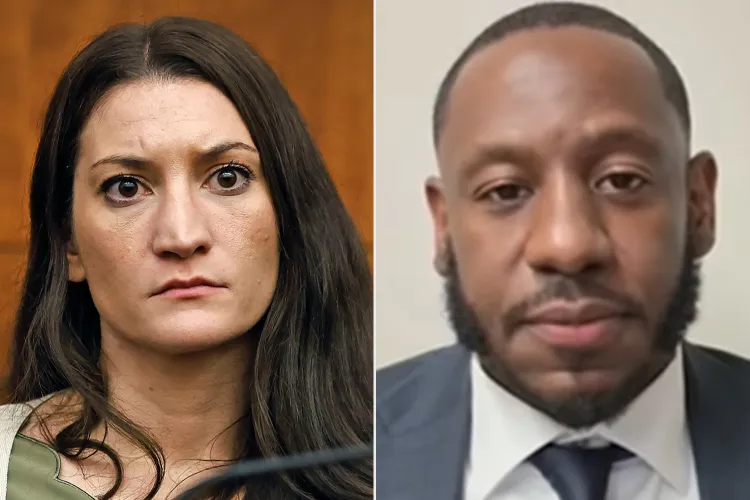
Michael Desronvil says he had no reasonable doubt about Lindsay Clancy’s criminal responsibility, explaining why he stood alone as the jury deliberated over the deaths of her three young children.
The high-profile case involving Lindsay Clancy has entered another difficult chapter after Michael Desronvil, the lone juror who favored convicting her, spoke publicly about why he could not agree with the other 11 members of the jury. In an interview with Fox News, Desronvil maintained that he had no reasonable doubt about her criminal responsibility, even as the majority of jurors believed the evidence supported a finding that she was not criminally responsible because of a mental disease or defect.
The disagreement prevented the jury from reaching a unanimous verdict. On September 4, 2026, the judge declared a mistrial after days of deliberations ended with an 11-to-1 split. The case, which centers on the deaths of Clancy’s three children in Massachusetts in January 2023, has drawn widespread attention because it raises difficult questions about criminal intent, severe mental illness, postpartum psychosis and the legal standards used to determine responsibility.
Desronvil’s account offers a glimpse into the disagreement that divided the jury. He said he believed the prosecution had presented substantial evidence supporting its case. However, he declined to reveal every detail of the deliberations, explaining that he wanted to respect the legal process while the next steps in the case remained uncertain.
His comments have renewed public discussion of the trial, but they do not resolve the central legal question. Clancy has not been convicted, and the mistrial means that the jury did not reach a final verdict.
Michael Desronvil Explains Why He Voted to Convict
During his Fox News interview, Desronvil made clear that his decision was based on what he believed the evidence demonstrated about Clancy’s actions and state of mind.
He said he had substantial evidence in mind when he decided that he could not support the conclusion favored by the other jurors. Although he acknowledged that the deliberations included tense moments, he did not offer a complete public account of every argument raised in the jury room.
Desronvil also rejected suggestions that he had admitted to having reasonable doubt but continued to support a conviction anyway. His position, as he has described it publicly, is that he did not believe the prosecution’s case left him with reasonable doubt about Clancy’s criminal responsibility.
In earlier comments released through his representative, Desronvil said that the physical evidence, key witnesses and the prosecution’s presentation convinced him that Clancy knew what she was doing and had planned her actions. He also said that he tried to discuss different possible explanations during deliberations but felt that other jurors interpreted his questions as signs of uncertainty.
His statements directly conflict with accounts from other jurors, including the foreperson, who described the discussions differently. The disagreement over what happened during deliberations has become a separate point of controversy surrounding the case.
Desronvil has chosen not to disclose all the evidence or arguments that influenced him. That decision leaves important details of his reasoning unclear to the public, while preserving the distinction between his personal assessment and a verdict reached by a court.
Why the Jury Split 11 to 1
The jury’s division was not simply a disagreement about whether the deaths occurred. The central question was whether Clancy should be held criminally responsible under the law, given the defense’s argument that she was experiencing a severe psychiatric condition at the time.
Eleven jurors were prepared to find that Clancy was not criminally responsible because of a mental disease or defect. Desronvil disagreed, maintaining that the evidence supported a finding of guilt rather than an insanity-based outcome.
The split highlights how jurors can hear the same testimony and examine the same evidence yet reach sharply different conclusions about intent, mental capacity and legal responsibility.
In a criminal trial involving a mental-health defense, jurors must evaluate more than the physical events. They must also consider the applicable legal standards and the evidence presented by both sides concerning the defendant’s state of mind.
The prosecution argued that Clancy understood her actions and carried them out deliberately. The defense, meanwhile, emphasized her serious mental-health difficulties and argued that postpartum psychosis affected her ability to understand or control what she was doing.
The jury’s inability to reach a unanimous decision meant that neither position resulted in a final verdict. A single juror’s refusal to join the majority was enough to prevent the panel from completing its task.
After seven days of deliberations, the court declared a mistrial. That outcome left the case unresolved and raised questions about whether prosecutors would seek another trial and how the court would address the legal disputes that followed.