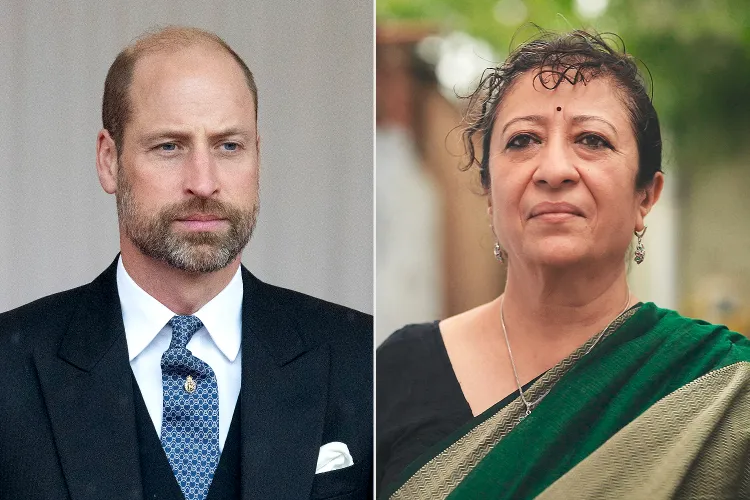
Prince William’s approach to fighting climate change is receiving praise from one of the leading environmental innovators selected as a finalist for the 2026 Earthshot Prize. Bijal Brahmbhatt, director and managing trustee of India’s Mahila Housing Trust, has described the Prince of Wales as a “thought leader” whose message of “urgent optimism” is helping turn environmental awareness into meaningful action.
Her comments highlight the growing influence of Prince William’s ambitious environmental initiative, which aims to identify, support and accelerate solutions to some of the planet’s most serious challenges. For Brahmbhatt, the importance of the Earthshot Prize goes beyond recognition. It provides an opportunity to bring attention to communities already experiencing the devastating effects of climate change, particularly women living and working in low-income neighborhoods.
As the 2026 awards ceremony approaches in Mumbai, India, the finalist’s remarks offer a powerful example of how royal influence, environmental innovation and community-led initiatives can work together to create lasting change.
Prince William’s ‘Urgent Optimism’ Inspires Environmental Action
Prince William has increasingly used his public platform to encourage a more determined and hopeful approach to environmental protection. Through the Earthshot Prize, he has promoted the belief that climate change and other environmental emergencies should not leave people feeling powerless.
The phrase “urgent optimism” captures the central idea behind his approach. It combines an honest understanding of the environmental dangers facing the world with the confidence that practical solutions already exist.
Brahmbhatt believes this message is particularly important at a time when climate concerns can sometimes feel overwhelming.
“One of the taglines of the Earthshot Prize is urgent optimism,” she explained, praising the Prince of Wales for helping transform that philosophy into action within a relatively short period.
She also described William as a thought leader in the environmental space, recognizing his contribution to bringing attention to solutions that might otherwise struggle to reach a global audience.
For the Mahila Housing Trust, this visibility is especially valuable. Its work focuses on protecting vulnerable communities from extreme heat, an increasingly serious problem in parts of India where inadequate housing can make everyday life dangerous.
William’s approach encourages people not simply to discuss environmental problems but to identify innovations that can be implemented, expanded and shared across different communities.
Mahila Housing Trust Is Helping Women Fight Extreme Heat in India
Among the organizations attracting attention at the 2026 Earthshot Prize is the Mahila Housing Trust, an Indian initiative working to improve living conditions and economic opportunities for low-income women.
The organization has spent decades collaborating with women in vulnerable communities, recognizing that environmental conditions can have a direct impact on health, household stability and financial independence.
According to Brahmbhatt, the Trust initially focused on supporting women’s economic opportunities. However, its work gradually expanded as the organization recognized how rising temperatures and increasingly difficult living conditions were affecting the communities it served.
In many informal settlements, homes are constructed with materials such as metal or tin sheets. Although these materials can be relatively affordable, they can trap significant amounts of heat inside buildings.
The problem becomes particularly serious for women who work from home. Without adequate ventilation or effective cooling systems, indoor temperatures can become extremely uncomfortable, making it difficult to complete everyday tasks.
Brahmbhatt explained that some homes can become approximately 42 degrees Fahrenheit hotter than the outdoor temperature.
For women already facing financial difficulties, this is more than an inconvenience. Extreme indoor heat can affect productivity, reduce working hours and create additional health concerns.
The Mahila Housing Trust recognized that protecting women from extreme temperatures was closely connected to protecting their livelihoods.
Its approach demonstrates how climate adaptation can also become a powerful tool for reducing poverty and improving economic security.
How Reflective Roof Coatings Are Making Homes Cooler
One of the most practical solutions associated with the Mahila Housing Trust is the use of affordable reflective roof coatings.
These specially designed coatings help reflect sunlight rather than allowing roofs to absorb as much heat. By reducing the amount of heat entering homes, the approach can create more comfortable indoor environments without requiring expensive air-conditioning systems.
According to the organization’s Earthshot Prize profile, its reflective roof solutions can reduce indoor temperatures by as much as 41 degrees Fahrenheit.
The significance of this technology lies in its accessibility. Many low-income households cannot afford costly cooling equipment or the electricity required to operate it continuously.
A relatively affordable improvement to a roof can therefore make a meaningful difference to families living in extremely hot conditions.
The benefits extend beyond comfort. Cooler indoor environments can help people work more effectively, protect their health and maintain more stable daily routines.
For women who earn money through home-based activities, these improvements can be especially important.
The initiative also illustrates an important principle in the fight against climate change: successful solutions do not always need to involve complicated or expensive technology.
Sometimes, practical innovations designed around the needs of local communities can deliver meaningful results.
Extreme Heat Is Taking a Serious Financial Toll on Women
Perhaps one of the most concerning details shared by Brahmbhatt involves the financial consequences of extreme heat.
She explained that women supported by the organization often have an average annual income of approximately $1,000.
The Mahila Housing Trust estimates that some of these women lose nearly 23% of their yearly income because of heat-related difficulties.
For households already living with limited financial resources, losing almost a quarter of an annual income can have devastating consequences.
It may mean having less money available for food, education, healthcare and other essential expenses.
It can also make it significantly harder for families to escape poverty.
Brahmbhatt believes that addressing heat resilience is therefore essential to improving women’s economic opportunities.
Her comments highlight an important connection between environmental protection and social equality. Climate change does not affect every community in the same way, and people with fewer resources often have fewer options for protecting themselves.
While wealthier households may be able to invest in air conditioning, improved insulation or other cooling technologies, families living in informal settlements may have to continue working in extremely hot conditions.
By focusing on affordable housing improvements and community-based support, the Mahila Housing Trust is attempting to address this imbalance.
Its work demonstrates why climate solutions must consider not only environmental targets but also the everyday realities of the people most affected by rising temperatures.
Climate Risk Insurance Offers Another Layer of Protection
Alongside its efforts to make homes cooler, the Mahila Housing Trust is also helping develop climate-risk insurance designed to protect women’s livelihoods.
Extreme weather can create financial uncertainty for families who depend on daily work and small-scale economic activities.
When temperatures become dangerously high or other climate-related disruptions occur, workers may lose income through reduced productivity or an inability to continue their usual activities.
For people without financial savings or access to traditional insurance products, even a short disruption can create significant difficulties.
Climate-risk insurance offers another potential form of protection by helping vulnerable households manage the financial consequences of environmental conditions.
Together, the Trust’s housing improvements and insurance initiatives address two connected problems: reducing exposure to extreme heat and helping families cope with the economic consequences of climate-related risks.
This combination makes its work particularly relevant to the Earthshot Prize’s Fix Our Climate category.
Rather than treating climate change as a purely environmental issue, the organization recognizes that solutions must also protect people, communities and livelihoods.
Why the Earthshot Prize Matters to Environmental Innovators
Founded by Prince William in 2020, the Earthshot Prize was created to identify and accelerate innovative solutions to the planet’s greatest environmental challenges.
Inspired by the ambition behind the historic Moonshot project, the initiative established five major environmental goals, known as the Earthshots.
These focus on protecting and restoring nature, cleaning the air, reviving oceans, building a waste-free world and fixing the climate.
The prize aims to bring together innovators, businesses, governments, investors and environmental organizations to help promising ideas reach a much larger scale.
For the 2026 edition, 15 finalists have been selected from a global pool of nearly 7,000 nominations across 169 countries.
The five winners will each receive £1 million to help expand their solutions and increase their impact.
However, the value of becoming a finalist extends beyond the financial award.
Brahmbhatt said the recognition has already created significant visibility for the Mahila Housing Trust.
She hopes the association with Prince William and the Earthshot Prize will encourage greater involvement from governments, private companies and Indian philanthropists.
Such partnerships could help bring more resources into communities that urgently need practical climate solutions.
For organizations working at the local level, gaining international recognition can open doors that might otherwise remain difficult to access.
Mumbai Prepares to Welcome the 2026 Earthshot Prize Awards
The 2026 Earthshot Prize ceremony is scheduled to take place in Mumbai on November 17, making India an important center of global environmental discussion.
For Brahmbhatt, the location carries particular significance because the Mahila Housing Trust is an Indian organization working directly with communities facing the consequences of climate change.
She expressed excitement about the international recognition Indian innovators are receiving and hopes the event will inspire more philanthropic investment in environmental initiatives.
The ceremony will also provide an opportunity to introduce the work of the finalists to a wider audience.
Prince William has repeatedly emphasized the importance of learning from people who are already developing successful solutions.
His enthusiasm for the finalists comes from seeing the dedication and creativity behind their projects. Their work demonstrates that meaningful environmental progress is already happening in different countries and communities.
The challenge now is ensuring that these ideas receive the support necessary to grow.
Prince William’s Environmental Vision Looks Toward the Future
The praise from Bijal Brahmbhatt highlights the growing importance of Prince William’s role in encouraging practical environmental action.
His message of urgent optimism is not simply about remaining hopeful in the face of climate change. It is about recognizing the seriousness of the situation while refusing to accept that meaningful progress is impossible.
The Mahila Housing Trust offers a compelling example of what that philosophy can achieve.
By developing affordable cooling solutions, supporting women’s economic independence and exploring climate-risk insurance, the organization is addressing problems that directly affect vulnerable communities.
Its work also demonstrates that climate action and social progress do not have to exist separately. Protecting people from extreme heat can also help protect their income, improve living conditions and create opportunities for a more secure future.
As the 2026 Earthshot Prize approaches, the attention surrounding Prince William and the finalists is likely to grow.
For Brahmbhatt, the greatest opportunity lies in turning international recognition into long-term cooperation and investment.
Ultimately, the message behind urgent optimism is simple: the world already has people developing solutions, but those solutions need support, resources and the determination to reach more communities.
Through the Earthshot Prize, Prince William hopes to help make that transformation possible, while organizations such as the Mahila Housing Trust are showing what real progress can look like on the ground.