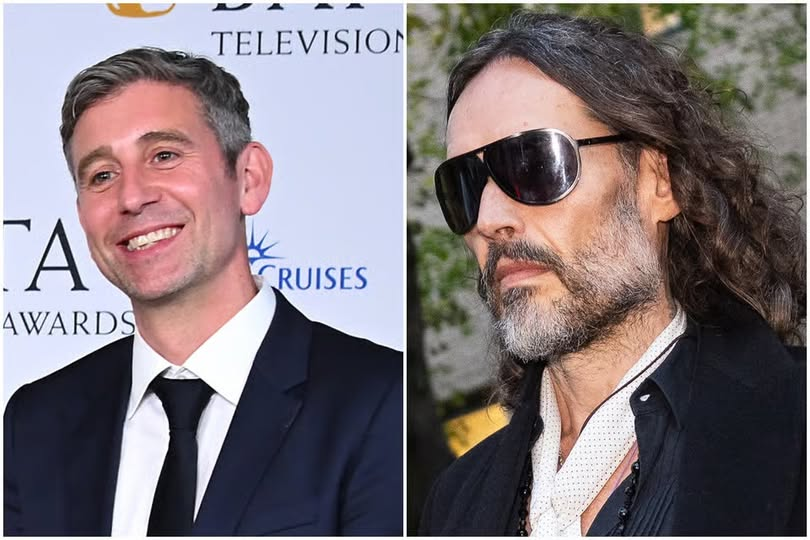
A television producer has come under intense scrutiny following allegations heard during the criminal trial of Russell Brand, prompting his production company to ask him to step back from his professional responsibilities. The development has renewed difficult questions about accountability, workplace culture and the responsibility of people who may witness inappropriate or abusive behaviour within the entertainment industry.
Jack Bayles, head of comedy at independent production company Various Artists Limited (VAL), was accused during Brand’s trial of watching and laughing while a female television worker was sexually assaulted in 2009. The allegations have attracted significant attention following Brand’s conviction for rape and three counts of sexual assault.
Bayles has said that he does not remember the incident described in court. He has also expressed regret, saying that if he was present when inappropriate behaviour occurred and failed to recognise the woman’s distress or intervene, he sincerely apologises.
In the wake of the verdict, VAL confirmed that Bayles had been asked to step back from the company while it considered the circumstances surrounding the trial. The decision has placed renewed attention on the wider entertainment industry and the question of what responsibility colleagues, production teams and employers have when concerns about misconduct arise.
Jack Bayles Asked to Step Back From Production Company
The decision involving Bayles followed the conclusion of Brand’s high-profile trial at Southwark Crown Court. VAL confirmed that the producer would step back while the company reviewed the verdict and the events discussed during the proceedings.
The company also indicated that Bayles would no longer work on two BBC sitcoms being produced through VAL: Such Brave Girls and Push. The move represents a significant professional development for a producer who has worked on several well-known television projects.
In its statement, VAL said it had asked Bayles to step back while it considered the verdict and the surrounding events. The company also emphasised that its thoughts were primarily with Brand’s victims.
The wording of the statement is important. The company described the decision as a step taken while it considered the circumstances, rather than announcing a final finding about Bayles’ conduct. The allegations concerning his alleged behaviour remain distinct from the criminal convictions secured against Brand.
Nevertheless, the decision has raised questions about how television production companies should respond when individuals connected to serious allegations remain in influential industry positions.
What the Court Heard About the 2009 Incident
The allegations involving Bayles emerged during evidence concerning an incident in 2009, when a young female staff member was working on a project involving Russell Brand for Channel 4.
The court heard that the woman had been pressured into giving Brand a massage. According to her account, Bayles and another member of Brand’s team, Gareth Roy, encouraged her to do so, with the situation described as one in which she felt reluctant but under pressure to comply.
The woman told the court that Brand then thrust his head into her groin area. She described feeling repulsed by what had happened and said that the situation was deeply distressing.
During her testimony, she also described how Brand’s associates allegedly watched and laughed rather than stepping in to stop the behaviour. The allegations against Bayles therefore became part of a wider discussion about the conduct of people surrounding powerful television personalities and whether those present recognised the seriousness of what was happening.
The woman said she subsequently complained to her Channel 4 bosses. Her evidence brought attention not only to the alleged assault itself but also to what happened after she reported her experience.
Her identity is protected by lifelong anonymity, a legal safeguard intended to protect people who report sexual offences.
Bayles Responds to the Allegations
Following the renewed scrutiny, Bayles issued a statement expressing strong condemnation of Brand’s actions. He said he was appalled and sickened by what the comedian had done and confirmed that he had cooperated fully and voluntarily with the investigation.
However, Bayles also said he did not remember the incident from 2009.
He acknowledged that he may have missed something at the time and failed to recognise the distress caused to the woman. He expressed sincere regret and apologised for any failure to identify or respond appropriately to what was happening.
Bayles also described the working environment surrounding Brand at the time as frantic, pressured and toxic. He characterised Brand as chaotic and dismissive, adding that he believed the comedian manipulated people around him.
According to Bayles, he made the decision to stop working with Brand in 2010 and had no contact with him since.
He further stated that no complaints about Brand’s behaviour had been made directly to him during the period in which they worked together, and that he was unaware whether concerns had been raised with more senior individuals.
His response has added another dimension to the story. While the woman’s account was presented to the jury, Bayles has disputed remembering the incident and has not accepted the specific recollection attributed to him. His apology was framed around the possibility that he had been present and failed to recognise or respond to inappropriate conduct.
The distinction matters as scrutiny continues: the allegations about Bayles should not be presented as a separate criminal conviction or as a finding made by the jury.
Russell Brand Convicted of Rape and Sexual Assault
The controversy surrounding Bayles has unfolded against the backdrop of Brand’s criminal convictions.
After a four-week trial at Southwark Crown Court, a jury found the comedian and former television presenter guilty of one count of rape and three counts of sexual assault. The offences related to four women and took place between 2004 and 2009.
Brand was also acquitted of two further rape charges and one count of attempted indecent assault. He denied the allegations, maintaining that his sexual encounters had been consensual.
The trial heard evidence from six women, whose accounts described different experiences involving the entertainer during the period in which he was becoming one of Britain’s most recognisable comedy and television personalities.
The convictions marked a major moment in a case that had attracted widespread attention since allegations about Brand were brought into the public spotlight in 2023.
The case has also prompted renewed examination of the environments in which celebrities work, the influence they can exercise over colleagues and the ways organisations respond when concerns are raised.
For many observers, the allegations involving the 2009 incident have become particularly significant because they concern not only the actions of the person convicted but also the alleged response of people nearby.
Questions About Accountability Across the Entertainment Industry
The decision to ask Bayles to step back has intensified a wider debate about accountability in television and entertainment.
Production environments can involve complicated power structures. Established performers may have considerable influence over projects, schedules and the people working around them. Junior employees, freelancers and temporary staff may feel particularly vulnerable when asked to comply with demands from prominent figures.
In such circumstances, the responsibility to maintain a safe workplace cannot rest solely on the person who experiences inappropriate behaviour. Colleagues, managers, production companies and broadcasters all have roles to play in ensuring that concerns are taken seriously.
The central question raised by the Bayles allegations is what people should do when they witness behaviour that appears inappropriate, humiliating or threatening. Laughing along, remaining silent or treating a situation as entertainment can leave someone feeling isolated and unsupported.
It is also important to recognise that people do not always respond to distressing situations in the same way. Someone may feel unable to challenge a powerful colleague in the moment, particularly when their employment or future opportunities appear to depend on maintaining good relationships.
That is why workplace policies need to provide clear reporting procedures, independent support and protection against retaliation. Employees should not have to decide between speaking up and safeguarding their careers.
Broadcasters Face Renewed Pressure to Examine Workplace Culture
The case has also brought renewed attention to the responsibilities of major broadcasters and independent production companies.
Television programmes are rarely created by one person alone. They depend on large teams of producers, writers, performers, technicians and support staff. A healthy production environment requires more than creative talent and successful programming; it also requires clear standards of professional behaviour.
When serious allegations emerge, broadcasters and production companies face difficult decisions about how to protect employees, assess information and maintain public confidence.
The response to Bayles demonstrates how allegations discussed in a criminal trial can have consequences beyond the courtroom. Even when an individual has not been convicted of an offence, a company may decide that a temporary change in responsibilities is appropriate while it reviews the circumstances.
For the industry, the challenge is to ensure that such decisions are based on careful consideration rather than public pressure alone. Fair procedures must protect both the people raising concerns and those facing allegations.
At the same time, organisations cannot use uncertainty as a reason to ignore serious questions about workplace safety.
A Wider Conversation That Is Far From Over
The scrutiny surrounding Jack Bayles is likely to remain part of the wider discussion following Russell Brand’s convictions. The decision by Various Artists Limited to ask him to step back has highlighted how the consequences of a high-profile criminal case can extend into professional relationships and the institutions that supported major television productions.
For the woman who gave evidence, the court proceedings provided an opportunity to describe an experience she said had left her repulsed and distressed. Her testimony also raised questions about whether people around her recognised what was happening and whether she received the support she needed afterwards.
Bayles, meanwhile, has said that he does not remember the incident and has expressed regret over the possibility that he failed to recognise her distress. VAL has confirmed that it is considering the events surrounding the trial.
Ultimately, the issue extends beyond one producer or one television project. It concerns the standards expected of people working in an industry where fame, influence and professional hierarchies can create unequal relationships.
The entertainment business now faces renewed pressure to demonstrate that the safety and dignity of its workers matter as much as the success of its programmes. The lasting measure of accountability will not simply be how companies respond when a scandal becomes public, but whether they create workplaces where people feel able to speak up, where complaints are investigated properly and where no individual is considered too influential to be held responsible for their conduct.