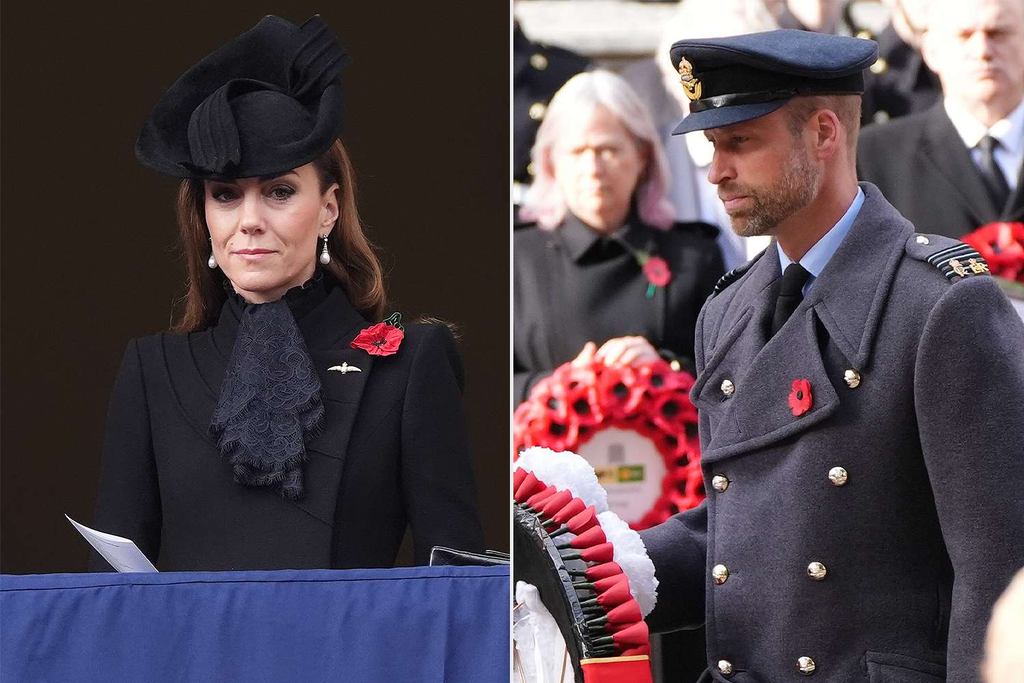
Prince William joined King Charles III and senior members of the British royal family at London’s annual Remembrance Sunday service on November 8, 2026, paying tribute to the men and women who lost their lives serving Britain and the Commonwealth. The Prince of Wales took part in one of the most significant events on the royal calendar, laying a wreath at the Cenotaph in Whitehall in a solemn display of respect and remembrance.
The annual ceremony brought together members of the royal family, political leaders, military representatives, veterans, and thousands of spectators. As the nation observed its traditional two-minute silence, Prince William stood alongside his father, continuing a royal tradition that has carried deep meaning for generations.
His appearance also highlighted his long-standing connection to the Armed Forces and his commitment to supporting those who have served their country.
Prince William Honors Fallen Heroes at the Cenotaph
The National Service of Remembrance took place at the Cenotaph war memorial in central London, where King Charles led the nation’s tribute to those who died in conflicts dating back to the First World War.
Prince William followed his father in laying a wreath at the memorial. His wreath featured the Prince of Wales feathers and a ribbon in Welsh red, reflecting his position as heir to the British throne and his historic connection with Wales.
For the occasion, William wore the distinctive uniform of a Lieutenant Colonel of the Household Cavalry, including the regiment’s recognizable red-collared uniform and a dark officer’s cloak. He also wore his military decorations, reflecting his service and honorary military appointments.
After placing the wreath, the Prince of Wales stepped back from the memorial and saluted in a moment that captured the solemn atmosphere of the occasion.
The gesture was particularly meaningful because Remembrance Sunday is not simply a formal royal engagement. It is a national moment dedicated to remembering the sacrifices made by generations of service personnel and their families.
William’s participation demonstrated the importance he places on preserving the traditions of the monarchy while recognizing the people whose service helped shape the country’s history.
King Charles Leads the Royal Family’s Tribute
King Charles III led the annual ceremony, laying the first wreath at the Cenotaph before other members of the royal family and political representatives followed.
The monarch wore his field marshal uniform and saluted after placing his wreath. His presence reinforced the traditional role of the sovereign as the figure who leads the United Kingdom’s national act of remembrance.
Prince William followed his father, continuing a responsibility previously associated with Charles when he held the title of Prince of Wales.
Other senior royals also participated in the ceremony, including Prince Edward, Duke of Edinburgh, and Princess Anne, who laid wreaths in tribute to the fallen.
Meanwhile, Queen Camilla and Catherine, Princess of Wales, watched the service from the central balcony of the Foreign, Commonwealth and Development Office overlooking Whitehall.
Their presence ensured that several generations of the royal family were represented during the national commemoration.
The gathering offered a powerful image of royal unity, with the King leading the proceedings while his eldest son took an active role in one of the monarchy’s most important annual traditions.
Kate Middleton Joins Queen Camilla for the Ceremony
Catherine, Princess of Wales, attended the Remembrance Sunday service alongside Queen Camilla, watching the proceedings from the balcony overlooking the Cenotaph.
Kate chose a formal black outfit for the solemn occasion, complemented by a black hat and poppy decorations. Her appearance reflected the traditional dress code associated with Remembrance events, where understated clothing and symbolic details help convey respect.
She also wore pearl earrings that had belonged to Diana, Princess of Wales, adding a personal historical detail to her appearance.
The Princess of Wales has regularly attended remembrance ceremonies as part of her royal responsibilities. Her presence at the Cenotaph continues a tradition of public service and commemoration that remains central to the royal family’s role.
Standing alongside Queen Camilla, Kate watched as King Charles, Prince William, Prince Edward, and Princess Anne paid their respects below.
Although the focus remained on the veterans and the fallen, the royal family’s participation attracted considerable public attention, particularly as William and Kate continue to take on increasingly prominent responsibilities within the monarchy.
A Two-Minute Silence Brings the Nation Together
One of the most moving moments of Remembrance Sunday came at 11 a.m., when Big Ben marked the beginning of the national two-minute silence.
The ceremony paused as the nation remembered those who had lost their lives in the two World Wars and subsequent conflicts involving British and Commonwealth forces.
The silence was observed by the royal family, military personnel, political leaders, veterans, and members of the public gathered along Whitehall.
The Last Post was sounded following the silence, creating an emotional atmosphere before wreath-laying continued at the Cenotaph.
For many people, the two-minute silence represents much more than a historical tradition. It offers an opportunity to remember relatives, friends, and fellow service members whose lives were shaped or ended by war.
The ceremony also recognizes the sacrifices made by civilians and military families, many of whom continue to experience the consequences of conflict long after fighting has ended.
Remembrance Sunday remains one of the United Kingdom’s most significant annual national events because it connects historical memory with the experiences of people serving today.
Around 10,000 Veterans Take Part in the March Past
Following the formal service, approximately 10,000 veterans participated in the Royal British Legion’s traditional March Past at the Cenotaph.
More than 300 Armed Forces and civilian organizations were represented, creating one of the largest and most diverse gatherings associated with the annual commemoration.
The participants included veterans from different generations, military cadets, former service personnel, and individuals representing organizations connected to Britain’s wartime history.
Some of the most emotional moments involved veterans who had traveled considerable distances to participate in the event.
Among those taking part were some of the last surviving veterans of the Second World War, whose presence provided a direct connection to a period of history that becomes increasingly distant for younger generations.
The march also included younger participants honoring relatives who had died while serving in the Armed Forces.
Their involvement demonstrated that remembrance is not limited to those who personally experienced war. It is also a responsibility passed from one generation to another.
Members of the royal family and political leaders observed the proceedings as veterans marched past the memorial, receiving recognition for their service and sacrifices.
The large turnout highlighted the continuing importance of supporting veterans and ensuring that their experiences are not forgotten.
Prince William’s Personal Connection to the Armed Forces
Prince William’s participation in Remembrance Sunday carries particular significance because of his own military background.
The Prince of Wales served in the British Armed Forces between 2006 and 2013, completing approximately seven and a half years of full-time military service.
His experience included training with the Royal Military Academy Sandhurst and serving with the Household Cavalry’s Blues and Royals. He also worked as a search-and-rescue pilot with the Royal Air Force and later served with the East Anglian Air Ambulance.
These experiences have helped shape his understanding of military service, teamwork, and the challenges faced by those working in demanding environments.
William has continued to maintain close relationships with military organizations through his royal appointments and public engagements. Since August 2023, he has held the position of Lieutenant Colonel of the Blues and Royals.
He has also used his public platform to recognize the contributions of veterans, serving personnel, and their families.
For William, Remembrance Sunday represents an opportunity to acknowledge the sacrifices of others while reinforcing the importance of supporting the Armed Forces community.
His presence at the Cenotaph also reflects the changing responsibilities of the future king, who is increasingly involved in major national occasions alongside King Charles.
Why Remembrance Sunday Remains Important to the Royal Family
Remembrance Sunday takes place on the Sunday closest to November 11, marking the anniversary of the Armistice that brought fighting in the First World War to an end in 1918.
The Cenotaph in Whitehall has been at the center of the national ceremony for more than a century. Originally constructed as a temporary memorial, it became a permanent monument and an enduring symbol of Britain’s remembrance of the fallen.
The annual service honors members of the Armed Forces who died in both World Wars and later conflicts. It also recognizes the contributions of civilian services and people whose lives were affected by war.
For the British royal family, attending the ceremony is an important part of its constitutional and ceremonial responsibilities.
The monarch traditionally leads the national tribute, while other senior royals participate by laying wreaths, attending services, and representing military organizations.
These traditions help maintain a visible connection between the monarchy, the Armed Forces, and the wider public.
As King Charles continues his reign, Prince William’s growing involvement in major remembrance events also offers a glimpse into the future of royal duties.
Prince William’s Remembrance Sunday Appearance Sends a Powerful Message
Prince William’s appearance at the 2026 Remembrance Sunday ceremony was an important moment for the royal family and the wider British public.
By laying a wreath at the Cenotaph alongside King Charles, the Prince of Wales honored generations of men and women who made the ultimate sacrifice in service to their country.
The ceremony also demonstrated the continuing importance of the royal family’s relationship with the Armed Forces, particularly as William prepares for an increasingly prominent role in the monarchy.
From the two-minute silence to the emotional veterans’ march past, the day’s events served as a reminder that remembrance is about more than looking back at history. It is about recognizing the courage, sacrifice, and resilience of those who served, while supporting the people and families who continue to carry those experiences.
As the United Kingdom approaches Armistice Day on November 11, Prince William’s tribute at the Cenotaph stands as another reminder of why the nation continues to gather each year: to honor the fallen, recognize the living, and ensure that their sacrifices are never forgotten.