Baseball has lost one of the unforgettable figures behind the New York Mets’ miraculous 1969 World Series victory. Jerry Koosman, the celebrated left-handed pitcher whose performance helped transform a struggling franchise into champions, has died at the age of 83. His passing marks the end of an important chapter in Mets history and brings renewed attention to a career defined by determination, consistency, and one extraordinary October.
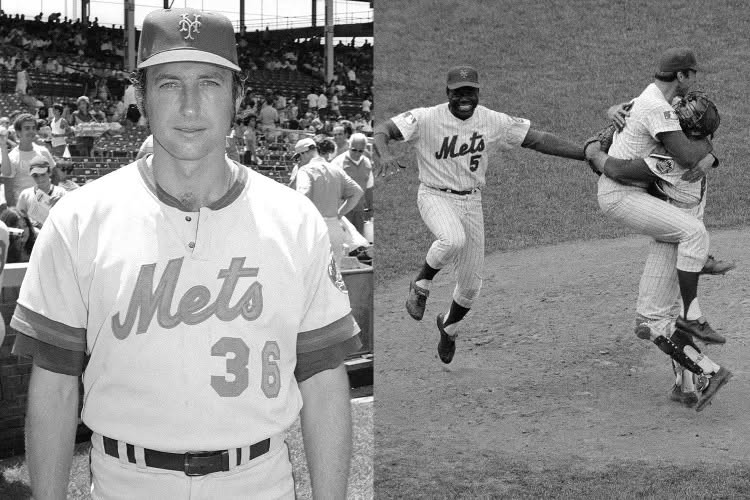
Koosman is remembered not only for his achievements on the mound but also for a photograph that became part of baseball history. After recording the final out of the 1969 World Series, he leaped into the arms of catcher Jerry Grote at Shea Stadium. Their emotional embrace captured the excitement of a team that had accomplished something few people believed possible.
The image became one of the defining symbols of the Miracle Mets, representing the joy of an unlikely championship and the determination of a group of players who refused to accept their underdog status.
For generations of New York baseball fans, Koosman was much more than a pitcher. He was one of the central figures in the season that changed the identity of the Mets forever.
Jerry Koosman Dies at 83 After an Illustrious Baseball Career
The New York Mets confirmed Koosman’s death on November 1, 2026. He died in Osceola, Wisconsin, after battling multiple illnesses for approximately a year, according to reports. He was surrounded by his children.
His passing prompted tributes from the Mets organization and baseball fans who remembered his contributions to the franchise. Koosman spent the first 12 seasons of his 19-year Major League Baseball career with New York, establishing himself as one of the most important pitchers in the club’s history.
Known affectionately as “Kooz,” he became a respected teammate and a formidable competitor. His left-handed pitching, command, and ability to perform in important games helped establish the foundation for the Mets’ success during the late 1960s and early 1970s.
Across 19 major league seasons, Koosman recorded 222 wins, 209 losses, and a 3.36 earned run average. He struck out 2,556 batters and completed 140 games, including 33 shutouts.
Those numbers reflect a pitcher who remained effective over a long career, but his legacy is especially connected to the remarkable achievements he delivered in a Mets uniform.
The Miracle Mets: A Championship Nobody Expected
To understand Koosman’s importance, it is necessary to remember what the New York Mets represented before 1969.
The franchise began playing in 1962 and struggled through its early years. The team became associated with losing seasons, difficult performances, and the challenges facing a relatively new organization.
Before 1969, the Mets had never finished a season with a winning record. They had also endured several campaigns in which losing 100 games became an unfortunate reality.
That history made their championship run all the more remarkable.
Under manager Gil Hodges, the Mets developed into a disciplined and competitive team. Their pitching staff became one of their greatest strengths, led by Tom Seaver and Koosman, who formed a powerful partnership at the top of the rotation.
The team finished the 1969 regular season with a 100-62 record, winning the newly established National League East. Their remarkable second-half performance helped turn them from outsiders into serious championship contenders.
After sweeping the Atlanta Braves in the National League Championship Series, the Mets advanced to face the Baltimore Orioles in the World Series.
The Orioles were widely regarded as the stronger team, making New York’s eventual triumph even more surprising.
The Mets won the series in five games, completing one of the most memorable underdog stories in professional sports.
Koosman was central to that achievement.
Koosman’s Two Victories Against the Baltimore Orioles
Koosman delivered two outstanding performances during the 1969 World Series, demonstrating why he was considered one of the Mets’ most dependable pitchers.
After Baltimore won the opening game, Koosman took the mound for Game 2 at Memorial Stadium. The Mets needed a strong response to prevent the Orioles from taking control of the series.
He delivered.
Koosman held Baltimore to one run over eight and two-thirds innings, earning a 2-1 victory that brought the Mets level in the championship series.
His performance gave the team renewed confidence and demonstrated that the Orioles could be challenged despite their reputation and impressive regular-season record.
Five days later, Koosman returned to the mound for Game 5 at Shea Stadium with the Mets one victory away from their first World Series title.
The pressure was enormous, but he produced another memorable performance.
Koosman pitched a complete-game five-hitter against Baltimore, helping New York secure a 5-3 victory. The win confirmed the Mets as world champions and completed their extraordinary transformation from perennial losers into baseball’s biggest surprise.
His performance in the deciding game became one of the defining achievements of his career.
The Iconic Embrace With Jerry Grote
Few moments in New York Mets history are as recognizable as the celebration following the final out of the 1969 World Series.
As Baltimore’s final batter sent a fly ball toward left field, Mets outfielder Cleon Jones made the catch that ended the game. Koosman watched the play unfold, knowing that one final successful moment would bring the championship to New York.
When the catch was completed, the tension disappeared.
Koosman leaped toward catcher Jerry Grote, who caught him in an emotional embrace on the Shea Stadium field. Other teammates rushed toward them as fans celebrated around the stadium.
The photograph of Koosman jumping into Grote’s arms became an enduring image of the Miracle Mets.
It represented more than the end of a baseball game. It captured the emotion of a team that had overcome years of disappointment and achieved something that once seemed impossible.
The image also reflected the strong relationships within the team. Baseball is often described as an individual sport played within a team structure, but the 1969 Mets demonstrated how trust, cooperation, and shared determination can produce extraordinary results.
For Koosman and Grote, that embrace became a permanent part of their shared legacy.
From a Minnesota Beginning to Major League Success
Jerome Martin Koosman was born on December 23, 1942, in Appleton, Minnesota. His journey to professional baseball was not a straightforward path to immediate fame.
After being drafted into the United States Army, he continued playing baseball while serving at military bases. His pitching ability eventually attracted attention through an unexpected connection involving fellow serviceman and catcher John Luchese, who recognized his potential and helped bring him to the attention of people connected to the Mets organization.
New York signed Koosman in August 1964 for $1,600.
He gradually worked his way through the minor leagues before making his Major League debut on April 14, 1967.
His breakthrough came the following season. In 1968, Koosman recorded a 19-12 record with an impressive 2.08 ERA and earned his first National League All-Star selection. He finished second in National League Rookie of the Year voting behind Cincinnati Reds catcher Johnny Bench.
He followed that performance with another excellent season in 1969, earning a second consecutive All-Star selection and becoming an essential part of the Mets’ championship rotation.
His rise demonstrated the value of patience and development, as a relatively unknown prospect became one of the most important pitchers in franchise history.
A Powerful Partnership With Tom Seaver
Koosman’s legacy is closely connected to that of Tom Seaver, the Hall of Fame pitcher who became the face of the Miracle Mets.
Together, the two left an extraordinary mark on New York baseball. Seaver was the staff’s leading figure, while Koosman provided another reliable presence capable of delivering important victories.
Their partnership helped establish the Mets as a team capable of competing with the National League’s strongest clubs.
Koosman continued to produce impressive results after the 1969 championship. In 1973, he helped the Mets return to the World Series, earning a victory against Cincinnati in the National League Championship Series and contributing another important performance against the Oakland Athletics.
His best regular-season campaign came in 1976, when he won 21 games and recorded a 2.69 ERA. That performance earned him a second-place finish in National League Cy Young Award voting.
Although the Mets eventually entered a period of decline, Koosman remained a respected figure because of his competitiveness and consistency.
His Career Beyond the New York Mets
Koosman’s time in New York ended after the 1978 season, when the Mets traded him to the Minnesota Twins.
He later played for the Chicago White Sox and Philadelphia Phillies, continuing his professional career until 1985.
His final statistics reflected a remarkably durable pitcher who had competed at the highest level for nearly two decades. He finished with 222 career victories, 2,556 strikeouts, and a 3.36 ERA.
While his later seasons took him away from the franchise where he had become a legend, his connection to the Mets remained strong.
He was inducted into the New York Mets Hall of Fame in 1989, recognizing his central role in the team’s early history.
In August 2021, the organization retired his No. 36 jersey at Citi Field. The honor placed him among a distinguished group of figures whose contributions had become inseparable from the identity of the franchise.
For Koosman, the ceremony was an opportunity to reflect on a career that had brought him from a small Minnesota community to one of baseball’s most celebrated teams.
A Lasting Legacy for Generations of Mets Fans
The passing of Jerry Koosman is a significant loss for the New York Mets and the wider baseball community.
His career represents an era when the franchise was establishing its identity and proving that it could compete with baseball’s traditional powerhouses.
The 1969 championship remains a defining moment in Mets history, and Koosman’s performances were essential to making that achievement possible.
His contribution cannot be measured only through statistics. The image of him celebrating with Jerry Grote remains a powerful reminder of what the team accomplished and how deeply that victory affected its supporters.
For longtime fans, Koosman will always be associated with the excitement of that October and the belief that an underdog can overcome expectations.
For younger generations, his story offers an opportunity to understand the history behind one of baseball’s most celebrated championships.
The Bottom Line
Jerry Koosman has died at 83, leaving behind a remarkable baseball legacy built around the New York Mets’ historic 1969 World Series victory.
His two wins against the Baltimore Orioles, including the complete-game performance that secured the championship, helped make him one of the central figures of the Miracle Mets.
The unforgettable photograph of Koosman leaping into Jerry Grote’s arms after the final out will continue to symbolize the joy and determination of that extraordinary team.
With 222 career victories, two All-Star selections, a Mets Hall of Fame induction, and his No. 36 permanently retired, Koosman earned a lasting place in baseball history.
His passing brings sadness to those who admired him, but his achievements will remain part of the sport’s story. Long after the final pitch of his career, Jerry Koosman will be remembered as one of the pitchers who helped make the impossible happen in New York.