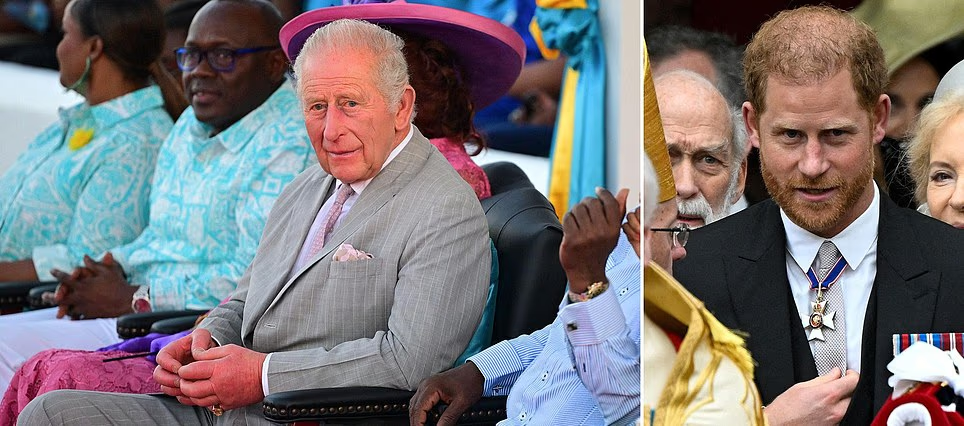
King Charles III’s reign was expected to mark the beginning of a new chapter for the British monarchy. Following decades of preparation as Prince of Wales, he finally ascended the throne after the death of Queen Elizabeth II, with his coronation in May 2023 providing a historic moment of continuity and celebration. Yet the years since that grand ceremony have proved far more complicated than many royal observers might have anticipated.
From family divisions and damaging controversies to health concerns and questions about the monarchy’s future, Charles has faced a succession of challenges during a relatively short period as king. What was meant to be a carefully managed transition has instead become a demanding test of his leadership, resilience, and ability to preserve public confidence in the institution.
A royal expert has suggested that even Charles could not have anticipated that certain scandals would grow to such significant proportions. The observation captures the difficult circumstances surrounding his reign: some problems have developed within the royal family, while others have emerged from wider questions about public accountability, institutional reputation, and the monarchy’s place in modern Britain.
For a monarch who spent most of his life preparing for the responsibilities of the crown, the reality of kingship has brought a series of unexpected pressures.
A Coronation That Promised a New Beginning
Charles became king on September 8, 2022, following the death of his mother, Queen Elizabeth II. Her 70-year reign had shaped the modern monarchy, making the transition to a new sovereign an important moment for Britain and the Commonwealth.
His coronation took place at Westminster Abbey on May 6, 2023. The ceremony combined centuries-old traditions with carefully selected modern elements, reflecting Charles’s desire to preserve the monarchy’s heritage while adapting it to contemporary society.
The event was watched around the world and offered an opportunity to present the new king as a steady figure capable of guiding the institution into its next era.
However, a coronation cannot remove the problems that already exist within an institution. Charles inherited not only the crown but also a complicated family situation, public expectations, and the long-standing challenge of maintaining relevance in a changing society.
The king’s position was particularly delicate because he was succeeding a monarch whose popularity and historical significance were difficult to match. Elizabeth II had become a familiar presence across generations, and Charles faced the challenge of establishing his own identity without appearing to distance himself from her legacy.
His reign therefore began with both an opportunity and a considerable burden.
Royal Family Tensions Complicate the King’s Leadership
One of the most persistent challenges facing Charles has been the continuing tension within his family, particularly the strained relationship between Prince Harry and the wider royal household.
Harry and his wife, Meghan, Duchess of Sussex, stepped back from their roles as senior working royals in 2020 before establishing their lives in the United States. Their departure created an unprecedented situation for the modern monarchy and raised questions about the future of royal duties, family relationships, and public communication.
The situation became even more complicated following Harry’s interviews and the publication of his memoir, Spare, in 2023. His accounts of family disagreements brought private tensions into the public arena and intensified scrutiny of the institution.
For Charles, the conflict has presented a difficult balancing act. As king, he has responsibilities to the monarchy, but he is also a father navigating a deeply personal family dispute.
Any attempt to resolve the situation must take account of the feelings and decisions of several people, each with their own perspective on what has happened.
The king has generally avoided discussing private family matters in detail, maintaining a restrained public approach. Yet the lack of visible reconciliation has ensured that speculation continues.
The challenge is not simply whether family members can meet again. It is whether they can rebuild enough trust to maintain a relationship while respecting the different lives and responsibilities they have chosen.
Scandals That Have Tested the Monarchy’s Reputation
The royal family has faced controversies for decades, but the speed and scale at which information circulates today can make reputational challenges particularly difficult to manage.
One of the most damaging issues inherited by Charles was the continuing fallout from Prince Andrew’s association with convicted sex offender Jeffrey Epstein. Andrew’s past relationship with Epstein and the allegations made against him have repeatedly raised questions about judgment, accountability, and the royal family’s handling of the controversy.
Andrew has denied the sexual assault allegation made against him by Virginia Giuffre. He settled her civil lawsuit in 2022 without admitting liability. Nevertheless, the controversy has continued to affect public discussion of the monarchy.
For Charles, the issue has been especially sensitive because it involves his brother and the wider institution. Decisions concerning Andrew’s public role, royal privileges, and relationship with the family have attracted considerable attention.
The king has had to consider the monarchy’s reputation while dealing with a situation that is also deeply personal.
The broader problem is that scandals involving members of the royal family rarely remain isolated incidents. They can become part of a wider debate about whether the institution is sufficiently transparent and whether its members are held to appropriate standards.
A royal expert’s suggestion that Charles could not have anticipated how dramatically certain controversies would escalate reflects the unpredictable nature of these situations. Even when a problem has existed for years, new developments can bring it back into the headlines with renewed force.
The King’s Health Adds Another Layer of Pressure
Perhaps one of the most personal challenges of Charles’s reign has been his health.
In February 2024, Buckingham Palace announced that the king had been diagnosed with cancer after undergoing treatment for an enlarged prostate. The palace did not initially disclose the specific type of cancer, but confirmed that it was not prostate cancer.
The announcement prompted widespread concern and brought an abrupt change to the rhythm of royal life. Charles temporarily stepped back from some public-facing duties while receiving treatment, although he continued carrying out certain constitutional responsibilities.
The news was particularly significant because it came during a period when the royal family was already dealing with another major health concern. Catherine, Princess of Wales, also announced in March 2024 that she was undergoing cancer treatment.
With both the king and the Princess of Wales facing serious health challenges, the monarchy had to adjust its public schedule and manage uncertainty about the availability of two prominent members of the royal family.
For Charles, the situation demonstrated that the demands of kingship do not exist separately from personal circumstances. Even a monarch with decades of preparation must sometimes adapt to events beyond his control.
His return to a fuller programme of public engagements became an important moment, although the need to balance official responsibilities with treatment and recovery remained a significant consideration.
The Burden of Following Queen Elizabeth II
Charles’s reign has also been shaped by the extraordinary legacy of his mother.
Queen Elizabeth II provided continuity for the monarchy through periods of major political, social, and cultural change. Her public image was built over decades, and her ability to remain a consistent figure during national moments of uncertainty became central to the institution’s identity.
Charles has inherited that legacy, but he cannot simply reproduce his mother’s approach.
He has different interests, a different public personality, and a different vision of the monarchy’s role. Throughout his years as Prince of Wales, he developed a reputation for speaking about issues such as the environment, architecture, and sustainable development.
As king, however, his public position requires a careful balance between personal convictions and constitutional neutrality.
The transition from a long-serving queen to a new monarch was always likely to involve adjustments. Yet the combination of family controversies, health concerns, and wider public scrutiny has made the process more difficult.
Charles must demonstrate that the monarchy can remain relevant without appearing to become involved in political disputes or losing the traditions that have defined it.
That is a demanding task for any sovereign, particularly one succeeding a monarch who enjoyed such a long and familiar presence in public life.
A Smaller Royal Family Faces Greater Expectations
Another challenge has been the reduced number of senior working royals available to carry out official engagements.
The departures of Harry and Meghan, the reduced public role of Prince Andrew, and periods when other family members have been unavailable have placed additional demands on those who remain.
Prince William and Catherine are central to the monarchy’s future, but they also have their own family responsibilities and the pressures associated with raising three children.
Princess Anne has continued to undertake a substantial programme of royal engagements, while other working members of the family have helped support the king’s schedule.
Even so, the monarchy faces questions about how it can maintain a visible presence across the country and the Commonwealth with a relatively limited group of senior representatives.
Charles has long supported the idea of a more streamlined monarchy. However, reducing the size of the institution also means ensuring that the remaining members can manage their responsibilities without becoming overstretched.
The challenge is to maintain public service, ceremonial duties, and community engagement while preserving the personal well-being of those carrying out the work.
Public Confidence and the Future of the Crown
The monarchy’s long-term position depends not only on the decisions made by the royal family but also on public attitudes toward the institution.
Younger generations may have different expectations from those who grew up during Elizabeth II’s reign. Questions about public spending, inherited privilege, transparency, and the monarchy’s constitutional role continue to influence discussions about its future.
Charles has acknowledged the need for the institution to evolve, but change must be handled carefully. Too little adaptation can make the monarchy appear disconnected from modern society, while too much can weaken the traditions that supporters consider central to its identity.
The king’s personal circumstances have made this balancing act even more complicated.
Every controversy creates another opportunity for critics to question the institution, while every successful public engagement offers a chance to reinforce its value.
For Charles, the task is to demonstrate that the monarchy can remain stable and useful despite the pressures surrounding individual members of the family.
Can King Charles Turn a Difficult Reign Around?
Despite the challenges, it would be premature to define Charles’s reign solely by its most difficult moments.
The king has spent much of his life preparing for the role, and his experience as Prince of Wales has given him a detailed understanding of the institution and its responsibilities.
His public engagements, charitable interests, and environmental advocacy have helped establish a distinct identity as monarch. His ability to continue working during periods of personal and institutional uncertainty has also demonstrated a commitment to the responsibilities of the crown.
However, the most significant tests may not be resolved through public appearances or ceremonial events.
Family relationships require time and trust. Reputational controversies demand careful decisions and credible accountability. Health concerns require patience and realistic adjustments to official duties. Meanwhile, the monarchy must continue responding to a society that is constantly changing.
Charles cannot control every development, but he can influence how the institution responds to them.
That distinction may ultimately define his leadership.
The Bottom Line
King Charles III’s reign began with the promise of continuity following the historic rule of Queen Elizabeth II. Yet since his coronation in May 2023, he has faced a succession of challenges that have tested both his personal resilience and the monarchy’s public reputation.
Family divisions, the continuing fallout from royal controversies, serious health concerns, and the pressure of following an exceptionally long-serving monarch have all contributed to a demanding start to his time on the throne.
The suggestion that Charles could not have anticipated certain scandals becoming so significant highlights how unpredictable modern royal life can be. Problems that might once have remained within palace walls can now become international talking points, placing pressure on the king to respond while maintaining the dignity of his office.
Ultimately, Charles’s success as monarch will not be measured by whether he avoids every crisis. It will depend on how he manages difficult circumstances, protects the institution’s credibility, and prepares the royal family for the future.
His reign may have begun with more pain than celebration, but its lasting legacy remains unwritten. The greatest test for King Charles will be whether he can turn a period of uncertainty into an era of stability, responsibility, and renewed public confidence.