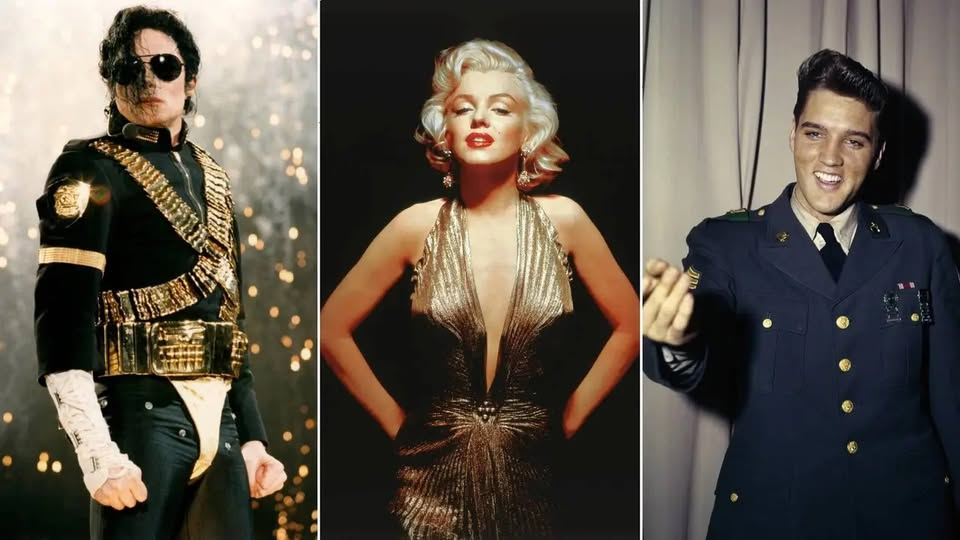
Some of the biggest fortunes in entertainment history continue growing long after the stars who created them have passed away. From Michael Jackson and Elvis Presley to other legendary musicians, actors and performers, the commercial value of their work remains enormous, generating revenue through music sales, streaming, licensing agreements, merchandise, films and major entertainment projects.
For these late celebrities, death did not bring an end to their financial influence. Their songs continue reaching new generations, their images remain instantly recognisable, and their creative work has become part of popular culture. Behind these extraordinary earnings are families, estate administrators, business partners and entertainment companies responsible for protecting and managing valuable legacies.
The business of celebrity estates has become a fascinating part of the modern entertainment industry. While fans remember the performances and personalities that made these stars famous, the people managing their estates face a different responsibility: ensuring that their work remains commercially successful while preserving the legacy that made them icons.
Michael Jackson: The King of Pop’s Enduring Financial Legacy
<PRIVATE_PERSON> Michael Jackson remains one of the most commercially powerful entertainers in history, even more than a decade and a half after his death in 2009.
Known around the world as the King of Pop, Jackson transformed the music industry through groundbreaking albums, unforgettable performances and innovative music videos. His influence extended far beyond music, shaping fashion, dance, entertainment marketing and the global pop culture landscape.
Albums such as Thriller, Bad and Dangerous continue attracting listeners, while songs including Billie Jean, Beat It and Smooth Criminal remain familiar to audiences across generations.
Jackson’s estate has continued generating substantial revenue through music streaming, licensing, merchandise, theatrical productions and other commercial opportunities.
One of the most significant developments has been the continued management and commercial exploitation of his musical catalogue. His songs are regularly introduced to new audiences through films, television, advertising and digital platforms.
The success of the musical MJ, which explores different periods of his life and career through his music, has also demonstrated the lasting theatrical appeal of his work.
Jackson’s estate has also been involved in major business transactions involving music rights. Such agreements illustrate how valuable an extensive catalogue can become when its songs continue to attract global demand.
His financial legacy is particularly remarkable because it demonstrates how an artist’s creative output can become a long-term business asset. Even without recording new music, Jackson’s existing work continues to generate opportunities for commercial growth.
Elvis Presley: Graceland and the Business of a Rock and Roll Legend
Elvis Presley remains another powerful example of a celebrity whose legacy continues producing income decades after his death.
Often called the King of Rock and Roll, Presley helped transform popular music and became one of the most recognisable performers of the twentieth century.
His influence extended beyond the recording studio. His distinctive voice, stage presence, fashion choices and film career helped create a public image that remains instantly recognisable.
Today, his legacy is closely associated with Graceland, his famous Memphis home, which has become one of the most important attractions connected to music history.
Graceland welcomes visitors interested in Presley’s life, career and personal history. The estate also benefits from merchandise, licensing arrangements, music-related projects and tourism connected to his name.
The commercial value of Elvis Presley extends beyond nostalgia. His songs continue to be streamed, performed and featured in entertainment projects, allowing younger generations to discover his music.
His image remains especially powerful in popular culture. From fashion and collectibles to films and television programmes, Elvis continues to represent a defining period in American entertainment.
The continued success of his estate demonstrates how a famous personality can become the foundation of a business that survives across generations.
Why Michael Jackson and Elvis Presley Remain So Valuable
The financial success of Jackson and Presley is not simply the result of their fame during their lifetimes.
Both artists created extensive catalogues of music that have remained relevant long after their original release dates. Their songs are regularly rediscovered by new audiences, while established fans continue returning to the recordings that defined important periods of their lives.
There is also a powerful emotional connection between audiences and these performers.
For many people, listening to an Elvis Presley song or watching a Michael Jackson music video brings back memories of childhood, family experiences or important moments in music history.
That emotional connection can help maintain demand for their work.
Another important factor is the ability to introduce classic material through modern platforms. Streaming services make it easier for listeners to explore older catalogues, while social media can bring renewed attention to familiar songs.
A track released decades ago can suddenly become popular again after appearing in a viral video, television programme or film.
For celebrity estates, these developments create opportunities to generate revenue from creative work that might otherwise have remained associated primarily with its original era.
Whitney Houston: A Voice That Continues to Reach New Generations
Whitney Houston remains one of the most celebrated vocalists in modern music history.
Her powerful voice and extraordinary range helped establish her as a global superstar, while songs such as I Will Always Love You, Greatest Love of All and I Wanna Dance with Somebody continue to attract audiences worldwide.
Houston died in 2012, but her musical catalogue remains an important commercial and cultural asset.
Her recordings continue to generate revenue through streaming, sales, licensing and other music-related activities. Her songs also remain popular choices for film soundtracks, television performances and major entertainment events.
The continued interest in her life and career has created opportunities for documentaries, biographical projects and tributes celebrating her influence.
Managing Houston’s legacy involves balancing commercial opportunities with the responsibility of preserving the reputation of an artist whose work holds deep emotional significance for millions of fans.
Her enduring popularity demonstrates that exceptional vocal performances can remain relevant regardless of changing musical trends.
Bob Marley: A Global Legacy Built Around Music and Culture
Bob Marley is another late musician whose influence reaches far beyond his original recording career.
The Jamaican singer helped introduce reggae music to audiences around the world and became a symbol of cultural expression, social awareness and artistic independence.
Songs such as One Love, Three Little Birds and Redemption Song remain widely recognised, while his image continues to appear on clothing, accessories, posters and other merchandise.
Marley’s commercial legacy is supported by a broad range of activities, including music sales, streaming, licensing and branded products.
His family has played an important role in maintaining his cultural influence and developing opportunities connected to his name.
However, the appeal of Marley cannot be explained by commercial success alone. His music continues to carry messages that resonate with listeners across different countries and generations.
The continued popularity of his work demonstrates how a musician’s influence can extend into fashion, lifestyle and wider cultural identity.
Prince: The Value of an Extraordinary Music Catalogue
Prince was celebrated for his musical creativity, distinctive style and ability to move between genres.
His catalogue includes some of the most recognisable recordings in modern music, including Purple Rain, When Doves Cry and Kiss.
Following his death in 2016, the management of his estate became an important responsibility, particularly because of the scale and complexity of his creative output.
Prince was known for recording extensively and maintaining significant control over his artistic work. His musical archive contains a vast amount of material, creating opportunities for carefully managed releases and projects.
The commercial value of his legacy comes from both his established recordings and the continued interest in previously unreleased material.
However, managing such an archive requires difficult decisions. Estate representatives must consider how to make recordings available while respecting the artist’s creative intentions and maintaining the integrity of his work.
Prince’s legacy highlights the challenges involved in managing an artist whose influence was built partly on independence and creative control.
The Business Behind Celebrity Estates
The fortunes generated by late celebrities rarely manage themselves.
After an entertainer dies, responsibility for their commercial interests generally passes to an estate, trust, family representatives or other authorised parties, depending on the legal arrangements.
These individuals and organisations may oversee music rights, licensing agreements, intellectual property, merchandise, property and other valuable assets.
Their work can be complicated because different parts of a celebrity’s legacy may be controlled by different companies or rights holders.
For musicians, music publishing and recording rights are particularly important. Publishing rights relate to the underlying musical compositions, while recording rights concern specific recorded performances.
Both can generate revenue, but they are not necessarily owned or managed by the same parties.
Celebrity estates may also negotiate agreements allowing films, television programmes, advertisements and other productions to use an artist’s music or image.
These arrangements can create significant financial opportunities, although they also require careful consideration of how the celebrity’s identity is represented.
A successful estate must therefore operate as both a business and a guardian of cultural history.
How Streaming and Social Media Keep Celebrity Legacies Alive
Technology has transformed the way audiences discover entertainment from previous generations.
In the past, older recordings often depended on radio broadcasts, physical albums and television programmes to reach new listeners.
Today, streaming services provide immediate access to extensive music catalogues, allowing audiences to explore artists they may never have experienced during their lifetimes.
Social media has also become an important source of renewed interest.
A classic song can become popular again through a viral video, dance trend or online discussion. A film featuring a famous performer can introduce their work to an entirely new audience.
These developments help explain why the commercial value of established celebrity catalogues can remain strong.
The same principle applies to actors and other entertainers. Their performances can continue generating revenue through film distribution, television licensing, merchandise and special anniversary releases.
The digital entertainment economy has effectively created new ways for the work of departed stars to remain commercially active.
The Challenges of Protecting a Celebrity’s Legacy
Although celebrity estates can generate extraordinary income, managing them is not always straightforward.
Disagreements over ownership, licensing decisions and family responsibilities can create legal and financial complications.
There is also the question of how much commercial activity is appropriate.
Fans may welcome new documentaries, theatrical productions and merchandise, but excessive commercialisation can risk damaging the reputation of an artist.
Estate representatives must consider whether a proposed project reflects the celebrity’s identity and artistic values.
For some performers, preserving privacy and creative independence may be particularly important. Others may have established commercial arrangements that allow their work to be licensed more freely.
The challenge is to maintain a balance between generating income and protecting the meaning behind the legacy.
The Bottom Line
The extraordinary fortunes associated with Michael Jackson, Elvis Presley, Whitney Houston, Bob Marley and Prince demonstrate that an entertainment career can continue generating significant financial value long after its creator has passed away.
Their music, performances, images and creative achievements remain part of global popular culture, creating opportunities through streaming, licensing, merchandise, films, theatrical productions and tourism.
Behind these continuing earnings are families, estate administrators and business partners working to protect valuable creative assets while keeping the artists’ legacies relevant.
Ultimately, the lasting financial power of these celebrities reflects something even greater than commercial success. Their work continues to connect with audiences, inspire new performers and shape popular culture.
For the biggest entertainment legends, the final curtain call does not necessarily mark the end of their influence. In many cases, it is simply the beginning of another chapter in the extraordinary story of their legacy.