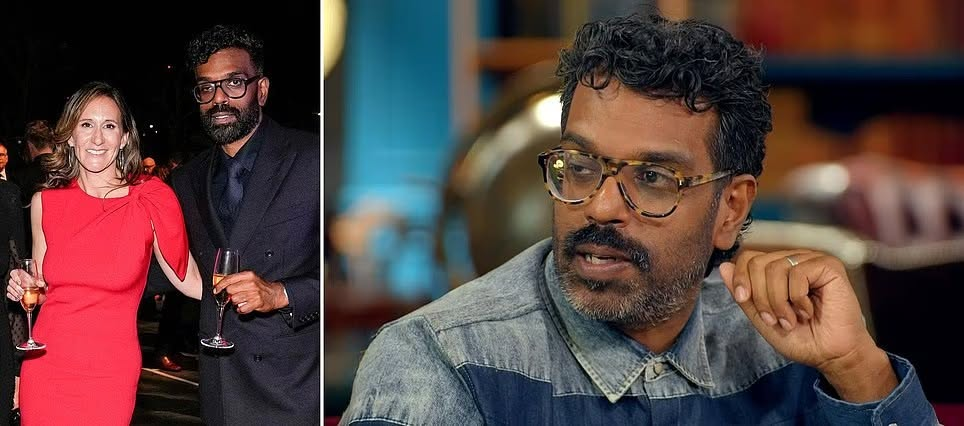
Behind Romesh Ranganathan’s quick wit, successful television career and reputation as one of Britain’s most recognizable comedians lies a deeply personal experience that has exposed the darker side of public life. The Celebrity Traitors star has spoken about a disturbing incident involving his wife, Leesa, who was targeted by an online troll because of her marriage to him.
According to Romesh, the social media user directed a racist insult at Leesa, calling her a “race traitor” for marrying a man of Sri Lankan heritage. The shocking comment highlighted how online abuse can extend beyond celebrities themselves, reaching family members who have not chosen to live in the public spotlight.
For Romesh, whose comedy often explores identity, family life and everyday experiences, the incident offered a painful reminder that racism is not always expressed through public arguments or obvious discrimination. Sometimes it appears in a short message sent from an anonymous account, intended to humiliate someone simply because of whom they love.
His account has also brought renewed attention to the emotional consequences of online harassment and the way public figures’ partners and children can become unintended targets of hateful behavior.
Romesh Ranganathan Opens Up About Racist Abuse Directed at His Wife
Romesh Ranganathan is known for his dry humor, sharp observations and ability to find comedy in uncomfortable situations. However, the experience involving Leesa was far removed from the lighthearted stories audiences usually associate with the comedian.
The online troll reportedly targeted his wife with the phrase “race traitor,” suggesting that her relationship with Romesh was somehow a betrayal of her own racial identity.
The insult was particularly disturbing because it attacked Leesa for a personal relationship rather than anything she had said or done publicly. It reflected an extreme form of racial hostility in which people attempt to impose rigid boundaries on whom others should love or marry.
Romesh’s decision to share the incident revealed how such abuse can affect people who are connected to famous individuals but are not necessarily public figures themselves.
Although comedians often develop a thick skin after years of dealing with criticism, their loved ones may have very different experiences when confronted with targeted harassment.
A cruel comment can be dismissed by some as internet provocation, but for the person receiving it, the message can feel deeply personal. It can also create anxiety about future attacks, particularly when the abuse comes from strangers who appear to know details about a family’s life.
Who Is Leesa, Romesh Ranganathan’s Wife?
Leesa has been an important part of Romesh’s life long before his television career made him a household name.
The couple met while working in education. Romesh was a mathematics teacher before becoming a successful comedian, and their relationship developed during a period when his professional future looked very different from the one he enjoys today.
They eventually married and built a family together, raising three sons.
Unlike her husband, Leesa has generally maintained a relatively private profile. While Romesh regularly appears on television, radio and comedy stages, she has not pursued the same level of public attention.
That difference makes the reported online attack especially unsettling. Leesa’s connection to a well-known entertainer appears to have been enough to make her a target for someone expressing racist views.
For many celebrity families, maintaining privacy is a way of protecting ordinary routines from the demands of public attention. However, social media has made it increasingly difficult to separate the professional identity of a public figure from the personal lives of those closest to them.
Partners, parents and children can find themselves discussed online despite having no direct involvement in the celebrity’s work.
Romesh’s account illustrates how easily that boundary can be crossed.
What Does the Phrase “Race Traitor” Reveal About Online Racism?
The phrase used against Leesa carries a particularly hostile meaning. It is designed to shame someone for forming a relationship across racial or ethnic boundaries.
Rather than treating marriage as a personal decision based on love, trust and shared values, the insult suggests that individuals should remain within racial groups and that choosing a partner from another background represents disloyalty.
Such language reflects racial prejudice and the belief that identity should determine personal relationships.
Interracial relationships have historically faced discrimination in different parts of the world. Although attitudes and laws have changed significantly in many countries, racist hostility has not disappeared.
Online platforms can make this behavior more visible because users may feel protected by anonymity or distance from the people they target.
The phrase directed at Leesa was not simply an ordinary disagreement or an attempt at humor. It was a personal attack based on racial identity and the assumption that people should be judged according to whom they marry.
The incident demonstrates how racist attitudes can appear in seemingly private digital interactions, even when the person receiving the abuse has not invited public discussion.
The Dark Side of Celebrity: When Family Members Become Targets
Being married to a famous person can bring unexpected attention. For many partners of television personalities, the experience involves a complicated balance between supporting a loved one’s career and protecting their own privacy.
Romesh’s television appearances, comedy tours and public interviews have made him a familiar figure to audiences across the United Kingdom. His growing profile also means that details of his personal life can attract curiosity.
However, public interest does not give strangers permission to harass his family.
Celebrity partners may become targets of criticism simply because they are associated with someone well known. In some cases, the abuse can involve appearance, parenting choices, relationships or personal backgrounds.
Racist harassment adds another layer of harm because it attacks something fundamental to a person’s identity.
For Leesa, the reported comment was especially troubling because it framed her marriage as a reason for condemnation.
It also raises a wider question about the responsibility of social media platforms to protect people who become targets of abuse through their connections to public figures.
While celebrities may have professional teams and established platforms through which to respond, their relatives may not have the same resources or desire to engage publicly.
Romesh Ranganathan’s Career Has Often Explored Identity and Family
Romesh has built much of his comedy around observations of everyday life, family relationships and cultural identity.
Before becoming a full-time comedian, he worked as a mathematics teacher. His transition into entertainment gradually brought him to a wider audience through stand-up performances, television appearances and panel shows.
His comedy is often recognizable for its understated delivery and willingness to discuss subjects that might otherwise feel uncomfortable.
He has spoken openly about his Sri Lankan heritage, his experiences growing up in Britain and the challenges of family life.
That ability to combine personal experiences with humor has become one of the defining features of his public persona.
However, the incident involving Leesa shows the limits of comedy when confronted with genuine prejudice.
Racism directed at a family member is not simply another subject for a humorous anecdote. It involves real emotional consequences and can expose people to hostility they never expected to encounter.
By discussing the experience, Romesh has helped draw attention to an issue that affects many people beyond the entertainment industry.
From Stand-Up Comedy to The Celebrity Traitors
Romesh’s appearance on The Celebrity Traitors has introduced him to another audience and reinforced his position as a major television personality.
The reality competition brings together well-known participants in a psychological game involving deception, suspicion and strategic decisions. Its format creates dramatic moments as contestants attempt to work out whom they can trust.
For a comedian, the show offers a very different environment from a stand-up stage or a traditional television panel.
Romesh’s familiar humor and ability to read social situations make him an interesting presence in a format where personality and communication can influence the game.
His television success has also increased public interest in his life outside entertainment.
However, the racist abuse directed at Leesa illustrates an unfortunate consequence of greater visibility: family members can become more exposed to online attention even when they have no role in the programs themselves.
The contrast between television entertainment and the personal experience he described is striking. On screen, Romesh may make audiences laugh. Away from the cameras, he and his family still face the same challenges as many other households, including the emotional impact of cruelty from strangers.
Why Online Racist Abuse Should Not Be Dismissed as “Just Trolling”
The word “trolling” is often used to describe provocative online behavior, but it can sometimes make serious harassment sound less harmful than it really is.
There is a difference between playful disagreement and deliberately targeting someone with racist language.
A person who receives a hateful message may feel anger, embarrassment, anxiety or a sense of vulnerability. Even if the comment is posted by an anonymous stranger, its impact can remain long after the message disappears.
For families of public figures, the experience can be particularly difficult because the attention may continue across multiple platforms.
Online harassment can also discourage people from participating in public conversations or sharing ordinary moments of their lives.
Addressing this problem requires more than telling victims to ignore abusive messages. Social media platforms, communities and individuals all have a role in challenging discriminatory behavior.
Users can report hateful content, avoid sharing abusive posts for entertainment and support those who are targeted.
It is also important to recognize that interracial relationships should never be treated as an invitation for public judgment. People have the right to choose their partners without being subjected to racial insults.
The Importance of Protecting Family Privacy
Romesh’s experience highlights a broader challenge for celebrities who want to maintain a public career while keeping their family life private.
A successful entertainer may choose to discuss personal experiences in interviews or on television, but that does not mean their relatives have agreed to become public property.
Leesa’s experience demonstrates why boundaries matter.
Family members should be able to attend events, maintain relationships and live their everyday lives without facing harassment because of another person’s fame.
The same principle applies to children, who deserve particular protection from unnecessary public scrutiny.
For Romesh and Leesa, the reported incident serves as a reminder that online visibility can create pressures that extend beyond the person whose name appears in television listings.
The Bottom Line
Romesh Ranganathan’s account of the racist abuse directed at his wife, Leesa, has revealed a deeply upsetting side of life behind television fame.
The online troll’s decision to call her a “race traitor” because of her marriage to Romesh was an attack rooted in racial prejudice, exposing how hateful attitudes can reach beyond public figures and affect their families.
While Romesh is known for making audiences laugh, his story highlights an issue that should not be treated lightly. Social media can provide a platform for creativity and connection, but it can also give individuals opportunities to target others with cruel and discriminatory messages.
Leesa’s experience is a reminder that no one should have to defend their marriage or personal relationships against racist abuse.
Ultimately, the message behind Romesh’s account extends far beyond celebrity culture. Love and family should not be judged by racial boundaries, and public attention should never become an excuse for harassment. Behind every famous name is a real family, deserving of the same privacy, dignity and respect as anyone else.